
Library | Sustainable Finance Practices
ESG Integration and analysis
Tools, methodologies, and frameworks for embedding ESG factors into financial analysis, valuation, credit assessment, underwriting, and portfolio management, while separating out broader strategic elements.
Refine
537 results
REFINE
SHOW: 16


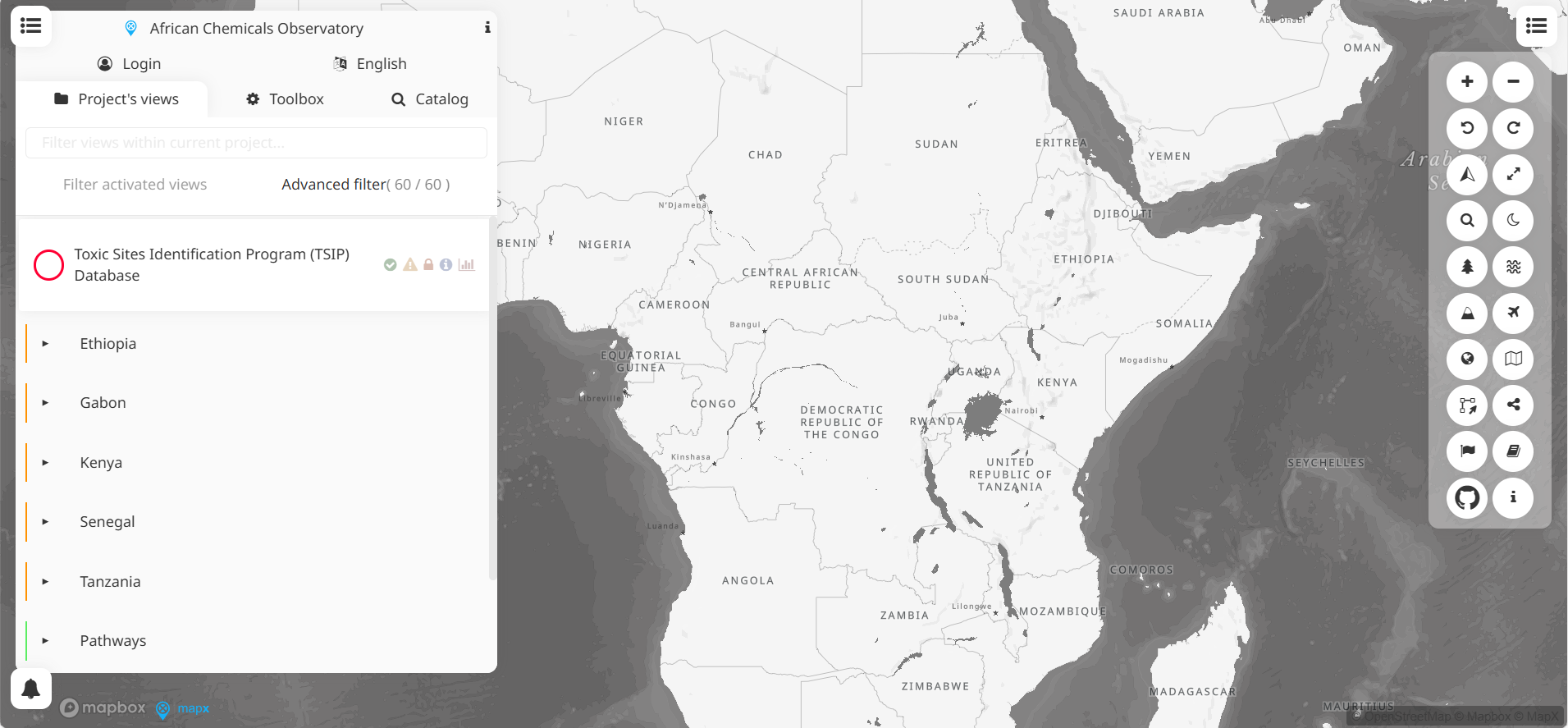
African chemical observatory
MapX is an open-source, cloud-based geospatial platform for visualising, analysing and managing environmental data. Developed by UNEP/GRID-Geneva, it supports decision-making in biodiversity, climate, land use and disaster risk, through map views, dashboards and storytelling tools.
Climate finance
This report reviews research on climate finance, focusing on how climate risks affect financial markets. It discusses theoretical models and empirical evidence on pricing climate risk in equities, bonds, housing, and mortgages, and explores portfolio strategies for hedging. Future research directions in modelling, measurement, and financial stability are highlighted.

National Bureau of Economic Research (NBER)
National Bureau of Economic Research (NBER) is a US-based nonpartisan economic research organisation producing working papers, conferences, datasets and publications on macroeconomics, labour markets, health economics and public policy. It supports scholars and policymakers with in-depth empirical research.
Presidential address: Sustainable finance and ESG issues: Value versus values
This report examines how investor and manager motivations—driven by either financial value or personal values—shape sustainable finance and ESG practices. It highlights definitional ambiguities, performance debates, and cultural differences, calling for clearer research to distinguish pecuniary risk-return considerations from non-pecuniary preferences in ESG investing.
Sustainable investing in practice: Objectives, beliefs, and limits to impact
This paper surveys 509 equity portfolio managers on their treatment of environmental and social factors. Findings show most prioritise financial returns, with limited willingness to sacrifice performance. ES constraints from mandates, policies, and client values strongly influence decisions. Beliefs and constraints outweigh fund labels in shaping sustainable investing practices.
The just transition: How two investors are tackling its social implications
This report by PRI outlines how Fonds de Solidarité FTQ and Ircantec integrate just transition principles into investment strategies. It highlights measures to support decarbonisation, quality jobs, community engagement, sustainable real estate, and shareholder dialogue, linking social considerations with environmental goals in advancing a low-carbon economy.
Target-setting protocol fourth edition
The report outlines the fourth edition of the Science Based Targets initiative’s target-setting protocol. It provides updated guidance, criteria, and methodology for companies to set near-term science-based greenhouse gas emission reduction targets, aligning with 1.5°C pathways and incorporating broader coverage across sectors, geographies, and organisational boundaries.
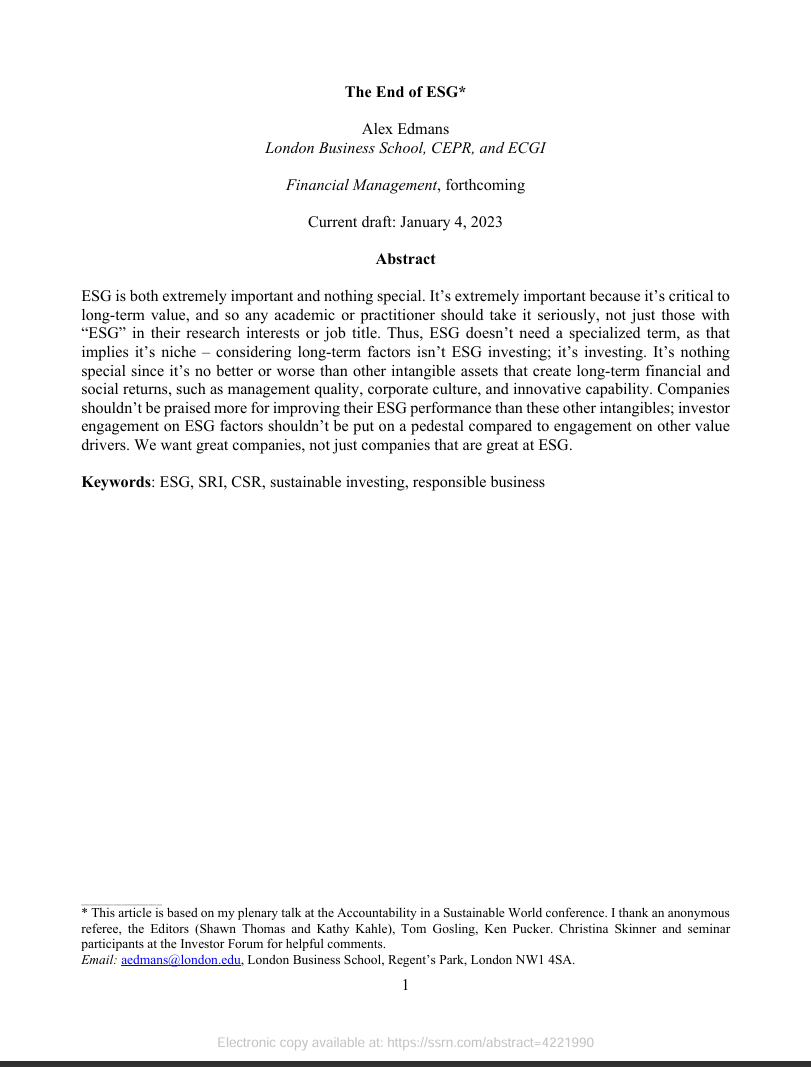
The end of ESG: Financial management, forthcoming
This report argues that ESG is both essential and ordinary: vital as a driver of long-term value but not unique compared to other intangibles such as culture or innovation. It cautions against over-emphasising ESG metrics, politicisation, and superficial classification, advocating instead a broader focus on overall sustainable value creation.
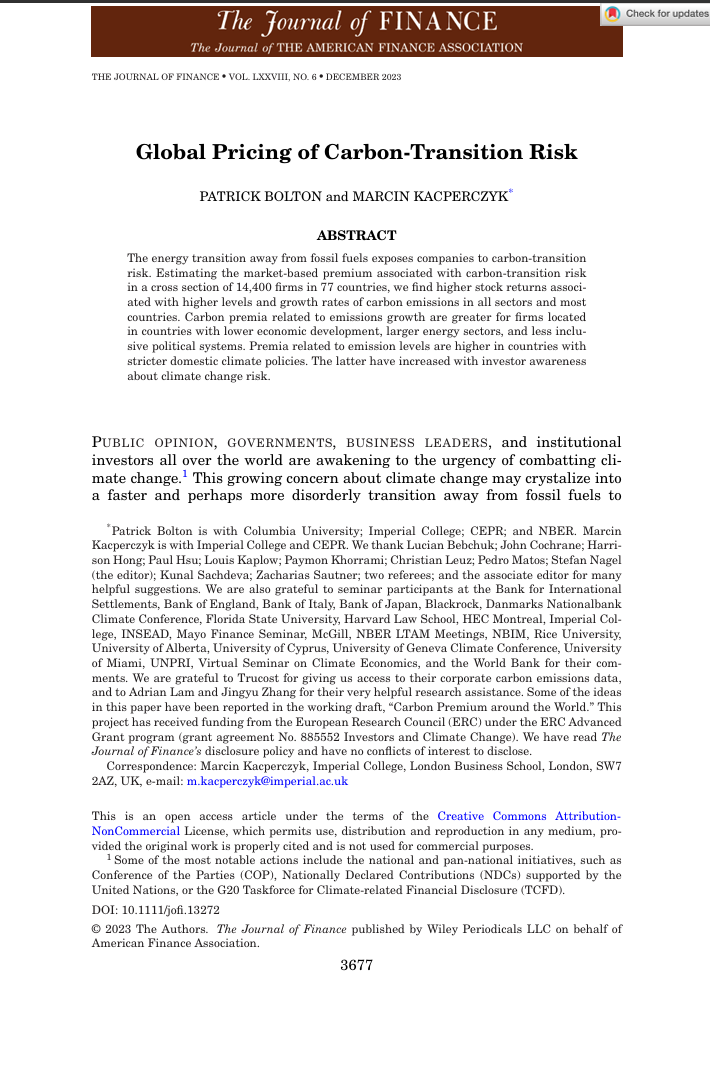
Global pricing of carbon-transition risk
This report examines the global pricing of carbon-transition risk by assessing equity markets’ responses to climate policy and transition exposure. It analyses regional variations, sectoral impacts, and the role of carbon pricing in financial markets, highlighting implications for asset valuation and investment strategies.
Survey of CFA institute members on latest ESG matters
The CFA Institute survey (Nov 2021) captures member views on ESG integration and sustainability reporting. Respondents support flexibility in ESG integration, oppose government mandates, and favour global product disclosure standards. They also prefer mandatory, globally consistent sustainability reporting with regulatory frameworks in place before adoption.
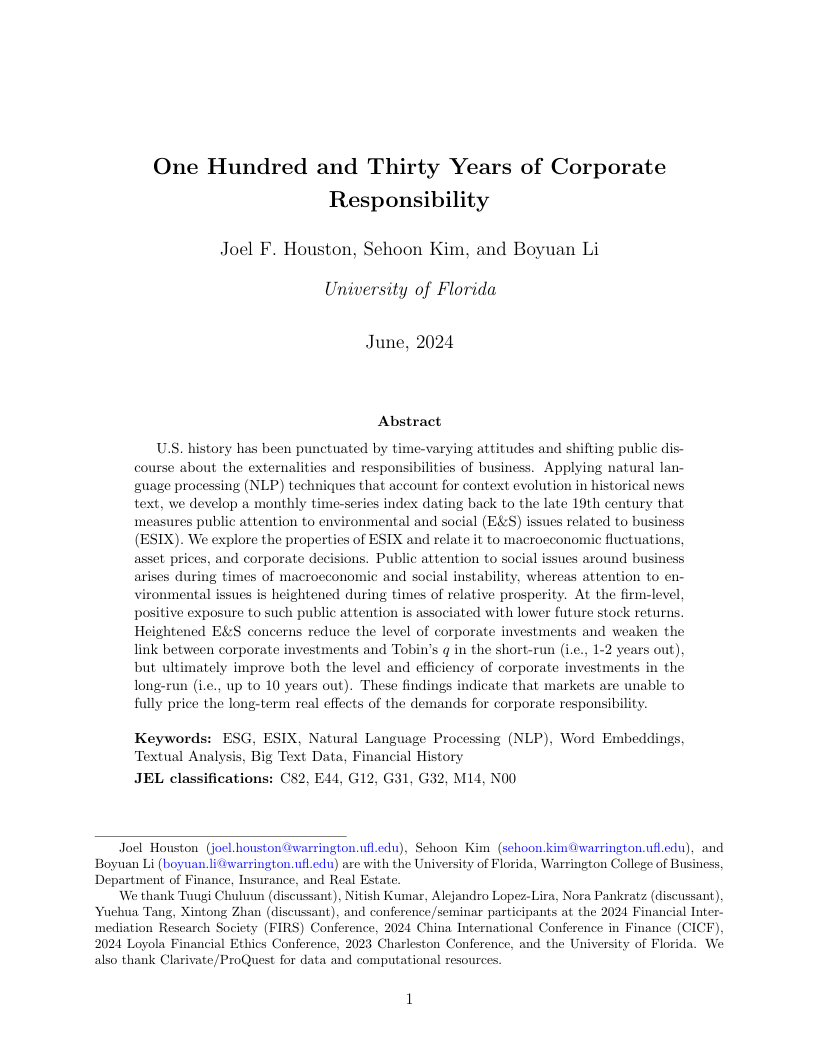
One hundred and thirty years of corporate responsibility
This report develops a 130-year index (ESIX) measuring public attention to environmental and social issues in business using historical news data. Findings show that such attention rises during instability (social) or prosperity (environmental), depresses short-term investment efficiency, but improves investment outcomes over longer horizons.
ESG and responsible institutional investing around the world: A critical review
This report reviews global ESG and responsible investing practices, focusing on definitions, regulation, climate finance, and institutional investor roles. It evaluates evidence from academic research and PRI data, highlighting investor influence, governance, and engagement strategies, while noting challenges around ratings, greenwashing, and measuring real outcomes.

DBS Bank
DBS Bank India is a digital-led universal bank offering personal, SME, corporate and wealth management services. Features include resident and non-resident (NRI) savings and fixed deposit accounts, remittance, loans, digital payments and credit/debit card solutions. Positions as Asia’s safest bank with a wide India branch network.
ShareAction's point of no return series
The Point of No Returns benchmark series assesses the world’s largest asset managers on responsible investment across climate, biodiversity, social issues, governance, and stewardship. Published by ShareAction, the series provides rankings, sector-wide analysis, and examples of practice to guide improvement and accountability.
Evidencing financial materiality of sovereign ESG risk
This report analyses the relationship between sovereign ESG risks and credit risk across 70 countries. Using FTSE Russell/Beyond Ratings data and five-year CDS spreads, it finds stronger financial materiality of ESG risks in emerging and high-yield markets, particularly for social and governance factors, with weaker results for environmental risks.

London Stock Exchange Group (LSEG)
LSEG (London Stock Exchange Group) is a global financial markets infrastructure and data provider. It delivers market-data, analytics, news and index products to over 44,000 customers in more than 170 countries. LSEG’s services cover capital markets, post-trade operations, risk management and information services.


