
Library | Sustainable Finance Practices
Laws and regulations
Government policies, legislation, and regulatory frameworks that shape sustainable finance practice, including mandatory disclosure rules, climate law, financial regulation, and ESG-related requirements.
Refine
190 results
REFINE
SHOW: 16


Responsible business conduct in the arms sector: Ensuring business practice in line with the UN guiding principles on business and human rights
The UN Working Group reviews arms sector regulation, finding persistent exports linked to humanitarian and human rights law violations. It identifies weak political will, opaque oversight and limited human rights due diligence, and urges stronger application of the UN Guiding Principles by states and companies.
Report of the working group on the universal periodic review
The report presents Norway’s fourth Universal Periodic Review, outlining human rights commitments, recent legal reforms, and policy measures. It records peer State feedback and extensive recommendations covering equality, child welfare, Indigenous rights, migration, climate action, and business and human rights, for Norway’s consideration and follow-up.
Draft policy on cyber enabled crimes under the rome statute
The ICC Prosecutor’s draft policy explains how existing Rome Statute crimes may be committed or facilitated through cyber means, outlines jurisdictional and evidentiary approaches, and affirms commitment to prosecuting serious cyber-enabled international crimes while excluding ordinary domestic cybercrime.
Salient Issue Briefing: Artificial intelligence based technologies
This briefing examines human rights risks from AI-based technologies in the ICT sector, outlines business, legal, and financial implications, and provides investor-oriented guidance grounded in international standards to support rights-respecting AI development, deployment, and oversight.
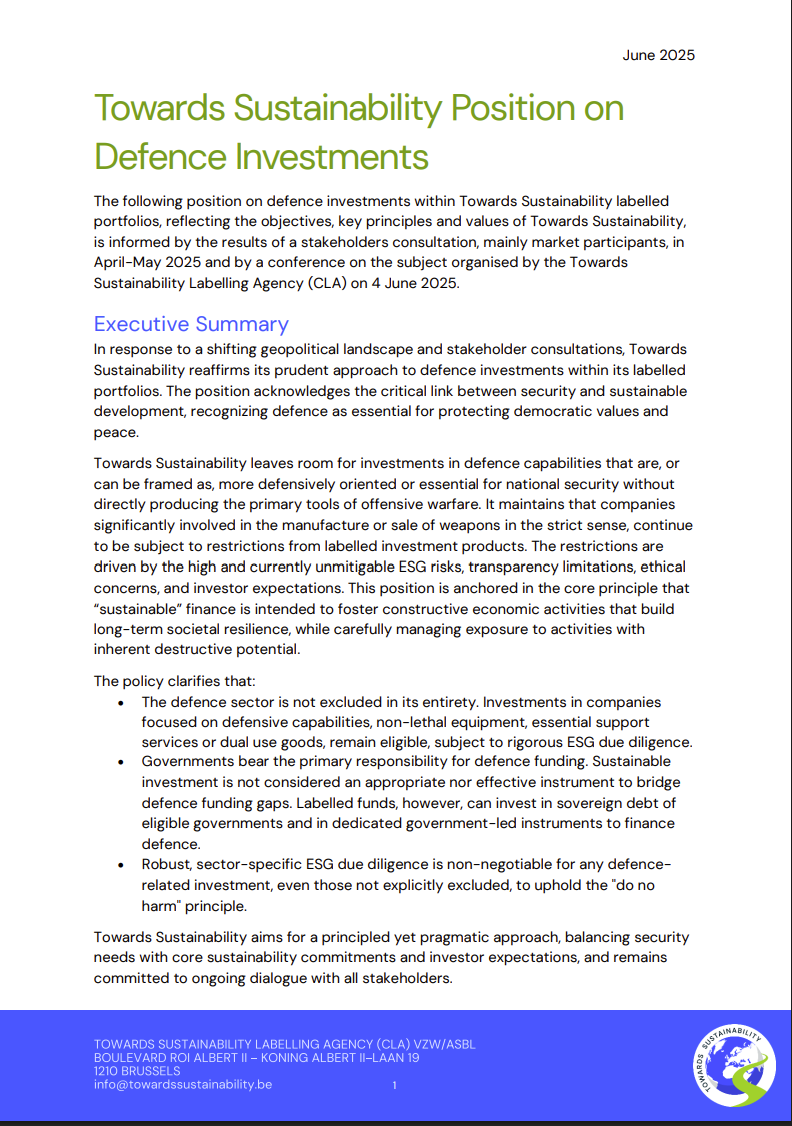
Towards sustainability position on defence investments
The report sets a pragmatic policy on defence investments for Towards Sustainability-labelled funds, permitting defensive, non-lethal and dual-use activities with strict ESG due diligence, while excluding weapons producers. It affirms defence funding as primarily a government responsibility.
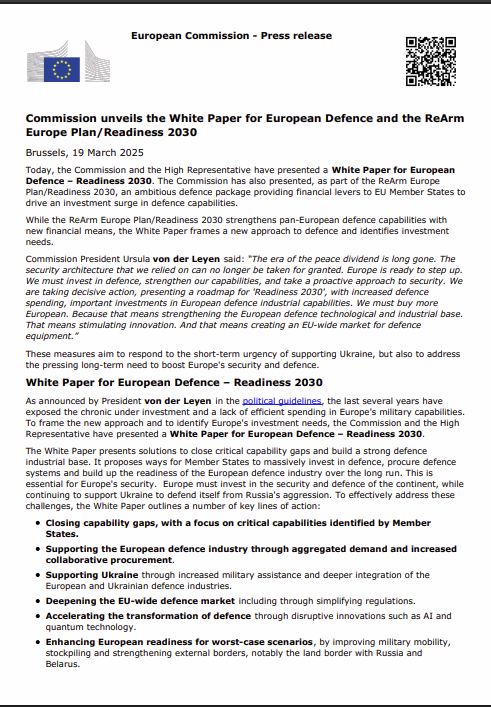
Commission unveils the white paper for european defence and the rearm europe plan readiness 2030
The report outlines the EU’s White Paper on European Defence and the ReArm Europe Plan, targeting defence readiness by 2030 through closing capability gaps, strengthening the defence industrial base, and mobilising over €800 billion via public, EU, and private funding mechanisms.
BPI France: European Defence Bond Framework
Bpifrance’s European Defence Bond Framework defines principles for issuing use-of-proceeds bonds financing eligible defence-sector projects, mainly SMEs, to support European sovereignty. It details eligibility criteria, exclusions, ESG safeguards, governance, reporting, and proceeds management, while stating the bonds are not ICMA-aligned sustainable instruments.
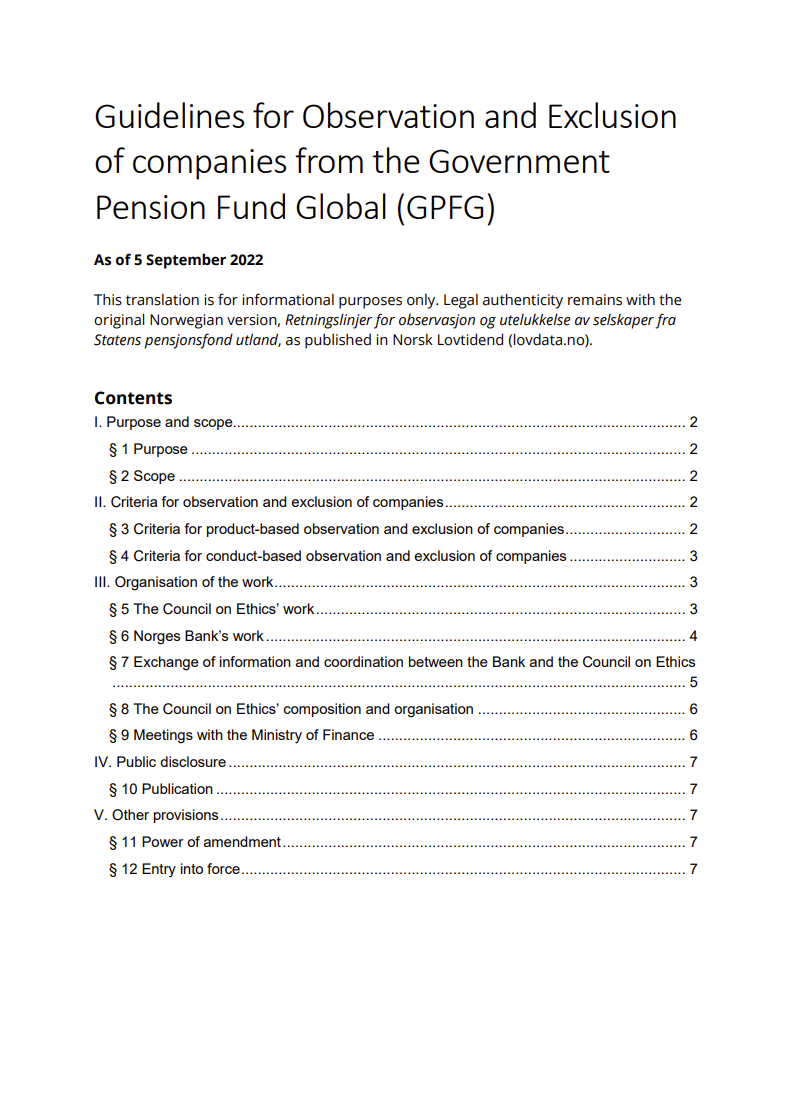
Guidelines for observation and exclusion of companies from the government pension fund global (GPFG)
The guidelines define ethical criteria for observing or excluding companies from Norway’s Government Pension Fund Global. They cover prohibited products, unacceptable conduct, coal thresholds, governance roles of the Council on Ethics and Norges Bank, and transparency requirements for decisions and reviews.
Repurposing power markets: The path to sustainable and affordable energy for all
IFC’s report argues that repurposing power market designs is critical to achieving affordable, reliable and sustainable electricity. Drawing on global data, it finds competitive markets attract private capital, improve access and accelerate renewables, while recommending tailored reforms guided by innovation, integration and institutional strength.
Nature as Shareholder: Who speaks for the Trees?: The opportunities and challenges of nature owning shares of companies
The paper examines the legal and practical implications of nature owning company shares, drawing on New Zealand precedents for legal personhood. It outlines governance models, challenges, and potential impacts on corporate purpose, investment, and long-term decision-making.
Nature-related risks and the duties of directors of Canadian corporations
This legal opinion examines whether nature-related risks are foreseeable and material for Canadian companies. It concludes directors must consider, manage and, where material, disclose such risks to meet fiduciary and care duties under Canadian corporate and securities law.
Green industrial policy’s unfinished business: A publicly managed fossil fuel wind-down
The report argues that green industrial policy must actively manage a fossil fuel wind-down. It contends that renewables expansion alone is insufficient, calling for public planning, regulation, and ownership to ensure equitable decarbonisation and prevent fossil fuel liabilities shifting to the public.

Council on Ethics for the Norwegian Government Pension Fund Global
Council on Ethics for the Norwegian Government Pension Fund Global is a government-appointed body advising on ethical standards for sovereign wealth fund investments. It assesses companies against human rights, environmental and governance criteria, and publishes public recommendations on exclusion or observation to support responsible investment by Norway’s Government Pension Fund Global.

Resilient LLP
Resilient LLP is a specialist climate change and clean energy law firm providing expert legal, policy and regulatory advice to public and private energy companies, governments, financial institutions and NGOs. It focuses on carbon markets, net-zero strategy, sustainable finance and Indigenous rights in the energy transition.
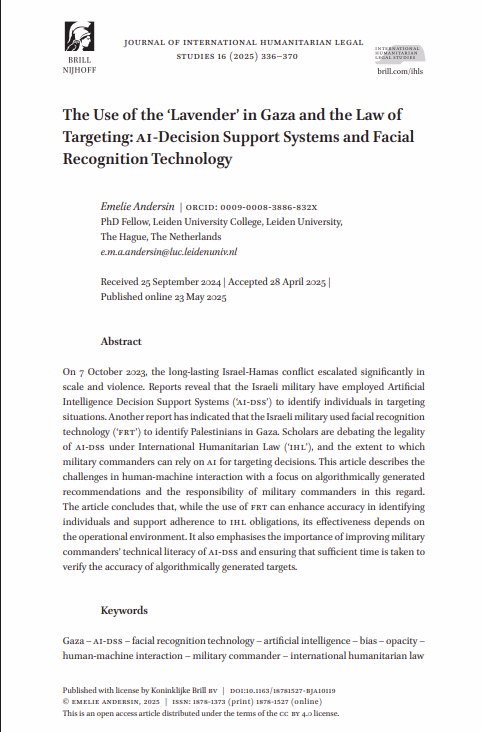
The use of the Lavender in Gaza and the law of targeting: AI-decision support systems and facial recognition technology
The report analyses Israel’s alleged use of the ‘Lavender’ AI decision-support system and facial recognition in Gaza, assessing compliance with international humanitarian law. It highlights risks from inaccuracy, bias, automation and opacity, concluding that commanders must retain judgement and verification to meet targeting obligations.
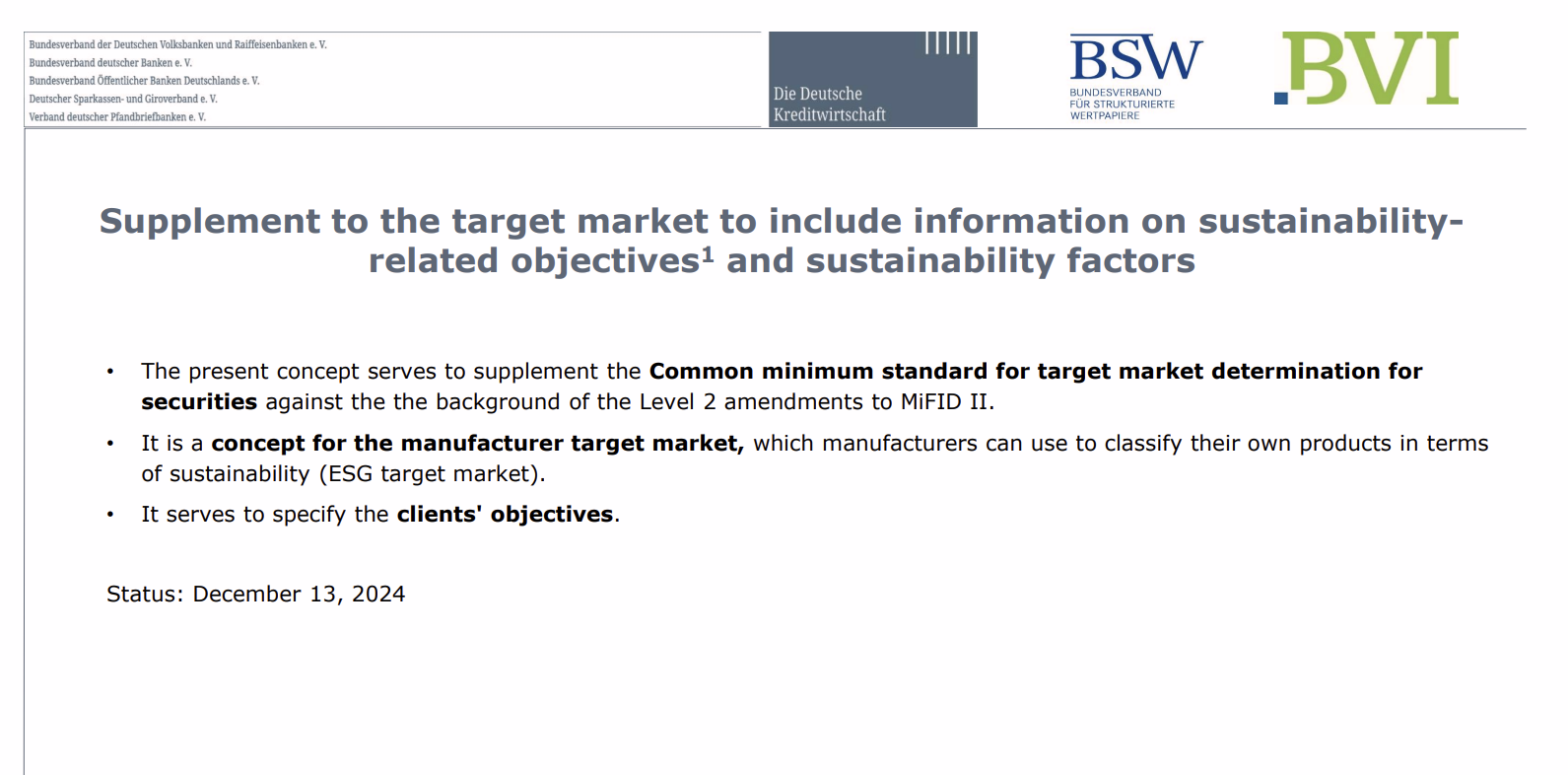
Supplement to the target market to include information on sustainability related objectives1 and sustainability factors
This supplement outlines a framework for classifying financial products by sustainability objectives under MiFID II. It defines ESG target markets, minimum exclusions, PAIs, and alignment with SFDR and Taxonomy rules across securities, funds, bonds, and certificates.


