
Library | Sustainable Finance Practices
Laws and regulations
Government policies, legislation, and regulatory frameworks that shape sustainable finance practice, including mandatory disclosure rules, climate law, financial regulation, and ESG-related requirements.
Refine
190 results
REFINE
SHOW: 16


MDPI
MDPI (Multidisciplinary Digital Publishing Institute) is a Swiss-based publisher of open access, peer-reviewed journals, established in 1996. MDPI publishes over 470 academic journals across science, technology and medicine, with authors covering article processing charges to enable unrestricted global access.
Volatile temperatures and their effects on equity returns and firm performance
This report summarises research on US firms’ exposure to temperature variability and its financial effects. It shows that volatile temperatures reduce profitability, affect consumer demand and labour productivity, and influence investor attention. Portfolios exposed to higher variability underperform, indicating temperature volatility is a material climate risk for firms and investors.
The economics of disclosure and financial reporting regulation: Evidence and suggestions for future research
This report summarises empirical evidence on the economic effects of disclosure and financial reporting regulation. It reviews challenges in identifying causal relationships, assessing costs and benefits, and evaluating market-wide outcomes. The authors highlight limited conclusive evidence and propose priorities for future research to better inform policy and regulatory design.
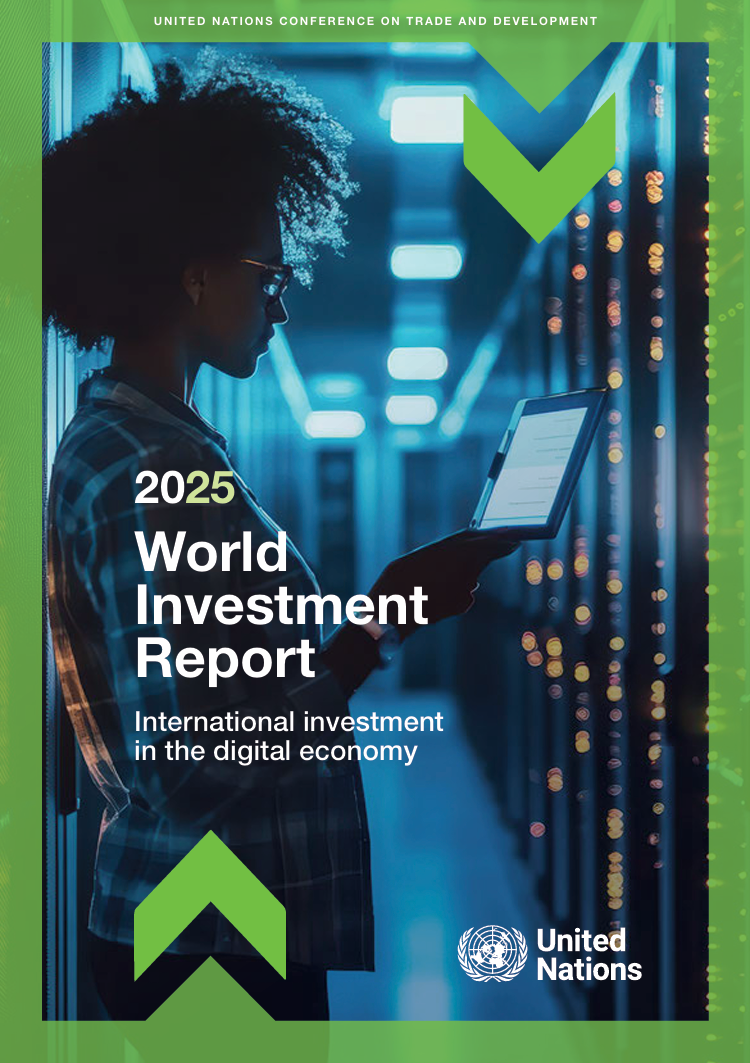
2025 World investment report: International investment in the digital economy
This report summarises international investment trends in the digital economy, focusing on data, digital infrastructure, and technology services. It highlights uneven global distribution, the role of multinational enterprises, and policy implications for sustainable development, emphasising the need for balanced regulatory frameworks and equitable access to digital opportunities worldwide.

United Nations Conference on Trade and Development (UNCTAD)
UN Trade and Development (UNCTAD) is a UN intergovernmental body that supports developing countries in trade, investment, finance and technology. It delivers data-driven policy analysis, technical cooperation and global consensus building to help countries integrate into the world economy and advance sustainable development.
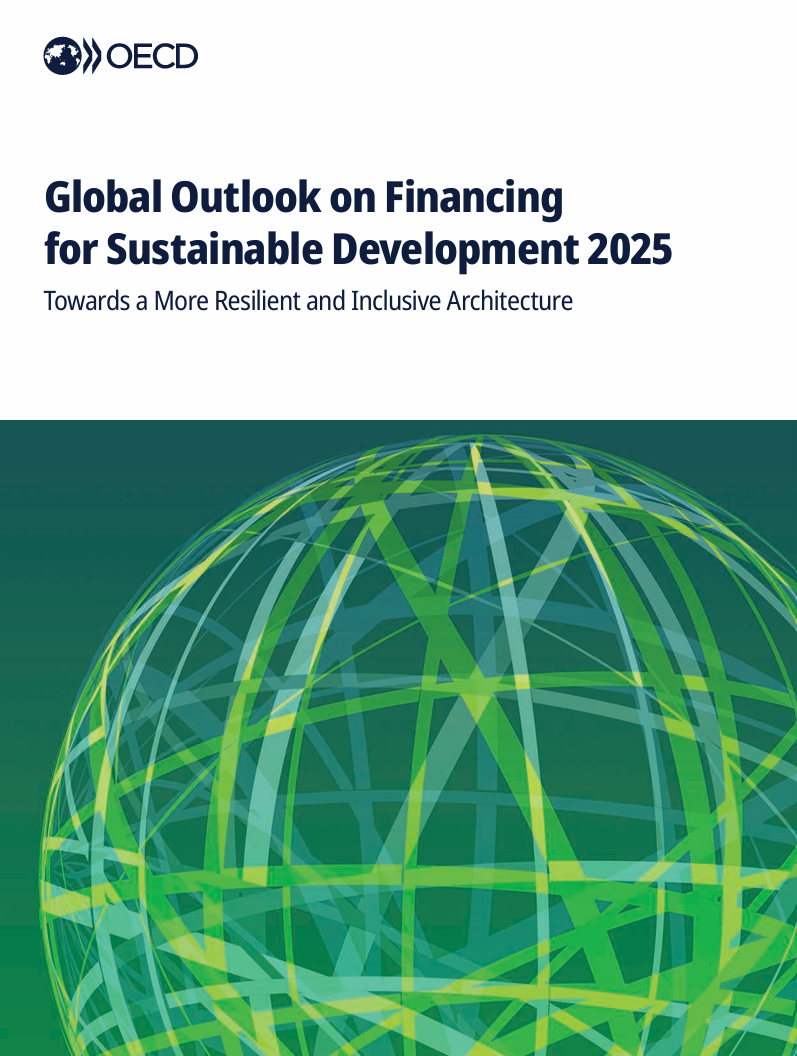
Global outlook on financing for sustainable development 2025: Towards a more resilient and inclusive architecture
This report summarises global financing trends for sustainable development, noting investment gaps in developing economies, heightened debt vulnerabilities, and the need for coordinated reforms. It highlights the importance of blended finance, resilience-building, and aligning the international financial architecture to better support inclusive and sustainable growth.
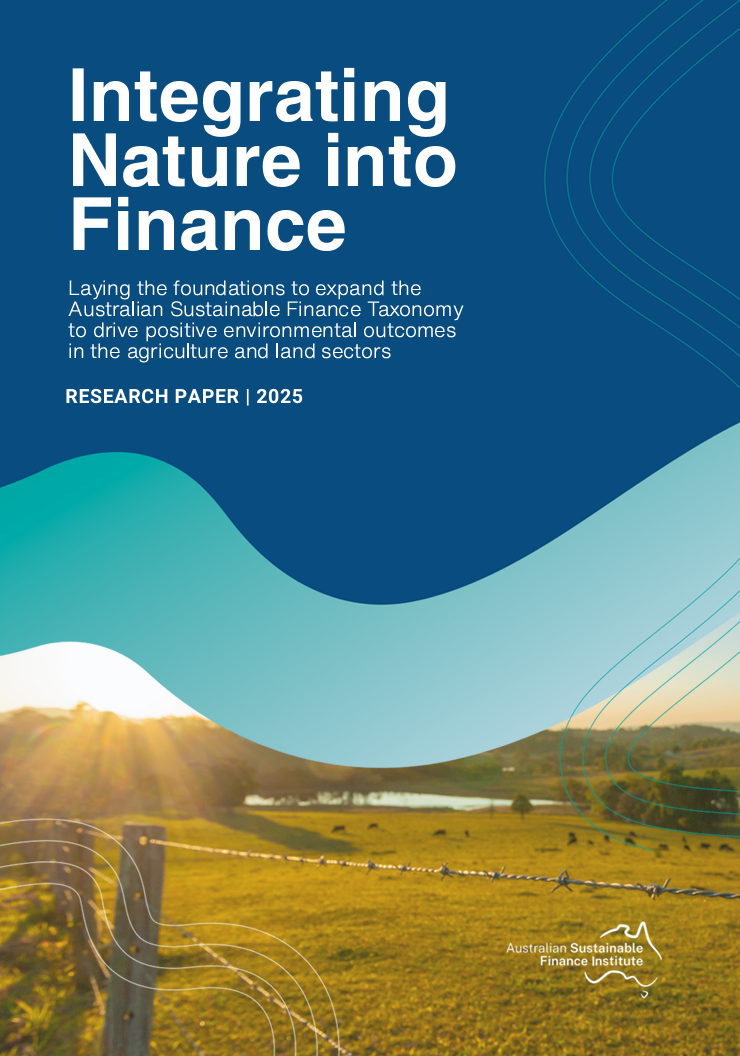
Integrating Nature into Finance: Laying the foundations to expand the Australian Sustainable Finance Taxonomy to drive positive environmental outcomes in the agriculture and land sectors
This report summarises how Australia’s Sustainable Finance Taxonomy could be expanded to agriculture, forestry and land management, proposing draft criteria for biodiversity protection, sustainable water use, and pollution control. It aligns with global biodiversity goals to guide investment and lending that support nature-positive outcome.
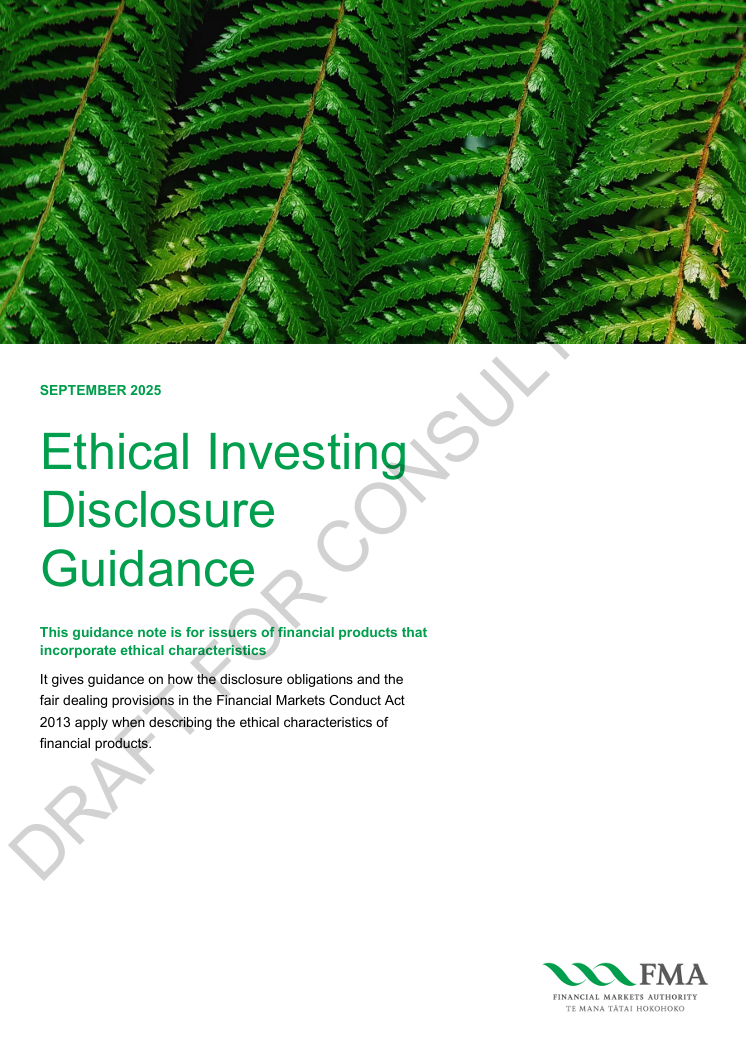
Ethical investing disclosure guidance
This report summarises draft guidance from New Zealand’s Financial Markets Authority on ethical investment disclosure. It sets expectations under the FMC Act, warns against greenwashing, and outlines principles of clarity, substantiation, consistency, and management of third-party involvement to improve transparency and accuracy for investors.
Financial Markets Authority (FMA)
Financial Markets Authority (FMA) is New Zealand’s independent regulator overseeing financial markets. It promotes fair, efficient and transparent markets, ensures quality financial advice and protects investors. FMA develops regulation, supervises licenced entities, enforces compliance, supports innovation and aims to enhance trust in NZ’s financial sector.

EDHEC Climate Institute
EDHEC Climate Institute (ECI) equips finance professionals and decision-makers with climate risk research, tools and scenario analysis. It focuses on physical risks, transition risks, green assets, resilience technologies and climate policy. ECI bridges academia, industry and public stakeholders to support low-emission investment strategies.

EDHEC Business School
EDHEC Business School is an international, triple-accredited (AACSB, AMBA, EQUIS) business school with campuses in Lille, Nice, Paris, London and Singapore. It offers a broad portfolio of programmes like BBA, master's in management, MSc, MBA, PhD and executive education, emphasising research, global partnerships and real-world impact.
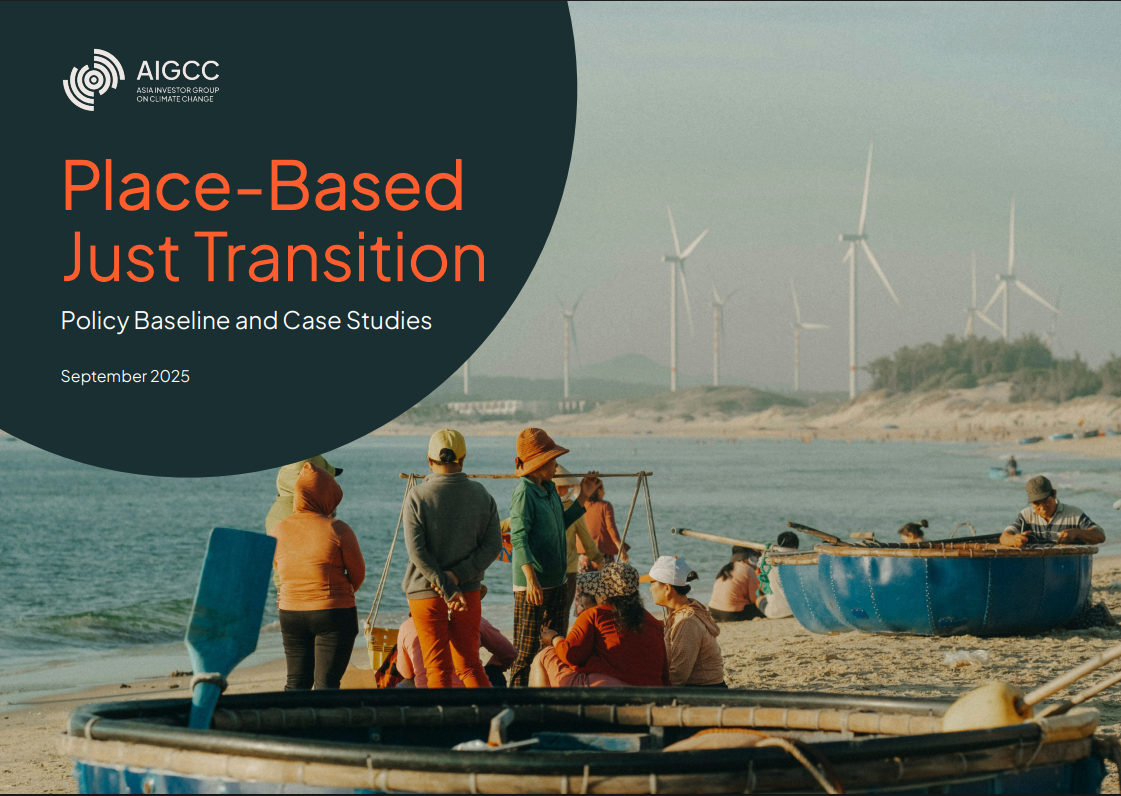
Place-based just transition: Policy baseline and case studies
This report from the Asia Investor Group on Climate Change analyses place-based just transition policies in India, Indonesia, Malaysia and Japan. It outlines market-specific policy baselines, labour and social dynamics, financing needs and case studies, providing investors and policymakers with insights into ensuring equitable low-carbon transitions in Asia.
InforMEA
InforMEA is a UN information portal giving central access to multilateral environmental agreements, including treaty texts, COP decisions, national reports, laws and court rulings. It also hosts a glossary, e-learning courses and tools linking MEAs to global goals.
Federal Ministry of Economic Affairs and Climate Action (BMWK)
Federal Ministry for Economic Affairs and Climate Action (BMWK) is a German government body responsible for economic policy, industrial strategy, energy transition, digitalisation, and climate action. It develops regulations, promotes innovation, supports businesses, and coordinates international cooperation to strengthen Germany’s economic growth while advancing sustainability and climate neutrality goals.
Tobacco Control Research Group (TCRG)
Tobacco Control Research Group (TCRG) at the University of Bath conducts international, multidisciplinary research into the tobacco industry’s influence on health and policy. TCRG generates evidence to support effective tobacco control, informs public health policy, and provides training on industry monitoring and accountability to advance global health outcomes.
Global pricing of carbon-transition risk
This report examines the global pricing of carbon-transition risk by assessing equity markets’ responses to climate policy and transition exposure. It analyses regional variations, sectoral impacts, and the role of carbon pricing in financial markets, highlighting implications for asset valuation and investment strategies.


