Insights | | Water Management: Goals and actions bank

Water Management: Goals and actions bank

19 February 2026

The Water Management Goals and Actions Bank helps finance professionals design and oversee credible approaches to identifying, managing, and mitigating water-related risks and impacts. It provides structured goals, practical actions, and resources to strengthen governance, transparency, accountability, and environmental due diligence across operations, supply chains, and investment decision-making.

AUTHORS

Wafiyah Haque - Research Associate (Goal & action development)
Emmalene Wysocki - Editor & Project Manager

Why addressing water management matters in sustainable finance

Water risk is a core concern in sustainable finance because water scarcity, pollution, and poor water governance create material operational, regulatory, and reputational risks. These impacts often occur across complex supply chains and water-stressed regions. Effective oversight supports resilience, regulatory compliance, ecosystem protection, and long-term value creation.

How water risk management shows up in practice

In practice, addressing water risk informs investment due diligence, site and basin-level risk assessments, supply chain analysis, and active ownership. It helps identify high-risk geographies, assess water dependency and discharge impacts, and strengthen engagement with investee and financed entities. Action may occur directly or through collaborative water stewardship initiatives.

Why it creates responsibilities for financial actors

International environmental standards, water stewardship frameworks, and emerging disclosure regulations set expectations for identifying, managing, and mitigating water-related impacts and dependencies.

For financial actors, this translates into responsibilities for governance, environmental due diligence, risk integration, and stewardship across investment decision-making and engagement with investee and financed entities. Weak oversight can expose institutions to material financial, regulatory, and reputational risks.

What this resource covers

This resource is organised around key sustainable finance practices, including active ownership, ESG analysis and integration, governance and directors’ duties, supply chain due diligence, disclosure, and industry standards. For each practice, it sets out clear goals and practical actions to support credible water risk management and stewardship.

How to use this resource

The goals and actions in this resource are illustrated using specific water risk scenarios and regulatory contexts. These examples are illustrative and should not be read as limiting exposure to particular sectors or regions.

Finance professionals can use this resource to design and strengthen water risk management for material exposures across portfolios and operations.


Active Ownership

This section provides guidance on how investors can use active ownership as a stewardship practice to influence investee behaviour and decision-making on water risks, with stakeholder engagement informing priorities, engagement strategies, and escalation where companies fail to adequately prevent, identify or address water management across their operations and supply chains.

Strengthen corporate water management practices

Actions extracted from: Investor Water Toolkit

Actions:

1. Engage portfolio companies on water risks

Develop and implement structured engagement strategies with portfolio companies to address water-related risks and opportunities. This includes conducting dialogues, setting clear expectations on water stewardship, and using tools such as letters and collaborative initiatives to drive improved water management practices.

2. Incorporate water KPIs in investment policies

Establish key performance indicators (KPIs) related to water governance, risk management, and performance within investment policies. This supports monitoring of corporate progress and encourages companies to strengthen their water management practices in line with sustainability objectives.

3. Promote transparency through disclosure

Encourage companies to improve water-related disclosure using recognised reporting frameworks (e.g. CDP, GRI, SASB). Strengthening transparency on water use, risks, and management practices enhances accountability and enables more informed investment decision-making.

Mobilise capital for scalable water resilience solutions

Actions extracted from: Handbook for the implementation of nature-based solutions for water security: Guidelines for designing an implementation and financing arrangement

Actions:

1. Strengthen development of full Five Case business models

Encourage the articulation of strategic, economic, commercial, financial and management cases—covering project rationale, value for money, delivery model, financing structure, and governance—to improve investment readiness and make water resilience projects more bankable for public and private investors.

2. Advance hybrid green-grey project clustering approaches

Support the phased development of hybrid (nature-based and engineered) infrastructure solutions within broader investment pathways, enabling scalable implementation and the aggregation of projects into investable pipelines that can attract larger pools of capital.

3. Support blended finance structuring

Encourage the alignment of taxes, tariffs and transfers (3Ts)—the main sources of funding for water projects—with public and private financing mechanisms to mobilise private capital, close financial viability gaps and ensure long-term financial sustainability.

Align stewardship with national adaptation and resilience priorities

Actions extracted from: Handbook for the implementation of nature-based solutions for water security: Guidelines for designing an implementation and financing arrangement

Actions:

1. Promote alignment with climate adaptation and water security strategies

Encourage alignment of project and investment strategies with broader climate adaptation, water security and resilience planning frameworks, ensuring that investments contribute to systemic risk reduction and long-term sustainability.

2. Support integration of resilience considerations into financial planning

Encourage the incorporation of climate adaptation and water resilience considerations into funding, financing and investment planning processes, strengthening the economic viability and long-term performance of projects.

3. Prioritise action where water-related risks threaten system resilience

Identify and prioritise contexts where water insecurity and climate risks undermine service delivery and economic stability, and support the development of investment strategies that address these systemic vulnerabilities.

Effective Communication and Greenwash

This section provides guidance on effective communication as a practice for transparently describing modern slavery risk identification, due diligence, engagement, and remediation efforts. Clear disclosure supports informed decision-making, strengthens accountability, and reduces the risk of misleading, boilerplate, or unsubstantiated statements about labour practices and supply chain oversight.

Strengthen credibility of water-related disclosures

Actions extracted from: Investors can assess nature now: A guide to assessing water and deforestation issues in investment portfolios

Actions:

1. Encourage structured and decision-useful disclosure of water-related risks, impacts and dependencies

Promote the use of recognised frameworks and methodologies (e.g. TNFD, SBTN) to ensure disclosures move beyond high-level statements and clearly describe material water-related risks, impacts and dependencies in a consistent and comparable manner.

2. Require clear differentiation between water use metrics and water risk exposure

Ensure companies distinguish between water use indicators (e.g. withdrawal, consumption, intensity) and broader water risk exposure—including physical, regulatory and reputational risks—to avoid misleading interpretations based solely on efficiency metrics.

3. Improve transparency on location-specific and supply chain water risks

Encourage disclosure of water-related risks across operations and supply chains at relevant geographic levels (e.g. river basins), including exposure in water-stressed areas, to avoid incomplete or generic reporting and enable more accurate assessment of material risks.

Improve robustness and credibility of nature-based solution assessments

Actions extracted from: Handbook for the implementation of nature-based solutions for water security: Guidelines for designing an implementation and financing arrangement

Actions:

1. Strengthen lifecycle cost analysis (LCCA)

Encourage the assessment and disclosure of total lifecycle costs, including capital, operational and maintenance costs, to enable more transparent and comparable evaluation of nature-based and grey infrastructure options.

2. Apply comprehensive social cost-benefit analysis (SCBA)

Promote the use of economic appraisal methods that capture environmental, social and economic benefits and trade-offs, improving the credibility and robustness of investment cases for nature-based solutions.

3. Clarify levels of service and performance over time

Ensure that expected service levels, performance metrics and timelines are clearly defined and assessed, enabling more accurate evaluation of how nature-based solutions deliver outcomes over their lifecycle.

Improve transparency and clarity in communicating nature-based solution value and performance

Actions extracted from: Handbook for the implementation of nature-based solutions for water security: Guidelines for designing an implementation and financing arrangement

Actions:

1. Clearly articulate assumptions, trade-offs and uncertainties in project appraisals

Encourage transparent communication of underlying assumptions, limitations and trade-offs in economic and financial analyses to avoid overstating benefits and ensure stakeholders can assess project credibility.

2. Communicate full value propositions using robust economic and financial analysis

Promote the use of structured appraisal approaches (e.g. cost-benefit analysis, lifecycle costing) to clearly demonstrate the economic, environmental and social value of nature-based solutions, strengthening the credibility of claims.

3. Ensure consistent communication of expected service levels and performance over time

Encourage clear definition and disclosure of expected outcomes, performance metrics and timelines to distinguish evidence-based projections from high-level or narrative claims.


ESG Analysis & Integration

This section provides guidance on modern slavery risk analysis and integration as practices through which labour rights risks are identified, assessed, and incorporated into investment decision-making, credit assessment, procurement, and underwriting. It supports systematic human rights due diligence and the integration of material modern slavery risks into financial analysis and oversight.

Integrate water-related climate risk into financial risk assessment and decision-making

Actions extracted from: Climate change risk index and municipal bond disclosures of United States drinking water utilities

Actions:

1. Incorporate multi-dimensional climate-water risk metrics into risk assessment frameworks

Integrate indicators of climate hazard, exposure and vulnerability into financial and credit risk assessment processes, enabling more comprehensive and forward-looking evaluation of water-related climate risks.

2. Identify and assess misalignment between physical risk and risk disclosure

Compare projected climate risk with existing disclosures (e.g. municipal bond statements) to identify entities with high exposure but limited risk awareness, supporting more informed investment and oversight decisions.

3. Prioritise high-risk entities for targeted financial and resilience planning interventions

Use risk assessment outputs to identify high-priority utilities or issuers that require enhanced adaptation planning, financial support, or revised risk assessment, particularly where high physical risk is not reflected in current financial decision-making.

Strengthen economic appraisal to support investment decision-making in water resilience projects

Actions extracted from: Handbook for the implementation of nature-based solutions for water security: Guidelines for designing an implementation and financing arrangement

Actions:

1. Integrate lifecycle cost analysis into project appraisal

Incorporate total lifecycle costs—including planning, construction, operation and maintenance—into appraisal processes to enable transparent and robust comparison between nature-based and grey infrastructure options.

2. Reflect cost structures and timing of costs and benefits in financial planning

Account for differences in capital and operational expenditure profiles, as well as the timing of costs and benefits, to improve the accuracy of financial feasibility assessments and investment planning.

3. Incorporate environmental, social and resilience benefits into economic analysis

Include ecosystem services, avoided losses and broader system resilience benefits in economic appraisal to better capture the full value of nature-based solutions and support more informed investment decisions.

Align ESG screening and risk assessment with nature-related frameworks and tools

Actions extracted from: Investors can assess nature now: A guide to assessing water and deforestation issues in investment portfolios

Actions:

1. Apply sector materiality approaches to prioritise water-related risks

Use sector-based prioritisation approaches to identify industries with high dependence on and impact on water resources, enabling more targeted risk assessment and engagement on material water issues.

2. Integrate geographic risk analysis into portfolio screening

Overlay portfolio holdings with location-specific risk data (e.g. basin-level water stress) to identify assets exposed to water-related risks in high-risk regions and improve risk visibility.

3. Incorporate water-related dependencies and impacts into ESG assessment frameworks

Embed consideration of freshwater dependencies, impacts and risk exposure into ESG analysis processes to support more systematic integration of nature-related risks into investment decision-making.


Governance and directors’ duties

This section provides guidance on governance and directors’ duties as the structures and responsibilities through which boards and senior leaders oversee modern slavery risks, strengthen accountability, and embed human rights due diligence into strategy, risk management, and oversight across operations, supply chains, and investment activities.

Embed water resilience into enterprise risk governance

Actions extracted from: Fast-tracking net zero by building climate and economic resilience: A summary for policymakers

Actions:

1. Integrate climate-water adaptation into board risk oversight mandates

Assign explicit board and committee responsibility for overseeing water-related climate risks by embedding adaptation and resilience considerations into enterprise risk management frameworks and governance charters.

2. Align capital allocation decisions with resilience objectives

Require boards to assess and approve major capital investments against defined climate adaptation and water resilience criteria to ensure alignment with long-term risk and resilience strategies.

3. Establish board-level monitoring and reporting on resilience performance

Mandate regular reporting to the board on water adaptation metrics, implementation progress, and risk exposure to support effective oversight, challenge, and accountability.

Strengthen governance of nature-based infrastructure delivery

Actions extracted from: Handbook for the implementation of nature-based solutions for water security: Guidelines for designing an implementation and financing arrangement

Actions:

1. Oversee selection of appropriate governance and delivery models for NbS projects

Ensure boards oversee the choice of project delivery and governance structures (e.g. public procurement, stewardship approaches, collective arrangements) so they align with the characteristics of the infrastructure and support long-term financial and operational sustainability.

2. Ensure appropriate allocation of lifecycle risks and responsibilities

Require oversight of contractual and institutional arrangements to ensure that construction, operational and performance risks are allocated to parties best able to manage them, supporting effective delivery and long-term project viability.

3. Embed clear service-level expectations into governance and oversight frameworks

Ensure that measurable performance standards and service levels are defined and incorporated into governance arrangements and oversight processes to support accountability and effective long-term management.

Strengthen accountability for water-related risk oversight

Actions extracted from: Investor Water ToolkitFast-tracking net zero by building climate and economic resilience: A summary for policymakers

Actions:

1. Assign clear board-level responsibility for water-related risk oversight

Ensure that responsibility for overseeing water-related risks and opportunities is explicitly allocated to the board and relevant committees, embedding accountability within governance structures and enterprise risk management processes.

2. Integrate water-related risks into strategic decision-making and risk management frameworks

Require boards to incorporate water-related risks into corporate strategy, risk management systems and long-term planning processes, ensuring alignment with broader climate resilience objectives.

3. Establish regular board-level reporting and review of water-related risks and performance

Mandate consistent reporting to the board on water risk exposure, management actions and performance outcomes to support ongoing oversight, challenge and accountability.


Impact Measurement & Verification

This section provides guidance on impact measurement and verification as practices for assessing, tracking, and validating outcomes related to modern slavery risk management, worker protections, and remediation. It supports credible disclosure, strengthens accountability, and helps ensure that due diligence and engagement efforts translate into meaningful risk reduction and improved labour outcomes.

Measure water impacts at the basin level to reflect system-wide outcomes

Actions extracted from: Investor Water Toolkit; Investors can assess nature now; NbS Handbook

Actions:

1. Track water risk and performance at the basin or watershed level

Measure water-related impacts and risks using basin-level indicators to reflect shared resource pressures and cumulative impacts, rather than relying solely on site-level metrics.

2. Incorporate location-specific data into impact measurement frameworks

Use geographic and hydrological data (e.g. water stress, scarcity, ecosystem condition) to assess whether operations and interventions contribute to or alleviate local water risks.

3. Assess system-level outcomes of water management interventions

Evaluate whether actions lead to measurable improvements in water availability, quality, and ecosystem resilience at the system level, rather than focusing only on operational efficiency or activity-based metrics.

Strengthen use of robust and comparable water metrics and indicators

Actions extracted from: Investor Water Toolkit; Investors can assess nature now

Actions:

1. Use standardised and decision-useful water metrics

Adopt consistent metrics that capture water use, risk exposure, and impacts (e.g. withdrawal, consumption, basin stress) to improve comparability and support meaningful performance assessment.

2. Differentiate between operational performance metrics and water risk indicators

Ensure measurement frameworks distinguish between efficiency metrics (e.g. intensity) and broader indicators of water risk, including physical, regulatory and reputational dimensions.

3. Track changes in water risk exposure and management performance over time

Monitor trends in water-related risks and management outcomes to assess whether company actions are reducing exposure and improving resilience.

Strengthen verification and credibility of water-related impact claims

Actions extracted from: Investor Water Toolkit; NbS Handbook

Actions:

1. Validate water-related performance using credible data sources and methodologies

Ensure that reported outcomes are supported by reliable data, transparent methodologies, and appropriate assumptions to strengthen confidence in impact claims.

2. Align reported outcomes with measurable performance standards and targets

Link disclosures and reporting to clearly defined indicators, baselines and targets to enable verification of progress and outcomes.

3. Encourage independent review or assurance of water-related data and outcomes

Promote the use of third-party verification or assurance processes to validate reported water impacts and strengthen accountability.


Industry Standards & Guidance

This section provides guidance on international human rights standards, modern slavery legislation, voluntary frameworks, and industry guidance that shape expectations for identifying, preventing, mitigating, and remedying modern slavery risks across operations, supply chains, and investment activities, supporting responsible conduct and regulatory alignment.

Align water-related disclosure and risk management with recognised global frameworks

Actions derived from: TNFD; CDP Water Watch Impact Index; GRI 303: Water and Effluents

Actions:

1. Apply recognised disclosure frameworks to identify and report water-related risks and impacts

Use established standards (e.g. TNFD, CDP, GRI) to guide consistent identification, assessment and disclosure of water-related dependencies, impacts and risks.

2. Integrate water-related metrics into financial and sustainability reporting processes

Ensure water-related risks and performance are incorporated within broader ESG and financial disclosures using standardised, decision-useful indicators.

3. Align reporting with financially material water risk metrics

Adopt industry-recognised metrics that capture material water risks and performance to support comparability and investor decision-making.

Apply water stewardship standards to manage shared water resources and basin-level risks

Actions derived from: Alliance for Water Stewardship (AWS); UN CEO Water Mandate; OECD Water Governance Principles

Actions:

1. Adopt recognised water stewardship standards to guide corporate water management practices

Align operations and supply chains with established stewardship frameworks that emphasise sustainable water use, stakeholder engagement and basin-level accountability.

2. Incorporate basin-level context into water management and decision-making

Apply guidance that recognises water as a shared resource, requiring coordination with local stakeholders and alignment with watershed conditions.

3. Support collective action to address shared water risks

Engage in multi-stakeholder initiatives and partnerships to manage water risks at the basin level and contribute to long-term water security.

Align investment and financing practices with recognised water resilience and sustainable infrastructure guidance

Actions derived from: Climate Bonds Initiative Water Criteria; World Bank/OECD guidance

Actions:

1. Apply recognised frameworks to structure and finance water-related investments

Use established approaches (e.g. sustainable finance taxonomies) to guide funding strategies and improve financial sustainability of water projects.

2. Align investment decisions with water resilience and sustainability criteria

Ensure capital allocation reflects recognised guidance on climate adaptation, water security and long-term infrastructure resilience.

3. Support development of credible, investable water project pipelines

Use structured project preparation and financing approaches to scale investment in water resilience and sustainable infrastructure.


Covered resources

Investor water toolkit

Ceres
Published by Ceres, this is a first ever comprehensive resource to evaluate and act on water risks in investment portfolios. This how to guide includes links to resources, databases, case studies and other tools for all investors to use.
Research
10 April 2024

Handbook for the implementation of nature-based solutions for water security: Guidelines for designing an implementation and financing arrangement

This handbook offers operational advice and project preparation guidelines, including hands-on formats that project proponents can use continuously and iteratively to develop the entire business case of NbS, enabling them to go from the idea stage towards an investment proposal or investment project stage that can be effectively assessed by potential investors. To illustrate the use of these guidelines the handbook presents the results of their application to three cases in Europe within the NAIAD project and to one case in Asia that was part of the Water as Leverage for Resilient Cities Asia programme.
Research
13 March 2021

Investors can assess nature now: A guide to assessing water and deforestation issues in investment portfolios
First Sentier Investors
First Sentier Investors presents a five-step approach for sector and company-level assessments of nature and biodiversity with a focus on freshwater and forests.
Research
13 September 2023

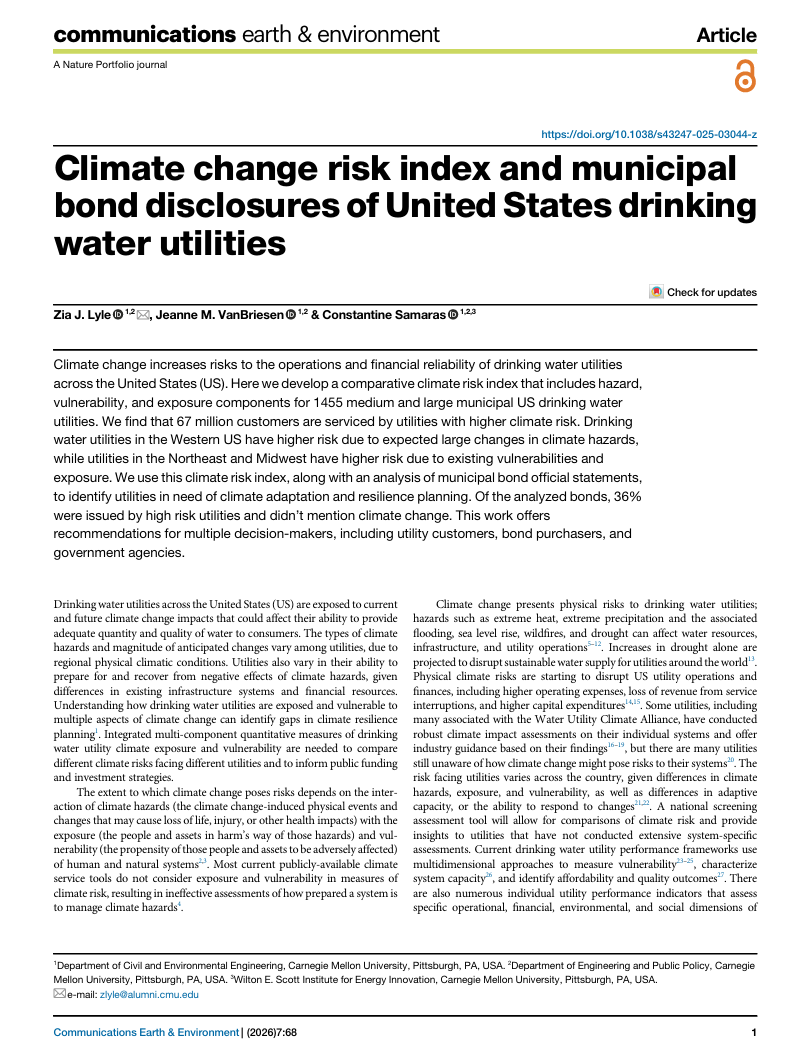
Climate change risk index and municipal bond disclosures of United States drinking water utilities

This study develops a climate risk index for 1,455 US municipal drinking water utilities and compares projected risks with municipal bond disclosures. It finds material mismatches between climate risk and disclosure, highlighting utilities where climate adaptation and financial risk management may be insufficient.
Research
22 January 2026

Tools

AQUEDUCT Floods

World Resources Institute
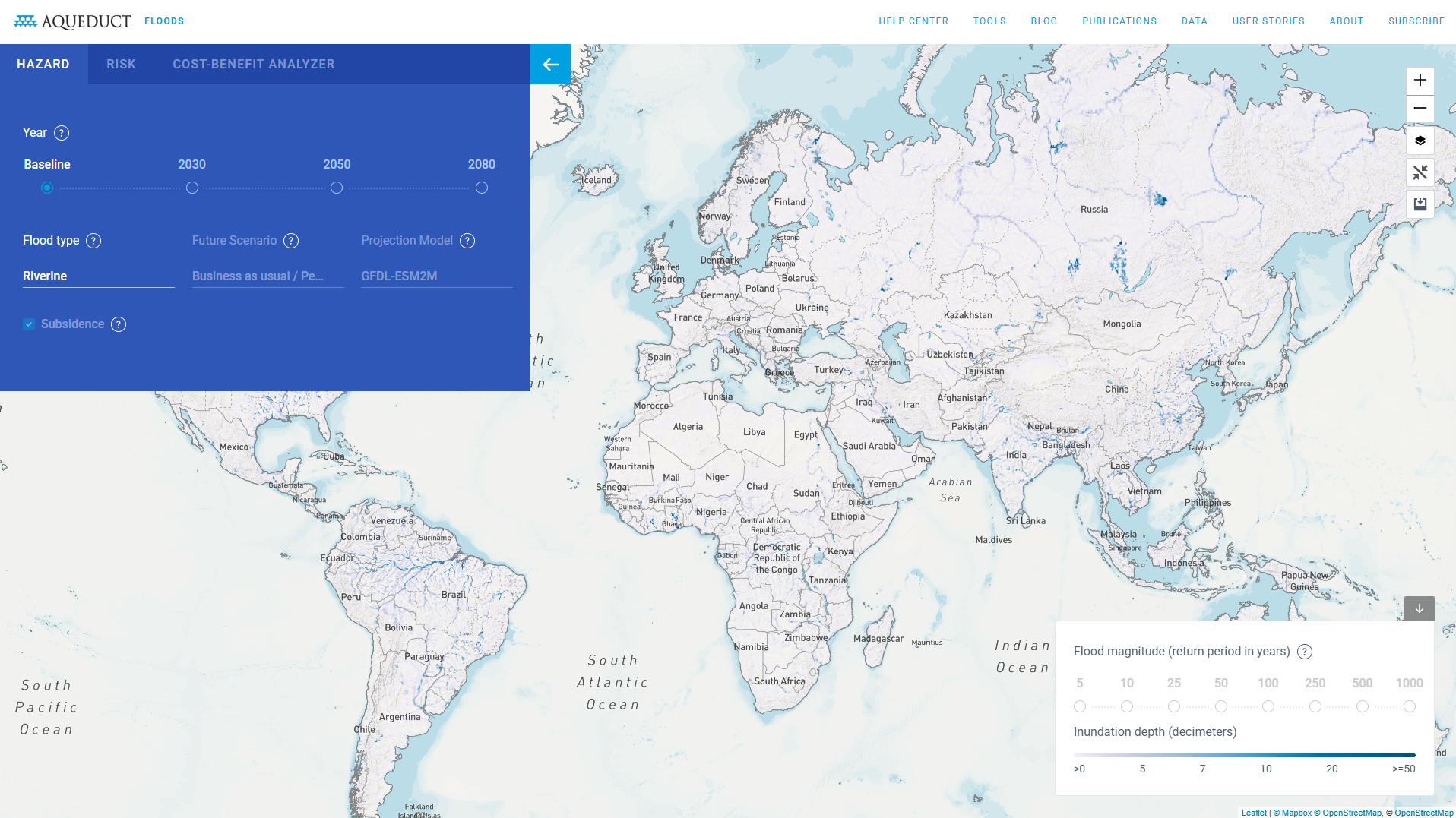
Aqueduct Floods is an interactive tool by WRI that maps current and projected riverine and coastal flood risk globally. It enables users to assess exposure, urban damage, and economic impacts under different climate scenarios, supporting risk analysis, resilience planning, and investment decision-making at country and sub-national levels.
Online tool/database

WESR: Water

United Nations Environment Programme
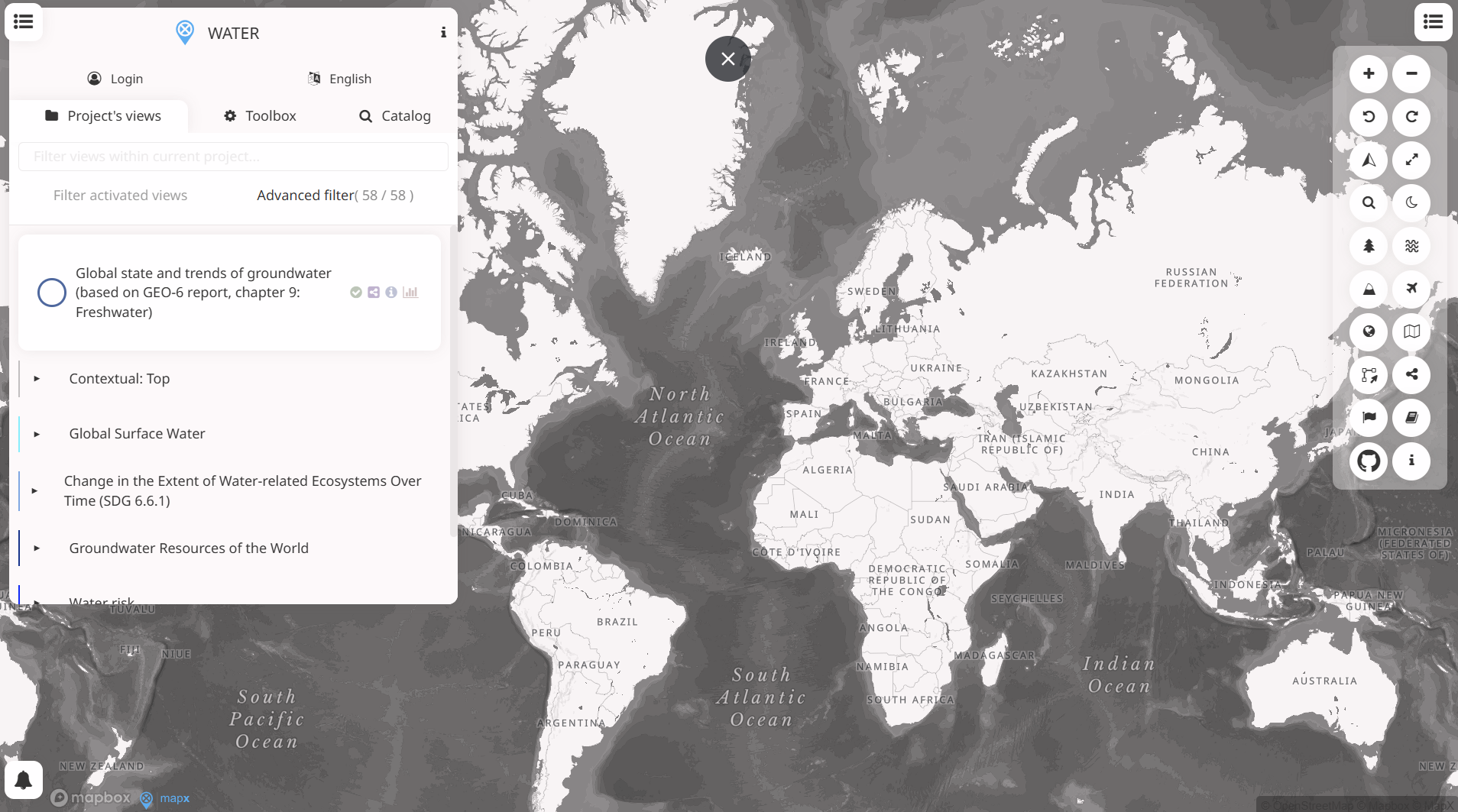
WESR – Water provides geospatial insights on water availability, stress, and related risks. It supports location-based assessment of water-related exposure, enabling finance professionals to integrate water risk considerations into investment analysis, risk management, and sustainability decision-making.
Online tool/database

Freshwater ecosystem explorer

United Nations Environment Programme
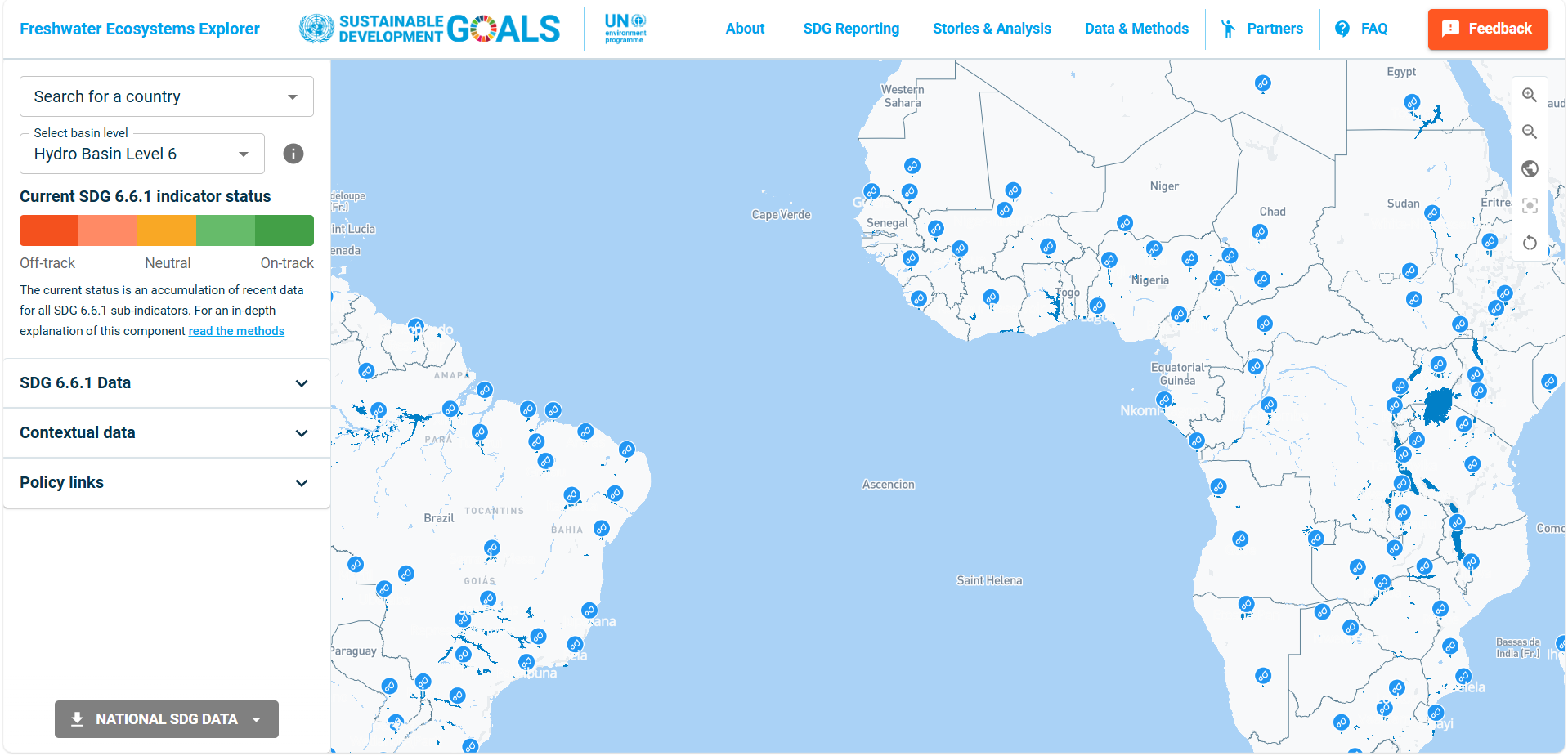
FreshExplorer is an interactive mapping tool that displays data on water, sanitation, and hygiene services globally, assisting policymakers and researchers to view coverage statistics, trends, and service gaps. The platform enables data exploration by country, service type, and time period, using Aus/UK spelling and grammar conventions.
Online tool/database

Water footprint assessment tool

Water footprint network
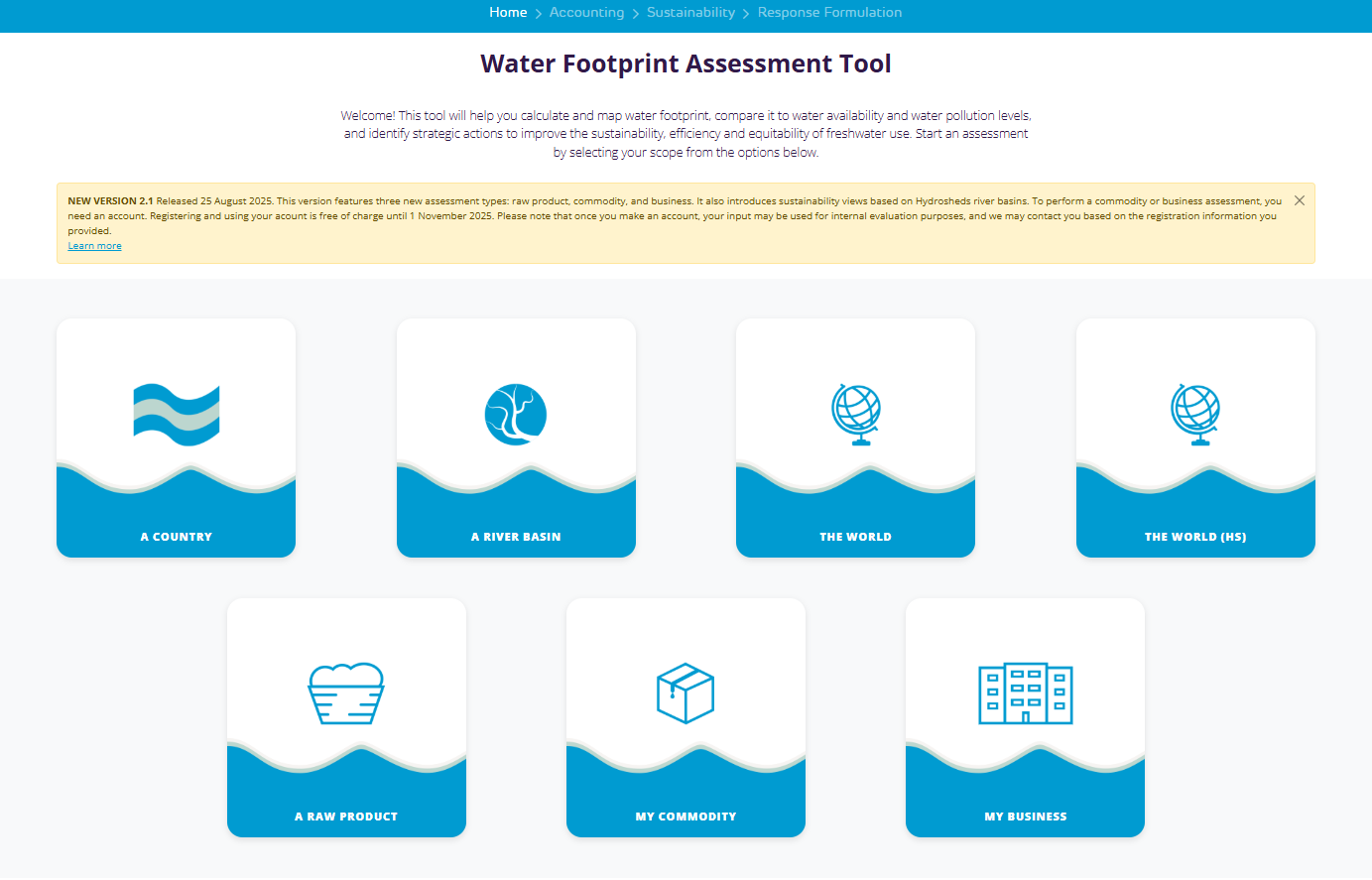
The Water Footprint Assessment Tool is a free online application that enables businesses, governments, investors, NGOs and researchers to calculate and map green, blue and grey water footprints, assess sustainability, efficiency and equitable water use, and identify strategic actions to improve water management.
Online tool/database

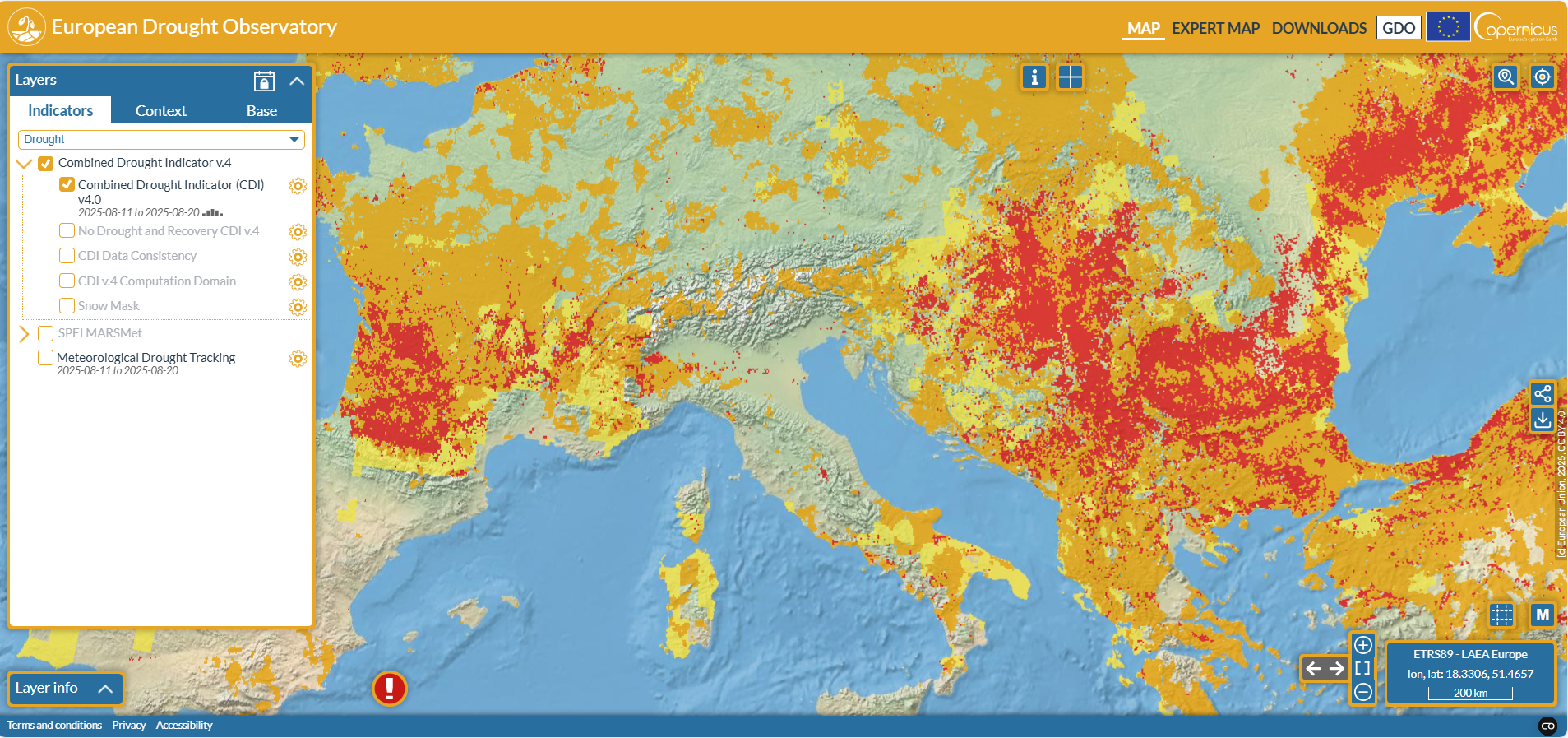
European drought observatory

Joint Research Centre
Copernicus’ European Drought Observatory (EDO) mapviewer displays up‑to‑date drought indicators—such as soil moisture, low‑flow, precipitation and the Combined Drought Indicator—across Europe. Users can access, view and download data freely, though caution is advised interpreting some hydrological outputs east of Poland since mid‑May 2025.
Online tool/database

Aqueduct Country Risk Rating

World Resources Institute
This spatial tool shows countries and provinces' average exposure to six of the Aqueduct 3.0's water risk indicators: baseline water stress, riverine flood risk, and drought risk.
Online tool/database

Aqueduct Water Risk Atlas

World Resources Institute
Aqueduct's global water risk mapping tool helps companies, investors, governments, and other users understand where and how water risks and opportunities are emerging worldwide. The Atlas uses a robust, peer reviewed methodology and the best-available data to create high-resolution, customizable global maps of water risk.
Online tool/database

CDP Water Watch Impact Index

CDP
The CDP's water watch impact index tool makes a qualitative assessment of impact on freshwater resources at different stages of the value chain, based on independent and trusted academic, scientific and industry-recognized sources. Its focus on environmental impact distinguishes it from tools that measure business risks posed by water.
Online tool/database

Carbon Disclosure Project (CDP) forest and water risk scores

The CDP Scores page provides access to the latest environmental performance assessments of companies and cities. It features the A Lists, highlighting leaders in environmental transparency and action. Users can view detailed scores and responses to understand entities' environmental strategies and progress.
Online tool/database

WWF water risk filter

World Wide Fund for Nature (World Wildlife Fund – WWF)
The WWF Water Risk Filter is an online tool that helps businesses and investors assess, understand, and respond to water-related risks globally. It offers comprehensive data, including customised risk assessments and mitigation strategies, enabling informed decision-making to manage water risks effectively.
Online tool/database

If you would like to suggest highly relevant resources to include in this resource, please submit your ideas to our Content suggestion form. Be sure to mention it is for this resource in the comments box at the end of the form.


Join or sign in to use Alma, Altiorem’s AI Agent. While the Altiorem library is free, Alma is exclusive to paying subscribers.