

IGCC Climate Finance and Investment Summit 2026 - Companion Resources
IGCC’s Climate Finance and Investment Summit 2026 brings institutional investors, policymakers and industry together on 24–25 November 2026 to ask whether climate is rising or falling on the investment agenda in a more fragmented, geopolitically charged world. These companion resources have been specially curated for each summit session.


CPD Bonus, take the Altiorem Summit Quiz and receive certificate of completion!
One free fully referenced Alma deep dive on a summit topic.
50% off Gold or Platinum membership for summit attendees.
MORNING SESSIONS: Tuesday 24 November 2026
Keynote Address: Arabella Douglas (9.20am)
Speakers: Arabella Douglas
Altiorem Suggested Resources
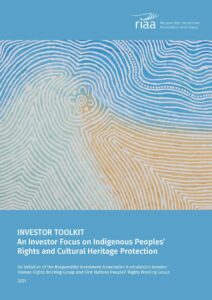 Investor toolkit: An investor focus on Indigenous Peoples’ rights and cultural heritage protectionThis toolkit guides investors on how to assess a company’s relationship with Indigenous stakeholders and its respect for their cultural heritage. The toolkit explains the impact of those issues on long-term financial value before providing detailed guidance on what investors should look for in a company’s disclosure and engagement practices. Chat with the reportVisit the summary page
 Indigenous investment principlesThis investment framework is for Indigenous organisations with accumulated capital. It outlines principles that empower local organisations to take control of their financial assets. It guides thinking about the purpose, governance and investment of financial resources to better protect interests for current and future generations, particularly for culture and heritage.Chat with the reportVisit the summary page
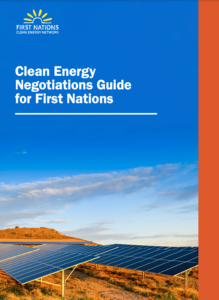 Clean energy negotiations guide for First NationsThis guidebook provides insights for First Nations communities in Australia to negotiate clean energy projects with companies seeking to establish projects on their land. The guide covers steps to prepare, the unity of representation, access to expert advice, negotiations, and the benefits and opportunities for First Nations people.Chat with the reportVisit the summary page
 Dhawura Ngilan – Business and investor initiative: A guide for businesses and investorsThis report provides guidance for businesses and investors to respect Aboriginal and Torres Strait Islander heritage rights and implement environmental, social, and corporate governance principles. The Dhawura Ngilan (Remembering Country) vision is outlined and detailed recommendations for ethical investment practices are provided.Chat with the reportVisit the summary page
Keynote Address: Daryl H. K. Ho (9.40am)
Speakers:
Daryl Ho
A New Investment Reality: Is Climate Rising or Falling on the Agenda? (9.50am)
Speakers: Rebecca Mikula-Wright, Kristian Fok, Daryl Ho & Elizabeth Thurbon
The investment landscape is undergoing a structural reset. Geopolitical disruption, fragmented markets, and strategic rivalry are reshaping how institutional investors allocate capital, assess risk and manage returns. Some argue climate is losing ground, crowded out by competing priorities, policy reversals and short-term market pressure. Others argue the opposite: this new world makes climate more important than ever, sitting at the centre of energy security and the most significant infrastructure opportunity of the decade. This session addresses the question directly.
Altiorem Suggested Resources
 The Big Fix Resource CollectionThe Big Fix is a resource hub from Resilience.org and the Post Carbon Institute focused on systemic resilience. It provides curated research and news to help professionals understand and navigate the interconnected ecological and economic challenges of the 21st-century polycrisis.Visit the summary page
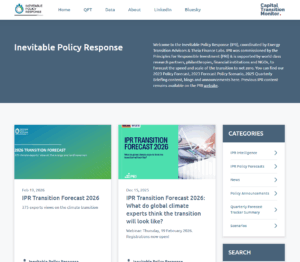 Inevitable Policy ResponseInevitable Policy Response (IPR) on ipr.transitionmonitor.com is a climate policy data and forecast platform that tracks global policy developments, scenarios and variables to help investors assess climate transition risk and alignment of portfolios with likely policy outcomes. It is supported by PRI and research partners.
Inevitable Policy Response (IPR) Transition Monitor is an online climate policy data platform tracking expected government climate actions by country and sector. It helps investors assess transition risk, forecast policy impacts and align portfolios with likely policy pathways to net-zero, based on expert forecasts and quarterly updates.
Visit the summary page Taking the lead on climate action and sustainable development: Recommendations for strategic national transition planning at the centre of a whole-of-system climate responseThe report outlines principles for national transition planning to drive a coordinated, whole-of-economy shift to net zero. It proposes five pillars—strategy, implementation, engagement, metrics and governance—to align policy, mobilise finance, enhance accountability, and support sustainable development and climate resilience.Chat with the reportVisit the summary page
 Working with uncertainty in climate planning and adaptationExplains how uncertainty in climate models affects adaptation planning, highlighting assumptions, variability, model limitations and downscaling challenges. Emphasises using scenarios and probability approaches to inform decisions, while recognising incomplete knowledge and the need for cautious, context-specific interpretation of projections.Chat with the reportVisit the summary page
Australia’s Climate Capital Opportunity: What Will It Take? (11.00am)
Speakers: John Daley, Jackie Funder, Angela Karl & Rory Lonergan
Australia competes in a volatile global environment for institutional investment. As countries look to attract capital for their decarbonisation, Australia can build on its reputation as a stable market for long-term patient capital, and position itself as the destination of choice for climate investment. Policy certainty, approvals timeframes, bankable pipelines and targeted incentives all have a role to play. This session brings together industry and government to examine their respective roles in scaling low-carbon projects.
Altiorem Suggested Resources
 IGCC’s state of net zero investment seriesAnnual survey-based analysis of net zero investment practices among 65 Australian institutional investors managing AU$4.2 trillion, covering climate targets, physical risk, engagement, disclosure, and governance.Chat with the reportVisit the summary page
 Driving Australian climate innovation: Unlocking capital to support a clean industrial revolutionCommissioned by IGCC and authored by Pollination, this report reviews climate innovation policy in California, Denmark, the Netherlands, South Korea and Germany to identify gaps in Australia’s policy landscape and recommend measures to drive transition industry investment, including strengthening the Safeguard Mechanism and establishing a national industrial strategy.Chat with the reportVisit the summary page
 Futureproofing industry: Investor priorities for a reformed Safeguard MechanismThis report outlines investor priorities for reforming Australia’s Safeguard Mechanism during the 2026-27 review. It recommends a seven per cent annual decline rate to align with 2035 climate targets, expanding scheme coverage, and implementing financial supports to incentivise on-site abatement over carbon offsets to ensure long-term industrial competitiveness.Chat with the reportVisit the summary page
 The New Supply-Side Era: The O-Ring Meets GeopoliticsThe report examines how geopolitical tensions, supply chain vulnerabilities and technological developments increasingly drive economic volatility. It applies O-ring theory to explain how disruptions spread through production networks, affecting inflation, investment and financial markets. It highlights implications for monetary policy, corporate resilience and long-term risk assessment.Chat with the reportVisit the summary page
Inside the Investment Committee: How Transition Allocations Get Approved (11.45am)
Speakers: Zoe Whitton, Philip Moffitt & Ian Patrick
Behind every major transition allocation sits a process most people never see: the questions asked, the evidence tested, and the judgements made before capital is committed. This session opens that process up. Chief allocators work through how a multi-billion-dollar transition infrastructure proposal is assessed: the return case, the execution risk, and the fit with mandate and strategy. Delegates receive an investment committee brief ahead of the session, and see what it takes for capital of this scale to move.
Altiorem Suggested Resources
 Transition risk framework: Managing the impacts of the low carbon transition on infrastructure investmentsThis report introduces a transition risk framework aiding investors and regulators in navigating risks and seizing opportunities in the low-carbon transition. It enhances comprehension of how transition risks impact financial performance in infrastructure investments, offering a transparent, adaptable, and robust methodology for assessing the financial implications of a shift towards a low-carbon economy.Chat with the reportVisit the summary page
 Aligning transition planning and financial planning: A guide for finance teamsThis guidance assists finance teams in integrating transition planning into their organisation’s core financial processes. It outlines steps to prepare, assess current positions, prioritise actions, and embed sustainability strategies into medium-term financial planning. The report provides practical frameworks for financing, improving decision-making, and monitoring progress towards climate resilience.Chat with the reportVisit the summary page
 Climate allocation compass, a framework for real-world decarbonization (Compass-FRWD)This report presents a multi-asset class decarbonisation framework aimed at bridging the global climate investment gap and guiding financial institutions in capital allocation strategies to decarbonise the real economy. The framework includes steps to set emission reduction targets, allocate capital accordingly, and monitor progress using metrics like the Net Zero Deviation Index (NZDI), while emphasising collaboration with policymakers and stakeholders. Chat with the reportVisit the summary page
 Mainstreaming just transition finance: Lessons from emerging best practiceThis report examines the integration of just transition principles into private finance. It highlights structural barriers, including the lack of robust business cases and quantifiable evidence. Recommendations include embedding just transition into existing regulatory frameworks, strengthening the evidence base for commercial benefits, and aligning private incentives with national commitments.Chat with the reportVisit the summary page
AFTERNOON SESSIONS: Tuesday 24 November 2026
Spotlight, presented by Bentley Systems (1.20pm)
Speakers:
Amelia Burnett
Decarbonising Supply Chains: Turning Geopolitical Disruption into Long-Term Opportunity (1.25pm)
Speakers: Amelia Burnett, Rob Law, Graeme Miller & Alison Reeve
Energy security assumptions embedded in institutional portfolios are under pressure. Disrupted shipping lanes, volatile commodity costs and fractured supplier networks are forcing a fundamental reassessment of how capital is deployed across global supply chains. But vulnerability creates opportunity. Australia’s Safeguard Mechanism, emerging carbon border policies and green trade frameworks are not merely compliance burdens. They are the architecture for a new generation of resilient, low-carbon supply chains. This session examines how investors can actively shape that transition.
Altiorem Suggested Resources
 Reconsidering supply chains and industrial policy from the economic security perspectiveThis report analyses supply chain resilience and industrial policy through the lens of economic security. It evaluates market failures in supply chain investment, examines cases of Chinese economic coercion, and assesses Japanese semiconductor subsidies for TSMC and Rapidus, emphasizing the roles of diversification, existing industrial clusters, and international research collaboration.Chat with the reportVisit the summary page
- Futureproofing industry: Investor priorities for a reformed Safeguard MechanismThis report outlines investor priorities for reforming Australia’s Safeguard Mechanism during the 2026-27 review. It recommends a seven per cent annual decline rate to align with 2035 climate targets, expanding scheme coverage, and implementing financial supports to incentivise on-site abatement over carbon offsets to ensure long-term industrial competitiveness.Chat with the reportVisit the summary page
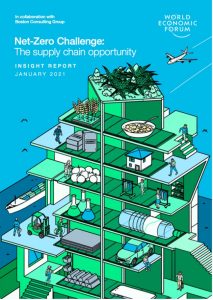 Net-zero challenge: The supply chain opportunityEight major value chains contribute to over half of the global carbon emissions, indicating that decarbonisation of the supply-chain will be essential in addressing corporate climate change impact. Abatement solutions are already available and affordable. This report addresses how to decarbonise the value chain based on industry. Chat with the reportVisit the summary page
 Carbon tariffs, emissions leakage, and production relocationThis paper examines whether carbon tariffs prevent emissions leakage from firm relocation in a North-South duopoly model. It finds that carbon tariffs combined with export rebates form the optimal carbon tax regime, preventing leakage when the northern firm’s emissions intensity exceeds fifty percent of the southern firm’s, and can benefit both countries.Chat with the reportVisit the summary page
Rethinking Resilience: What Emerging Asia Means for Australian Portfolios (2.10pm)
Speakers: Anjali Viswamohanan, Joey Alcock & Saji Anantakrishnan
Australian institutional portfolios still lean heavily on developed markets, which are increasingly facing a turbulent geopolitical landscape. Meanwhile, Emerging Asia is projected to drive a meaningful share of global growth this decade, fuelling enormous demand for energy and infrastructure investment. Underexposure isn’t just a missed return. It’s a missed source of diversification, and a missed opportunity to build experience as the region’s role in the energy transition grows. A fireside chat on how today’s geopolitical reality is redrawing the line between safe and risky, and what portfolio resilience actually means over the decades ahead.
Altiorem Suggested Resources
 Mobilising climate investment in emerging markets: Opportunities for Australian pension and superannuation fundsThis report delves into the potential of pension funds in driving climate solutions in developing economies. Highlighting barriers like geopolitical risks and policy uncertainties, the report underscores collaboration, ESG standards, and internal expertise as pivotal for sustainable investments in these regions.Chat with the reportVisit the summary page
 AIGCC’s the state of investor climate transition in Asia benchmark seriesThis benchmark series examines how Asian investors are approaching net zero and climate-aligned investment, including target setting, portfolio alignment, climate risk assessment, stewardship, investment strategies and barriers to implementation across asset classes and markets in Asia.Chat with the reportVisit the summary page
 Energy and AI in East AsiaThis report examines the intersection of artificial intelligence and energy in East Asia. It highlights how AI optimises renewable energy integration and grid management, whilst addressing rising data centre electricity demand. It recommends accelerating digitalisation, updating regulatory frameworks, and promoting clean energy procurement to ensure sustainable development.Chat with the reportVisit the summary page
 Australian financial institutions’ views on climate and clean energy opportunities in South and Southeast AsiaAssesses Australian financial institutions’ views on climate and clean energy investment in South and Southeast Asia, highlighting growth potential, limited current exposure, key risks, and barriers. It emphasises blended finance, policy support, and government intervention to mobilise private capital and scale regional investment.Chat with the reportVisit the summary page
Capital Across Asia-Pacific: What’s Driving and Blocking Australian Investment at Scale? (2.30pm)
Speakers: Rachel Halpern, Jodie Barns, David Barton, Greg Munford & Hiran Wanigasekera
The opportunity is established. The Asia-Pacific region will drive the majority of global energy demand growth this decade, and the infrastructure, renewables and critical minerals investment required is enormous. The question is what’s enabling capital to flow, and what’s holding it back. Financial practitioners share firsthand accounts of the tools, structures and partnerships making deployment possible, and why. No theoretical case-making. Just the real blockers and the real progress.
Altiorem Suggested Resources
 Catalysing partnerships to mobilise infrastructure financing and investment in low- and middle-income countriesThis learning note explores how an ecosystem approach to infrastructure financing can mobilise capital in low- and middle-income countries. It highlights the importance of early finance engagement, de-risking mechanisms, and integrated partnerships to transform technically sound projects into commercially viable investments.Chat with the reportVisit the summary page
 Forging a global clean steel economy: Leveraging trade to reduce the green premiumThis report examines how decarbonising the global steel industry requires separating ironmaking from steelmaking. By leveraging international trade, countries can co-locate energy-intensive processes in resource-rich regions like Brazil, Australia, and India. This strategic approach reduces production costs and helps lower the green premium for clean steel.Chat with the reportVisit the summary page
 Catalytic capital: A key to aligning infrastructure investments with climate mitigation in emerging marketsThis report provides a roadmap for directing more institutional capital toward climate infrastructure financing in emerging markets. It identifies the importance of using catalytic capital and outlines four themes crucial to its effective use: targeting, speed, support, and analysis. The report offers recommendations for how to address climate challenges through targeted catalytic interventions.Chat with the reportVisit the summary page
 Extraction to equity: Responsible finance and trade for critical minerals in AsiaThe report examines critical mineral value chains across selected ASEAN countries, highlighting downstream processing ambitions alongside environmental, human rights and governance risks. It finds trade agreements lack adequate sustainability safeguards and recommends stronger due diligence, impact assessments, benefit-sharing, local value addition, transparency and sustainable finance taxonomies.Chat with the reportVisit the summary page
From Public to Private: Designing a Climate Solutions Strategy That Delivers (3.45pm)
Speakers: Catherine Brown, Meredith Block, Guido Giese & Julianne Wilkin
For institutional investors seeking exposure to climate solutions, there is no one-size-fits-all approach. The opportunity set is broad, spanning public and private markets, venture capital to infrastructure, and sectors from clean energy and storage to green buildings and sustainable agriculture. Different entry points carry different risk-return profiles and implementation demands. Designed for senior investors making real allocation decisions, this session examines whether capital is delivering risk-adjusted returns with climate impact.
Altiorem Suggested Resources
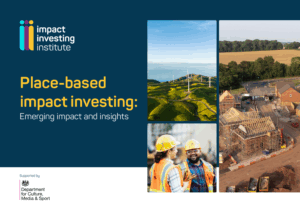 Place-based impact investing: Emerging impact and insightsThe report examines the expansion of place-based impact investing (PBII) in the UK since 2021. It outlines how institutional and local investors, supported by public–private partnerships, are aligning financial returns with social and environmental outcomes. The study highlights progress, barriers, and pathways to scaling PBII through collaboration and blended finance.Chat with the reportVisit the summary page
 The GIIN Climate Solutions Investing Framework: A resource for asset owners to move from ambition to allocationThis research provides a framework for asset owners to evaluate climate mitigation investment strategies. It outlines foundational concepts and four criteria for selection: identifying climate theses, quantifying decarbonisation contributions, understanding prioritisation, and managing uncertainties. The resource aims to help investors transition from climate ambition to effective capital allocation.Chat with the reportVisit the summary page
 Building disaster- and climate-resilient infrastructure through public–private partnershipsThe report discusses leveraging public–private partnerships (PPPs) to build disaster- and climate-resilient infrastructure in Southeast Asia, addressing funding gaps, enhancing regulatory frameworks, and integrating resilience measures. It highlights Australian practices, aligning climate, disaster, and inclusion goals for sustainable infrastructure development.Chat with the reportVisit the summary page
 Activating private investment in adaptation: Turning capital flight risk into the next multibillion opportunityThis report highlights the need to scale private investment in climate adaptation to mitigate capital flight from vulnerable areas. It outlines barriers like resilience valuation and fiduciary concerns, and recommends actions for governments and investors to facilitate resilience innovation, regulatory support, and shared understanding of physical risks, ensuring long-term economic stability and community protection.Chat with the reportVisit the summary page
Spotlight, presented by ARENA (4.30pm)
Speakers:
Zoe von Batenburg
The Climate Capital Pitch: Closing the Gap (4.40pm)
Speakers: Charlotte Connell, Zoe von Batenburg, Frere Byrne, Fraser Hughson, Tom Kline, Carly Marsh & Olivia Utharntharm
Capital is moving towards climate solutions, but some of the most transformative ideas are considered too early, too unfamiliar, or too hard to fit within traditional mandates. This session puts three exciting climate solutions on stage, each with genuine potential to accelerate the transition and generate returns. A panel spanning concessional finance, institutional investment and venture capital will discuss the investment case and what each of them would need to see, and in what order, for capital to actually move.
Altiorem Suggested Resources
 Global Innovation Lab for Climate Finance: PortfolioThe Global Innovation Lab for Climate Finance Portfolio is a database of vetted financial instruments designed to mobilise private capital for climate action. It provides finance professionals with access to innovative blended finance models, case studies, and sector-specific investment structures.Visit the summary page
- Driving Australian climate innovation: Unlocking capital to support a clean industrial revolutionCommissioned by IGCC and authored by Pollination, this report reviews climate innovation policy in California, Denmark, the Netherlands, South Korea and Germany to identify gaps in Australia’s policy landscape and recommend measures to drive transition industry investment, including strengthening the Safeguard Mechanism and establishing a national industrial strategy.Chat with the reportVisit the summary page
 From bonds to blended Finance: How a diverse range of financial instruments are financing climate adaptation and resilienceAnalyses 162 cases (2015–2025) of 11 financial instruments financing climate adaptation. Finds blended finance most prevalent, with instruments mainly supporting ex-ante risk reduction. Adaptation finance is largely pooled and increasingly multicountry. Use varies by income level, highlighting growing innovation to mobilise capital for resilience.Chat with the reportVisit the summary page
 New frontiers in value creation: A guide to impact value creation in collaboration with impact capital managersThis report explores new frontiers in impact value creation across private markets. It discusses key considerations for financial materiality of impact, sources of impact value creation, and modalities for impact value creation with a focus on case studies.Chat with the reportVisit the summary page
MORNING SESSIONS: Wednesday 25 November 2026
Live Virtual Keynote Address: The Baroness Bryony Worthington (9.05am)
Speakers: Bryony Worthington
Altiorem Suggested Resources
 Green industrial policy’s unfinished business: A publicly managed fossil fuel wind-downThe report argues that green industrial policy must actively manage a fossil fuel wind-down. It contends that renewables expansion alone is insufficient, calling for public planning, regulation, and ownership to ensure equitable decarbonisation and prevent fossil fuel liabilities shifting to the public.Chat with the reportVisit the summary page
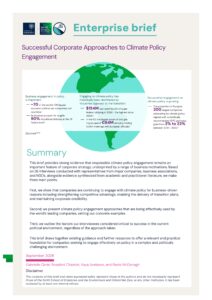 Successful corporate approaches to climate policy engagementThis research examines how leading companies maintain climate policy engagement despite geopolitical challenges. It identifies three core approaches—direct engagement, trade association influence, and coalition forming—driven by business motivations such as competitive advantage and transition plan delivery. Success depends on timing, transparency, and alignment with corporate decarbonisation goals.Chat with the reportVisit the summary page
 Market-shaping states: A new theory of public sector capacities and capabilitiesThis report introduces a market-shaping theory of the public sector, arguing that governments must act as proactive co-creators of public value. It presents a three-layered framework of structural capacities, organisational routines, and dynamic capabilities to help states navigate socio-technical challenges, steer innovation, and drive sustainable societal transformations.Chat with the reportVisit the summary page
 Climate Policy DatabaseThe Climate Policy Database (CPDB) is an open, collaborative resource that compiles detailed information on climate-change mitigation policies worldwide. It categorises and tracks over 6,500 policies across nearly 200 countries, enabling comparison of policy adoption, identification of mitigation gaps, and support for climate-policy analysis.Visit the summary page
The Last Fuel Crisis? Electrifying Australia’s Energy Reset (9.25am)
Speakers: Sylvia Chen, Baethan Mullen & Deidre Willmott
The longer Australia remains reliant on vulnerable fossil fuel supply chains, the more exposed its economy and energy security become. The current global energy crisis is a reminder, but it might also be a turning point. So, are we in the middle of the great energy pivot? Fresh from COP31, this session unpacks Australia’s progress to electrify and diversify: the pace of renewable energy and battery storage rollout, and electrifying heavy transport and industry.
Altiorem Suggested Resources
 2026 Energy Crisis Policy Response TrackerThe IEA’s 2026 Energy Crisis Policy Response Tracker is an interactive database monitoring government measures taken in response to global energy market disruptions. It provides regularly updated data on policies to conserve energy and support consumers, enabling analysis of country-level responses to supply shocks and price volatility.Visit the summary page
 Global Energy MonitorGlobal Energy Monitor is an open-access research database that compiles and analyses global energy infrastructure data, including fossil fuel and renewable projects, via interactive tools, maps and downloadable datasets to support informed analysis of energy trends and ownership structures.Visit the summary page
 Energy security through freight electrification: A rapid response briefing note on policy options for responding to the global fuel crisisThis briefing note outlines policy options to enhance Australia’s fuel security through freight electrification. It recommends a phased, five-year, $3 billion programme to deploy up to 50,000 battery electric trucks, displacing one billion litres of diesel annually while leveraging private capital and implementing structural reforms.Chat with the reportVisit the summary page
 The battle over energy security: Challenging the fossil fuel playbookThis report by InfluenceMap analyses how the fossil fuel industry uses geopolitical instability to promote energy security narratives. It highlights the industry’s historical playbook of delaying the renewable transition and outlines current counter-arguments from renewable sectors advocating for electrification to ensure genuine energy independence and affordability.Chat with the reportVisit the summary page
Keynote Address: Professor Frank Jotzo (10.10am)
Speakers: Frank Jotzo
Altiorem Suggested Resources
 10 New insights in climate science seriesThe 10 New Insights in Climate Science is an annual series that synthesises recent peer-reviewed climate research across natural and social sciences. It provides a concise, policy-relevant overview of emerging scientific developments to inform decision-makers, practitioners, and stakeholders engaged in climate policy, finance, and governance. Chat with the reportVisit the summary page
 Information integrity about climate science: A systematic reviewSystematic review of 300 studies (2015-2025) finds coordinated misinformation and greenwashing by corporate, political, and media actors undermine climate science, eroding trust and delaying policy. Research is Global North–centric. Evidence supports regulation, litigation, coalitions, and education to strengthen information integrity.Chat with the reportVisit the summary page
 Bioscience’s annual state of the climate report seriesThis series offers an annual overview of climate trends, examining key indicators and events that impact the global environment. It provides insights into planetary vital signs, climate impacts, and extreme weather, making it an essential resource for finance professionals seeking to understand the implications of climate change on economic systems.Chat with the reportVisit the summary page
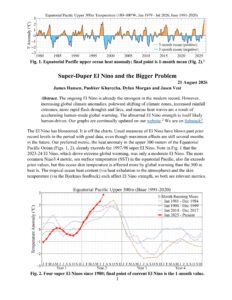 Super-duper El Nino and the bigger problemThis report analyses the 2026 super El Nino, identifying it as the strongest in the modern record. It discusses accelerating human-made global warming, the doubling of Earth’s energy imbalance, and severe health implications. Findings highlight that rising temperatures significantly increase mortality risks for vulnerable populations across Europe and Asia.Chat with the reportVisit the summary page
Data Centres: Clean Energy Catalyst or Carbon Lock-In? (11.00am)
Speakers: Andrew Bambrook, Nicola Falcon, Joel O’Halloran & Naomi Wagura
Australia is a fast-growing data centre hub, and the Australian Government has framed the sector as a strategic economic opportunity. But growth risks outpacing the renewable energy build-out needed to power it. Decisions being made now on siting, connection, procurement and firming will be locked in for decades. For institutional investors, this risk does not diversify away, because every sector’s transition depends on the same grid. Who will shape the outcome, and what should investors expect of them?
Altiorem Suggested Resources
 AI data centers and electricity demand: Taming the energy guzzlersThis paper examines AI data centre electricity demand and its costs for ratepayers and the environment. It finds that Big Tech market capitalisations have risen far above predicted levels since ChatGPT’s 2022 launch, while data centres drive up electricity prices and fossil fuel use. Regulatory reforms and innovations are recommended.Chat with the reportVisit the summary page
 Artificial intelligence and sustainability transitions: Emergent opportunities, risks, and governanceThis report examines the intersection of artificial intelligence and sustainability transitions, detailing opportunities and risks across environment, energy, labour, finance, and democracy. It proposes a three-layered governance framework and a phased roadmap for global scientific alignment, interim safety measures, and a binding international framework convention to ensure societal well-being.Chat with the reportVisit the summary page
 Toward a more human pace for data center developmentThis research examines the environmental and social impacts of rapid data centre expansion in the United States. It highlights how generative AI infrastructure disproportionately burdens marginalised communities through pollution, increased utility costs, and resource depletion. The authors call for a “more human pace” centred on environmental justice.Chat with the reportVisit the summary page
 Chipping point: Tracking electricity consumption and emissions from AI chip manufacturingThe report estimates AI chip manufacturing electricity use rose from 218 GWh in 2023 to 984 GWh in 2024, driven by East Asian production. By 2030, demand could reach 11,550 – 37,238 GWh, sharply increasing emissions unless renewable electricity adoption accelerates.Chat with the reportVisit the summary page
Spotlight, presented by Lendlease (11.45am)
Speakers: Kate Nelson
Altiorem Suggested Resources
 The role of investors in measuring and achieving lower embodied carbon in real estate and infrastructureThis guidance outlines strategies for Australian investors to manage and reduce embodied carbon in real estate and infrastructure. It details a maturity pathway from benchmarking to achieving reductions, highlighting mandatory reporting requirements and strategic benefits. The document provides specific actions for equity and debt investors to align with net-zero pathways.Chat with the reportVisit the summary page
 Net zero carbon buildings in cities: Interdependencies between policy and financeThis report analyses how cities can decarbonise buildings by mapping the interdependencies between policy and financial instruments and the barriers they address. It highlights priority actions for cooling, embodied carbon, adaptation and a just transition, outlining pathways that help cities sequence measures to accelerate net zero building outcomes.Chat with the reportVisit the summary page
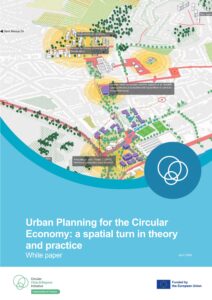 Urban planning for the circular economy: A spatial turn in theory and practiceThis report examines how urban planning can operationalise the circular economy by addressing spatial dimensions. Drawing on European city experiences, it explores circular developments, infrastructure, land management and multi-level governance. It provides strategic directions for integrating circularity into core planning instruments to support systemic, territorially grounded transitions.Chat with the reportVisit the summary page
 A global, proxy-based assessment of building climatization vulnerabilityThis research assesses global building energy efficiency, identifying vulnerable populations living in aged or poorly shaped structures. It reveals that 48 million people are currently at risk, with vulnerability likely shifting towards heat-prone regions by 2100. Disparities in building codes and income levels significantly affect global climate adaptation efforts.Chat with the reportVisit the summary page
Advancing the System: The Investment Risk No One Owns (11.50am)
Speakers: Sarah Barker, Jorge Chapa, Nishtha Manocha, Nanthesh Sivarajah & Charlotte Stratton
Driving down emissions requires action across infrastructure, property, supply chains and policy. Yet trillions in capital are deployed through fragmented systems. Narrow mandates, misaligned incentives and stalled sequencing mean no actor moves first. For long-horizon investors this is a fiduciary problem: transition risk stays mispriced and net zero commitments become unreachable if the broader economy fails to decarbonise, however well individual portfolios are managed. If the system has to move together, who goes first?
Altiorem Suggested Resources
 The third, systems stage of corporate governance: Why institutional investors need to move beyond modern portfolio theoryThe authors of this paper argue that institutional investors need to move beyond Modern Portfolio Theory (MPT), and consider a wider risk management strategy. The paper outlines the potential failings of MPT and suggests ways for institutional investors to better align with the needs of society and the economy.Chat with the reportVisit the summary page
 Systems stewardship: Managing interconnected climate risks for lasting valueThis report examines how Australian investors apply systems stewardship to manage interconnected climate risks. It identifies key practices, such as collaborative engagement and policy advocacy, while highlighting barriers like resource constraints. Six recommendations are provided to help investors safeguard long-term returns and support a net-zero transition.Visit the summary page
 Our predicament: The fundamental flaws of predominant economic systems – and the cultures scaffolding themThis report synthesises interviews with global thinkers to diagnose structural flaws in dominant economic systems. It argues that extractive capitalism, growth imperatives, inequality and ecological overshoot underpin a planetary predicament, and frames the challenge as navigation towards regenerative, responsibility-based economies rather than problem-solving.Chat with the reportVisit the summary page
 SAIL: Systems Aware Investing LaunchpadSAIL (Systems Aware Investing Launchpad) is an AI-enhanced platform developed by TIIP to support institutional investors in implementing system-level investing strategies. It provides tools for strategy development, benchmarking, reporting and collaboration, helping users assess and manage systemic environmental, social and financial risks.Visit the summary page
AFTERNOON SESSIONS: Wednesday 25 November 2026
False Comfort? A Debate on Physical Risk Disclosures (1.25pm)
Speakers: Fergus Pitt, Kim Farrant, Steffen Hoerter, Judith Landsberg & Siobhan Leach
Large companies are now required to disclose their climate risks and plans. But for many Australian investors, more disclosure has not meant better visibility on physical climate risk. Some, but not all, companies smooth over significant exposures, from extreme heat and flooding to insurance, financing and value chain risks, even where compliance requirements are met. Two speakers will ask whether physical risk disclosures are giving investors false comfort. Two will show what good looks like.
Altiorem Suggested Resources
 Recalibrating climate risk: Aligning damage functions with scientific understandingThis report argues climate damage functions systematically underestimate risks by relying on smooth, GDP-centred models. Drawing on expert elicitation, it highlights nonlinear, cascading and tail risks, tipping points, and limits to growth. It recommends recalibrating modelling and financial supervision towards precaution, systemic resilience and transparent uncertainty.Chat with the reportVisit the summary page
 Climate transition and global financial stabilityThis literature review assesses evidence on how delayed, failed or uneven climate transitions affect UK and global financial stability. It finds intensifying physical and transition risks, potential mispricing and spillovers, and significant uncertainty, highlighting EMDE transitions as central to managing systemic financial risk.Chat with the reportVisit the summary page
 A risk professional’s guide to physical risk assessments: A GARP benchmarking study of 13 vendorsGARP benchmarks 13 vendors’ asset-level climate physical risk models, finding wide dispersion in hazard and damage estimates due to differing data, assumptions and methods. The report stresses due diligence, transparency and improved asset data when selecting vendors. Chat with the reportVisit the summary page
 Climate Risk Signals ExplorerThe Climate Risk Signals Explorer is an AI-powered analytical tool by Climate Proof that tracks climate risk mentions in corporate earnings calls, helping finance professionals monitor physical and transition risks.Visit the summary page
When Insurance Retreats, Who Pays? Navigating Risk and Opportunity in an Extreme Weather World (2.10pm)
Speakers: Alison Drill, Timothy Grech & Tom Mortlock
Insurance is much more expensive and sometimes practically unavailable for the highest-risk assets and regions. When insurance is hard to get, a critical mechanism for pricing and managing climate risk disappears. The cost does not vanish. It moves onto balance sheets, governments and investors. APRA’s Insurance Climate Vulnerability Assessment found expected annual losses from weather-related events could rise from around $7 billion today to more than $16 billion by 2050. Where is uninsurability already eroding asset values, and how should investors manage that exposure? For institutional investors with exposure to property and infrastructure, the question is no longer theoretical. Where is uninsurability already eroding asset values and how should investors be identifying, pricing and managing that exposure? And as capital begins to shift from recovery to adaptation, where are credible opportunities emerging and for whom?
Altiorem Suggested Resources
 Mind the gap: An insurance climate vulnerability assessmentAPRA assesses Australia’s home insurance protection gap under climate scenarios, finding affordability pressures may increase uninsured households from one in seven to one in four by 2050. Rising weather risks and economic factors drive premiums, widening financial system risks, particularly in regional areas, with implications for households, insurers and banks.Chat with the reportVisit the summary page
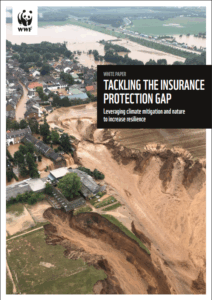 Tackling the insurance protection gap: Leveraging climate mitigation and nature to increase resilienceThis white paper analyses how climate change and nature loss are widening insurance protection gaps in advanced economies. It outlines impacts on affordability and coverage, and recommends combining climate mitigation, nature-based solutions, and regulatory reforms to strengthen resilience and maintain insurability.Chat with the reportVisit the summary page
 Insurers’ resilience toolkit: A practical taxonomy of climate adaptation and resilience measuresThis research provides a practical taxonomy for the insurance sector to advance climate adaptation and resilience. Analysing over 200 measures, it highlights structural barriers and enabling conditions for scaling initiatives. The report advocates for a shift from post-event compensation towards proactive risk reduction and long-term stakeholder engagement.Chat with the reportVisit the summary page
 GRI risk viewerThe Global Resilience Index (GRI) Risk Viewer provides global‑scale risk metrics across hazard, exposure and vulnerability to assess risks to people, planet and prosperity via open, publicly available datasets.Visit the summary page
From Mandatory Disclosure to Decarbonisation: Is the Information Chain Delivering? (3.20pm)
Speakers: Pablo Berrutti, Karen McWilliams, Helge Muenkel & James Tayler
Mandatory climate disclosure was built on a premise: that consistent, comparable information about climate-related risks and opportunities is essential for investors to make informed decisions — and that better decisions, at scale, will drive real-world emissions reductions. This premise is now being tested in real time. Australia’s largest companies filed their first mandatory climate reports in early 2025. From July 2026, the next wave of entities, including institutional investors, enters the regime — significantly expanding the information available. But data quality, consistency and comparability remain contested — and the retreat from climate reporting in some markets is creating new gaps in the disclosure chain. This has implications for investor reporting. For Australian institutional investors, compliance is the floor — not the goal. The real challenge is whether disclosure is actually delivering for decision-making, stewardship, and ultimately, for economic decarbonisation. This session explores the full information chain — from corporate disclosure to investor decision-making to real-world decarbonisation outcomes. The central question: is better reporting actually changing what investors do?
Altiorem Suggested Resources
 Introducing a standardised framework for escalating engagement with companiesShareAction’s report introduces a standardised escalation framework for investors to engage with companies on environmental and social issues. It outlines an escalation toolkit and pathway to ensure structured, transparent, and time-bound engagement. The framework aims to enhance investor accountability, drive systemic change, and improve corporate sustainability practices through clear expectations, reporting, and enforcement mechanisms.Chat with the reportVisit the summary page
 The (mis)use of scenarios in fossil fuel and industry climate disclosuresThe report analyses climate disclosures by investor-owned carbon majors, finding widespread misuse of climate scenarios to claim Paris alignment. Common issues include outdated scenarios, opaque assumptions and misleading aggregation, which obscure transition risks and may misinform investor decision-making. Chat with the reportVisit the summary page
 Materiality: The word that launched a thousand debatesThis report explores the concept of materiality in the context of corporate sustainability disclosure. It discusses evolving definitions of materiality in the US and abroad, the need for a common language and structure for disclosure frameworks, and SASB’s role in providing decision-useful and financially material information to investors and financial capital providers.Chat with the reportVisit the summary page
 Climate change & the engagement gap: Why investors must do more than move the needle, and how they canThis report argues that climate change poses systemic risks to diversified portfolios and that conventional ESG engagement is insufficient. It proposes investor-led, enterprise-agnostic “guardrails” to limit greenhouse gas emissions, protect overall economic value, and complement inadequate regulation.Chat with the reportVisit the summary page
Spotlight, presented by Australian Ethical Investment (4.05pm)
Speakers:
Ludovic Theau
Countering Climate Obstruction: From Diagnosis to Investor Action Interests Slow the Transition (4.10pm)
Speakers: Michael Bones, Christian Downie, Persephone Fraser & Maggie Shelton
Progress on climate policy is not slow by accident. It is actively obstructed by organised, well-funded actors. For investors, this is a fiduciary problem: obstruction delays the transition, misprices risk and erodes long-term returns. Drawing on Climate Obstruction: A Global Assessment by Oxford University Press, this session sets out how delay tactics work, then turns to the response — how investors are using policy advocacy to counter them.
Altiorem Suggested Resources
 Time to get real: Current and future best practice for investor engagement on climate policyThis report examines how institutional investors engage on climate policy and sets out guidance for best practice. Drawing on interviews with 70+ individuals and a survey of investors representing approximately USD 33 trillion in AUM, it calls for a shift from disclosure-focused engagement towards real economy policies, and identifies three field-building priorities.Chat with the reportVisit the summary page
 What can investors do about climate change?This report explores the evolving role of investors in addressing climate change. Drawing on insights from major asset managers, it advocates shifting from market-led targets to a policy-led approach. Investors are advised to focus on realistic stewardship, pragmatic objective-setting, and policy advocacy to effectively manage climate-related financial risks.Chat with the reportVisit the summary page
 LobbyMapLobbyMap is an online database that analyses corporate and trade association lobbying on climate and energy policy. It compares stated public positions with lobbying activities to assess alignment, consistency, and potential risks for investors and financial decision-making.Visit the summary page
 Blueprint for responsible policy engagement on climate changeThis paper makes the investment case for businesses and investors alike to implement policies that align with the latest science on climate change. It provides a framework that stakeholders can use to mitigate climate risks and manage the transition to a net-zero carbon economy by 2050. Chat with the reportVisit the summary page
Bonus summit gifts from Altiorem
CPD Bonus, take the Altiorem Summit Quiz and receive certificate of completion!
One free fully referenced Alma deep dive on a summit topic.
50% off Gold or Platinum membership for summit attendees.


