
Library | Location
Japan
Refine
153 results
REFINE
SHOW: 16


Japanese Society for Artificial Intelligence (JSAI)
The Japanese Society for Artificial Intelligence (JSAI) is a leading organisation in AI research and development. Explore JSAI's initiatives, events, and publications, providing valuable insights into the dynamic field of artificial intelligence. Discover the latest advancements and contributions to AI technology through the society's official website.

InfluenceMap
InfluenceMap provides insightful analysis on corporate climate lobbying and influence activities. Explore data-driven research and visualisations revealing the impact of companies on climate policy. Gain transparency into corporate engagement with climate-related issues, empowering informed decision-making on sustainability.

Global Sustainable Investment Alliance
The Global Sustainable Investment Alliance (GSIA) promotes sustainable investment worldwide. Their initiatives include research, policy advocacy, and collaboration with stakeholders to advance environmental, social, and governance (ESG) considerations in investment decisions. Explore their resources for insights into sustainable finance practices and global investment trends.

Diversity wins: How inclusion matters
This report highlights that the business case for gender and ethnic diversity in executive teams is stronger than ever, having been deepened by the COVID-19 crisis. Emphasis on diverse representation within organisations is no longer sufficient; employees must feel and perceive equality and fairness of opportunity in their workplace.

A status report on financial institutions’ experiences from working with green, non green and brown financial assets and a potential risk differential
This 2020 report presents the results from a survey that assesses whether a risk differential can be detected between green, non-green and brown financial assets (loans and bonds). Based on information obtained by 49 banks, it presents a snapshot of current practices among financial institutions in their asset allocation.
Investing for the climate in Asia
Are “green finance" and climate change gaining traction in the Asian financial sector? Asia Research and Engagement (ARE) reviewed the practices of 88 leading financial institutions across Asia-Pacific to find out. Growing momentum is discovered: 28% of banks and 30% of investors have incorporated climate change into their respective policies.

Climate transparency report 2021: Comparing G20 climate action towards net zero
The Climate transparency report 2021 summarises the climate actions of G20 countries using the latest emissions data. It covers 100 indicators on decarbonisation, climate policies, finance, and vulnerability to the impacts of climate change. Providing country ratings, it identifies leaders and laggards in transition to a net zero-emission economy.

Factory farming in Asia: Assessing investment risks
Asia's meat, dairy, and seafood industries are increasingly vulnerable to risks with the potential to damage returns. This report analyses twelve Asia-Pacific markets identifying five areas of risk including food safety and nutrition, public health, environment, animal welfare and labour standards. Each area of risk includes key questions for investors.
Can government policies that drive strong economic outcomes for the private sector alleviate poverty?
The report examines how the adoption of policies that drive strong economic outcomes for the private sector often reduce poverty in the developing world, primarily through opportunities for job creation. In particular, the report calls for policies that promote greater access to credit and the protection of minority investors.

Appetite for disruption: A second serving
This report explores the growth of the alternative protein market, particularly in the face of supply chain disruptions, food safety concerns from COVID-19, and global emissions. This is published alongside FAIRR's Sustainable Proteins Hub, an interactive tool which allows investors to assess how companies are diversifying toward alternative, climate-positive portfolios.

Financing sustainability: Asia Pacific embraces the ESG challenge
Explores the drivers of sustainable finance growth in Asia Pacific and the factors constraining it. The analysis was determined through parallel surveys - one of investors and one of issuers. The research found that the biggest constraint for sustainable finance was a lack of bankable sustainable projects.

Commonwealth Climate and Law Initiative
Commonwealth Climate and Law Initiative (CCLI) is a research, education and outreach project focused within four Commonwealth countries: Australia, Canada, South Africa and the United Kingdom. It examines the legal basis and obligations that directors and trustees have in response to climate change risk.
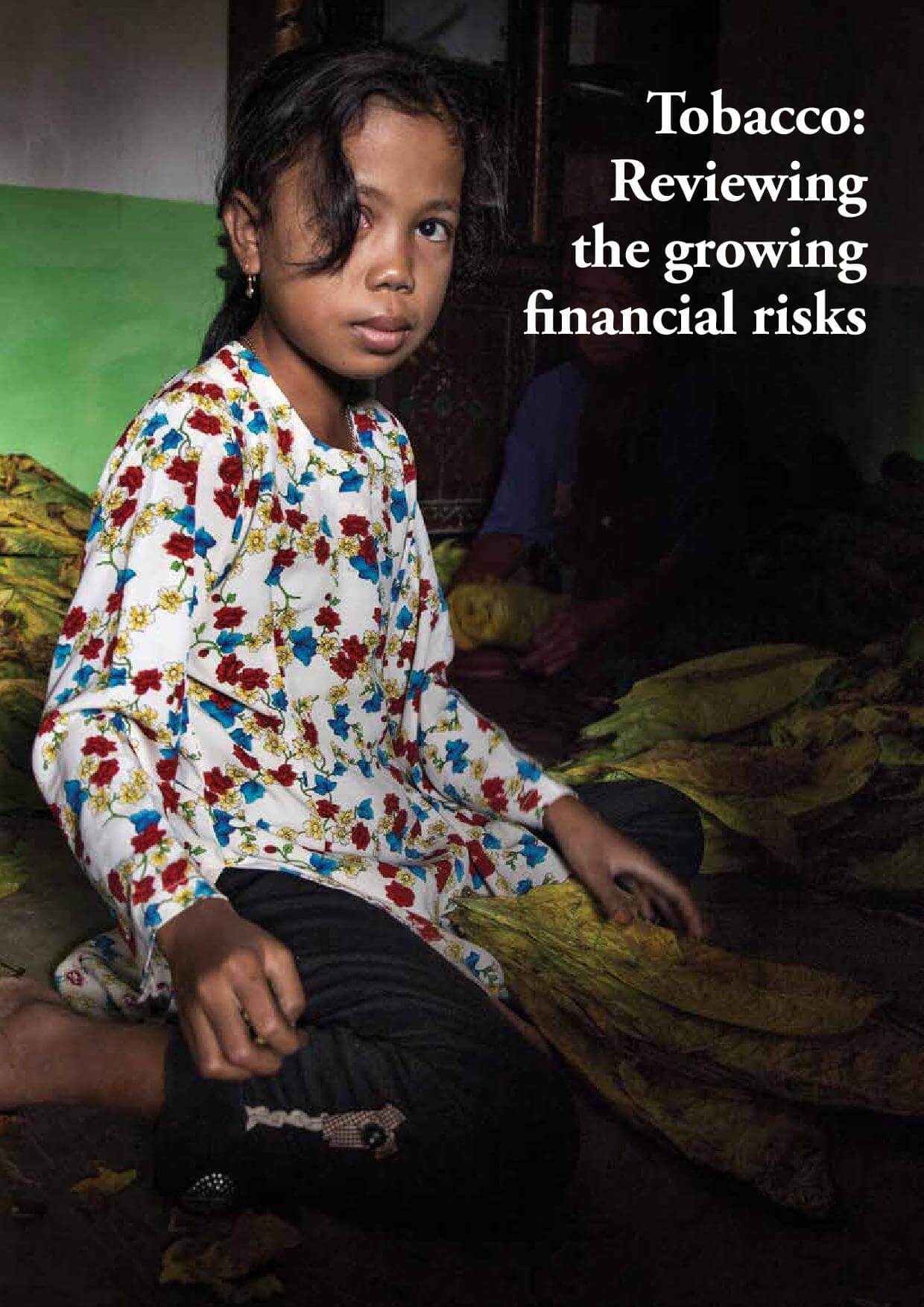
Tobacco: Reviewing the growing financial risks
Addresses the performance declines in the tobacco industry and presents evidence of how it can be a financial risk for investors. It examines industry trends and outlooks in the context of varying future scenarios and provides recommendations to support future investment decisions.

Fiduciary duty in the 21st century: Final report
This is the final report from a four-year, multi-stakeholder/multi-jurisdiction research and engagement exercise. It demonstrates that environmental, social and governance integration is a component of investors' fiduciary duty. In order to fulfill this duty, regulators and policymakers must better understand fiduciaries’ needs and establish policies that support this approach.
TCFD good practice handbook
This Task Force on Climate-related Financial Disclosures (TCFD) handbook provides examples of good practice climate-related financial disclosures across the four core TCFD elements of governance, strategy, risk management, metrics and targets from corporates across the G20.
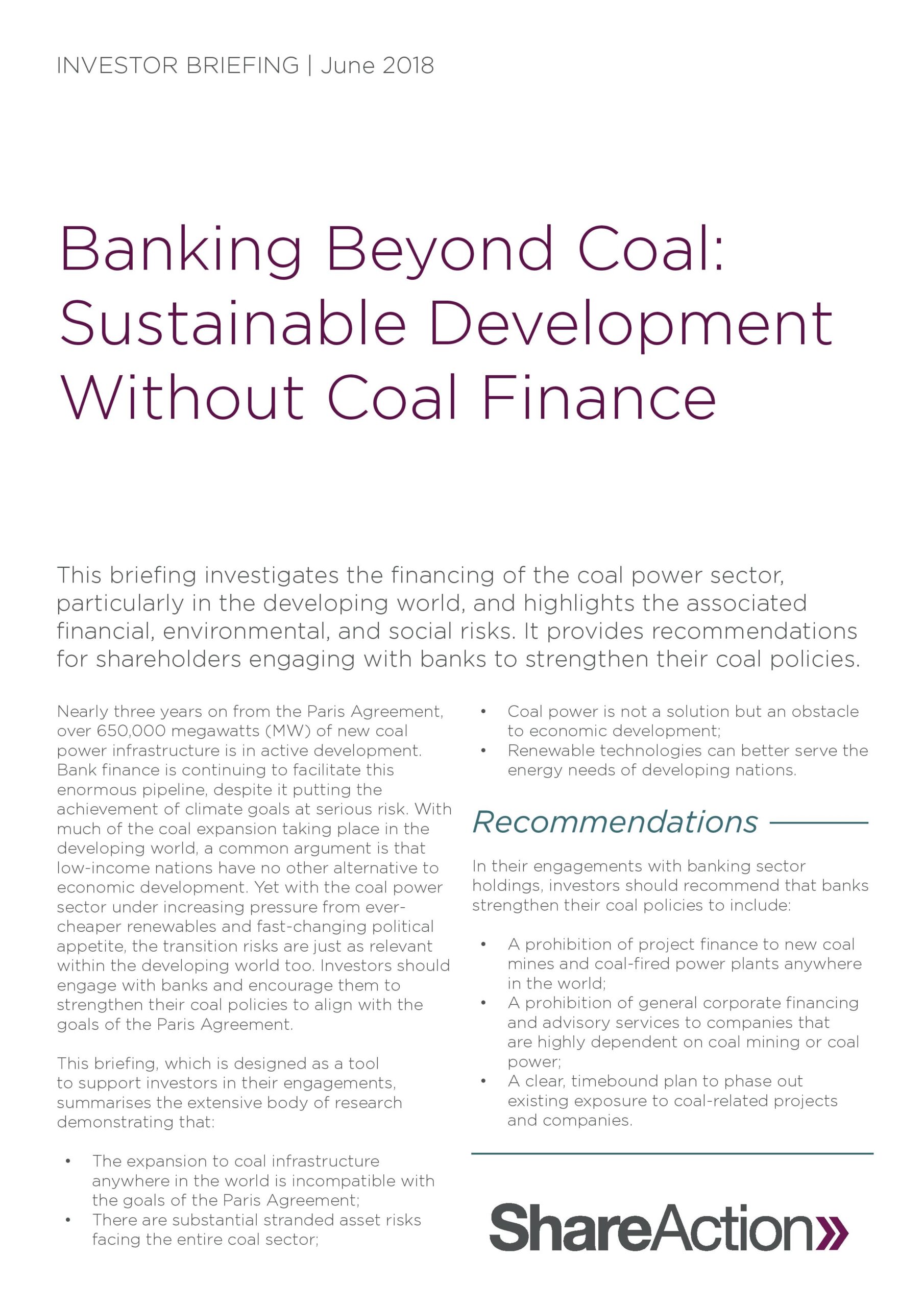
Banking beyond coal: Sustainable development without coal finance
This investor briefing investigates the financing of the coal power industry. Highlighting that bank financing continues to facilitate active development of coal power infrastructure, particularly in developing nations, which is incompatible with the Paris Agreement. Additionally, it provides a call to action for investors to engage with their banks to strengthen coal divestment policies.


