
Library | Things to learn
Status and relevance of environmental issues for finance and business
Refine
254 results
REFINE
SHOW: 16


Superannuation fund trustee duties and climate change - updated memorandum of opinion 2021
This is an updated memorandum of opinion with the last one given in 2017. The report looks at recent regulatory and industry statements and develops a two-step approach superannuation trustees should take to remain compliant with their regulatory obligations. Trustees must understand the risk posed by climate change to investments and manage any identified risks.

Australia's future gas strategy: Corporate advocacy and industry narratives
This report analyses the responses to Australia's Future Gas Strategy by corporate entities and industry associations from the country's fossil fuel value chain. It sheds light on the advocacy for expanding fossil gas supply, which contradicts the science-based policies to meet global climate goals, while showing a lack of positive engagement from non-fossil fuel corporations.

The hidden risk in state pensions: Analysing state pensions’ responses to the climate crisis in proxy voting
This report analyses the proxy voting strategies of 19 state pensions, as well as the five New York City Comptroller systems, managing over US$2 trillion in assets. Results reveal that most pensions failed to address climate-related financial risk, especially in areas such as lobbying, environmental justice, and Indigenous rights.
The global GHG accounting and reporting standard for the financial industry series
Standardised methodologies for financial institutions to measure and disclose financed GHG emissions across ten asset classes under scope 3 category 15.

Towards financing large-scale holistic landscape restoration in Europe: Recommendations for EU policy actors to attain inspirational, social, natural and financial returns
The report provides financing recommendations for large-scale holistic landscape restoration in Europe, addressing climate change, biodiversity loss, and food and water insecurity. It emphasises the effectiveness of landscape finance in promoting healthy ecosystems, offering practical frameworks for policymakers to accelerate impactful activities and align natural and community needs for comprehensive restoration.
Clearing the air: A case for investor action on air quality and a practical guide for getting started
This report summarises the health implications, financial risks, and actions investors and companies can take to reduce air pollution emit. It also highlights existing regulations across the world as well as upcoming sustainability reporting standards.

Global tipping points
The 2023 report explores ways to prevent potentially irreversible changes to the Earth's natural systems and recommends coordinated global action and governance. It also highlights positive tipping points in technology, economics, and society that can aid a sustainable future.

UN Environment Programme's adaptation gap report series
The Adaptation Gap Report series provides yearly updates on global progress in climate change adaptation. It assesses the status of adaptation planning, implementation, and finance, highlighting the increasing gap between the need for adaptation and the actions taken.

Deconstructing ESG ratings performance: Risk and return for E, S and G by time horizon, sector, and weighting
This article evaluates the relevance of key environmental, social, and governance (ESG) issues and the importance of their pillars regarding risk and return using a comprehensive analysis of market performance. It additionally compares the weighting and performance of each pillar and key ESG issues.

The geography of Australia’s digital industries: Digital technology industry clusters in Australia’s capital cities and regions
This report documents the location of 96 digital technology industry clusters in Australia’s capital cities, regions, and suburbs. The report draws attention to the variables that affect industry growth and development, from company profit growth to housing affordability and quality of life.
Earth system justice needed to identify and live within Earth system boundaries
This article considers how to integrate principles of justice within Earth’s system boundaries, specifically for climate, the biosphere, water and nutrient cycles, and aerosols. Using the Earth system justice approach, it discusses living within planetary limits whilst minimising significant harm to all people and ensuring equitable access to resources.
Climate impacts at work: Supporting a climate ready workforce
Demonstrates empirical evidence of varied climate change impacts and their effects on workers and organisations across a range of industries, working mostly in Victoria. Workers are being affected in many compounding ways. With climate change impacts continuing to worsen, workers and industry must be supported to adapt to climate change.

Mobilising climate investment in emerging markets: Opportunities for Australian pension and superannuation funds
This report delves into the potential of pension funds in driving climate solutions in developing economies. Highlighting barriers like geopolitical risks and policy uncertainties, the report underscores collaboration, ESG standards, and internal expertise as pivotal for sustainable investments in these regions.
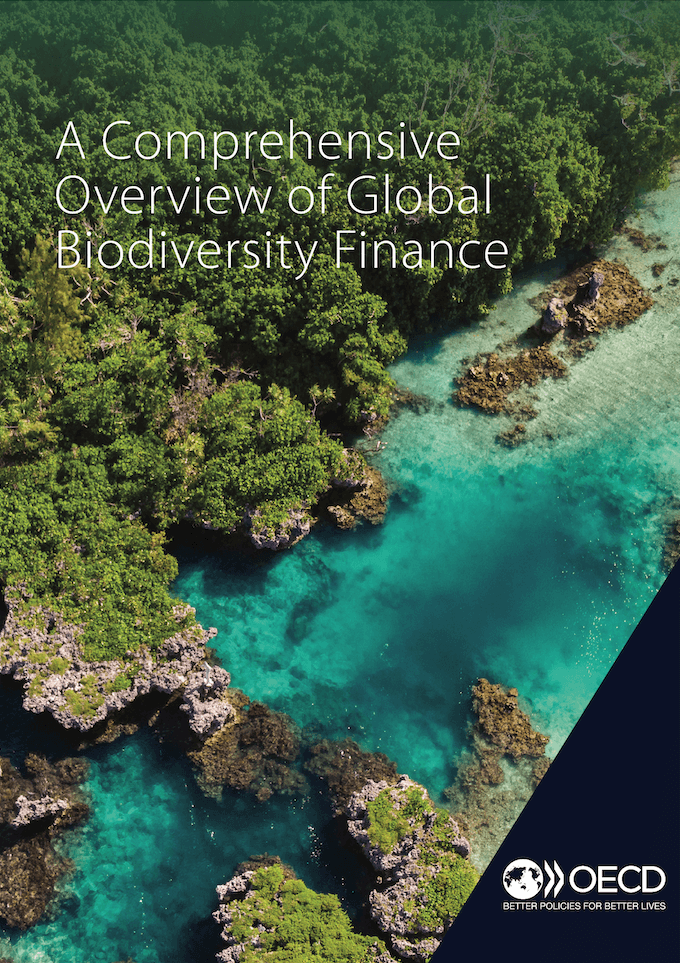
A comprehensive overview of global biodiversity finance
This report aims to provide a comprehensive overview and an aggregate estimate of global biodiversity finance. It aims to provide an outline of government support that is potentially harmful to biodiversity and offers recommendations for improving the assessment, tracking, and reporting of biodiversity finance.

Recommendations of the Taskforce on Nature-related Financial Disclosures
This report aims to provide a unified approach to the disclosure of natural dependencies, impacts and risks for financial institutions and corporates. As the issue of natural loss and climate change continues to grow, a harmonised way of tackling these risks needs to be agreed to safeguard against material impacts.

How can businesses thrive in a sustainable economy?
How can businesses thrive while still respecting planetary boundaries and meeting the essential needs of all people? This report provides a framework for businesses to transition to sustainable models by addressing unsustainable characteristics and adopting regenerative and distributive practices. The report highlights examples of businesses implementing these strategies and provides a Sustainable Business Model Canvas for businesses and investors to assess alignment with a sustainable economy.


