
Library | ESG issues
Biased Media
Biased media occurs when journalists or news organisations favour certain perspectives, influencing story selection, framing, and language. This can shape public opinion, reinforce existing biases, and, in extreme cases, become propaganda. Social media algorithms further amplify bias by curating content that aligns with user preferences. Media bias can impact societal trust, corporate reputation, and regulatory scrutiny, creating risks and opportunities for businesses and investors.

Refine
21 results
REFINE
SHOW: 16


Code of practice on transparency of AI-generated content
The European Union's Code of Practice on Transparency of AI-Generated Content provides guidance on meeting AI Act transparency obligations. It addresses machine-readable marking, detection, labelling of deepfakes and AI-generated text, technical reliability, compliance processes and disclosure requirements for providers and deployers of artificial intelligence systems.

A guide to greenwashing and corporate disinformation in the mining sector
This guide examines greenwashing and disinformation in the mining sector, detailing strategies used to project an environmentally responsible image. It identifies tactics such as 'woke-washing' and judicial intimidation, while advocating for stronger consumer protection, anti-SLAPP laws, and transparency to combat corporate narratives that delay urgent climate action.

Soldiers of misfortune: Mercenaries and digital propaganda in Africa
This report investigates the intersection of mercenary groups and digital propaganda in Africa. It details how organisations like the Wagner Group utilise AI-driven disinformation and "regime survival packages" to sustain authoritarian rule. The paper recommends stricter platform accountability and enhanced digital literacy to protect democratic institutions across the continent.
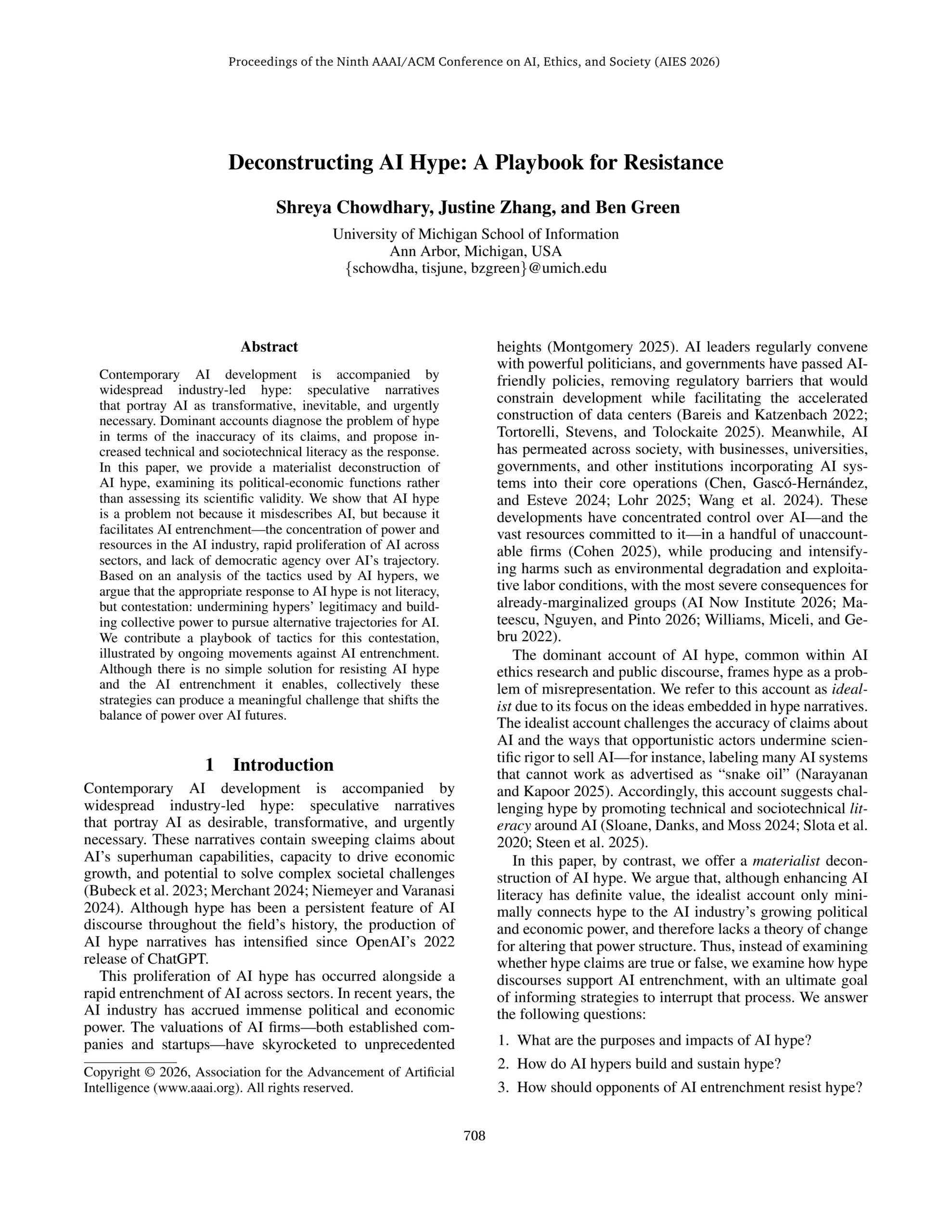
Deconstructing AI hype: A playbook for resistance
This research provides a materialist deconstruction of AI hype, arguing it facilitates power concentration rather than just misrepresenting technology. It details how "hypers" manufacture urgency and capture credibility. The paper offers a playbook for resistance through contestation, undermining legitimacy and building collective agency to challenge AI entrenchment.
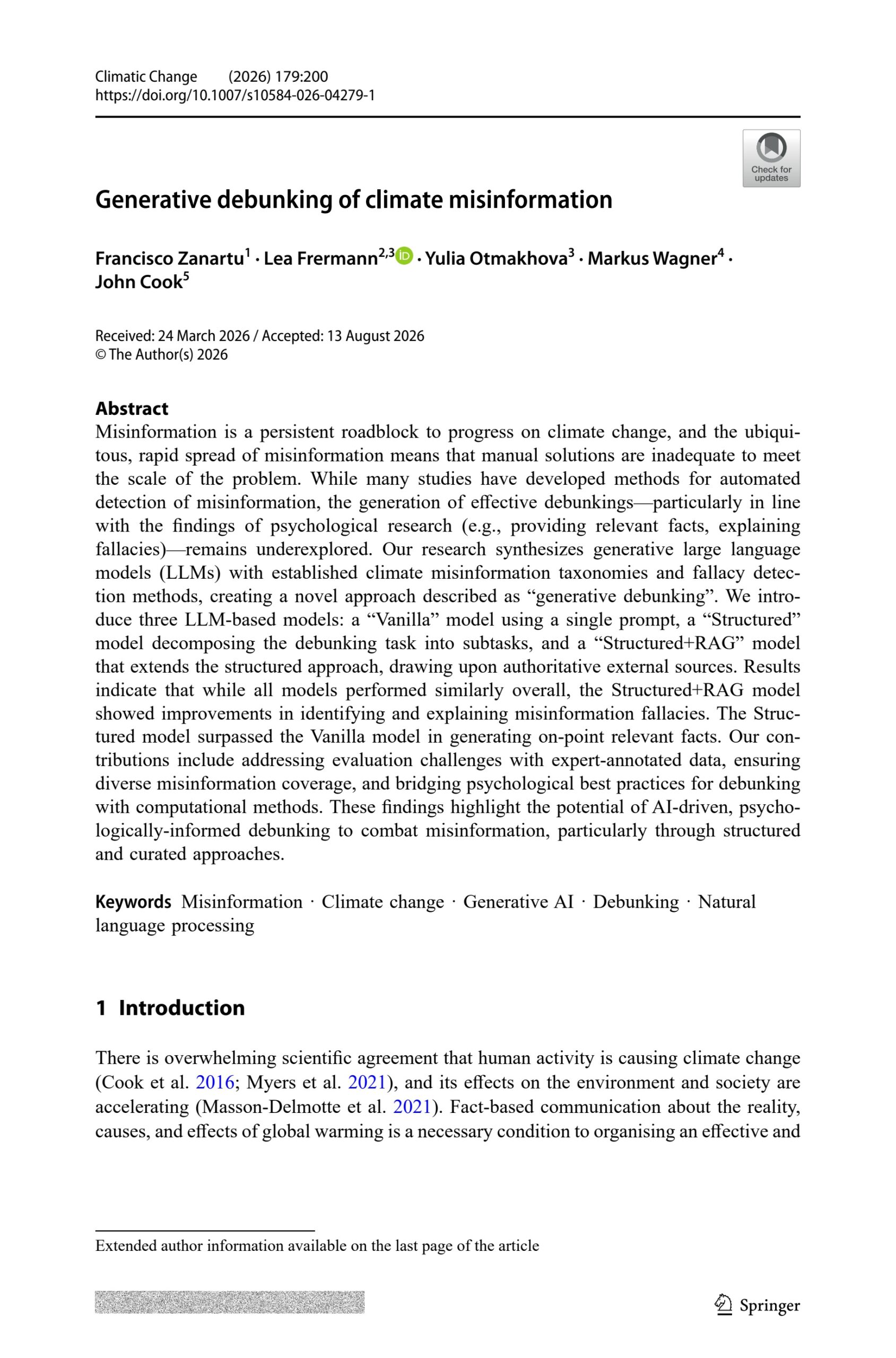
Generative debunking of climate misinformation
This research introduces 'generative debunking' using large language models to combat climate misinformation. By synthesising psychological best practices with computational tools, the study develops three models using the 'truth sandwich' approach. Expert evaluation indicates that structured prompting and retrieval-augmented generation significantly improve the identification and explanation of logical fallacies.
Managing LLM bias in investing: From detection to mitigation
This report examines implicit and explicit LLM biases in investment management. Through a case study on framing bias across nine OpenAI models, it identifies significant sensitivities in drawdown and client retention scenarios. It concludes that manual prompt restructuring and human-in-the-loop protocols are the most effective mitigation strategies.
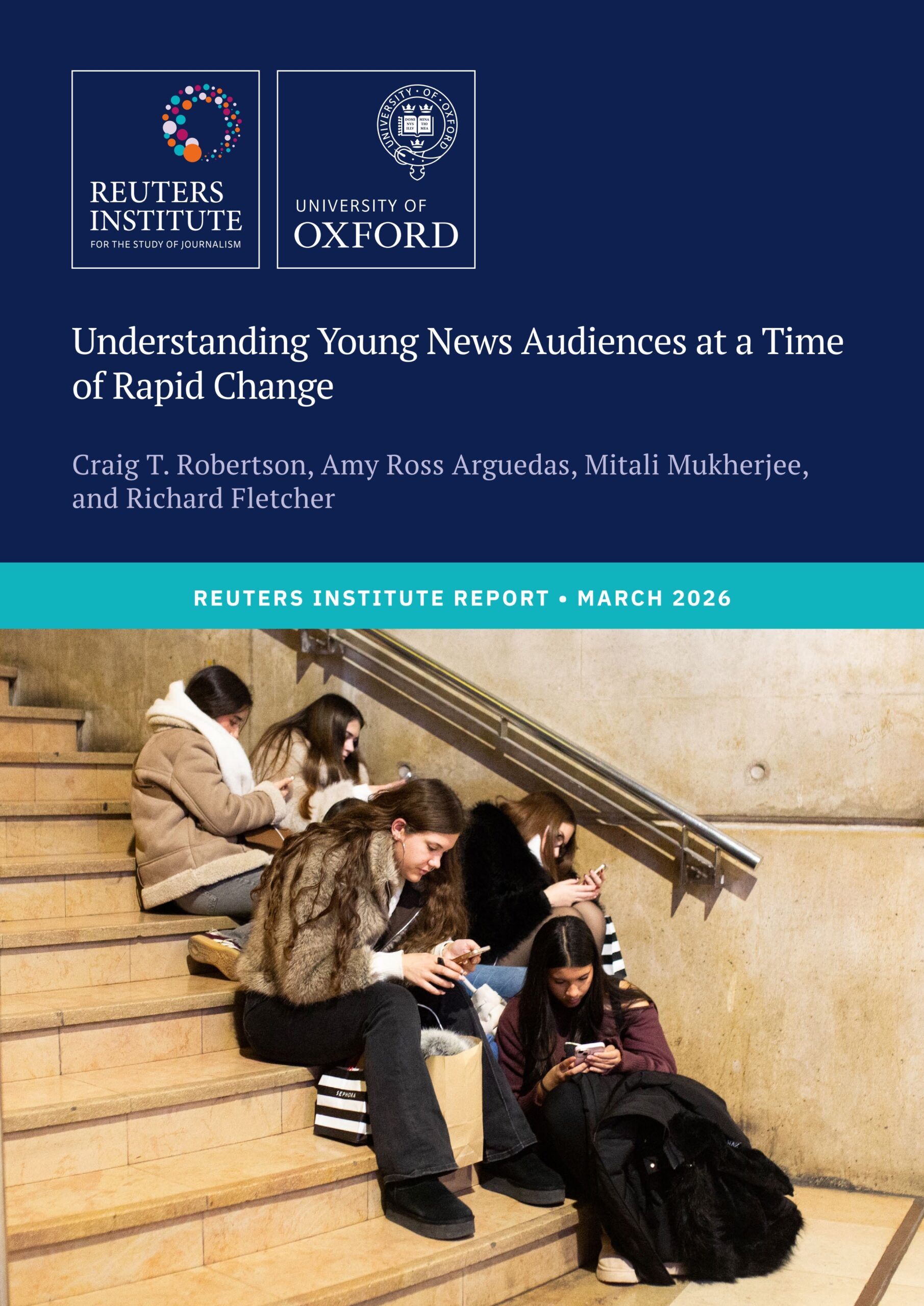
Understanding young news audiences at a time of rapid change
This report examines the shifting news consumption habits of audiences aged 18–24. It highlights a definitive move towards social-first, audiovisual content and individual creators. Furthermore, it explores the growing role of generative AI in navigating complex stories, emphasising the need for publishers to adapt to these evolving digital preferences.
Seeing green: The effects of financial exposures on support for climate action
This research evaluates a randomised controlled trial using financial exposure to the energy sector to build support for climate action. Findings demonstrate that ownership of green and brown assets increases support for mitigation policies through a learning mechanism, where participants consume more financial news and improve their environmental knowledge.

Reuters Institute digital news report series
This research series provides a comprehensive annual analysis of digital news consumption globally. It tracks audience trends across 48 markets, focusing on trust, platform usage, and the transition to digital formats. This benchmark series informs stakeholders about the evolving information environment and changing news habits across diverse demographics.
AI managed household portfolios: A preliminary report
This research investigates AI-managed household portfolios, finding that large language models recommend undiversified portfolios concentrated in high-momentum, large-cap technology stocks. While returns may exceed market benchmarks, they do not provide abnormal returns when adjusted for risk characteristics. Recommendations are primarily driven by media attention rather than investment skill.

Communicating climate change and migration: A user’s guide to navigating the research
This report guides practitioners on communicating climate-linked migration, highlighting research gaps, biases and limited diversity. It emphasises critical engagement with academic literature, improved representation of affected communities, and the need for nuanced, interdisciplinary approaches to inform effective, ethical communication strategies.
AI search has a citation problem
The report evaluates eight generative AI search tools and finds widespread problems in accurately citing news sources. Many systems fabricate or misattribute links, ignore publisher restrictions and provide confident but incorrect answers, raising concerns about information reliability, publisher traffic loss and the transparency of AI-generated search results.
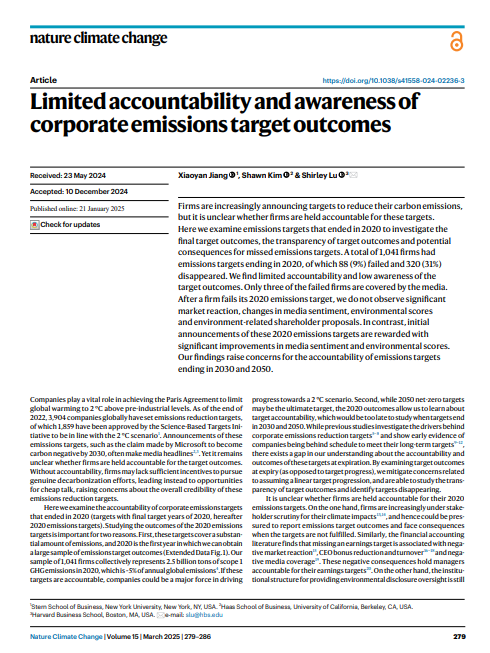
Limited accountability and awareness of corporate emissions target outcomes
The study analyses 1,041 corporate emissions targets ending in 2020, finding limited accountability. Thirty-one per cent of targets disappeared and 9% failed, with minimal disclosure, media attention or market penalties. By contrast, target announcements improved media sentiment and ESG scores, raising concerns for future climate targets.
Climate change and news audiences report series
Annual survey-based report analysing climate change news consumption, trust, political leadership perceptions, AI attitudes, and audience needs across eight countries.
Information integrity about climate science: A systematic review
Systematic review of 300 studies (2015-2025) finds coordinated misinformation and greenwashing by corporate, political, and media actors undermine climate science, eroding trust and delaying policy. Research is Global North–centric. Evidence supports regulation, litigation, coalitions, and education to strengthen information integrity.

On YouTube, a Shift from Denying Science to Dismissing Solutions
This article dives into an analysis of over 12,000 YouTube videos and finds that while outright climate-change denial is dropping, content undermining climate solutions and trust in scientists is rising sharply. It also highlights concerns over YouTube’s ad policies, which still allow monetisation alongside videos that downplay impacts or spread misleading claims about climate policy.


