
Library | ESG issues
Climate Change
Climate change, driven by human-induced greenhouse gas (GHG) emissions, is increasing global temperatures and extreme weather events. Major GHGs like carbon dioxide and methane primarily come from burning fossil fuels, deforestation, and agriculture. Key sectors contributing to emissions include energy, industry, transport, buildings, and land use, making mitigation and adaptation essential for environmental and economic stability.

Refine
1170 results
REFINE
SHOW: 16


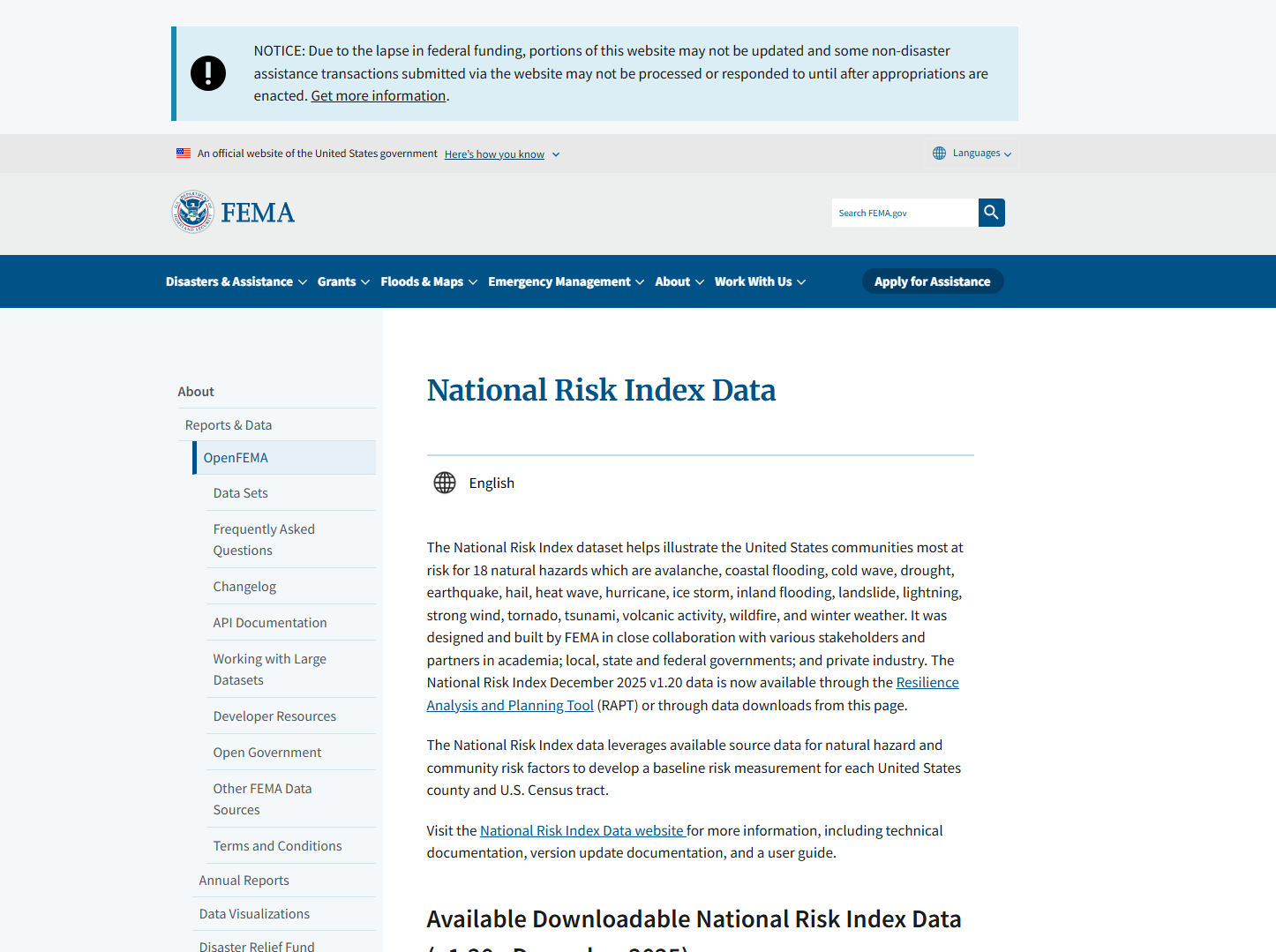
OpenFEMA National Risk Index Data
The OpenFEMA National Risk Index Data is a dataset that shows which United States communities are most at risk from 18 natural hazards, using measures of expected annual loss, social vulnerability and community resilience. Data are available for counties and Census tracts and can be downloaded for analysis.
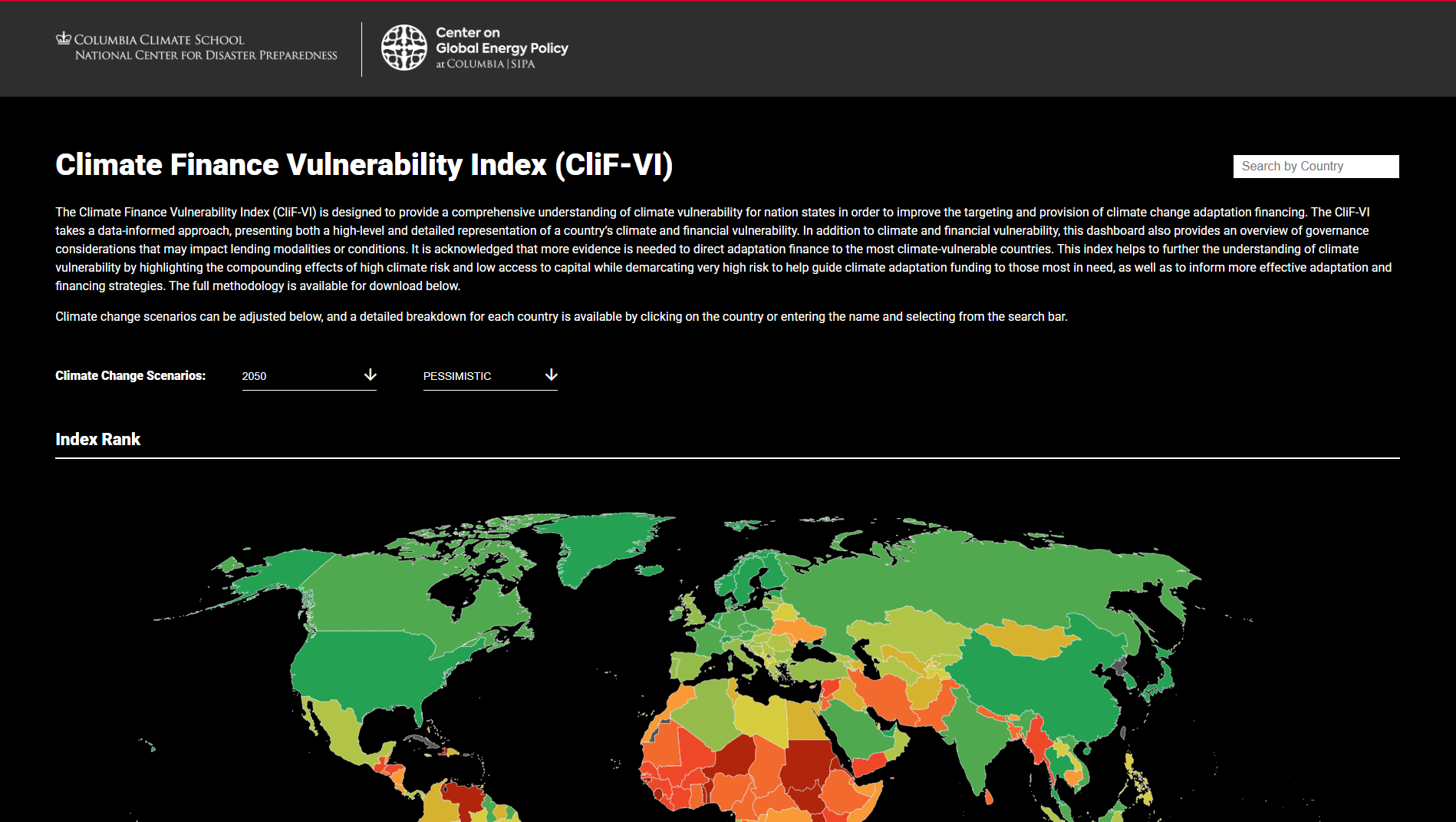
Climate Finance Vulnerability Index (CliF-VI)
The Climate Finance Vulnerability Index (CliF-VI) is a data-driven global tool that assesses nations’ climate risk alongside their financial capacity to respond, helping guide adaptation financing. It combines climate, financial and governance indicators in an interactive dashboard to inform equitable allocation of climate adaptation funds.
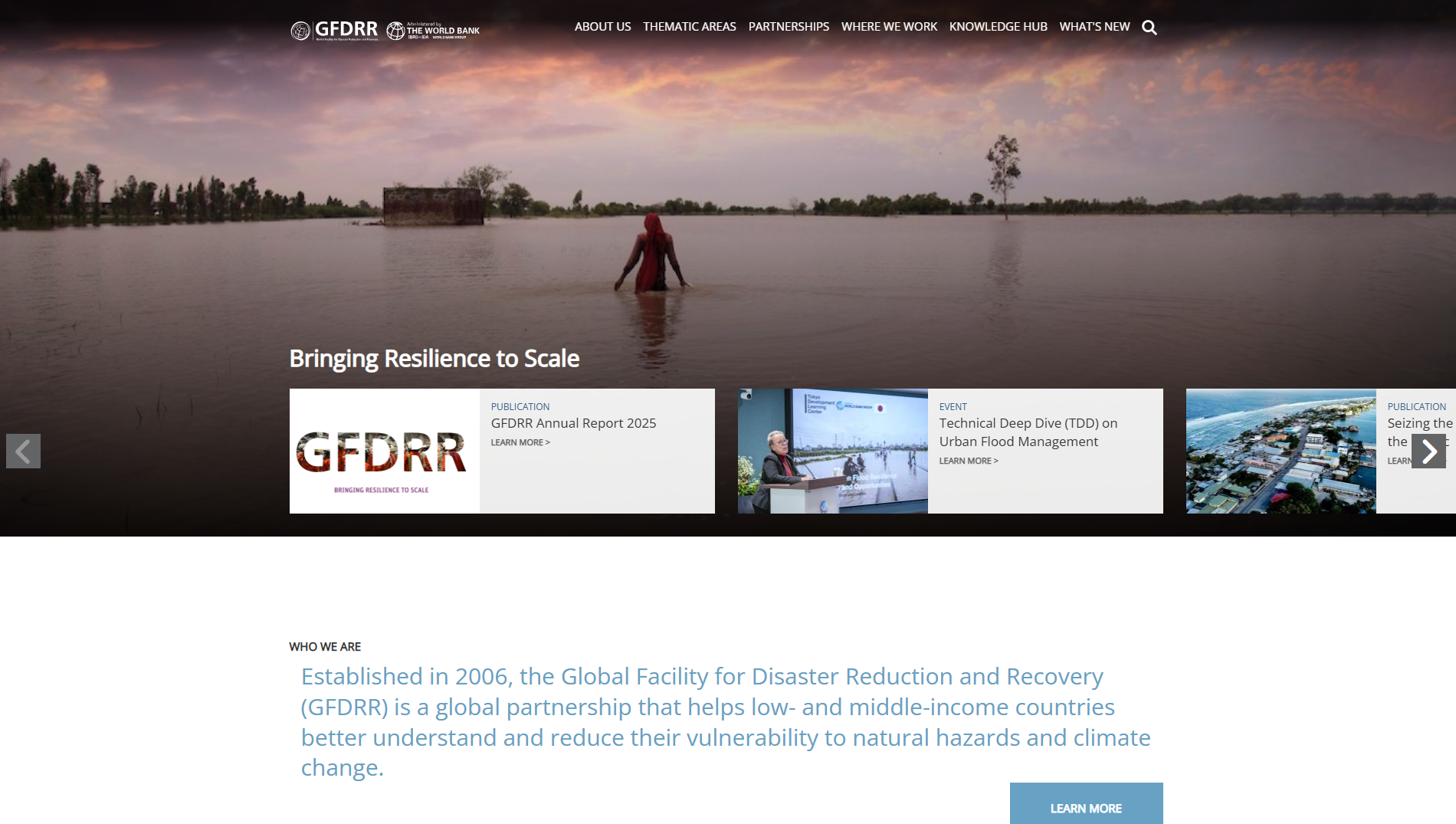
Global Facility for Disaster Reduction and Recovery (GFDRR)
The Global Facility for Disaster Reduction and Recovery (GFDRR) is a World Bank-managed, multi-donor partnership that provides grants, technical assistance and tools to help low- and middle-income countries understand, manage and reduce disaster and climate risks. It supports resilience planning, risk analytics and disaster risk management integration into development.
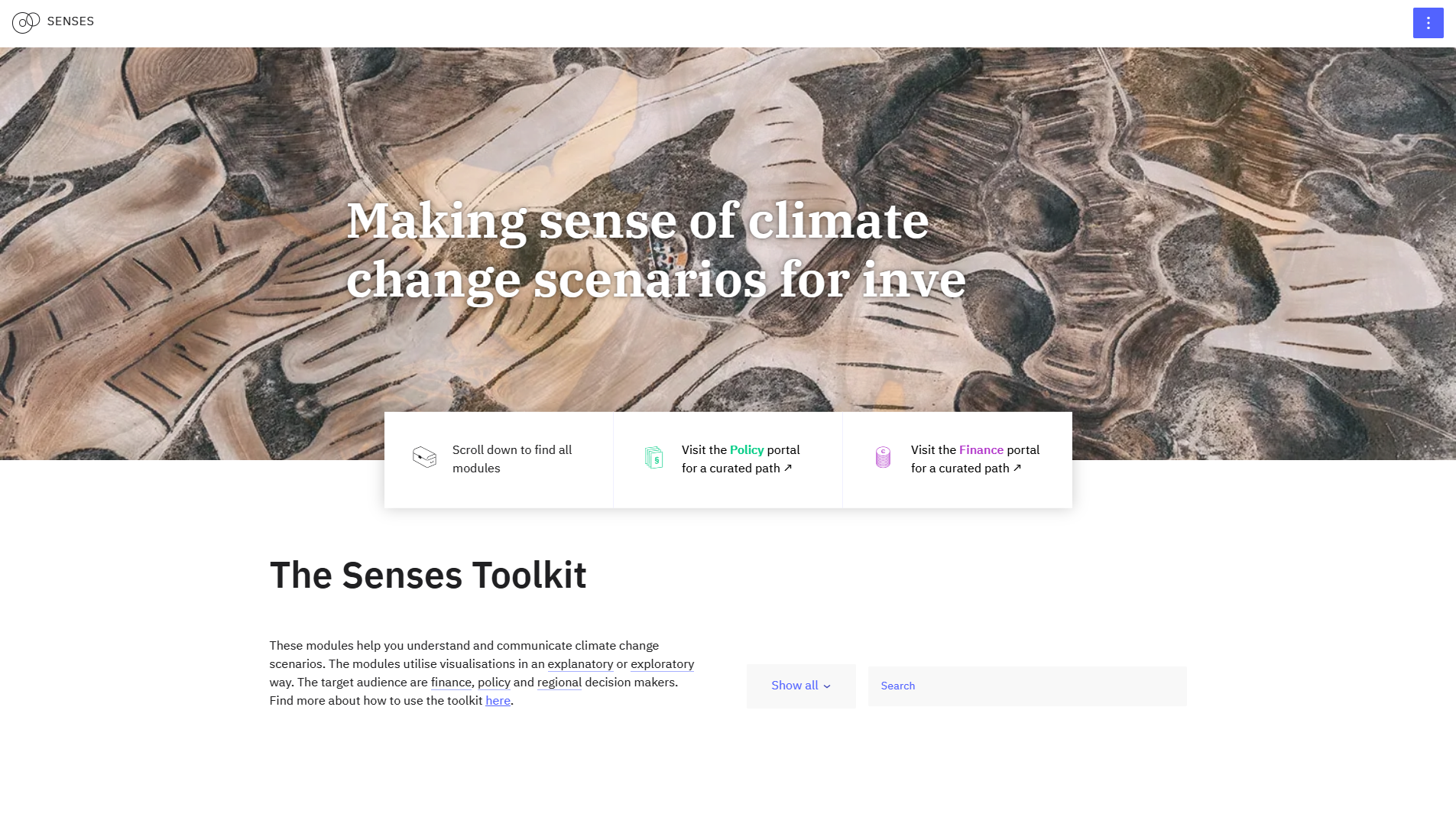
SENSES Toolkit
The SENSES Toolkit is an interactive online platform offering modules to learn about, visualise and explore climate change scenarios. It supports decision-makers in understanding scenario approaches, climate impacts, mitigation and adaptation pathways, with practical guidelines for policy, finance and regional users.

Wageningen University & Research (WUR)
Wageningen University & Research (WUR) is a leading Dutch academic institution focused on sustainable food systems, climate change, biodiversity, agriculture and environmental science.
It combines university education with applied and fundamental research to address global challenges in nutrition, health, water and circular bioeconomy. WUR partners with industry and governments worldwide.
It combines university education with applied and fundamental research to address global challenges in nutrition, health, water and circular bioeconomy. WUR partners with industry and governments worldwide.
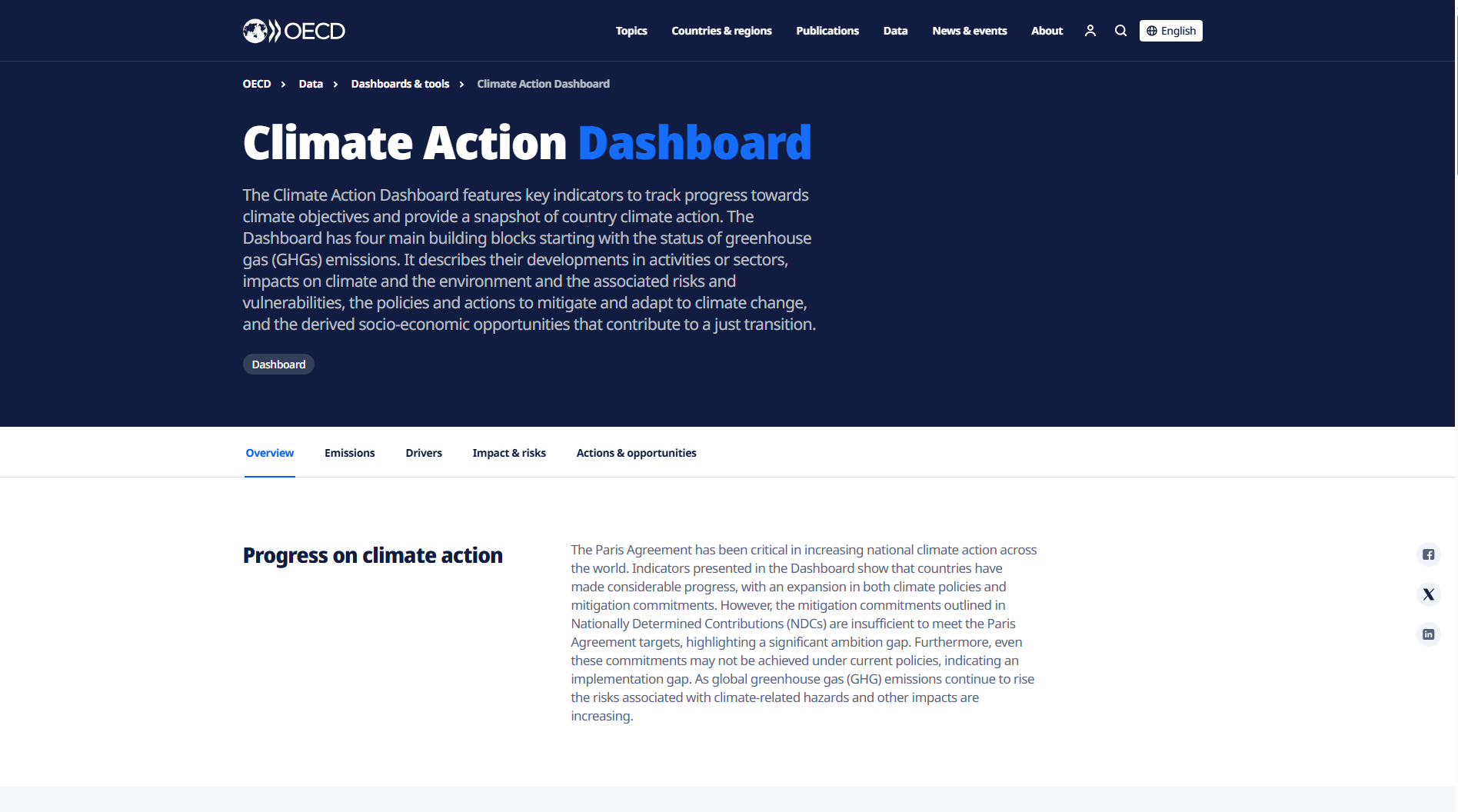
OECD Climate Action Dashboard
The OECD Climate Action Dashboard is an interactive tool showing key indicators of national climate action and progress towards objectives such as net-zero greenhouse gas emissions. It provides comparable, country-level data to track climate mitigation, emissions trends and policy responses.
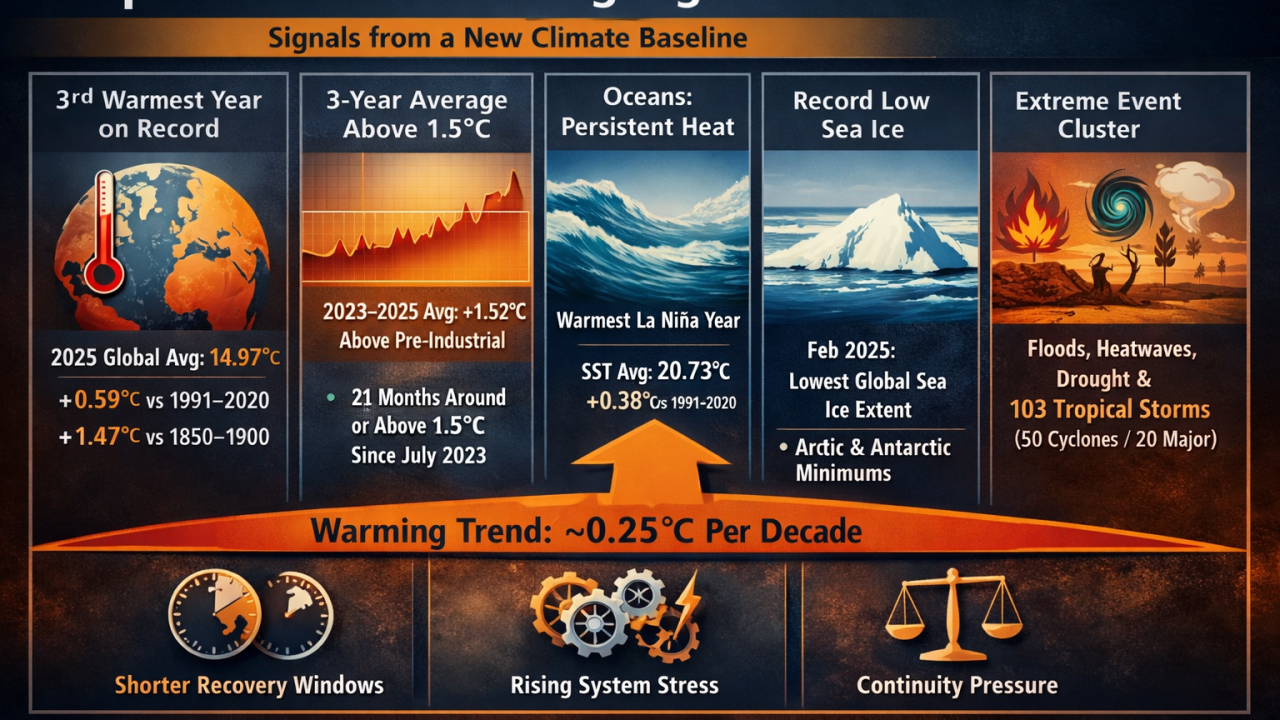
PerilScope: Strategic Deep Dive Copernicus Global Climate Highlights 2025 — From Records to Operating Conditions in the 3°C World SRP® Frame
The article interprets Copernicus’s Global Climate Highlights 2025 as a shift from episodic extremes to a structurally warmer, more volatile baseline. It argues that persistent temperature exceedances, ocean heat, cryosphere decline, and overlapping hazards demand a move from climate risk awareness to disciplined adaptation and continuity planning.
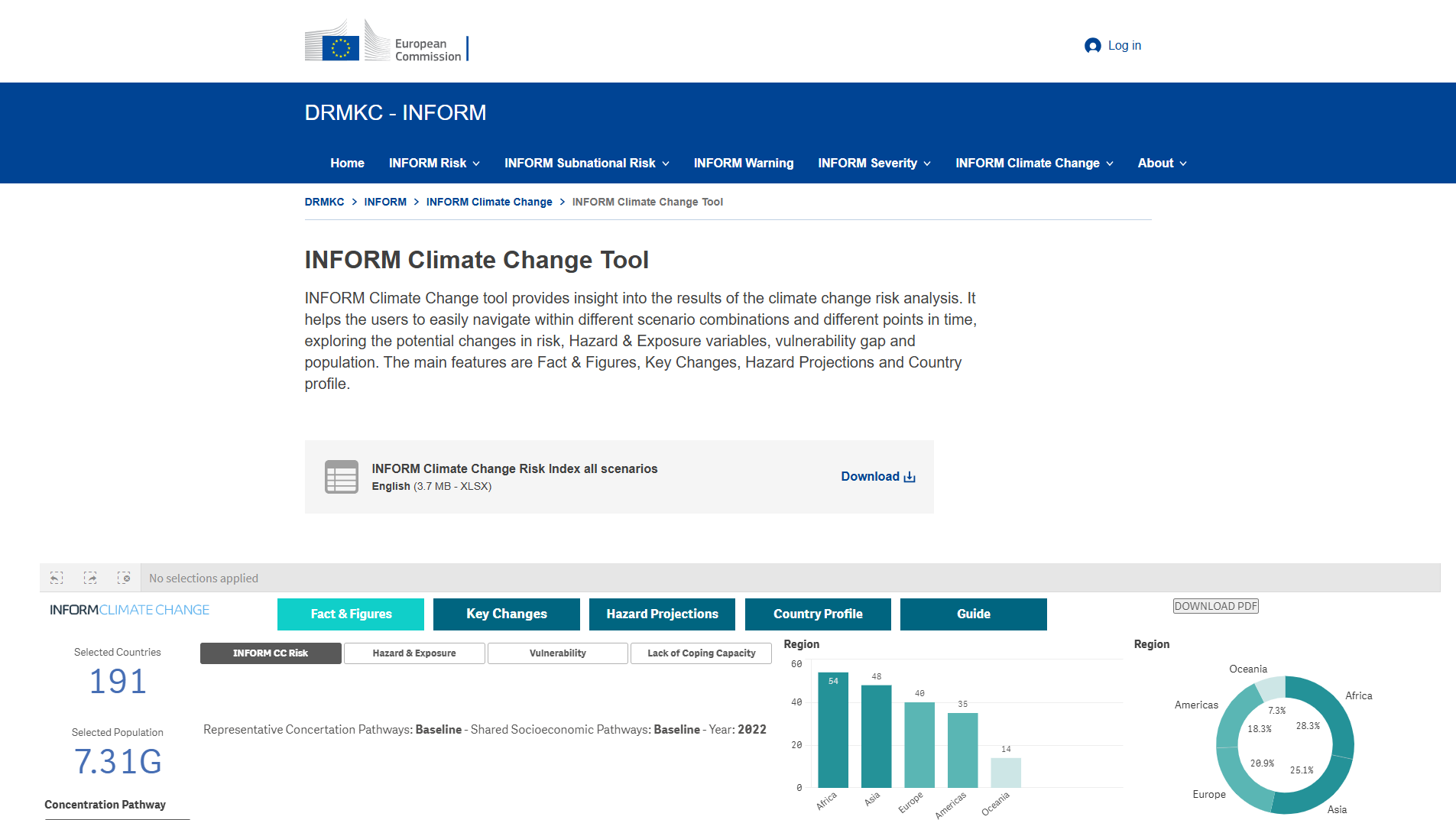
INFORM Climate Change tool
INFORM Climate Change Tool visualises climate-change risk projections, letting users explore future risk, hazard & exposure variables, vulnerability gaps and population changes under different scenarios and time points. It supports analysis of climate impacts on humanitarian and disaster risk via scenario comparison and country profiles.
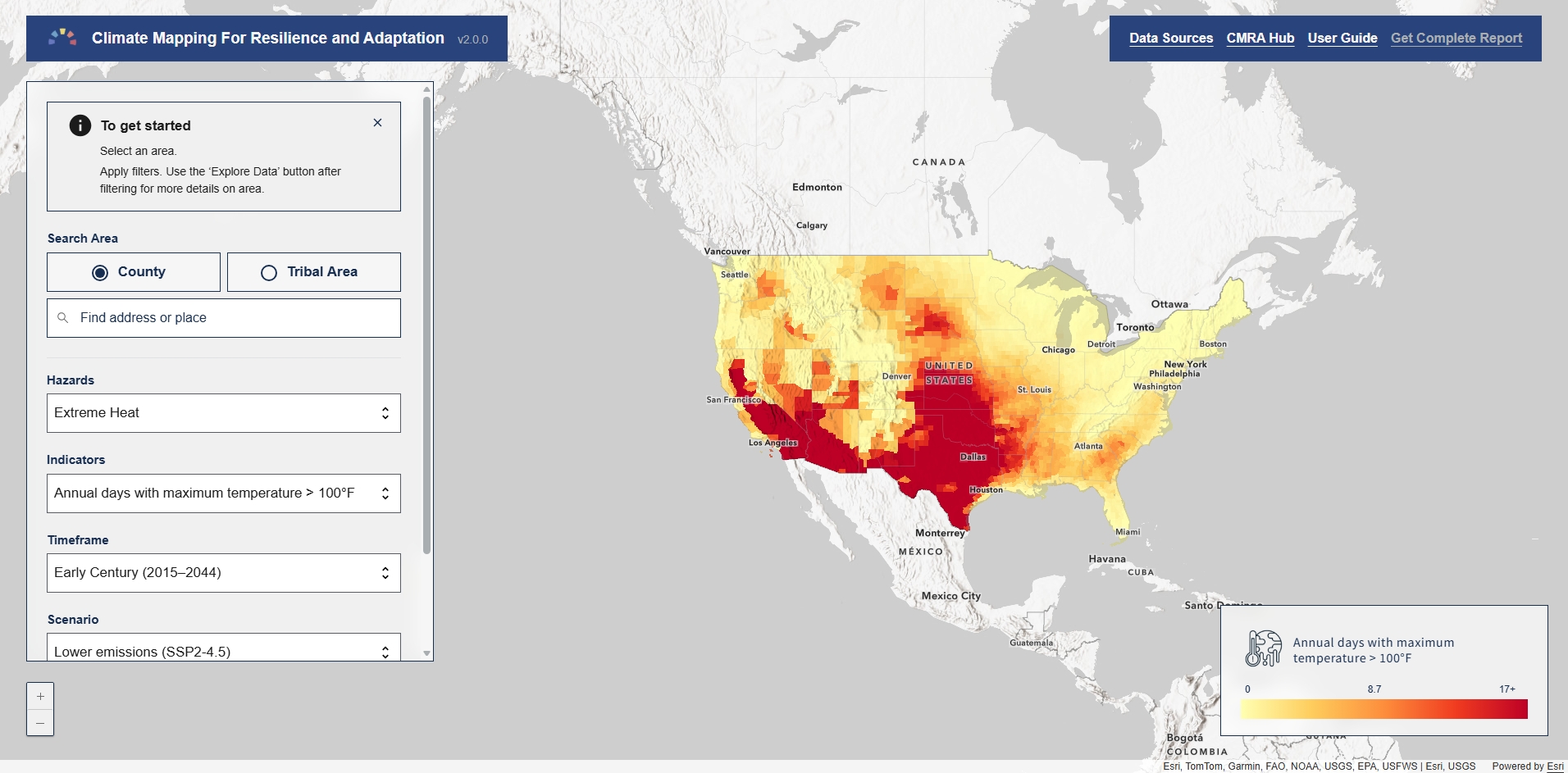
Climate Mapping for Resilience and Adaptation
Climate Mapping for Resilience and Adaptation (CMRA) is a portal that helps users assess local exposure to climate-related hazards using federal data, enabling analysis of past, present and projected climate conditions to support risk assessments and resilience planning.

National Oceanic and Atmospheric Administration (NOAA)
National Oceanic and Atmospheric Administration (NOAA) is a US government science agency focused on understanding and predicting changes in climate, weather, oceans and coasts. It provides environmental data, severe weather forecasting, climate monitoring and marine ecosystem management to support public safety, commerce and research.
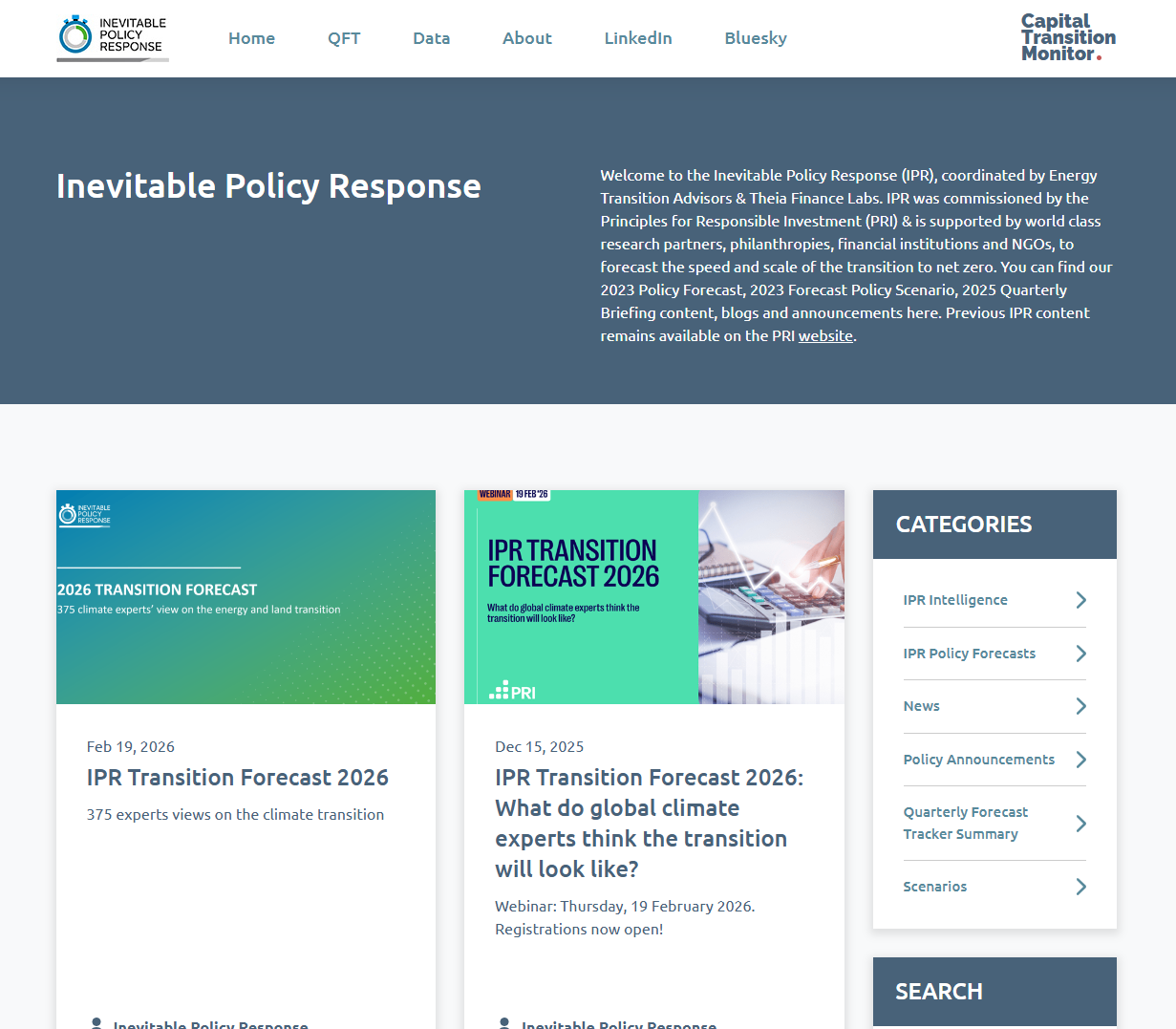
Inevitable Policy Response
Inevitable Policy Response (IPR) on ipr.transitionmonitor.com is a climate policy data and forecast platform that tracks global policy developments, scenarios and variables to help investors assess climate transition risk and alignment of portfolios with likely policy outcomes. It is supported by PRI and research partners.
Inevitable Policy Response (IPR) Transition Monitor is an online climate policy data platform tracking expected government climate actions by country and sector. It helps investors assess transition risk, forecast policy impacts and align portfolios with likely policy pathways to net-zero, based on expert forecasts and quarterly updates.
Inevitable Policy Response (IPR) Transition Monitor is an online climate policy data platform tracking expected government climate actions by country and sector. It helps investors assess transition risk, forecast policy impacts and align portfolios with likely policy pathways to net-zero, based on expert forecasts and quarterly updates.
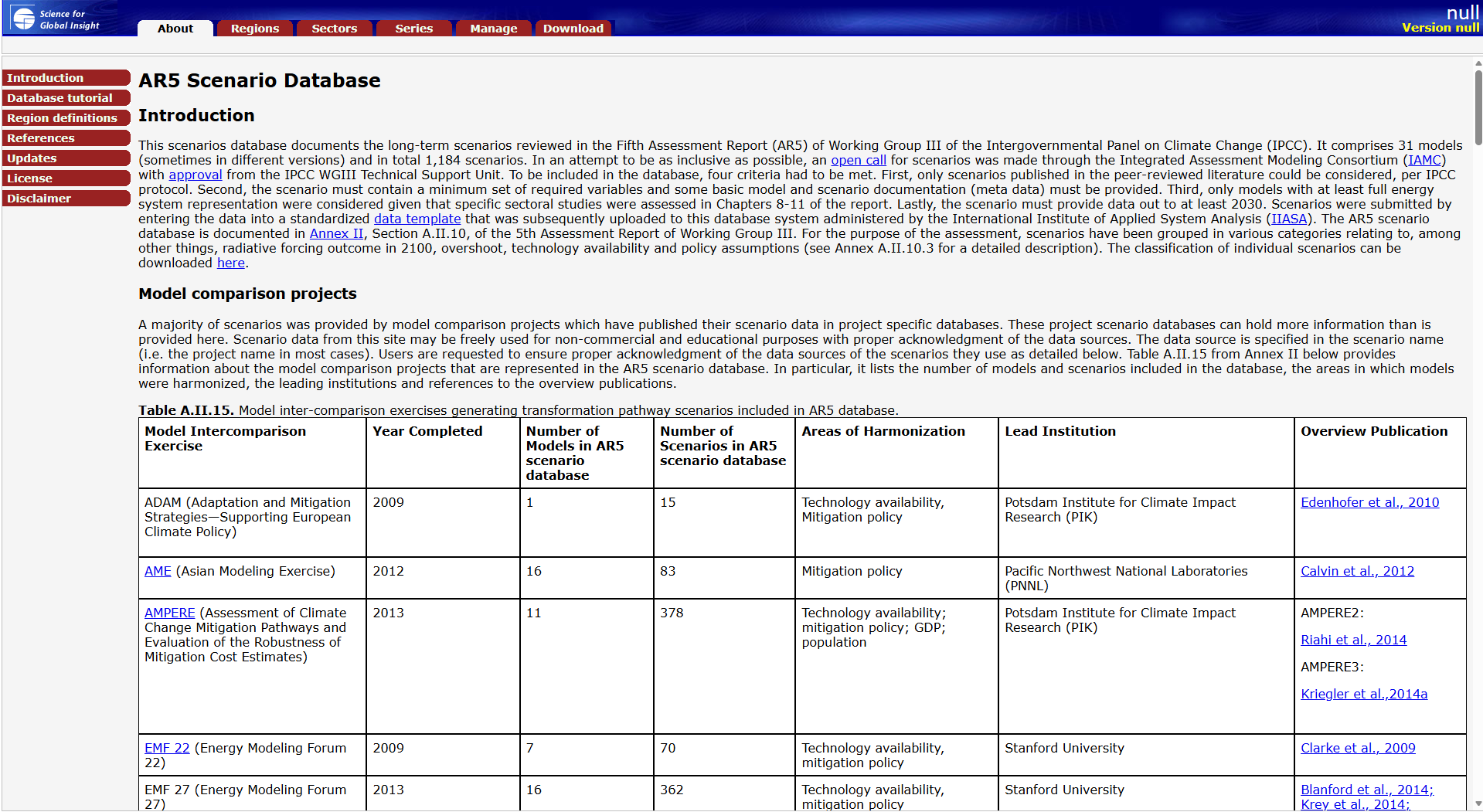
AR5 Scenario Database
The IPCC AR5 Scenario Database, hosted by IIASA, provides access to long-term emissions and mitigation scenarios assessed in Working Group III’s Fifth Assessment Report. It enables users to explore modelled pathways on climate change, energy systems and greenhouse gas emissions, supporting analysis of transition risks and policy-relevant climate outcomes.
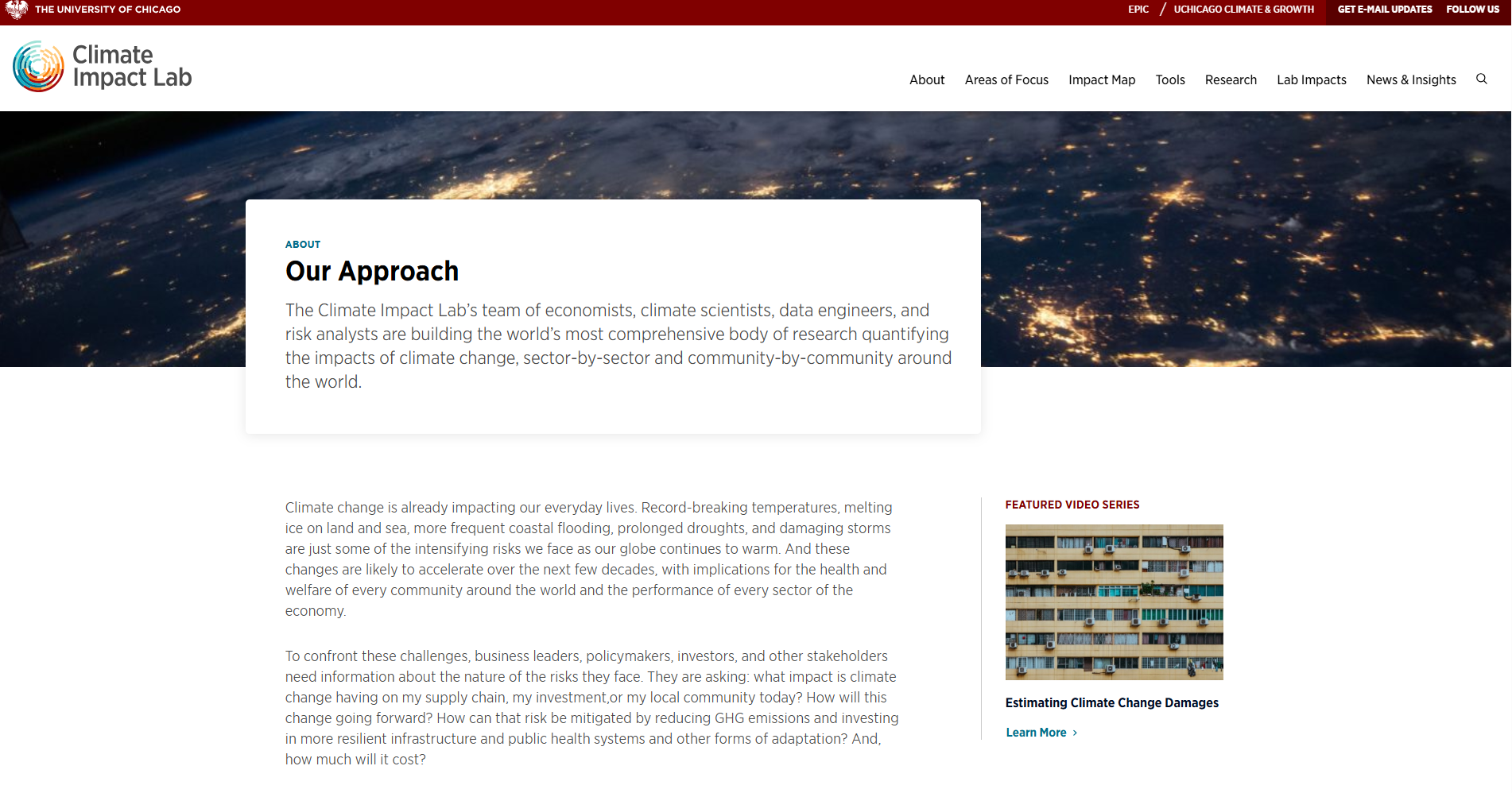
Climate Impact Lab
Climate Impact Lab uses historical climate and socioeconomic data with evidence-based, data-driven analysis to quantify climate change impacts and economic costs at local and sector levels, informing policymakers, investors and business decisions, including an empirically-derived estimate of the social cost of carbon.

Climate Impact Lab
ImpactLab is a research organisation quantifying real-world climate change impacts using evidence-based, data-driven climate science and socioeconomic analysis. It provides hyperlocal climate risk data, estimates social cost of carbon, and informs policymakers, investors and businesses to support climate risk assessment, adaptation planning and sustainable decision-making.
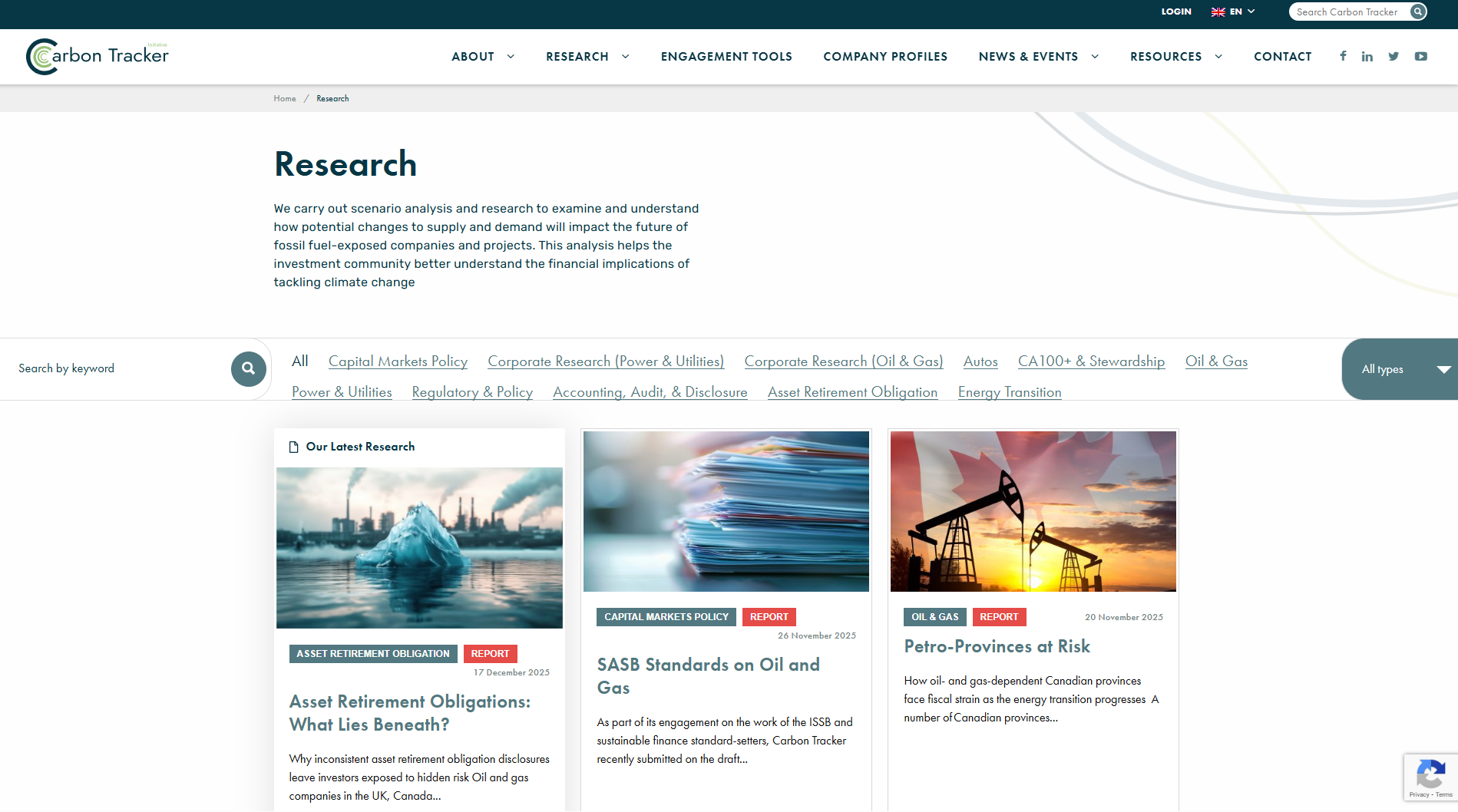
Carbon Tracker Initiative
Carbon Tracker’s Reports page hosts research analysing how supply, demand and climate policy affect fossil-fuel exposed companies and markets. It provides scenario analysis, methodological frameworks and sector-specific insights for investors and policymakers on climate-related financial risk and the energy transition.
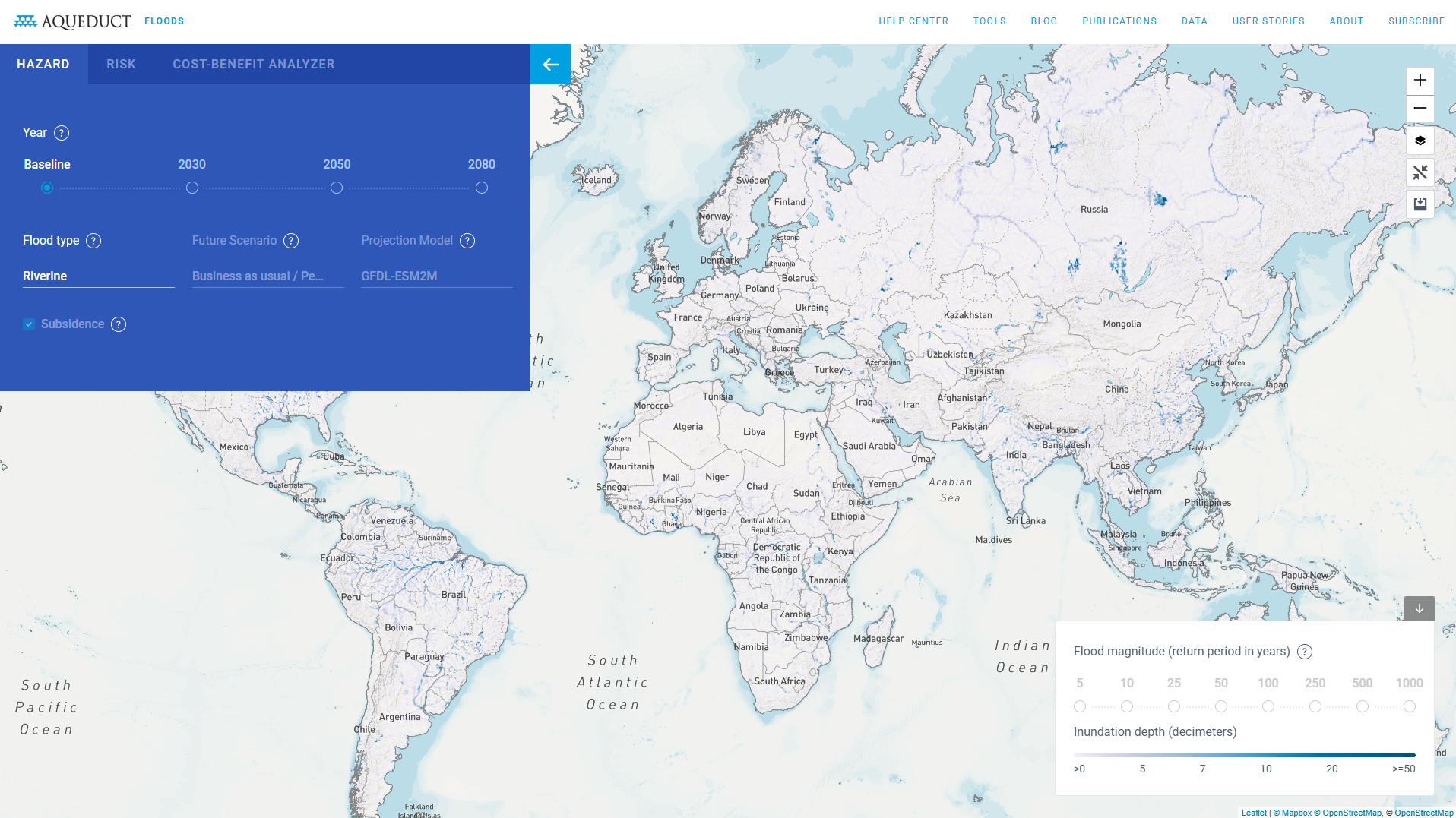
AQUEDUCT Floods
Aqueduct Floods is an interactive tool by WRI that maps current and projected riverine and coastal flood risk globally. It enables users to assess exposure, urban damage, and economic impacts under different climate scenarios, supporting risk analysis, resilience planning, and investment decision-making at country and sub-national levels.


