
Library | ESG issues
Climate Change
Climate change, driven by human-induced greenhouse gas (GHG) emissions, is increasing global temperatures and extreme weather events. Major GHGs like carbon dioxide and methane primarily come from burning fossil fuels, deforestation, and agriculture. Key sectors contributing to emissions include energy, industry, transport, buildings, and land use, making mitigation and adaptation essential for environmental and economic stability.

Refine
1170 results
REFINE
SHOW: 16


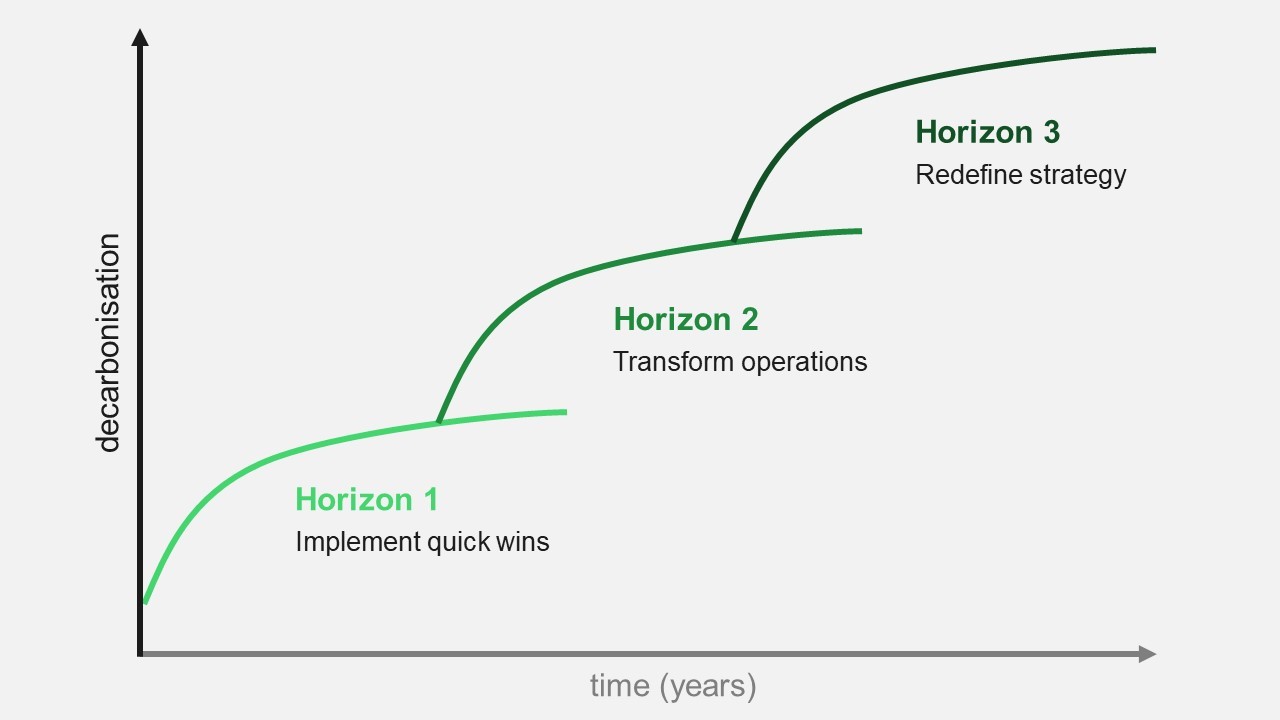
The Three Horizons of Decarbonisation
This article presents the Three Horizons of Decarbonisation framework, helping companies distinguish between short-term efficiency measures, operational transformation, and fundamental business model shifts. It explains how clear horizon identification improves capital allocation, stakeholder engagement, and the likelihood that net zero plans translate into meaningful action.
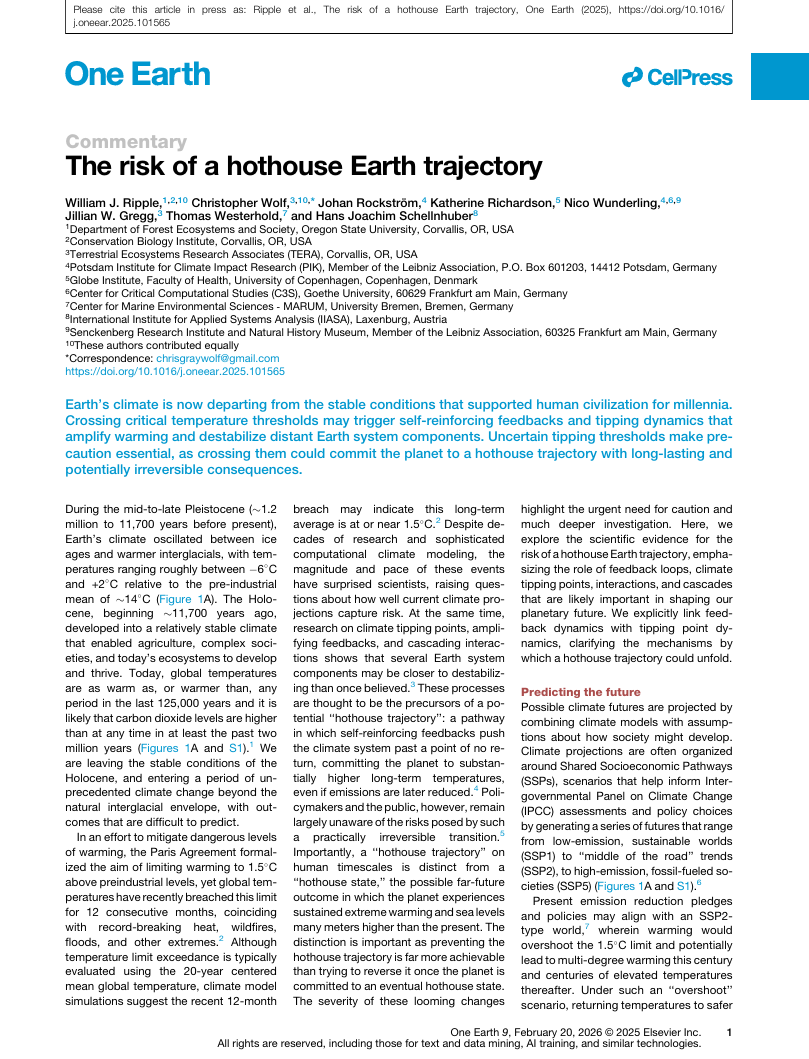
One Earth: The risk of a hothouse Earth trajectory
This commentary assesses risks of a self-reinforcing “hothouse Earth” trajectory driven by accelerating warming, feedback loops and tipping points. It reviews evidence on climate sensitivity, overshoot scenarios and cascading tipping elements, warning that current emissions pathways heighten irreversible risks and require urgent mitigation and precautionary governance.
Hong Kong taxonomy for sustainable finance (phase 2A)
Phase 2A of the Hong Kong Taxonomy for Sustainable Finance sets out detailed criteria for classifying environmentally sustainable activities, aligned with international taxonomies. It covers additional sectors, technical screening thresholds, and transition activities, aiming to enhance transparency, comparability and capital allocation towards climate mitigation and adaptation in Hong Kong.
The macroeconomic impact of climate change: Global vs. local temperature
This paper estimates that global temperature increases have far larger macroeconomic damages than local measures suggest. Using time-series evidence and a neoclassical growth model, it finds a 1°C rise reduces world GDP by over 20% long term, implying substantial welfare losses and a high social cost of carbon.
Developing survey methods for collecting individual policy narratives: A case study of climate change narratives using an engaged convenience sample
This study tests open-ended survey methods for eliciting individual climate policy narratives using the Narrative Policy Framework. In a small, liberal US sample (n=88), problem-focused questions generated more complete narratives. Narrative elements varied by ideology, education and media use, supporting the ‘homo narrans’ assumption.
Advancing adaptation: Mapping costs from cooling to coastal defenses
This McKinsey Global Institute report assesses current and projected costs of adapting to heat, drought, flooding and wildfires under a 2°C warming scenario. It estimates $190 billion is spent annually today, rising to $1.2 trillion by 2050 for developed-economy protection standards, with benefits outweighing costs.
Future energy scenarios: Pathways to Net Zero
Future Energy Scenarios 2025 provides independent pathways for Great Britain’s energy system to reach net zero by 2050. It models demand, supply, flexibility and emissions across electricity, gas and hydrogen, assessing costs, infrastructure needs, carbon budgets and policy choices under varying levels of electrification, hydrogen deployment and consumer engagement.
Coal 2025: Analysis and forecast to 2030
This report analyses global coal supply, demand, trade and prices to 2030. It assesses regional consumption trends across power and industry, production outlooks for major exporters, policy and decarbonisation impacts, and market risks. Forecasts highlight shifting Asian demand, plateauing global use, and implications for investment and energy security.
Global trends in climate change litigation series
This series reviews global developments in climate change litigation, tracking case numbers, jurisdictions, claimant and defendant trends, and evolving legal strategies. Drawing on international litigation databases, it analyses patterns in claims against governments and corporations, highlighting emerging themes in climate governance, accountability and legal risk.
The production gap series
This benchmark series examines the gap between governments’ planned fossil fuel production and pathways consistent with international climate goals. It assesses alignment with temperature limits by reviewing national production plans and policy signals, providing a consistent framework to track progress and comparability across editions.
China sustainable investment review series
The China Sustainable Investment Review is a recurring research series that provides a structured overview of the development of China’s sustainable investment market. It examines policy evolution, market practices, product types, and ESG integration across financial institutions using publicly available information.
The MSCI sustainability institute net-zero tracker series
The MSCI Sustainability Institute Net-Zero Tracker is a periodic benchmark series that monitors how listed companies align with global climate goals. It provides a consistent framework for assessing emissions pathways, transition readiness, disclosure practices and climate-related investment context across markets and sectors.
Ecosystem tipping points: Understanding the risks to the economy and the financial system
This report analyses ecosystem tipping points as systemic risks to economies and financial systems, highlighting non-linear, irreversible ecosystem collapse. It finds current models underestimate impacts and urges precautionary, ecosystem-focused policy and financial regulation to protect price and financial stability.
Unblocking climate and biodiversity finance: Global public investment for global missions
The report proposes integrating mission-oriented policy with Global Public Investment to unblock climate and biodiversity finance. It argues for predictable, equitable public funding, shared decision-making, reduced debt reliance, and reforms such as a Climate and Biodiversity Marshall Plan and redesigned debt-for-nature swaps.
Too-big-to-strand? Bond versus bank financing in the transition to a low-carbon economy
The paper shows bond markets price fossil fuel stranding risk, while syndicated bank loans do not. Firms substitute bonds with bank loans as climate policy risk rises, concentrating exposure in large banks and raising “too-big-to-strand” regulatory concerns.
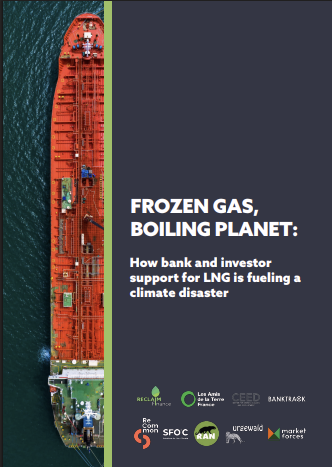
Frozen gas, boiling planet: How bank and investor support for LNG is fueling a climate disaster
The report analyses bank and investor financing of LNG expansion, finding US$213 billion in bank support and US$252 billion in investor exposure since 2021. It concludes this financing drives overcapacity, climate risk and misalignment with 1.5 °C pathways.


