
Library | ESG issues
Environmental
The environmental pillar in ESG (environmental, social, and governance) assesses an organisation’s impact on the planet. It includes issues such as climate change, biodiversity, waste management and water management. Strong environmental practices help businesses reduce risks, comply with regulations, and drive long-term sustainability.
Refine
1899 results
REFINE
SHOW: 16



Where cultivated meat can be sold
An interactive tracker by The Good Food Institute mapping global regulatory approvals and market pathways for cultivated meat products.
The Ocean framework: An investor guide to navigating ocean risks and opportunities
This investor guide examines ocean-related risks and opportunities across nine ocean-dependent sectors. It outlines five key drivers of ocean degradation, introduces a seven-step portfolio assessment framework, and provides sector-specific engagement guidance for fisheries, aquaculture and maritime transportation.
Navigating nature-related data: Metrics, sources and uses
This NGFS information note examines available nature-related data resources and methods for integrating them into financial risk assessment. It reviews metrics and indicators against five key criteria, presents four case studies, and identifies data quality, availability, and standardisation challenges. Public-private collaboration and targeted investment are recommended to address data gaps.
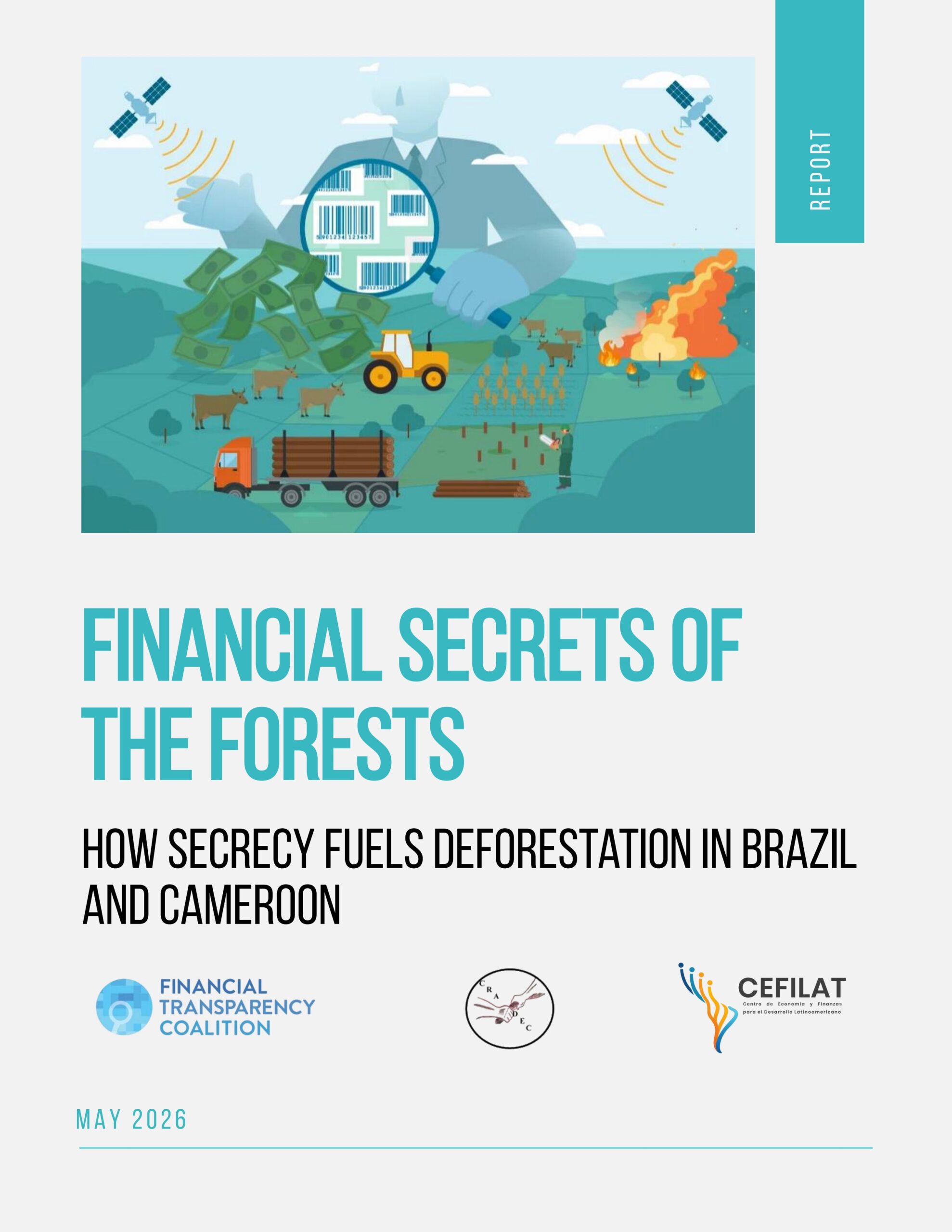
Financial secrets of the forests: How secrecy fuels deforestation in Brazil and Cameroon
This report examines illicit financial flows linked to deforestation in Brazil and Cameroon, estimating trade mispricing losses at US$289 million per year in Cameroon and US$214 million in Brazil. It finds that financial and land ownership secrecy enables illicit deforestation and recommends public beneficial ownership registries and supply chain transparency measures.
Driving Australian climate innovation: Unlocking capital to support a clean industrial revolution
Commissioned by IGCC and authored by Pollination, this report reviews climate innovation policy in California, Denmark, the Netherlands, South Korea and Germany to identify gaps in Australia's policy landscape and recommend measures to drive transition industry investment, including strengthening the Safeguard Mechanism and establishing a national industrial strategy.
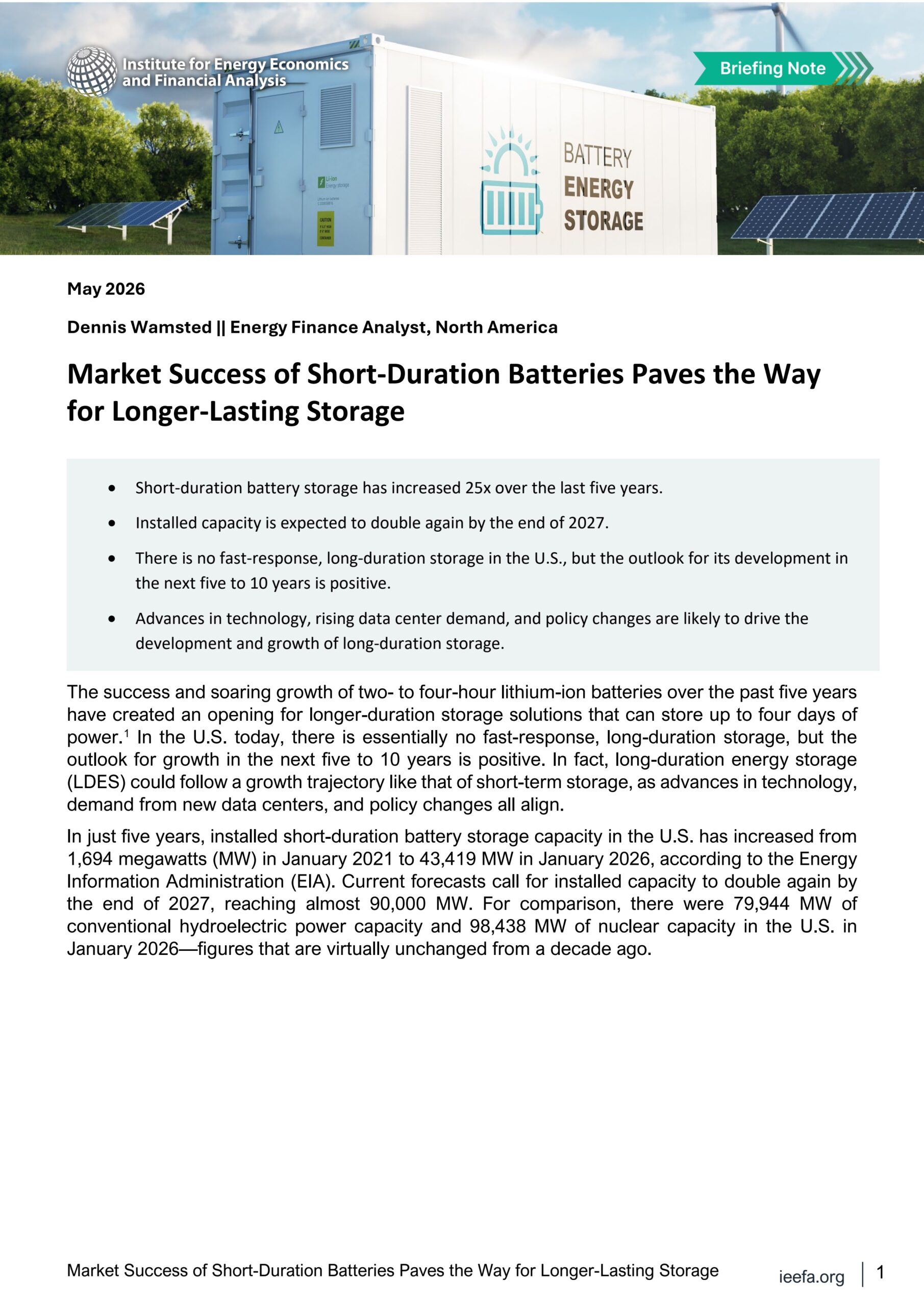
Market success of short-duration batteries paves the way for longer-lasting storage
Short-duration battery storage in the U.S. has grown 25x in five years, reaching 43,419 MW. This IEEFA report examines how that success is opening pathways for long-duration energy storage, driven by state mandates, data centre demand from AI companies, and advances in technologies including iron-air, liquid air, and carbon-oxygen systems.
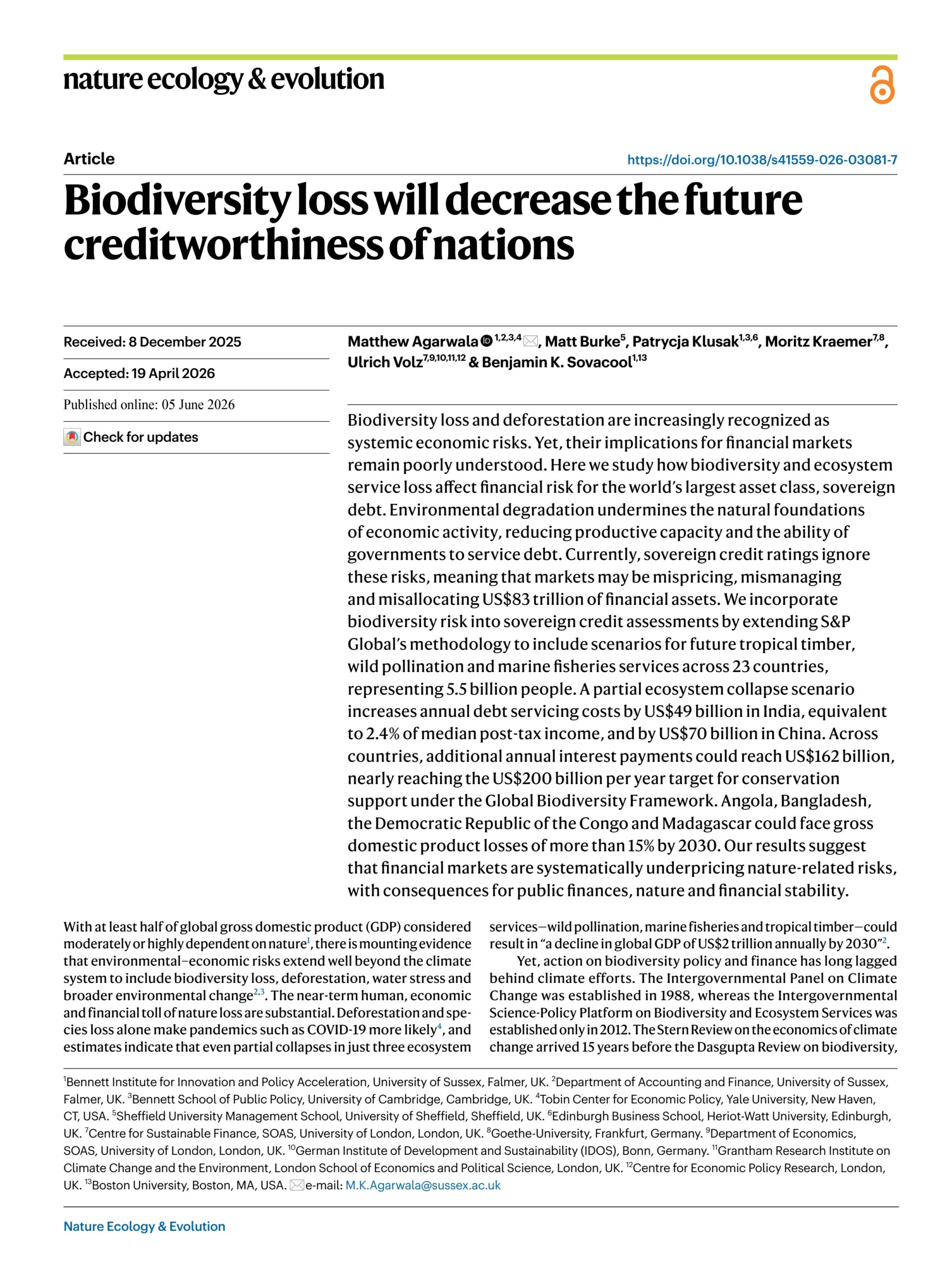
Biodiversity loss will decrease the future creditworthiness of nations
This study examines how biodiversity and ecosystem service loss affect sovereign creditworthiness across 23 countries. Using ecological-economic modelling, it finds that a partial ecosystem collapse could generate US$162 billion in additional annual debt servicing costs globally, highlighting that sovereign credit ratings are systematically underpricing nature-related financial risks.
Red lines in the Abyss: Growing financier concern over deep-sea mining
This report maps 82 financial institutions — representing approximately EUR 24 trillion in combined assets — that have excluded or expressed concern over deep-sea mining. Published by Seas At Risk and the Deep Sea Mining Campaign, it charts growing financier momentum against deep-sea mining and calls for explicit exclusion policies from both financial institutions and governments.
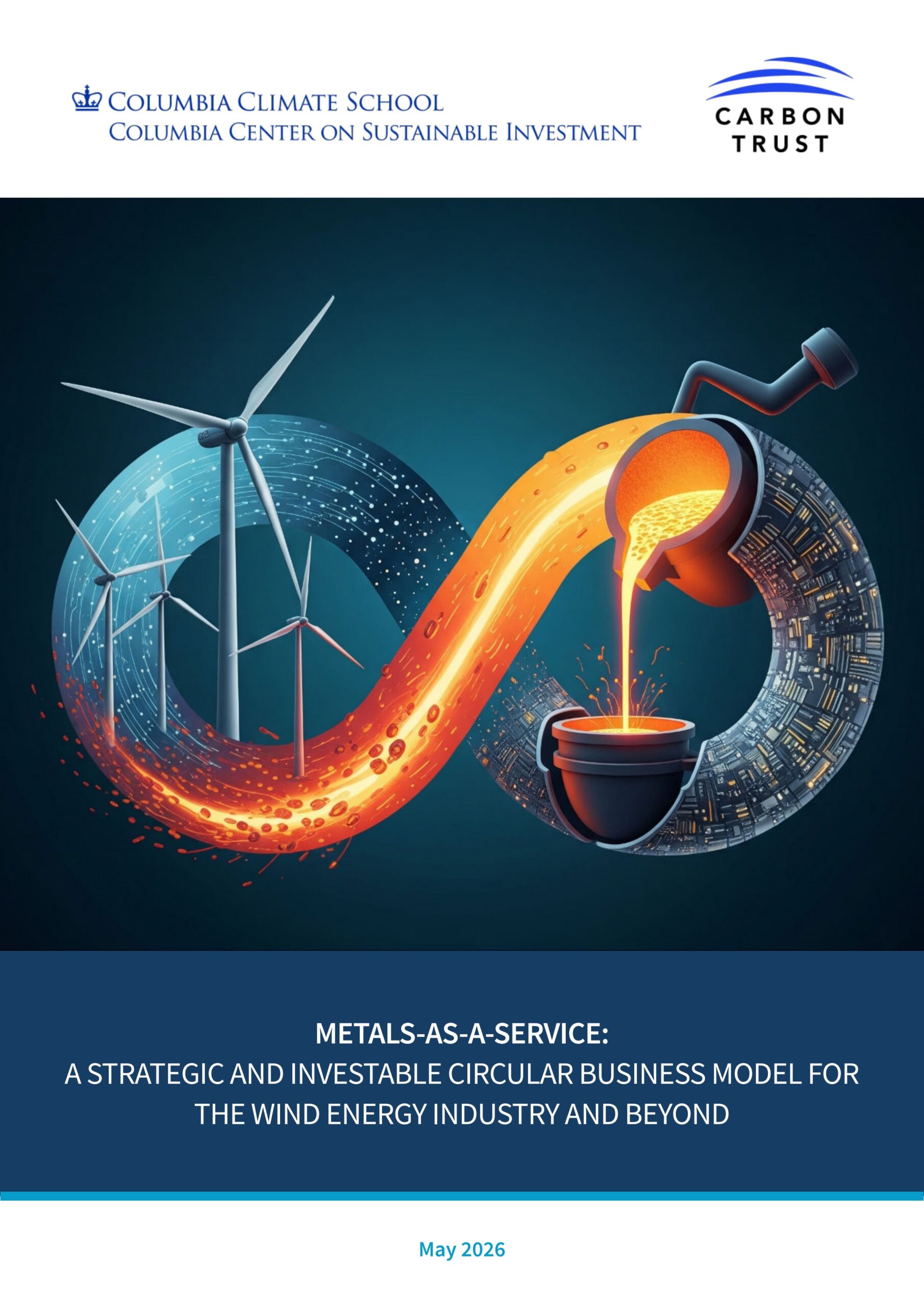
Metals-as-a-Service: A strategic and investable circular business model for the wind energy industry and beyond
Metals-as-a-Service (MaaS) proposes a circular business model for the wind energy sector and beyond, in which metal ownership is retained by a Special Purpose Vehicle throughout the asset lifecycle. The model converts metal procurement from capital expenditure into a service-based structure, enabling securitisation, improved supply security, and circular value creation.
Nature-based solutions for a sustainable critical minerals value chain
This report examines how nature-based solutions (NbS) can be integrated into critical minerals mining. Drawing on case study research and expert events at Climate Week NYC and COP30, it identifies six resilience-building NbS categories and highlights the need for systems-based planning, community collaboration, and improved financing mechanisms.
Airports and aviation emissions: The Airport Tracker as a tool for data-driven advocacy
This policy brief presents findings from the third update to the Airport Tracker, a global inventory covering the world's 1,300 busiest airports. Using 2023 data, it analyses CO₂ and local air pollution from passenger, freight and private jet flights, finding that aviation remains off track to meet net-zero goals.
The differential impacts of critical mineral prices and oil prices on the economy
This paper uses a neoclassical open-economy growth model to compare the macroeconomic impacts of critical mineral and oil price shocks. Oil price increases are found to be more contractionary for output and welfare, while mineral price shocks primarily affect investment and external balance sheets, warranting macroprudential and fiscal policy responses.
How to use consensus state of nature metrics to understand business dependencies on ecosystem services
This briefing note explains how businesses and financial institutions can configure the NPI consensus State of Nature metrics to understand their dependencies on ecosystem services. It outlines a four-step practical process, identifies where the metrics provide strong insight, and highlights where complementary indicators are needed.
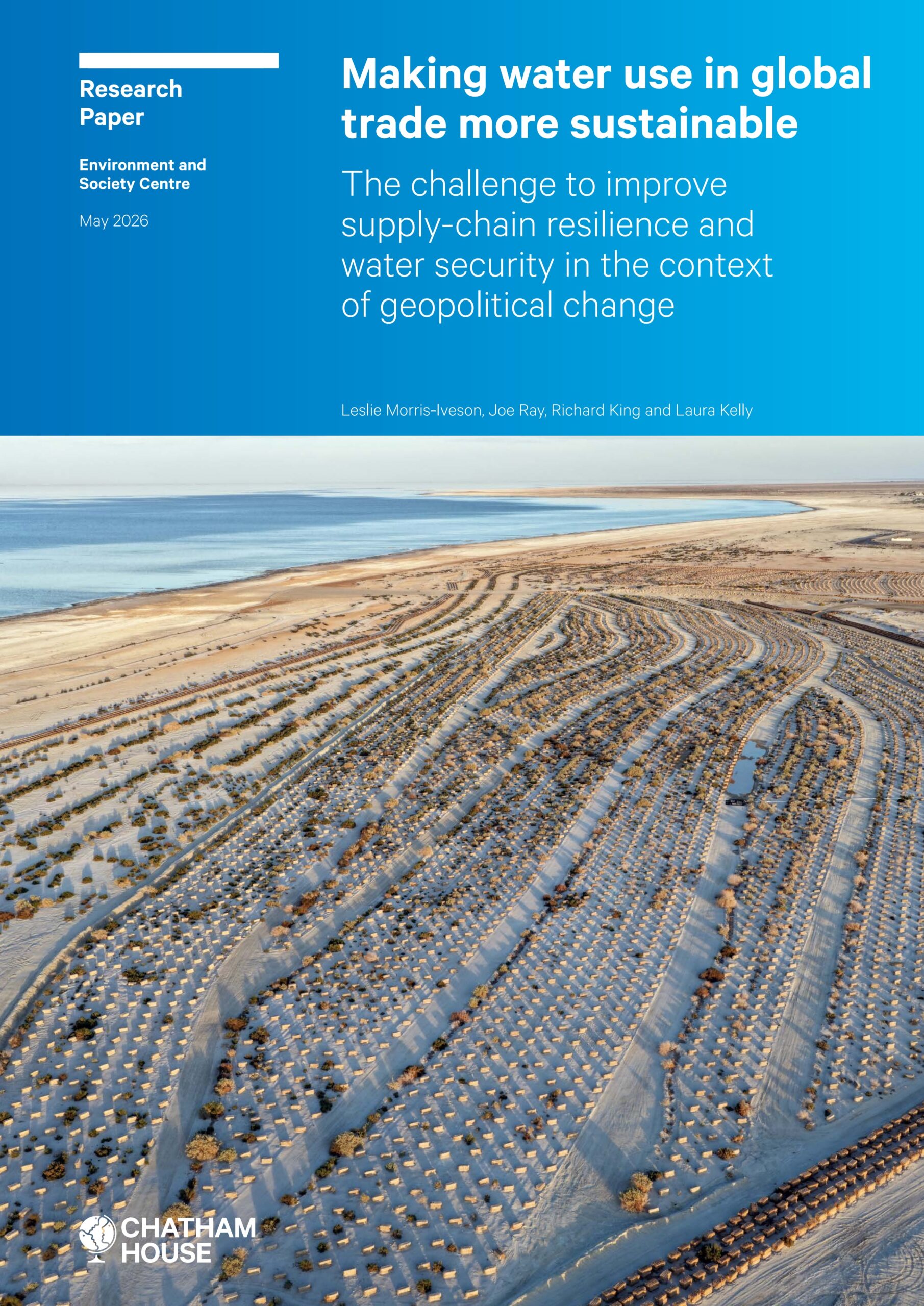
Making water use in global trade more sustainable: The challenge to improve supply-chain resilience and water security in the context of geopolitical change
This Chatham House paper examines how global supply chains drive unsustainable water use and water insecurity, particularly in the Global South. It explores 'virtual water' trade dynamics, the impact of geopolitical fragmentation on cooperative water governance, and presents 10 recommendations for governments, corporations, financial institutions and civil society.
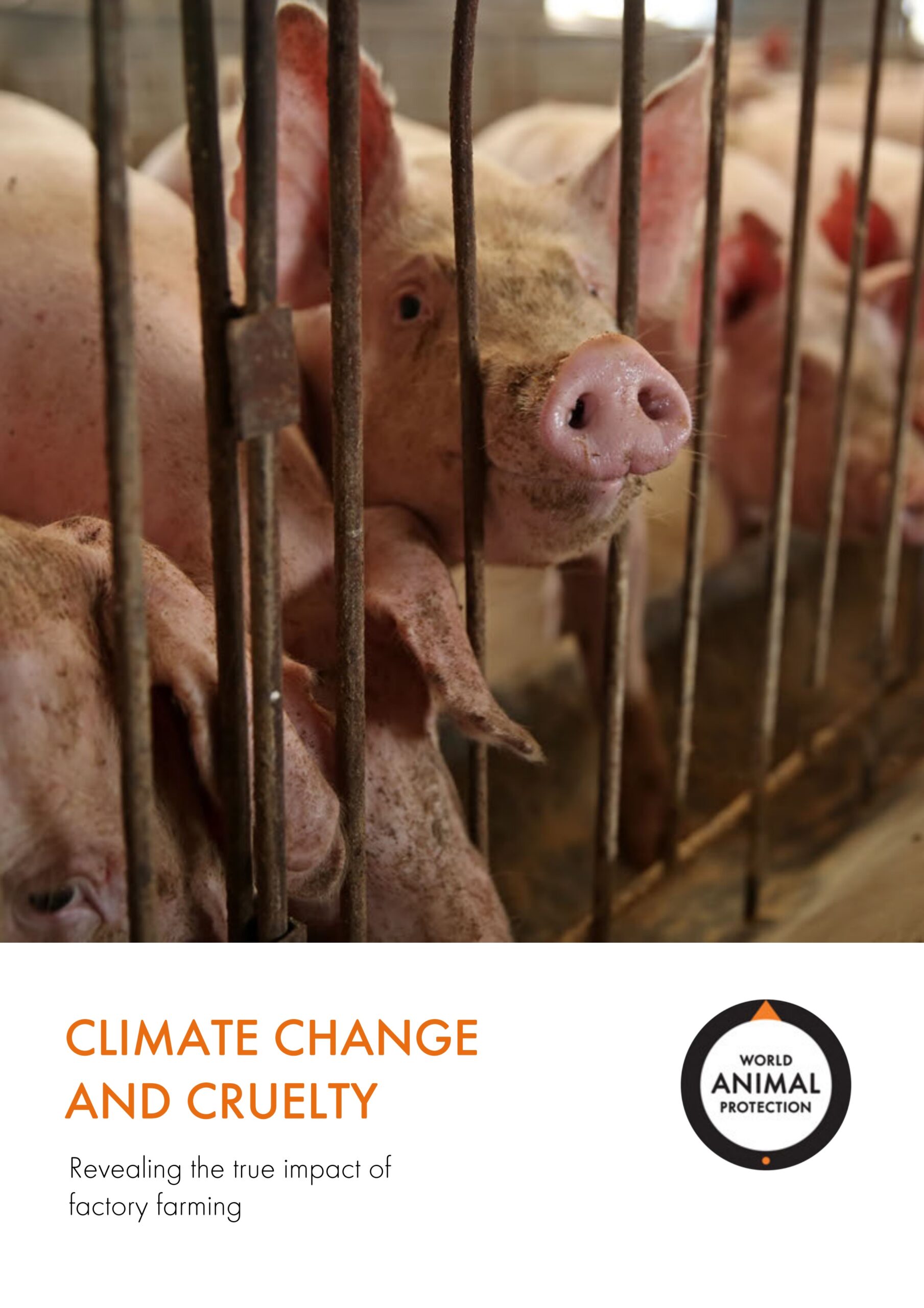
Climate change and cruelty: Revealing the true impact of factory farming
This World Animal Protection report examines the climate and environmental impacts of factory farming in Brazil, China, the USA and the Netherlands. It models scenarios for reduced meat consumption and higher welfare production, finding that eating less and better could halve the climate impacts of chicken and pork by 2040.
Leading the charge: Turning risk into reward with a circular economy for EV batteries and critical minerals
This report by the Ellen MacArthur Foundation examines systemic risks in the EV battery value chain and sets out a circular economy framework, identifying five bright spots — battery design, rightsizing, circular business models, regional infrastructure, and data transparency — to build resilience and reduce critical mineral demand.


