
Library | ESG issues
Environmental
The environmental pillar in ESG (environmental, social, and governance) assesses an organisation’s impact on the planet. It includes issues such as climate change, biodiversity, waste management and water management. Strong environmental practices help businesses reduce risks, comply with regulations, and drive long-term sustainability.
Refine
1909 results
REFINE
SHOW: 16


Empowering key development finance institutions in Asia to accelerate the decarbonization of the energy sector
The report outlines Asia's challenges to decarbonising energy while driving economic development. It suggests there is significant room for improvement among regional banks and to achieve their commitments to the Paris Agreement, firms need to implement more stringent sustainable finance policies.

Greenpeace
Greenpeace International is an environmental NGO advocating for global environmental protection and sustainability. With a focus on climate change, deforestation, overfishing, and other ecological issues, it engages in activism, research, and lobbying to drive positive change. Greenpeace campaigns for renewable energy, biodiversity preservation, and the mitigation of environmental damage worldwide.

New Zealand Green Investment Finance (NZGIF)
The New Zealand Green Investment Finance (NZGIF) is dedicated to driving sustainable investment across New Zealand. With a focus on green initiatives, NZGIF collaborates with businesses, government, and communities to promote environmental stewardship and economic growth. Their strategy emphasises innovation, values integrity, and embraces a holistic approach to green investment.

Decarbonization, population disruption and resource inventories in the global energy transition
The study underscores the necessity of macro-level planning for energy decarbonisation. It delves into the geographical intricacies and dynamics of mineral resource extraction during the transition, providing an empirical foundation to evaluate spatial impacts and demographic shifts. It reveals potential risks and disparities in risk distribution, emphasizing targeted planning's importance.

Nature positive economies: Progress, lessons and next frontiers
The report titled explores a six-year global partnership aimed at embedding natural capital into economic decision-making. It highlights key lessons, including the need for systemic change, collaboration across sectors, and nature-based solutions to build resilient, sustainable economies. The report provides case studies and frameworks to guide future efforts towards nature-positive economies.

Green Economy Coalition (GEC)
The Green Economy Coalition is a global network advancing sustainability and economic prosperity. Focused on promoting green economic policies and practices, they engage diverse stakeholders to foster a transition to sustainable development.
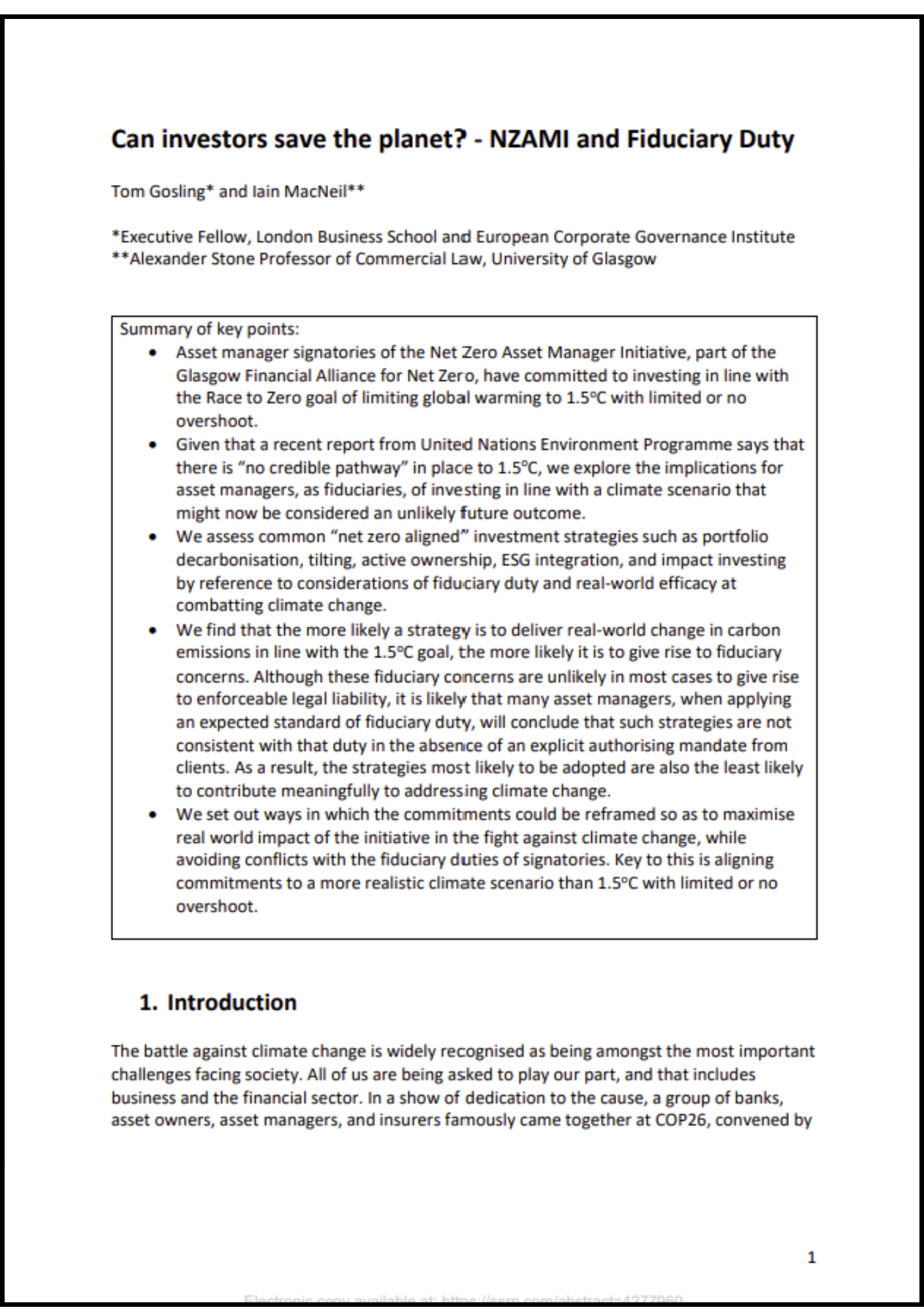
Can investors save the planet? - NZAMI and fiduciary duty
The report evaluates asset managers' strategies aligning with the Race to Zero goal of limiting global warming while considering the possibility of a different climate scenario. It finds impactful environmental approaches might pose fiduciary challenges. Authors propose revising commitments to enhance climate impact while upholding fiduciary duties.

Catalytic capital: A key to aligning infrastructure investments with climate mitigation in emerging markets
This report provides a roadmap for directing more institutional capital toward climate infrastructure financing in emerging markets. It identifies the importance of using catalytic capital and outlines four themes crucial to its effective use: targeting, speed, support, and analysis. The report offers recommendations for how to address climate challenges through targeted catalytic interventions.

The rising tide of greenwashing: Navigating ‘greenwashing’ risks in climate change targets and sustainability credentials
The report highlights the risks and challenges associated with businesses misrepresenting their sustainability credentials or strategies. The document elaborates on the subject with the help of multiple examples and practical guidelines to reduce legal and reputational exposure to businesses and corporations.
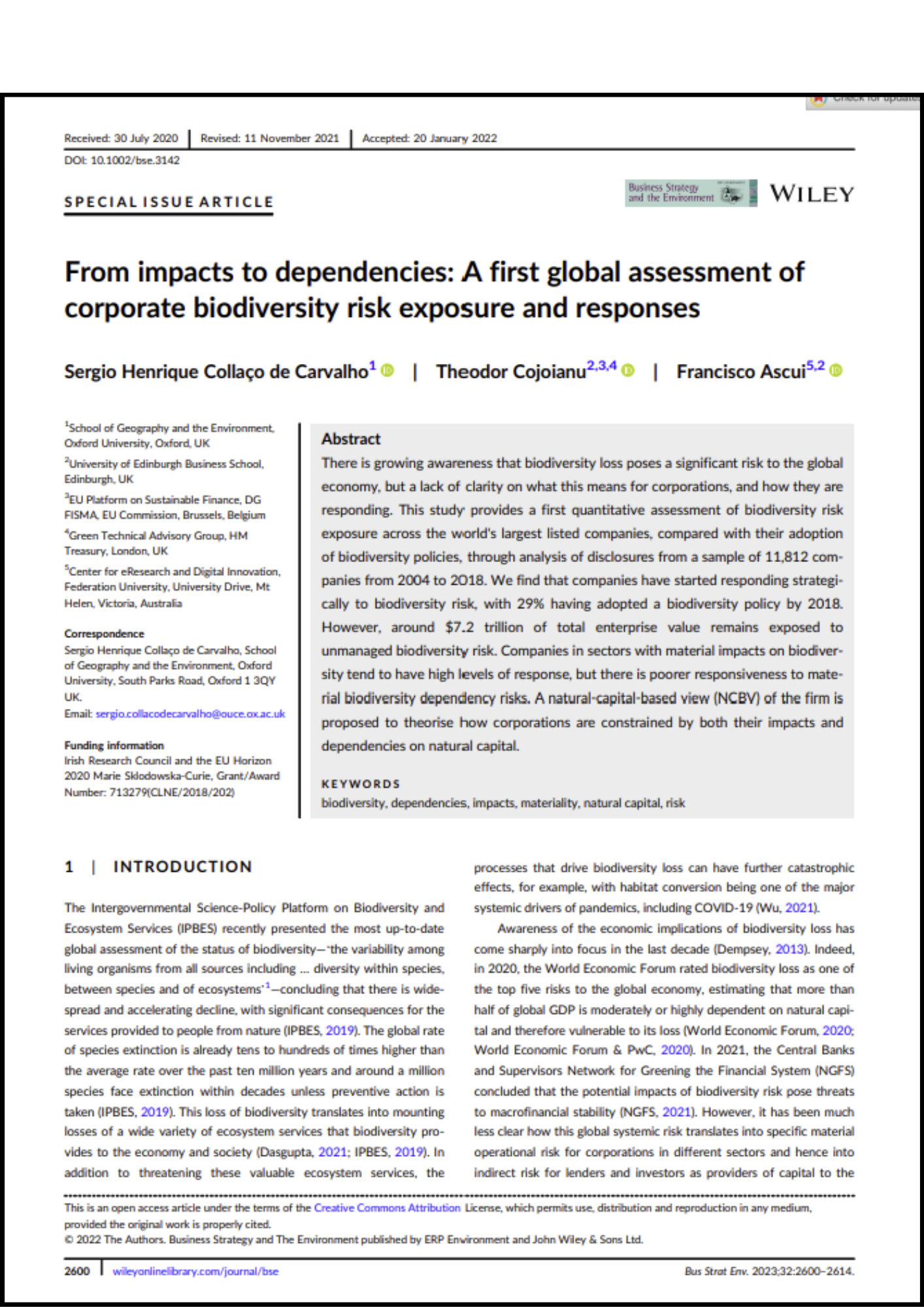
From impacts to dependencies: A first global assessment of corporate biodiversity risk exposure and responses
The report unveils a significant gap in corporate biodiversity risk management, with $7.2tn exposed despite a 29% adoption rate of biodiversity policies among 11,812 sampled companies. It emphasises the inadequate response to biodiversity risks, especially in sectors highly reliant on biodiversity.

In search of the true greenium
The expected return of green securities relative to brown is a crucial impact measure for ESG investors, and the greenium is more negative in greener countries and over time. The equity greenium has become more negative over time. The proposed robust green score combined with forward-looking expected returns yields a more precisely estimated annual equity greenium.

Measuring what matters: Australia's first well-being framework
Measuring What Matters is Australia's first wellbeing framework, published in July 2023 by the Commonwealth of Australia. It seeks to deepen our understanding of how Australians are faring beyond traditional economic indicators. The framework includes 50 wellbeing indicators under the themes of healthy, secure, sustainable, cohesive, and prosperous societies.

2024 XDI gross domestic climate risk report
The 2024 XDI report ranks over 2,600 regions worldwide according to the projected damage to the built environment from extreme weather and climate change, including floods, wildfires and sea-level rises, and which of these regions are likely to see the largest escalation in damage from 1990 to 2050.

Cross Dependency Initiative (XDI)
XDI Systems (Cross Dependency Initiative) is a mission-driven company dedicated to accelerating action on climate change by embedding physical climate risk data in all decisions. As experts in physical climate risk, they provide actionable results to clients globally, collaborating with governments, NGOs, companies, banks, and communities to address climate challenges collaboratively.

ESG investing in emerging markets – a roadmap towards net-zero
This report discusses the challenges in ESG investing for emerging markets due to varying standards in regulations and reporting. It also covers the importance of sovereign engagement and incorporating biodiversity in investment decisions. The lack of standardisation in data and regulation presents difficulties in generating sustainable investments.

BNP Paribas
Explore the diverse offerings of BNP Paribas Group, a global leader in banking and financial services. From retail banking to corporate and institutional banking, their expertise spans various sectors. With a commitment to sustainability and innovation, they provide tailored solutions to meet the needs of clients worldwide.


