
Library | ESG issues
Fisheries & Aquaculture
Fisheries and aquaculture involve both wild fishing and the farming of aquatic organisms for commercial purposes. Sustainable practices minimise environmental impacts, maintain biodiversity, and balance ecosystem health, reducing risks associated with overfishing, habitat destruction, and pollution. Responsible management of both wild fisheries and aquaculture is essential for long-term food security, economic stability, and the preservation of marine ecosystems. Investors can assess risks related to overfishing, habitat degradation, supply chain transparency and regulatory compliance.
Refine
53 results
REFINE
SHOW: 16



University of Adelaide
The University of Adelaide, established in 1874, is Australia's third-oldest university and a member of the prestigious Group of Eight. Ranked among the top 100 globally, it offers a diverse range of undergraduate and postgraduate programs. Located in Adelaide, South Australia, the university is renowned for its research excellence and vibrant campus life.
Climate risk and adaptation in global food
The report outlines rising climate risks to global food supply chains, projecting up to $38 trillion in damages by 2050. It explores mitigation and adaptation strategies across crops, livestock, and fisheries, and highlights investor actions to build resilience, support sustainable practices, and adapt to shifting market, environmental, and regulatory conditions.
Addressing biodiversity risk and opportunity at PensionDanmark
PensionDanmark developed a biodiversity strategy targeting its real estate and infrastructure assets to mitigate nature loss. It employs data-led initiatives, stakeholder engagement, and nature-based solutions to protect and restore biodiversity, aligning with EU taxonomy and Science Based Targets for Nature. Implementation includes construction screening, sustainable sourcing, and performance monitoring.
Investing in a pollution free ocean
The report explores how ocean pollution poses financial, legal and reputational risks to businesses, particularly land-based sectors. It identifies data gaps as a barrier to effective decision-making and highlights opportunities in green chemistry, data innovation and sustainable finance. It recommends integrating ocean health into corporate and financial strategies.

Back to Blue
Back to Blue Initiative is a joint project by Economist Impact and the Nippon Foundation addressing ocean pollution. It focuses on data-driven solutions for plastic and chemical pollution in marine environments. The initiative offers research, policy insights and advocacy to support sustainable ocean health and inform global environmental decision-making.
The nature-based solutions map
This tool is designed to help businesses identify relevant nature-based solutions (NbS) for addressing challenges related to core business operations, climate, nature, water, and social equity. It categorises NbS based on business needs and biomes, facilitating decision-making. The map serves as a starting point, requiring further development for implementation.
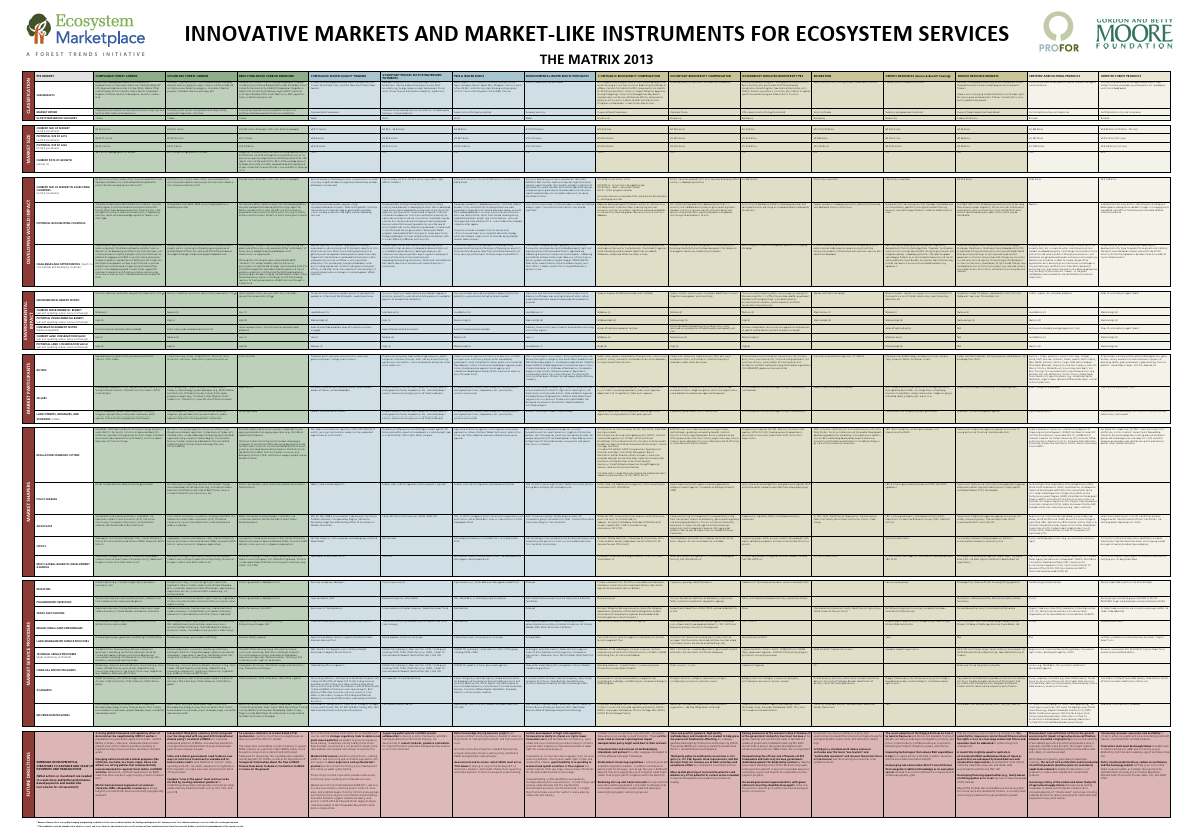
Innovative markets and market-like instruments for ecosystem services
This tool provides investors with a framework for evaluating and comparing different nature-based investment opportunities. It helps identify projects that offer the best combination of financial returns and environmental impact, supporting informed investment decisions.

Conservation investment blueprint: Public-private partnership for marine protected areas developed based on the case study of blue finance
The report outlines a conservation investment blueprint using public-private partnerships (PPPs) to manage marine protected areas (MPAs). Blue Finance structures collaborative management agreements and sustainable financing mechanisms to enhance marine biodiversity, support local economies, and improve climate resilience. The model combines impact investment, tourism revenues, and government collaboration for long-term MPA sustainability.

Guidelines for blue finance: Guidance for financing the blue economy, building on the Green Bond Principles and the Green Loan Principles
This guidance document aims to provide a list of eligible use of proceeds to support private investments aligned with the Green Bond Principles and Green Loan Principles and contributing to Goals 6 and 14 of the United Nations Sustainable Development Goals — “Ensure availability and sustainable management of water and sanitation for all,” and “Conserve and sustainably use the oceans, seas and marine resources for sustainable development.” This document identifies eligible blue project categories to guide IFC’s investments to support the blue economy, in line with the Green Bond Principles and Green Loan Principles.

Biodiversity measurement approaches: A practitioner's guide for financial institutions (4th edition)
This guide provides a comprehensive overview of tools and methodologies for financial institutions to assess biodiversity impacts and dependencies. It includes practical recommendations, evaluations of twelve tools, case studies, and guidance on marine biodiversity. The guide supports nature-related risk management, aligning with frameworks like TNFD and EU Biodiversity standards.

Protected Planet
Protected Planet is the most up to date and complete source of data on protected areas and other effective are-based conservation measures (OECMs), updated monthly with submissions from governments, non-government organisations, landowners and communities.

Ocean+
Ocean Plus is an initiative that brings together accurate and up-to-date information on ocean biodiversity to support effective decisions that protect global marine life. The database includes three primary datasets: Ocean+ Data viewer, Ocean+ Habitats, and Ocean + Library.

World database of key biodiversity areas
The key biodiversity areas database provides a comprehensive, robust, up-to-date, and accessible data management system for Key Biodiversity Areas, the most important sites in the world for nature (still in beta stage at time of writing).

CSIRO's state of the climate report series
This series offers insights into Australia’s climate changes based on comprehensive research from the Bureau of Meteorology and CSIRO. Each report synthesises data on climate trends, impacts, and projections, guiding informed decision-making for sustainable environmental and economic resilience.

Investigating global aquatic food loss and waste
This report explores the global issue of aquatic food loss and waste (FLW), quantifying it across various species and product types. In 2021, approximately 14.8% of aquatic foods were lost or wasted globally. The report identifies hotspots, outlines key drivers, and suggests targeted interventions to enhance sustainability in the aquatic food industry.

Ocean Risk and Resilience Action Alliance (ORRAA)
Ocean Risk and Resilience Action Alliance (ORRAA) brings together finance, insurance, and environmental sectors to address ocean-related risks and enhance coastal resilience. ORRAA mobilises investment into ocean-based solutions to mitigate climate change, protect ecosystems, and support vulnerable communities.


