
Library | ESG issues
Fossil Fuel Industry
The fossil fuel industry includes coal, crude oil, and natural gas, which are carbon-intensive energy sources formed from ancient organic material. Their extraction and use are major contributors to greenhouse gas emissions, environmental destruction, and climate change. In the finance industry, fossil fuels present both risks and opportunities, as investors assess regulatory challenges, transition risks, stranded asset potential, and shifting market demand while also exploring opportunities in cleaner energy alternatives and low-carbon transition strategies.

Refine
137 results
REFINE
SHOW: 16


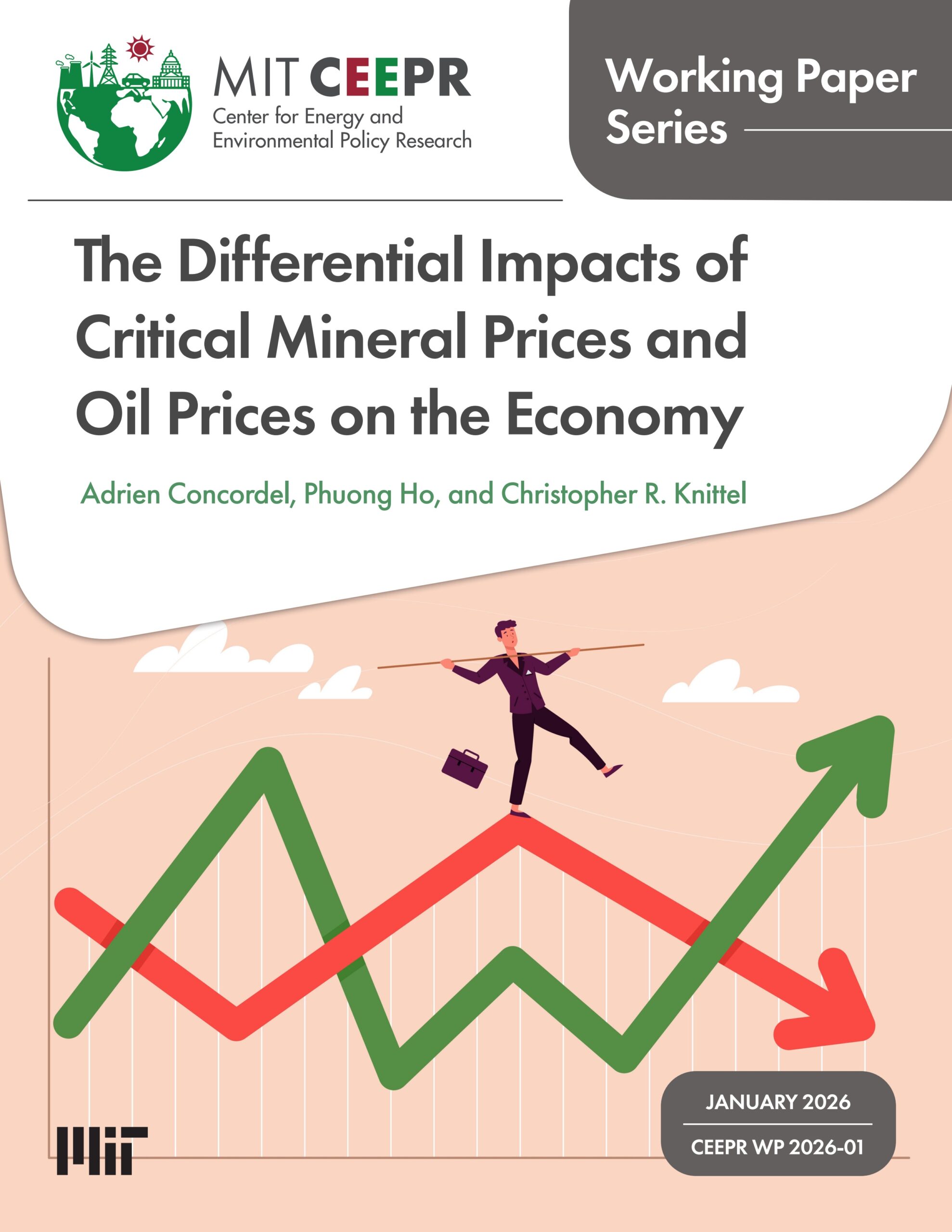
The differential impacts of critical mineral prices and oil prices on the economy
This paper uses a neoclassical open-economy growth model to compare the macroeconomic impacts of critical mineral and oil price shocks. Oil price increases are found to be more contractionary for output and welfare, while mineral price shocks primarily affect investment and external balance sheets, warranting macroprudential and fiscal policy responses.
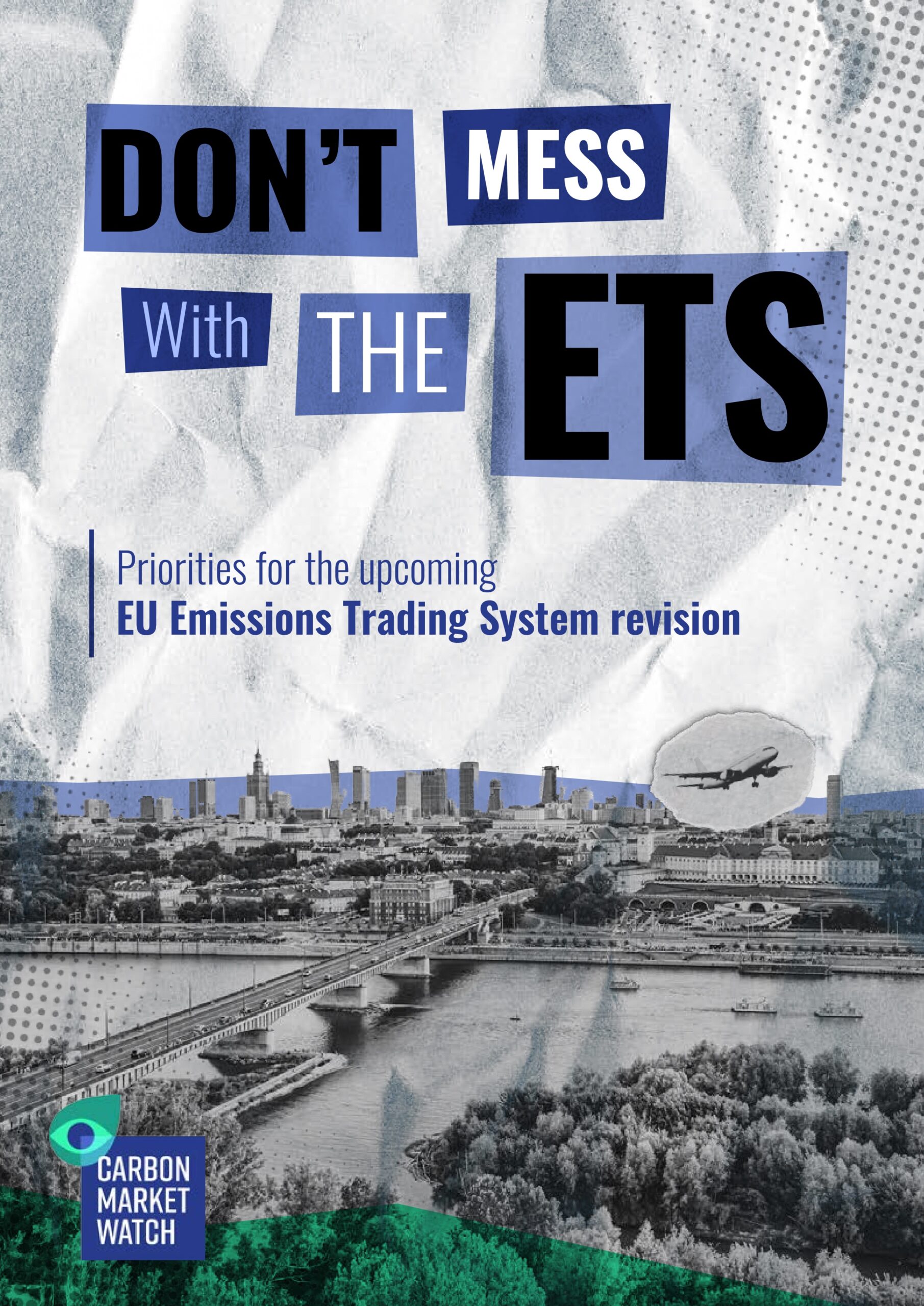
Don't mess with the ETS: Priorities for the upcoming EU emissions trading system revision
Carbon Market Watch presents a 10-point plan for improving the EU Emissions Trading System ahead of its upcoming revision. The report argues against weakening the cap, free allocation phase-out, or the Market Stability Reserve, and calls for expanded coverage of aviation, shipping, and biomass, alongside eliminating fossil fuel subsidies from ETS revenues.
Boom and bust coal series
The Boom and Bust series is an annual research series that tracks the global coal plant pipeline using data from the Global Coal Plant Tracker. It examines trends in coal power development, construction, commissioning, retirements and policy developments across countries and regions, providing an overview of changes in the global coal sector.
The battle over energy security: Challenging the fossil fuel playbook
This report by InfluenceMap analyses how the fossil fuel industry uses geopolitical instability to promote energy security narratives. It highlights the industry's historical playbook of delaying the renewable transition and outlines current counter-arguments from renewable sectors advocating for electrification to ensure genuine energy independence and affordability.
Sheltering from oil shocks: Measures to reduce impacts on households and businesses
This International Energy Agency report outlines measures to reduce the impact of oil supply disruptions on households and businesses. It details short-term and structural strategies across road and air transport, industry, and cooking fuels to lower demand and shield vulnerable consumers from rising energy costs.
Pipe dreams: How oil and gas fail to deliver economic development in Africa
This 2026 report analyses the economic impact of oil and gas extraction across 13 African nations. Finding that fossil fuels exacerbate poverty, vulnerability, and corruption rather than delivering sustained growth, it advocates for a rapid, just transition to decentralised renewable energy to ensure future economic stability and development.
Climate litigation as a financial risk: Evidence from a global survey of equity investors
This report surveys 811 global equity investors to assess perceptions of climate litigation as a financial risk. It finds that investors view climate lawsuits as financially material, with effects often manifesting early, such as upon media coverage or filing, and affecting both carbon majors and other sectors.
Energy security through freight electrification: A rapid response briefing note on policy options for responding to the global fuel crisis
This briefing note outlines policy options to enhance Australia's fuel security through freight electrification. It recommends a phased, five-year, $3 billion programme to deploy up to 50,000 battery electric trucks, displacing one billion litres of diesel annually while leveraging private capital and implementing structural reforms.
2025 Southeast Asia fossil fuel divestment scorecard
Assesses 35 banks’ fossil fuel financing and climate policies in Southeast Asia, finding continued coal and gas funding despite commitments. International banks dominate financing, with policy gaps and loopholes persisting. The scorecard highlights misalignment with 1.5°C goals and calls for stricter divestment and increased renewable investment.
Toxic finance: The banks and investors funding the expansion of petrochemicals in the US
This report argues that banks and investors are enabling US petrochemical expansion despite rising market, legal, climate and public health risks, identifying major financiers and investors while warning that continued support may expose them to financial, reputational and regulatory harm.
Sustainable Finance Roundup March 2026: Markets, Climate Risk, and the Transition in Practice
This month’s sustainability roundup captures a shift from framework development to real-world application, where climate and nature risks are increasingly embedded across financial systems, legal accountability, and decision-making. It highlights how intensifying physical climate signals, evolving disclosures, and maturing litigation are converging with insights on sovereign risk, energy systems, and corporate strategy. Together, these developments show how sustainability is moving beyond principle—being tested, priced, and enforced across markets, regulation, and the real economy.
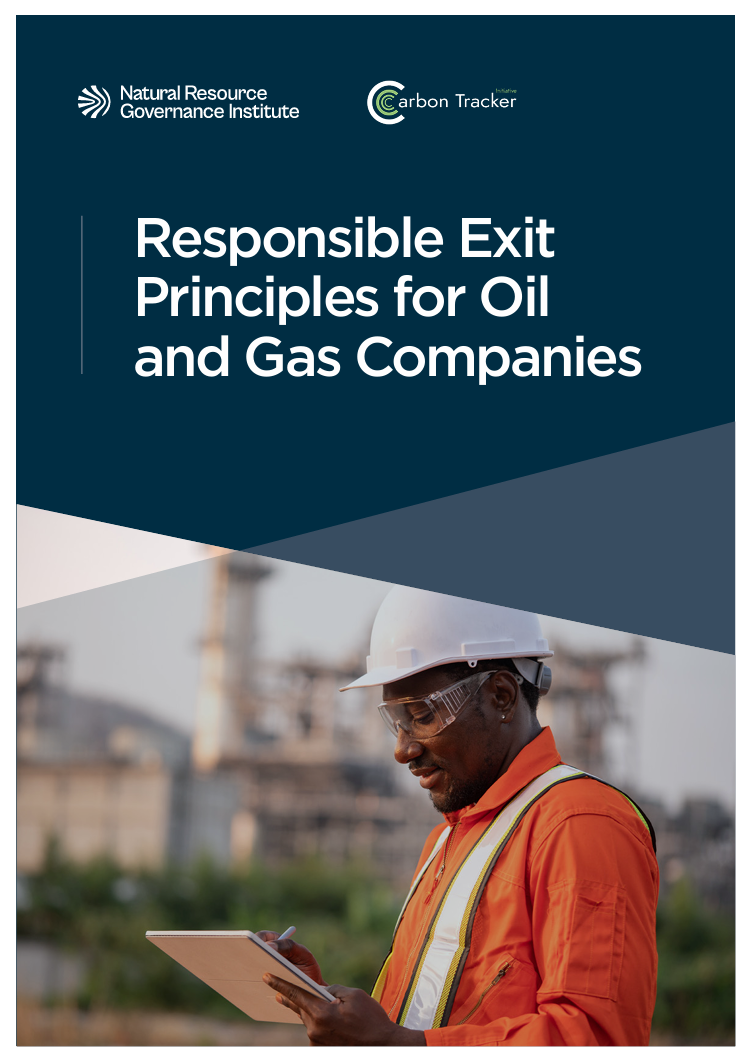
Responsible exit principles for oil and gas companies
Sets out voluntary principles for responsible oil and gas asset exits, focusing on decommissioning, buyer due diligence, transparency and stakeholder engagement to reduce climate, financial, legal and social risks from asset transfers and support an orderly transition.
Sustainable Finance Roundup February 2026: Disclosure, Carbon Trade, and Transition Economics
This month’s sustainability roundup traces a rapidly evolving landscape in climate governance and industrial transition, highlighting the convergence of ISSB-aligned disclosure standards and emerging carbon trade measures alongside shifting cost curves in transport and critical minerals. It underscores how tighter emissions accounting and border policies are embedding carbon competitiveness into capital allocation, while advances in electrification, AI-driven power demand and expanding legal accountability are integrating climate and nature risk into mainstream financial decision-making.
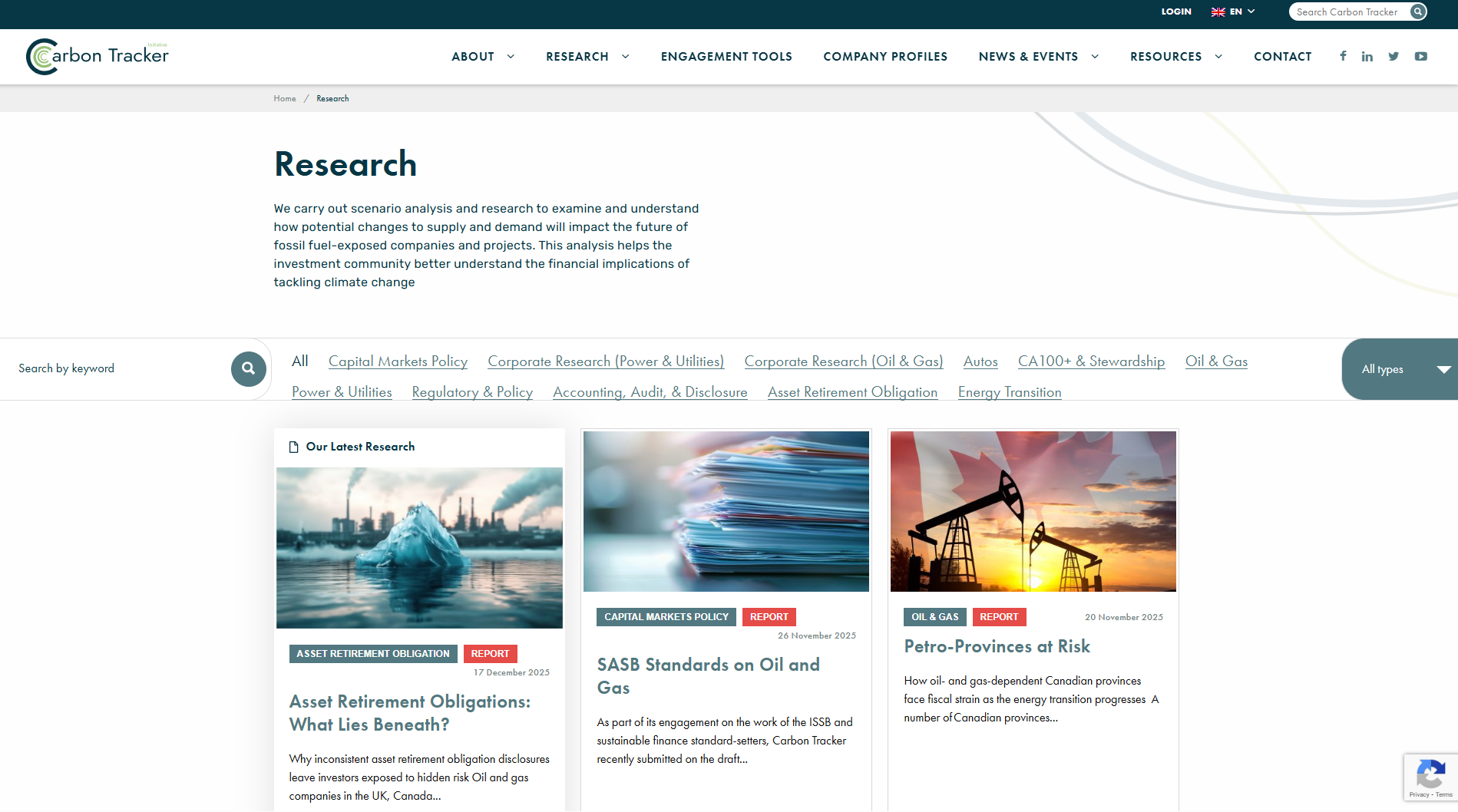
Carbon Tracker Initiative
Carbon Tracker’s Reports page hosts research analysing how supply, demand and climate policy affect fossil-fuel exposed companies and markets. It provides scenario analysis, methodological frameworks and sector-specific insights for investors and policymakers on climate-related financial risk and the energy transition.
Coal 2025: Analysis and forecast to 2030
This report analyses global coal supply, demand, trade and prices to 2030. It assesses regional consumption trends across power and industry, production outlooks for major exporters, policy and decarbonisation impacts, and market risks. Forecasts highlight shifting Asian demand, plateauing global use, and implications for investment and energy security.
The production gap series
This benchmark series examines the gap between governments’ planned fossil fuel production and pathways consistent with international climate goals. It assesses alignment with temperature limits by reviewing national production plans and policy signals, providing a consistent framework to track progress and comparability across editions.


