
Library | ESG issues
Governance
The governance pillar in ESG (environmental, social, and governance) refers to the systems, policies, and practices that ensure an organisation is managed responsibly and ethically. It includes issues such as board structure, reporting & disclosures, shareholders & voting, and risk management. Strong governance reduces risks, enhances trust, and supports long-term business sustainability.
Refine
2256 results
REFINE
SHOW: 16


Acceleration is not a strategy: A framework for directing AI towards public value before it's too late
This report outlines a framework for European governments to steer artificial intelligence towards public value rather than just accelerating sector growth. It recommends implementing AI directionism by targeting high-impact uses, preparing priority sectors for adoption, curbing big tech monopolies, and ensuring the economic benefits are broadly shared.
Reforming investment contracts: Why policy - makers must act now — and how
This policy brief highlights the urgent need to reform investor–state contracts to support sustainable development. It explores how fragmented frameworks, outdated stabilisation clauses, and tax incentives undermine national laws. The report recommends strengthening interministerial coordination, assessing existing contracts, and developing national model agreements to improve transparency and policy coherence.
24/7 renewables: The economics of firm solar and wind
This report analyses the transition to reliable, round-the-clock renewable energy through solar, wind, and battery storage. Introducing the firm levelised cost of electricity (F-LCOE), it evaluates the cost-competitiveness of hybrid systems against fossil fuels and outlines the necessary policy reforms to support widespread deployment.
Assessing the resilience of global grain supplies to compound climatic and non-climatic shocks
This research evaluates the resilience of global grain supplies to compounding climatic and non-climatic shocks. Using a bilateral trade model for 177 countries, it demonstrates that energy price spikes and extreme weather severely disrupt food systems, highlighting the need for strategic stockpiling and diversified trade agreements to ensure food security.
Energy security through freight electrification: A rapid response briefing note on policy options for responding to the global fuel crisis
This briefing note outlines policy options to enhance Australia's fuel security through freight electrification. It recommends a phased, five-year, $3 billion programme to deploy up to 50,000 battery electric trucks, displacing one billion litres of diesel annually while leveraging private capital and implementing structural reforms.
Energy and AI in East Asia
This report examines the intersection of artificial intelligence and energy in East Asia. It highlights how AI optimises renewable energy integration and grid management, whilst addressing rising data centre electricity demand. It recommends accelerating digitalisation, updating regulatory frameworks, and promoting clean energy procurement to ensure sustainable development.
Governance: Hard to build, easy to erode: Global trends, business implications and the role of employer and business membership organizations
This report analyses global governance trends from 1996 to 2024, revealing widespread stagnation and persistent risks of backsliding. It highlights the critical link between stable institutional governance, increased foreign direct investment, and the necessary role of business membership organisations in sustaining long-term policy reforms.
Navigating the EV transition: Barriers and tools for shifting Europe to low-carbon mobility
This report examines the challenges facing the European automotive industry in transitioning to electric vehicles (EVs). It analyses shifting revenue streams, battery production costs, supply chain risks, and the need for charging infrastructure, while outlining financial tools to support adoption, research, and skills development.
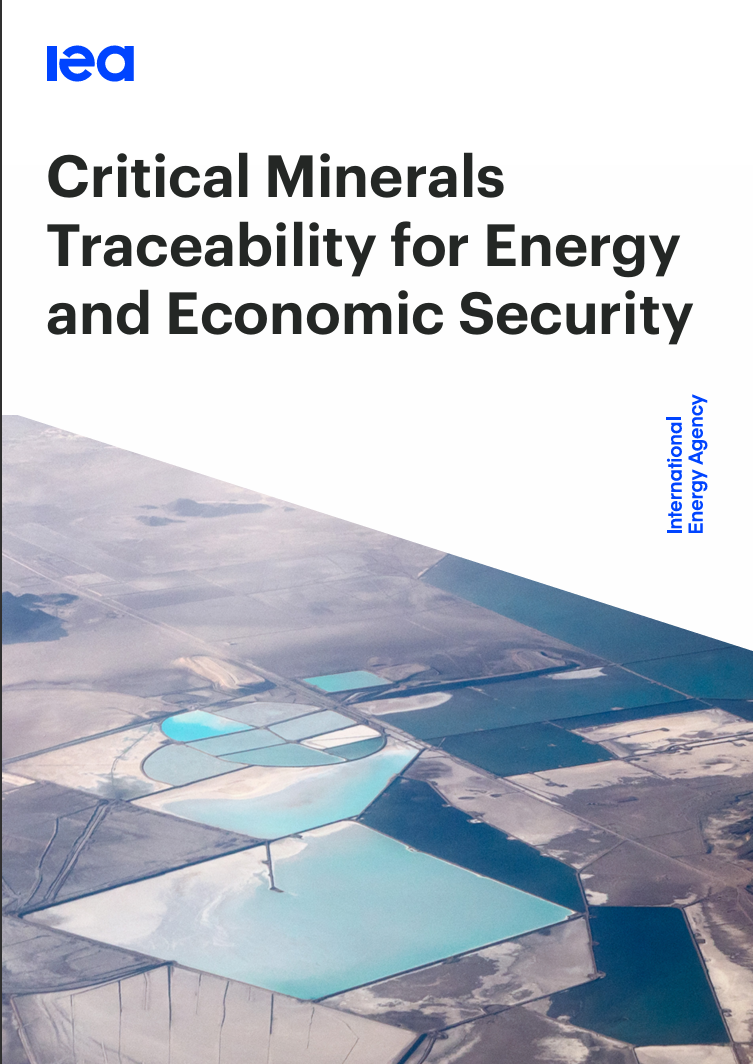
Critical minerals traceability for energy and economic security
IEA finds traceability systems can strengthen critical mineral supply chain resilience by improving visibility, diversification and responsible sourcing. Adoption is increasing but remains uneven due to costs, interoperability issues and limited incentives. The report recommends harmonised standards, financial support and international co-operation to improve energy and economic security.

RIAA Conference Australia 2026 - Companion Resources
Responsible investment has moved well beyond principles and pledges. Today’s challenges require practical capability and informed judgement. The RIAA Conference is a must-attend event for finance, sustainability and industry practitioners who want to focus on the key themes for responsible investment in 2026 and what implementation really looks like. Designed as an immersive, hands-on experience, the program focuses on the systems that underpin strong financial performance, and will help you understand how climate, nature, technology, governance and regulation intersect.
These specially curated companion resources have been recommended by the conference speakers and Altiorem team.
These specially curated companion resources have been recommended by the conference speakers and Altiorem team.
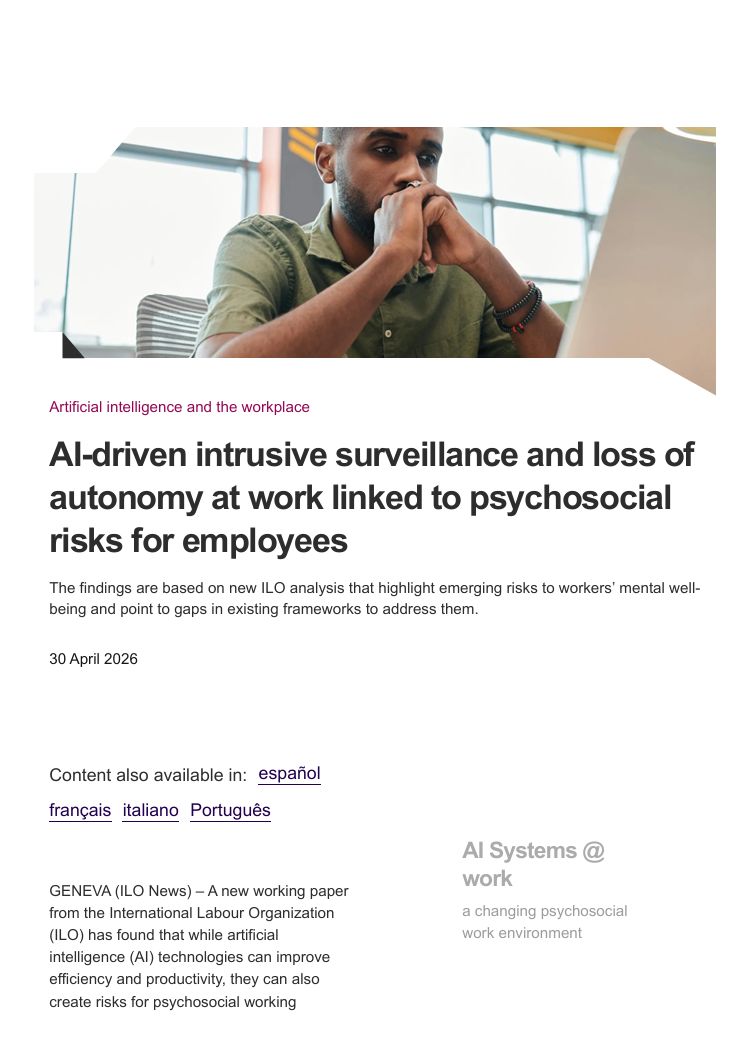
AI-driven intrusive surveillance and loss of autonomy at work linked to psychosocial risks for employees
ILO research finds AI-driven workplace surveillance and reduced employee autonomy may heighten psychosocial risks, including stress, privacy concerns and work intensification. The paper highlights gaps in occupational safety frameworks and calls for integrated regulation covering labour rights, data protection and mental wellbeing.
Equity in principle, misalignment in practice: Adaptation finance governance in the adaptation fund and green climate fund
The report argues that adaptation finance through the Adaptation Fund and Green Climate Fund formally prioritises equity, vulnerability and country ownership, but remains constrained by voluntary funding, access barriers and project-based delivery, limiting alignment with Global South priorities.
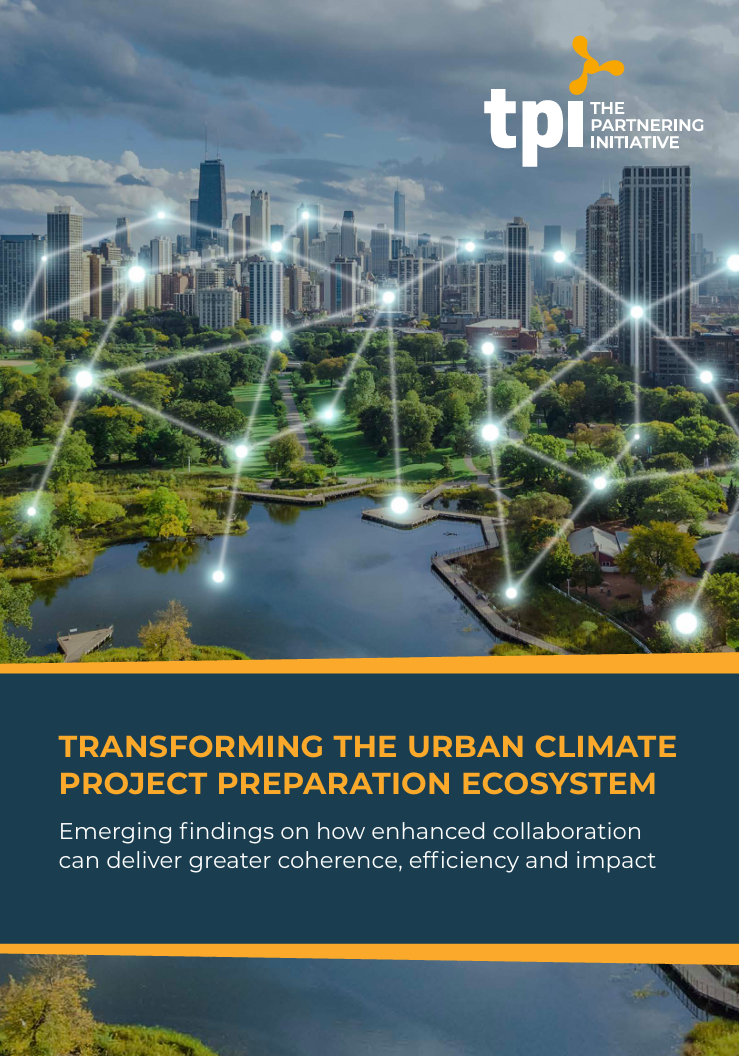
Transforming the urban climate project preparation ecosystem: Emerging findings on how enhanced collaboration can deliver greater coherence, efficiency and impact
The report examines weaknesses in urban climate project preparation and argues that stronger coordination between cities, financiers and support organisations could improve coherence, efficiency and project impact. It identifies structural and operational barriers and proposes collaborative reforms to strengthen climate finance delivery.
Physical climate risk in the United States equity market: Quantifying state–sector heterogeneity
The report presents an NGFS-aligned framework for assessing physical climate risk in U.S. equities. Using state-level GDP damage projections and sector-specific adjustments, it estimates a roughly 4.0% valuation loss for a U.S. equity benchmark under current policies, highlighting substantial variation across states and sectors.
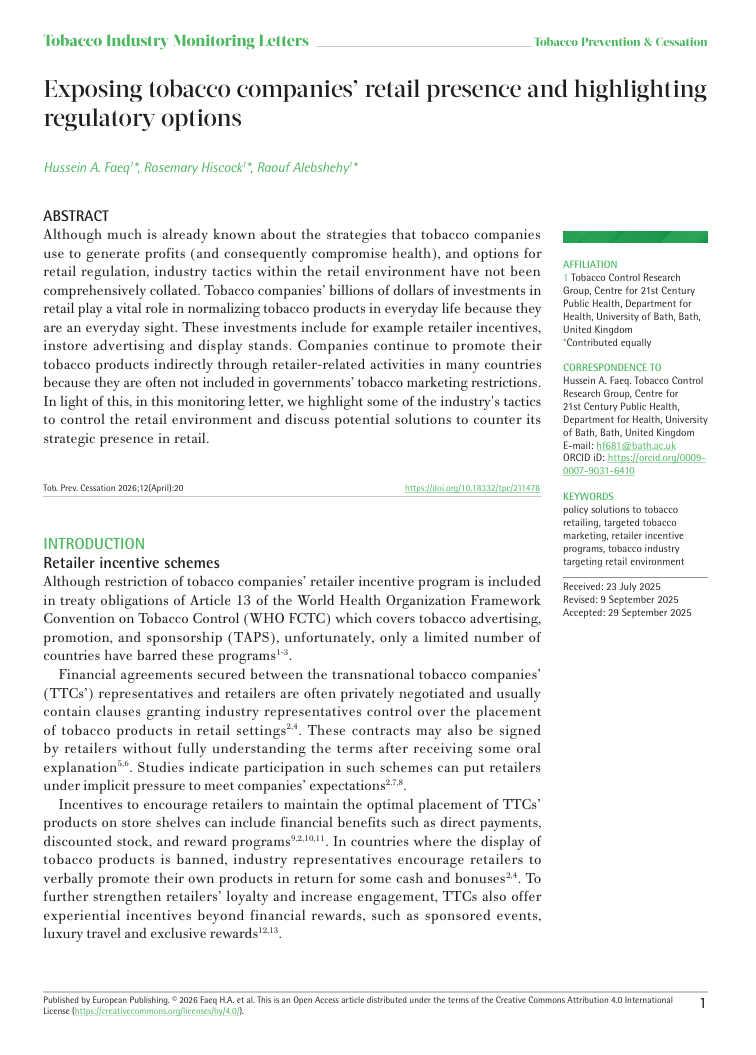
Exposing tobacco companies’ retail presence and highlighting regulatory options
The report outlines how tobacco companies use retailer incentives, targeted in-store marketing, and retailer lobbying to sustain product visibility and influence regulation. It reviews policy options, including retail licensing, outlet restrictions, and sales limitations, aimed at reducing tobacco availability and countering industry presence in retail settings.
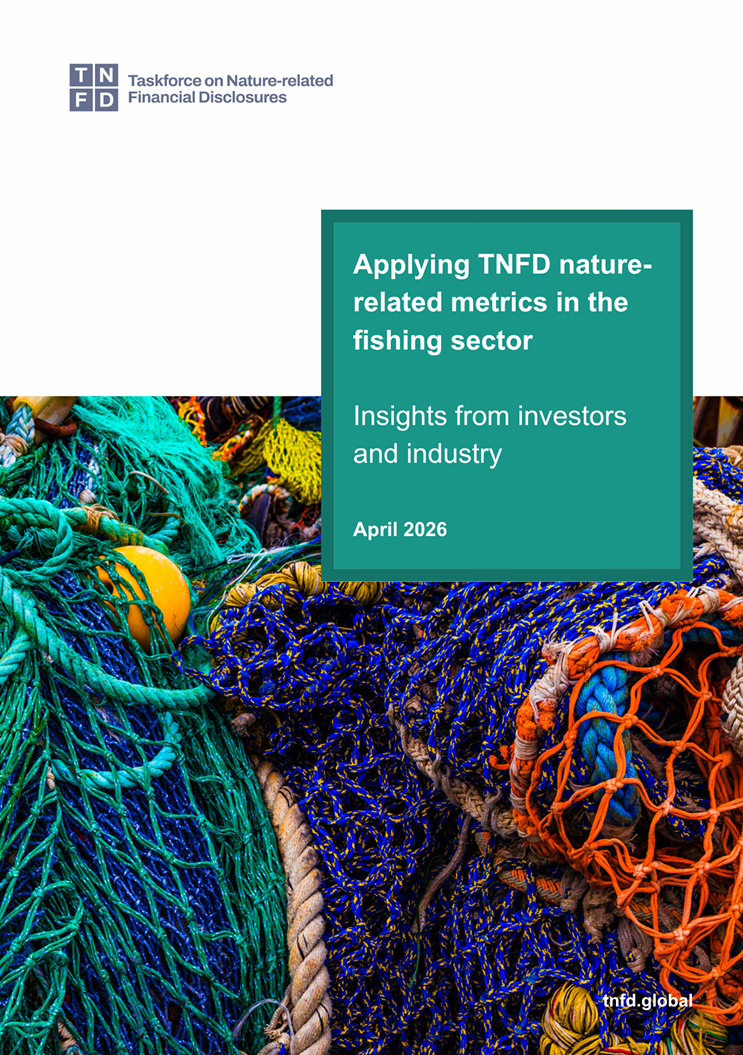
Applying TNFD nature-related metrics in the fishing sector: Insights from investors and industry
TNFD guidance for the fishing sector outlines how investors and seafood companies use nature-related metrics to assess risks, disclosure and stewardship. Findings highlight growing demand for traceability, stock health and bycatch data, while noting certification interoperability, persistent data gaps and emerging access to blue finance instruments.


