
Library | ESG issues
Governance
The governance pillar in ESG (environmental, social, and governance) refers to the systems, policies, and practices that ensure an organisation is managed responsibly and ethically. It includes issues such as board structure, reporting & disclosures, shareholders & voting, and risk management. Strong governance reduces risks, enhances trust, and supports long-term business sustainability.
Refine
2256 results
REFINE
SHOW: 16


Investor guidance on responsible contracting
This investor guidance examines the role of contracts in human rights and environmental due diligence (HREDD). It provides investors with tools to engage with companies on responsible contracting practices, aligning with international standards and evolving legislation.

System-level investing: Case studies of investors leading the way
This report from The Investment Integration Project (TIIP) summarises findings from five case studies of leading system-level investors. It begins by explaining the concept of system-level investing, describes how investors adopt this approach, and introduces five early adopters. It also discusses implications for future investment practices and processes.

Public to private divestment in Asia: trends and best practice
The database of Asian mergers and acquisitions (M&As) in high-emission sectors reveals a steady, not increasing, trend from 2020 to April 2024. This shift of high-emission assets from public to private ownership, totalling USD 5-9 billion annually, raises concerns about reduced transparency and accountability in emissions reporting. While not accelerating, this trend has negative implications for investor stewardship and emissions disclosure.

Nature-positive strategy: Practical guidance for corporates
This practical guidance report provides a principles-based approach that equips corporates with an understanding of the value of nature, identifies key frameworks, and encourages a call to action. It suggests implementing “no regrets” actions for risk mitigation while progressing work on key frameworks. It further recognises that taking actions now will create business value.

Investing in nature: Opportunities for institutional investors
This guide aims to assist institutional investors in navigating the evolving landscape of nature-based finance. It offers practical insights into various investment opportunities, showcasing case studies that exemplify best practices and innovative approaches in nature investments.

The global slavery index 2023
This report reveals that 50 million people live in modern slavery. It highlights the G20's $468 billion worth of high-risk imports and identifies North Korea, Eritrea, and Mauritania as having the highest prevalence. Australia, the Netherlands, and the UK have the strongest government responses.

An innovation pathway to decarbonization: Circular economy solutions for policymakers and industry in the US
The US has a significant opportunity to decarbonise its industrial sector and boost its economy by transitioning to a circular economy. This report explores the economic and environmental benefits of circular solutions in key industries, such as batteries, construction, and electronics. It also analyses current US policies that support a circular economy and provides recommendations for further policy interventions to accelerate this transition.

Good practice toolkit: Strengthening modern slavery responses
This toolkit provides guidance on improving business practices under Australia's Modern Slavery Act. It emphasises effective stakeholder and supplier engagement, human rights due diligence, and the use of digital technologies. The toolkit includes practical examples and recommendations for businesses, governments, and civil society to better combat modern slavery.

FAST connection diagnostic and risk mapping
The FAST Initiative's Risk Mapping tool aids finance professionals in identifying and mitigating risks related to forced labour and human trafficking in supply chains. It offers practical guidance and resources to enhance due diligence and promote responsible investment practices.

Big oil reality check: Aligned in failure
Big oil and gas companies’ climate pledges lack ambition and integrity, resulting in continued exploration and extraction. They fail to align with the Paris Agreement, relying on misleading accounting and greenwashing. Immediate action from governments and investors is essential to catalyse a socially just and equitable phase-out of fossil fuels.
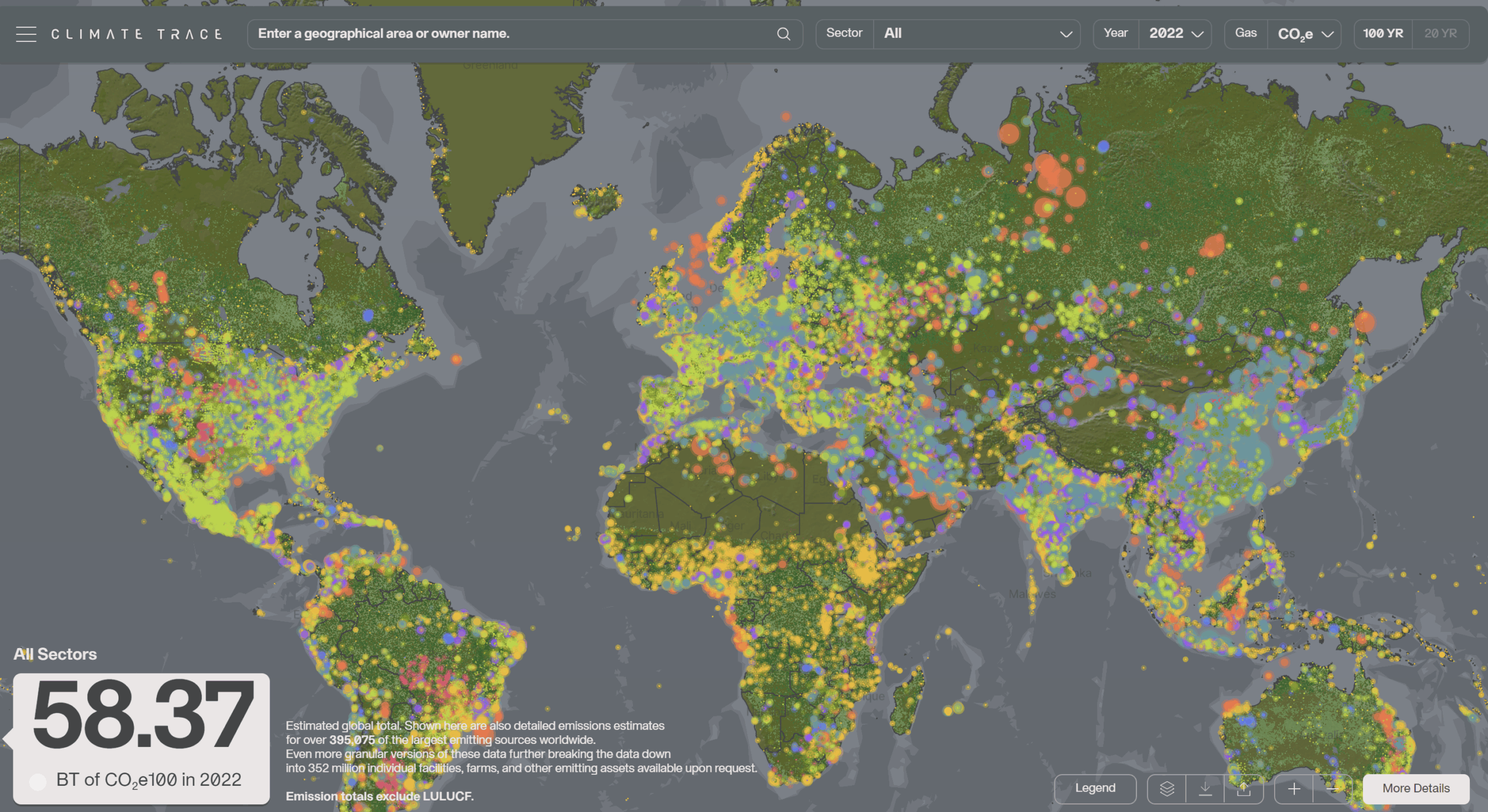
Climate TRACE
Climate TRACE is a comprehensive tool for tracking global greenhouse gas emissions. Utilising satellite data and AI, it provides real-time insights, helping finance professionals assess environmental impacts and make informed decisions. This tool supports ESG integration and sustainability in financial practices.

2024 XDI Asia-Pacific real estate investment trust physical climate risk report
This benchmark report assesses the vulnerability of 2,134 assets across 20 APAC REITs to climate risks. By 2050, nearly 10% of properties face high risk, particularly from coastal inundation and flooding, highlighting significant financial implications for investors and the urgent need for adaptation strategies.

Energy transition risks and opportunities initiative's series
Energy Transition Risk and Opportunities Initiative (ET Risk) provides finance professionals with tools to assess energy transition risks and opportunities. The project focuses on sustainable finance, ESG impacts, and climate change, helping users make informed investment decisions.

Outsized impact: How investment can address the systemic risk of LGBTQIA+ inequality?
This report examines the systemic inequity faced by the LGBTQIA+ community in the US, highlighting its significant economic consequences. It provides evidence of the positive link between LGBTQIA+ inclusion and financial performance, and outlines a framework for investors to advance LGBTQIA+ equity through system-level investing.
Refugee-related investments: Myth or reality?
This report examines the current state of refugee-related investment, a subset of impact investing focused on companies benefiting forcibly displaced people. It discusses the need for sustainable solutions for refugees' economic inclusion, the challenges faced by this nascent field, and recommendations for governments, development partners, and private sector actors to accelerate refugees' social and economic inclusion while benefiting host countries.

Sustainable Markets Initiative
Sustainable Markets Initiative (SMI) champions sustainable finance and responsible investing, fostering a green economy through innovative market solutions. Explore insights, tools, and resources on sustainability and impact investing. Ideal for investors, policymakers, and businesses committed to a sustainable future.


