
Library | ESG issues
Greenhouse Gas Emissions
Greenhouse Gas (GHG) Emissions, including carbon dioxide and methane, trap heat in the atmosphere and drive climate change. Reducing emissions is vital to mitigating global warming risks and aligning with climate targets like the Paris Agreement, influencing long-term corporate and investment strategies.

Refine
519 results
REFINE
SHOW: 16


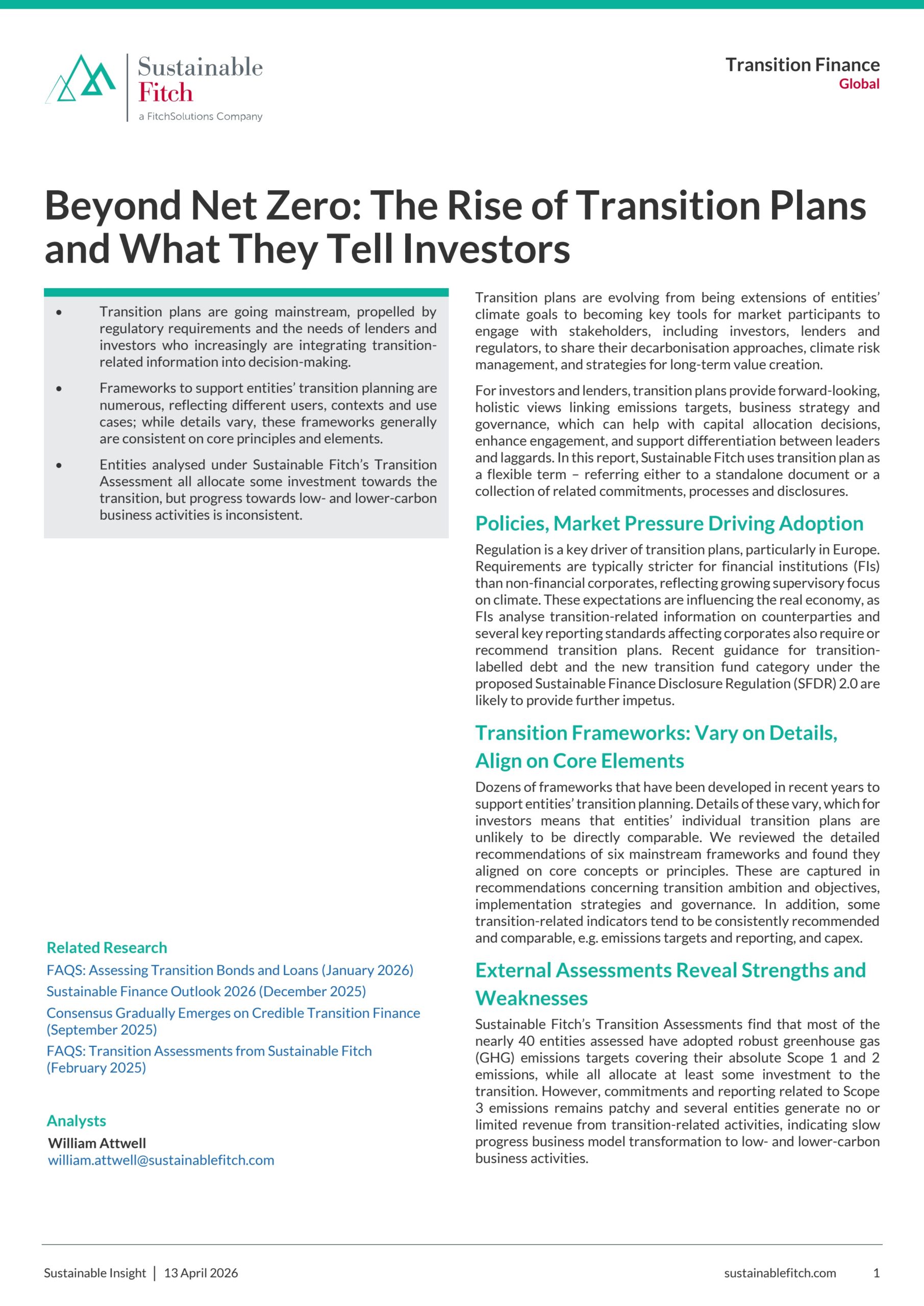
Beyond net zero: The rise of transition plans and what they tell investors
This Sustainable Fitch report examines the rise of corporate transition plans, driven by regulatory requirements and investor demand. It reviews six mainstream transition planning frameworks, finding alignment on core principles but variation in detail, and analyses around 40 entities, revealing strong Scope 1 and 2 targets but patchy Scope 3 commitments and limited transition revenue.
DBSA: Financial instrument design for an effective carbon market in South Africa
The Development Bank of Southern Africa details two proposed financial instruments to support the domestic voluntary carbon market: a carbon credit-backed bond and a repurchase facility. These tools aim to mobilise private capital, address early-stage funding shortages, and improve liquidity for carbon reduction projects.
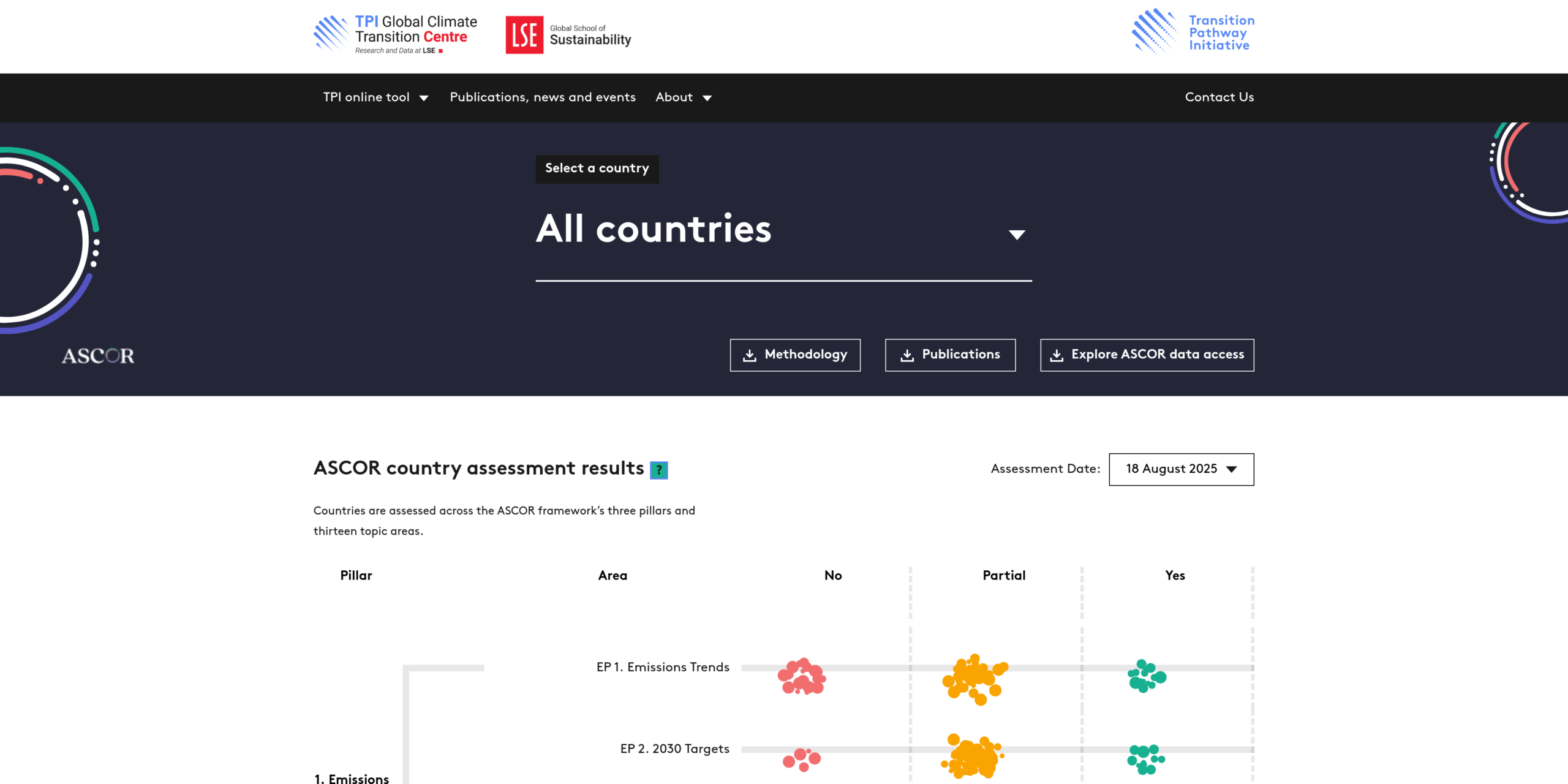
ASCOR Tool
The ASCOR Tool is an investor-led framework for assessing how countries manage the low-carbon transition and the impacts of climate change.
Leaning on uncertainty: Are European countries overrelying on carbon removals to reach climate targets?
This report analyses the climate strategies of six European countries and the European Commission, revealing a risky overreliance on unproven carbon dioxide removal technologies. It highlights fragmented planning, absent feasibility assessments, and policies contradicting scientific advice, warning that current approaches threaten effective climate action.
Climate litigation as a financial risk: Evidence from a global survey of equity investors
This report surveys 811 global equity investors to assess perceptions of climate litigation as a financial risk. It finds that investors view climate lawsuits as financially material, with effects often manifesting early, such as upon media coverage or filing, and affecting both carbon majors and other sectors.
Physical climate risk in the United States equity market: Quantifying state–sector heterogeneity
The report presents an NGFS-aligned framework for assessing physical climate risk in U.S. equities. Using state-level GDP damage projections and sector-specific adjustments, it estimates a roughly 4.0% valuation loss for a U.S. equity benchmark under current policies, highlighting substantial variation across states and sectors.
Deploying established climate technologies and solutions for buildings
Policy brief outlining market-ready climate technologies for buildings, including heat pumps, insulation, renewable energy systems and circular construction practices. The report highlights financing, policy and capacity barriers, particularly in developing economies, and recommends stronger building codes, targeted funding, and integration of traditional knowledge to accelerate low-emissions, climate-resilient buildings.
Systematic stewardship on the waterbed
Tröger argues corporate governance tools, including stewardship, say-on-climate votes and ESG-linked pay, cannot replace broad climate regulation. Firm-level interventions may trigger “waterbed effects”, shifting emissions rather than reducing them. Carbon pricing or comprehensive emissions caps are presented as more effective.
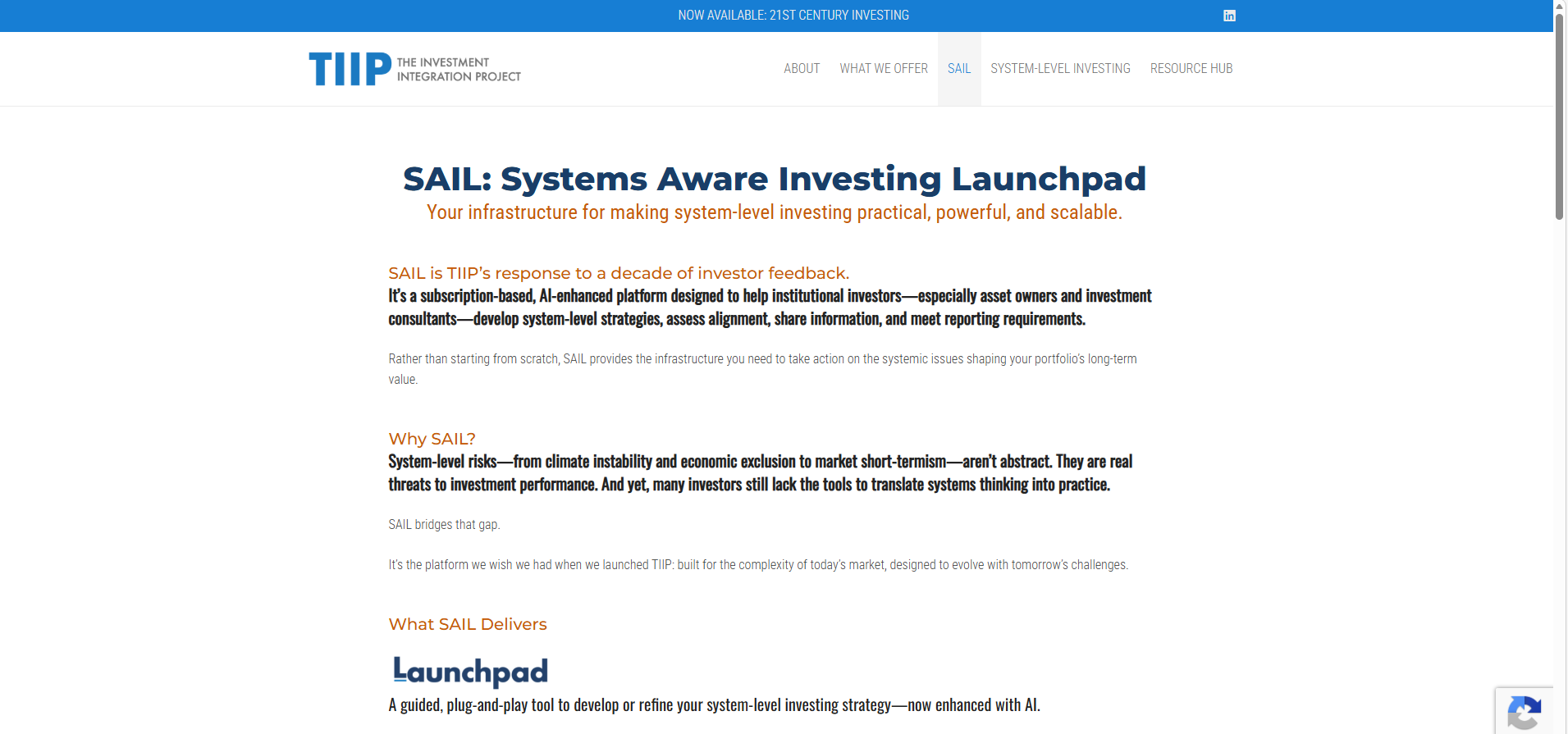
SAIL: Systems Aware Investing Launchpad
SAIL (Systems Aware Investing Launchpad) is an AI-enhanced platform developed by TIIP to support institutional investors in implementing system-level investing strategies. It provides tools for strategy development, benchmarking, reporting and collaboration, helping users assess and manage systemic environmental, social and financial risks.
Navigating the impact valuation landscape: A practitioner’s guide to choosing value factors
A practitioner guide that maps available impact valuation methods and value factor sources, comparing their scope, methodology and use cases. It helps users select appropriate data sources for monetising social and environmental impacts, addressing fragmentation and inconsistencies across existing valuation approaches.
The case for pricing pollution: Reducing emissions, strengthening the economy, and delivering a fair share for Australians
The report argues Australia should introduce a Polluter Pays Levy and Fair Share Levy to cut emissions, raise revenue, compensate households, improve productivity, and secure fairer returns from fossil fuel resources.
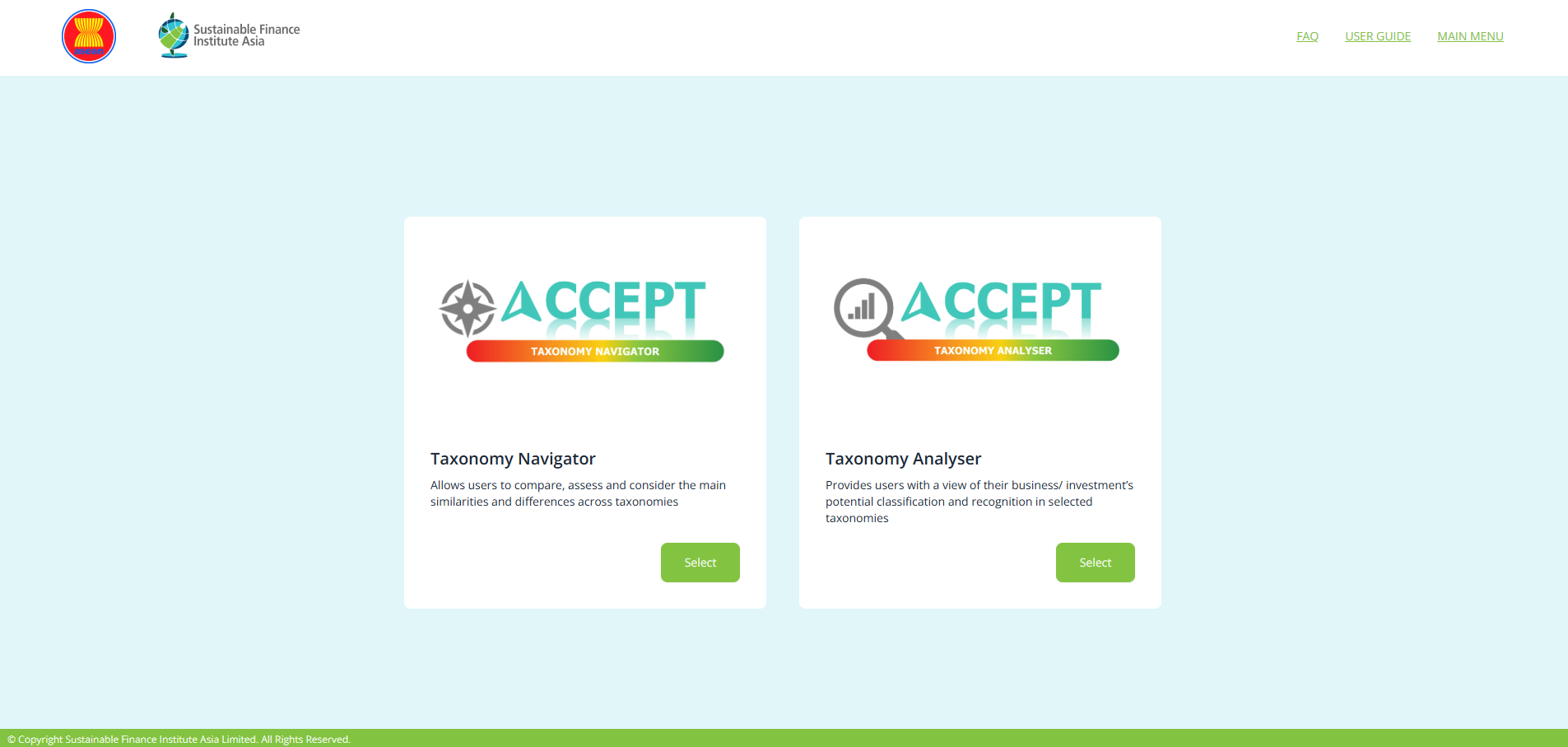
ASEAN Taxonomy Navigator
The ACCEPT Taxonomy Navigator is an online tool that enables users to explore and compare sustainable finance taxonomies, including the ASEAN Taxonomy. It provides a structured view of economic activities and classification criteria, supporting consistent assessment of sustainability alignment and aiding finance professionals in applying taxonomy requirements.
A director’s guide to mandatory climate reporting: Version 2
Provides guidance for directors on Australia’s mandatory climate reporting regime, outlining regulatory requirements, governance expectations, and disclosure obligations under AASB S2. Explains implementation timelines, assurance pathways, and practical steps to manage climate-related risks, opportunities, and reporting processes within corporate reporting frameworks.
ASEAN taxonomy for sustainable finance series
The ASEAN Taxonomy for Sustainable Finance is a benchmark series that provides a common framework to classify sustainable economic activities across ASEAN. It guides financial institutions, policymakers and market participants in assessing environmental objectives, supporting an orderly transition and alignment with regional and international sustainable finance standards.
ESRS–ISSB standards: Interoperability guidance
Guidance outlines alignment between ESRS and ISSB sustainability standards, focusing on climate disclosures, materiality and reporting requirements. It maps corresponding provisions, highlights differences, and explains how entities can achieve compliance with both frameworks to improve efficiency and consistency in sustainability reporting.
Harnessing Climate and SDGs Synergies
UN resources on climate–SDG synergies examine how integrated approaches to climate action and sustainable development can deliver social, economic and environmental co-benefits. They highlight policy alignment, investment efficiency, and cross-sector strategies to support national planning, reduce costs, and address significant climate and SDG financing gaps.


