
Library | ESG issues
Greenhouse Gas Emissions
Greenhouse Gas (GHG) Emissions, including carbon dioxide and methane, trap heat in the atmosphere and drive climate change. Reducing emissions is vital to mitigating global warming risks and aligning with climate targets like the Paris Agreement, influencing long-term corporate and investment strategies.

Refine
519 results
REFINE
SHOW: 16


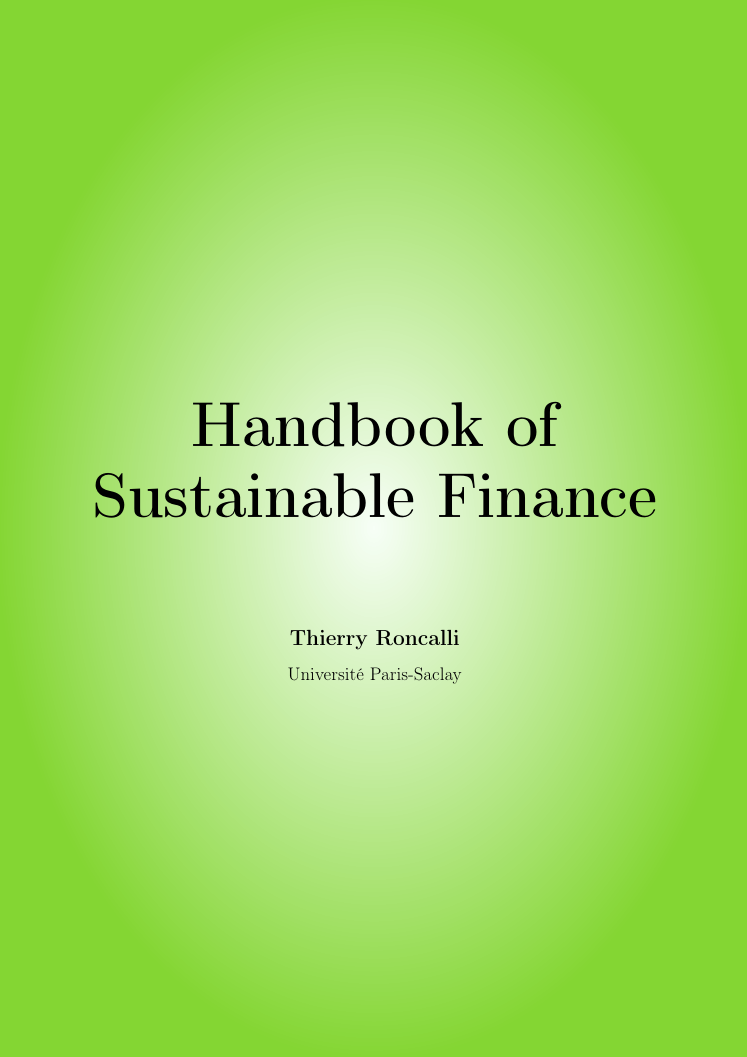
Handbook of sustainable finance
This handbook explains sustainable finance concepts, ESG scoring, regulation, reporting, sustainable products, impact investing, biodiversity, climate risk measurement, transition and physical risk modelling, portfolio construction, stress testing and risk management for finance practitioners.
The Core Carbon Principles (CCPs)
The Core Carbon Principles are a global benchmark developed by the Integrity Council for the Voluntary Carbon Market to assess the quality of carbon credits. They set standards for transparency, governance and environmental integrity, helping market participants identify credible credits and improve confidence in voluntary carbon markets.
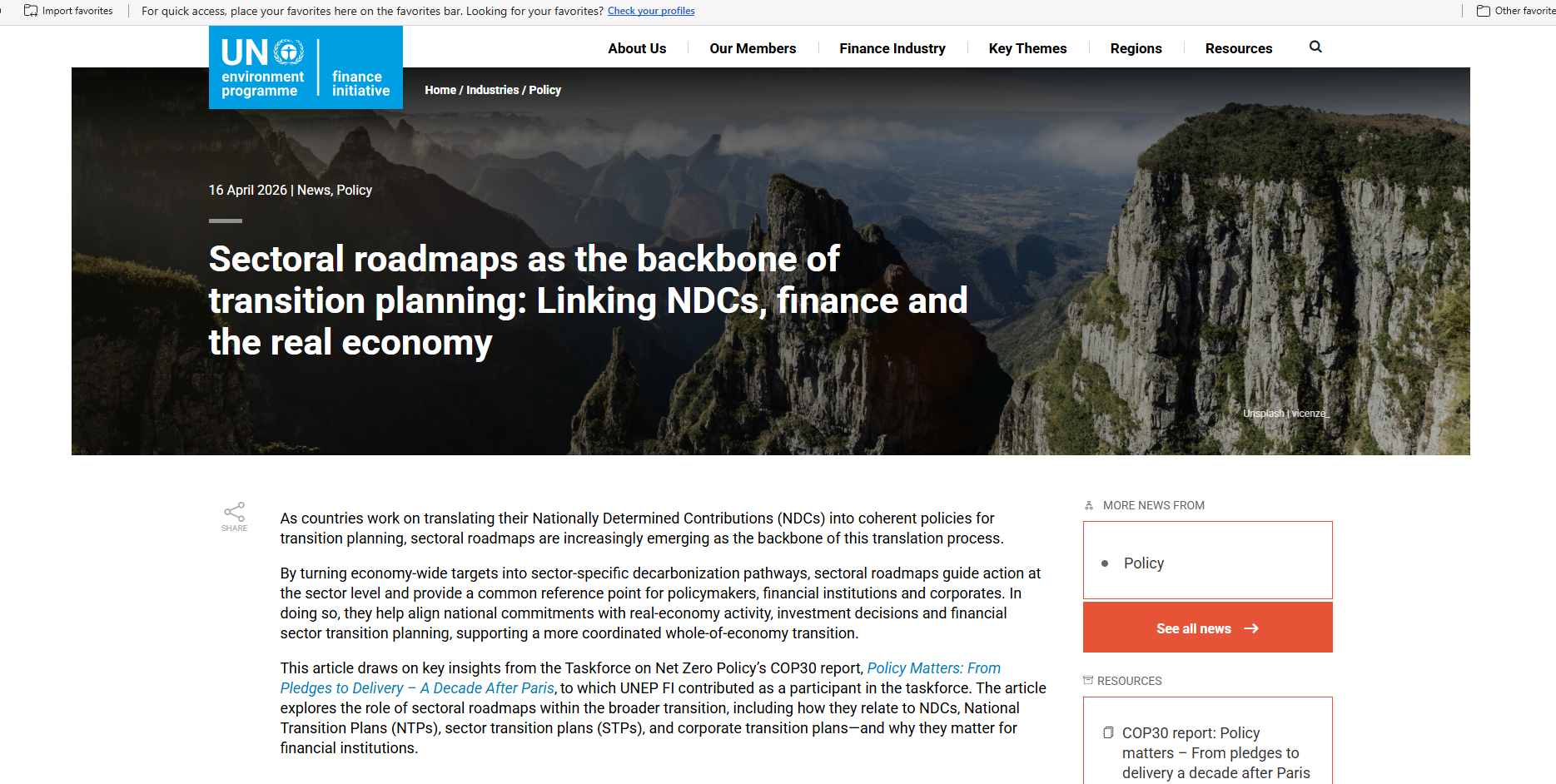
Sectoral roadmaps as the backbone of transition planning: Linking NDCs, finance and the real economy
Sectoral roadmaps translate national climate targets into sector-specific decarbonisation pathways, guiding policy, investment and corporate transition plans. They align real-economy activity with finance, reduce uncertainty, and support risk assessment and capital allocation, strengthening the credibility and implementation of whole-economy transition planning.
IFC's performance standards on environmental and social sustainability
The IFC Performance Standards (2012) form part of the Sustainability Framework, setting requirements for clients to identify, manage, and mitigate environmental and social risks in financed projects. They comprise eight standards covering areas such as labour, resource efficiency, biodiversity, and community impacts, and are widely used as a global benchmark for responsible investment.
Implications of the International Court of Justice’s Advisory Opinion on Climate Change for directors’ duties in relation to climate-related risks
Examines how the ICJ’s climate advisory opinion may elevate climate-related risks and regulatory pressures, increasing directors’ duty of care. Highlights litigation, disclosure, and transition risks, particularly for emissions-intensive sectors, and emphasises informed decision-making and accurate reporting to mitigate liability.
Oxford climate policy monitor: 2025 annual review
Assesses climate policies across 37 jurisdictions and six domains, finding overall strengthening despite political pressures, but slow implementation. Highlights rising policy leadership in developing regions and persistent gaps in ambition and execution relative to Paris Agreement targets.
Australian taxonomy-aligned debt guidance: Issuing use-of-proceeds debt under the Australian sustainable finance taxonomy
Guidance explains applying the Australian sustainable finance taxonomy to use-of-proceeds debt, outlining classification, allocation, and disclosure requirements. It details technical screening criteria, Do No Significant Harm and social safeguards, and supports consistent, transparent identification of climate-aligned investments for issuers and investors.
Energy technology perspectives series
The Energy Technology Perspectives is a series by the IEA that provides analysis of global energy systems, focusing on the development, deployment and innovation of clean energy technologies and their role in achieving sustainable, secure and low-emissions energy transitions across sectors and regions.
The Climateworks guide to credibility for corporate climate transition plans
Provides an Australian-focused framework for assessing the credibility of corporate climate transition plans, outlining principles, criteria and disclosure expectations. It supports companies, investors and regulators in evaluating emissions targets, governance, strategy alignment and risk management within mandatory climate reporting and net zero transition planning.
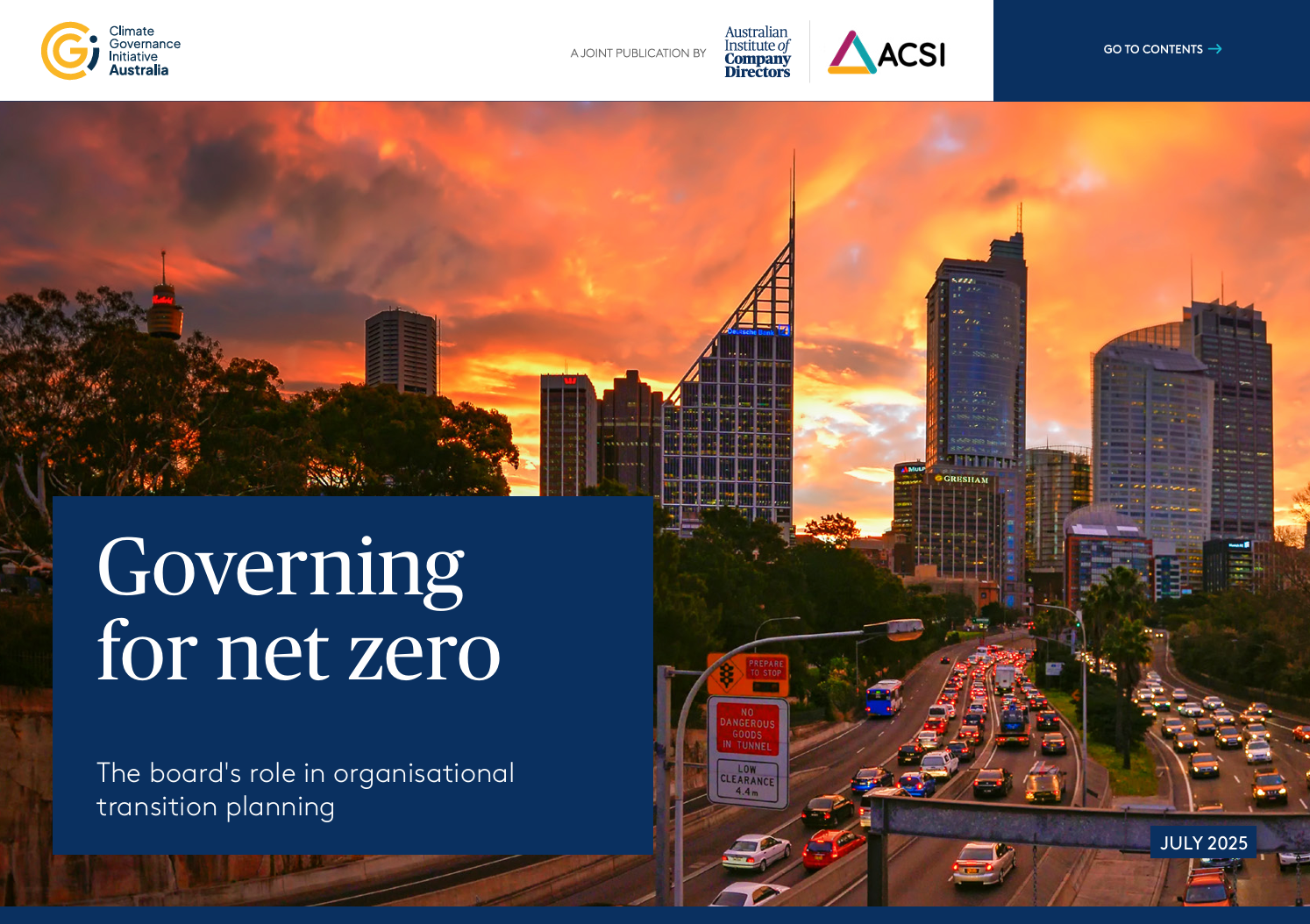
Governing for net zero: The board's role in organisational transition planning
This report guides Australian boards on integrating net zero transition planning into strategy, governance, disclosure and stakeholder engagement. It outlines directors’ legal duties, mandatory climate reporting requirements, and practical oversight questions to help organisations manage climate-related risks, opportunities and implementation.
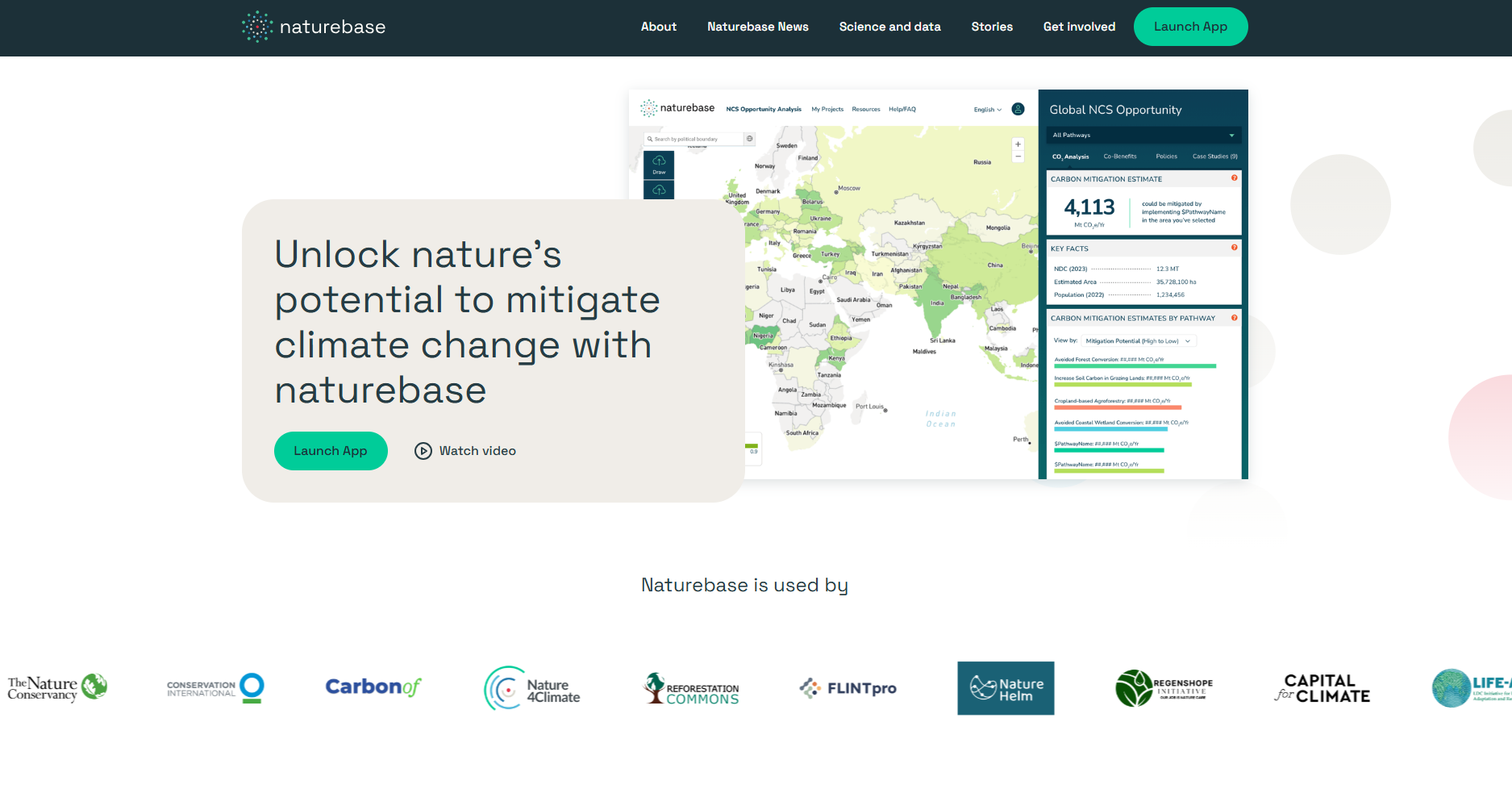
Naturebase
Naturebase is a free, science-based platform that maps where and how to implement nature-based solutions. It provides data on carbon mitigation potential, biodiversity and social benefits, alongside policy guidance and case studies, enabling investors and policymakers to identify, assess and finance high-integrity climate and nature projects.
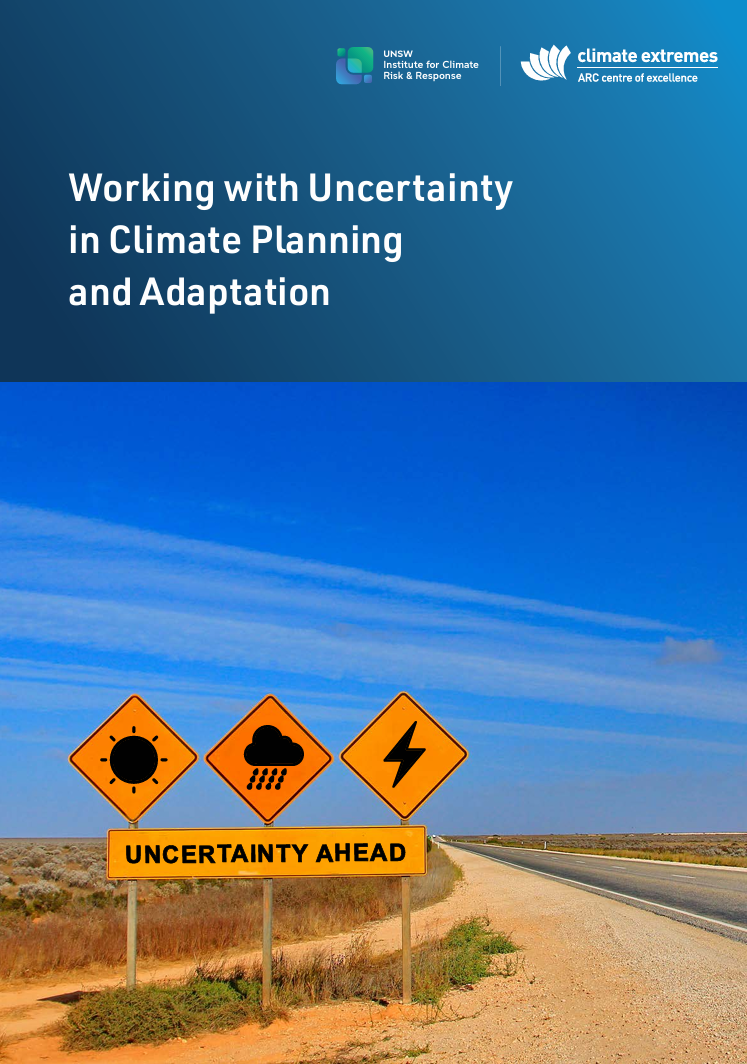
Working with uncertainty in climate planning and adaptation
Explains how uncertainty in climate models affects adaptation planning, highlighting assumptions, variability, model limitations and downscaling challenges. Emphasises using scenarios and probability approaches to inform decisions, while recognising incomplete knowledge and the need for cautious, context-specific interpretation of projections.
Global literature review and survey of implementation constraints on natural climate solutions
Global review and project survey of natural climate solutions across 137 countries finds implementation is constrained mainly by social-behavioural, knowledge, and government or organisational barriers, especially weak policy coordination and implementation capacity. Without targeted enabling measures, near-term mitigation will remain below biophysical potential.

Sustainable Finance Roundup March 2026: Markets, Climate Risk, and the Transition in Practice
This month’s sustainability roundup captures a shift from framework development to real-world application, where climate and nature risks are increasingly embedded across financial systems, legal accountability, and decision-making. It highlights how intensifying physical climate signals, evolving disclosures, and maturing litigation are converging with insights on sovereign risk, energy systems, and corporate strategy. Together, these developments show how sustainability is moving beyond principle—being tested, priced, and enforced across markets, regulation, and the real economy.
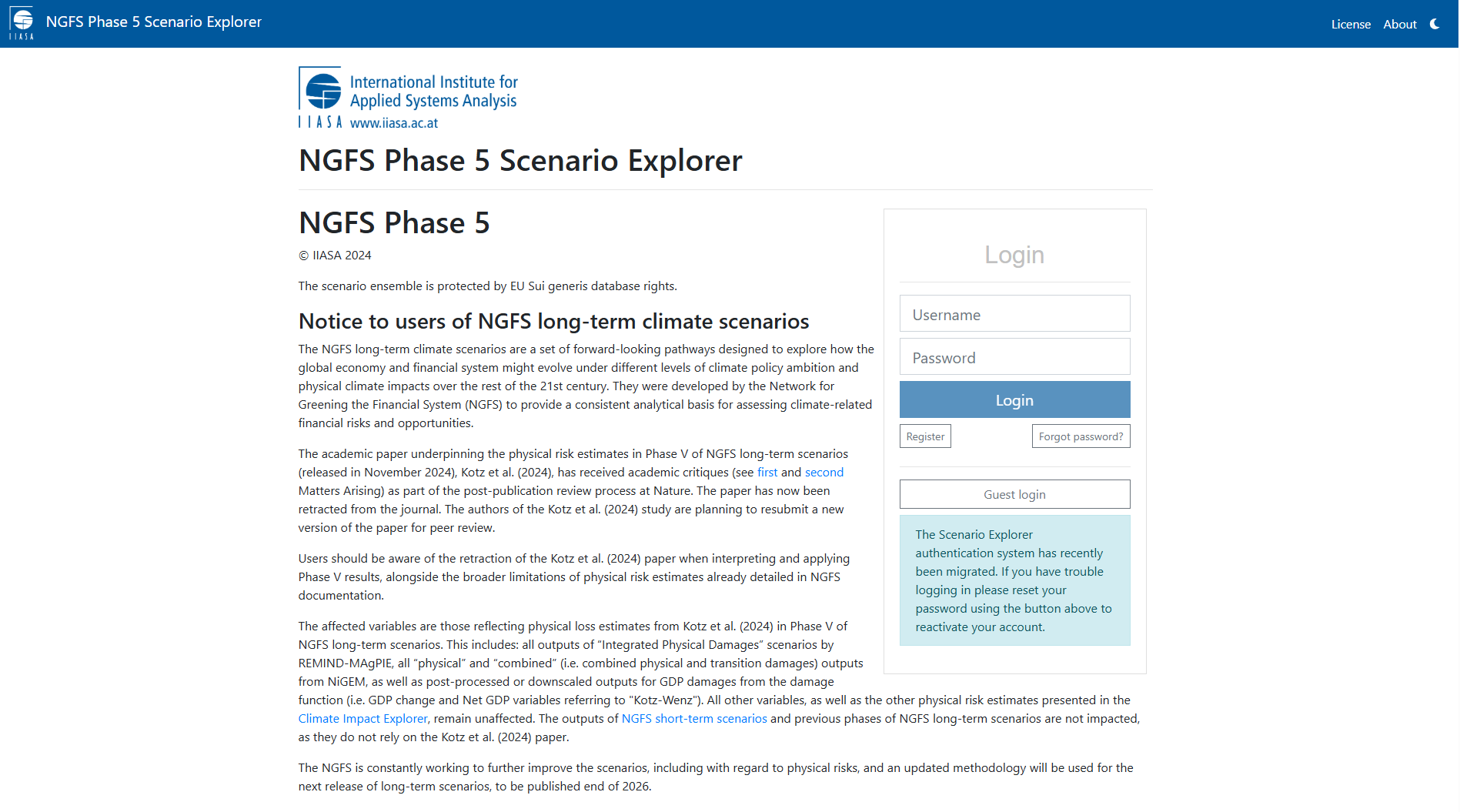
NGFS Phase 5 Scenario Explorer
Web-based platform by NGFS and IIASA providing access to climate scenario data. It enables users to visualise, compare and download time-series data on transition pathways, physical risks and macroeconomic impacts, supporting climate risk analysis, stress testing and financial modelling. Data can be accessed via workspaces, bulk downloads or APIs.

ARC Centre of Excellence for Climate Extremes
ARC Centre of Excellence for Climate Extremes (CLEX) is an Australian climate science research centre focused on understanding and predicting climate extremes. It produces research, reports and briefing notes on extreme weather, drought and climate risk, supporting policymakers and industry to assess impacts of climate change and improve resilience and forecasting capabilities.


