
Library | ESG issues
Law, Regulation & Compliance
The evolving legal and regulatory landscape financial organisations regarding Environmental, Social, and Governance (ESG) considerations comprises both voluntary frameworks and mandatory regulations. Voluntary initiatives, such as the Task Force on Climate-related Financial Disclosures (TCFD), provide guidelines for companies to disclose climate-related financial risks and opportunities. In contrast, mandatory regulations like the European Union’s Sustainable Finance Disclosure Regulation (SFDR) require financial market participants to disclose how they integrate ESG factors into their investment decisions.

Refine
716 results
REFINE
SHOW: 16


Policy and action standard: An accounting and reporting standard for estimating the greenhouse gas effects of policies and actions
The Policy and Action Standard provides a consistent framework for estimating and reporting the greenhouse gas (GHG) impacts of policies and actions. It outlines methods for ex-ante and ex-post assessments, defines principles of GHG accounting, and offers guidance on defining policy boundaries, estimating baseline emissions, and assessing uncertainty to support transparent, accurate decision-making.

Replacing Animal Research
Replacing Animal Research is a UK charity dedicated to ending animal testing by promoting human-relevant, non-animal research methods. Through funding scientific projects, publishing the peer-reviewed journal ATLA, and engaging in education and policy advocacy, it aims to create a world where no animal suffers for science.

The greenhouse gas protocol: A corporate accounting and reporting standard
The Greenhouse Gas Protocol Corporate Standard provides a framework for businesses to quantify and report greenhouse gas emissions. It establishes standardised accounting principles, categorises emissions by scope, and offers guidance for setting organisational and operational boundaries. The Standard promotes transparency, consistency, and comparability in corporate GHG inventories.

RIAA policy platform: Sustainable finance for a thriving Aotearoa New Zealand 2023 and beyond
This report outlines RIAA’s policy platform to strengthen sustainable finance in Aotearoa New Zealand. It recommends a national strategy, clearer ESG disclosures, taxonomy alignment with global standards, anti-greenwashing measures, Māori inclusion, human rights protections, and alignment with biodiversity and the Sustainable Development Goals.

GHG protocol scope 2 guidance: An amendment to the GHG protocol corporate standard
This report updates the GHG Protocol Corporate Standard by introducing dual reporting for Scope 2 emissions—requiring both location-based and market-based methods. It defines Scope 2 accounting principles, emission factor hierarchies, and quality criteria for contractual instruments, aiming to improve transparency, accuracy, and comparability across energy markets.

Corporate climate litigation in Australasia: (Re)shaping the private law-climate interface
The report examines how corporate climate litigation in Australia and New Zealand is shaping private law. It highlights legal actions involving directors’ duties, disclosure obligations, consumer protections, and tort law. The analysis shows incremental adaptations in private law to address climate change impacts, especially through anti-greenwashing and climate accountability claims.
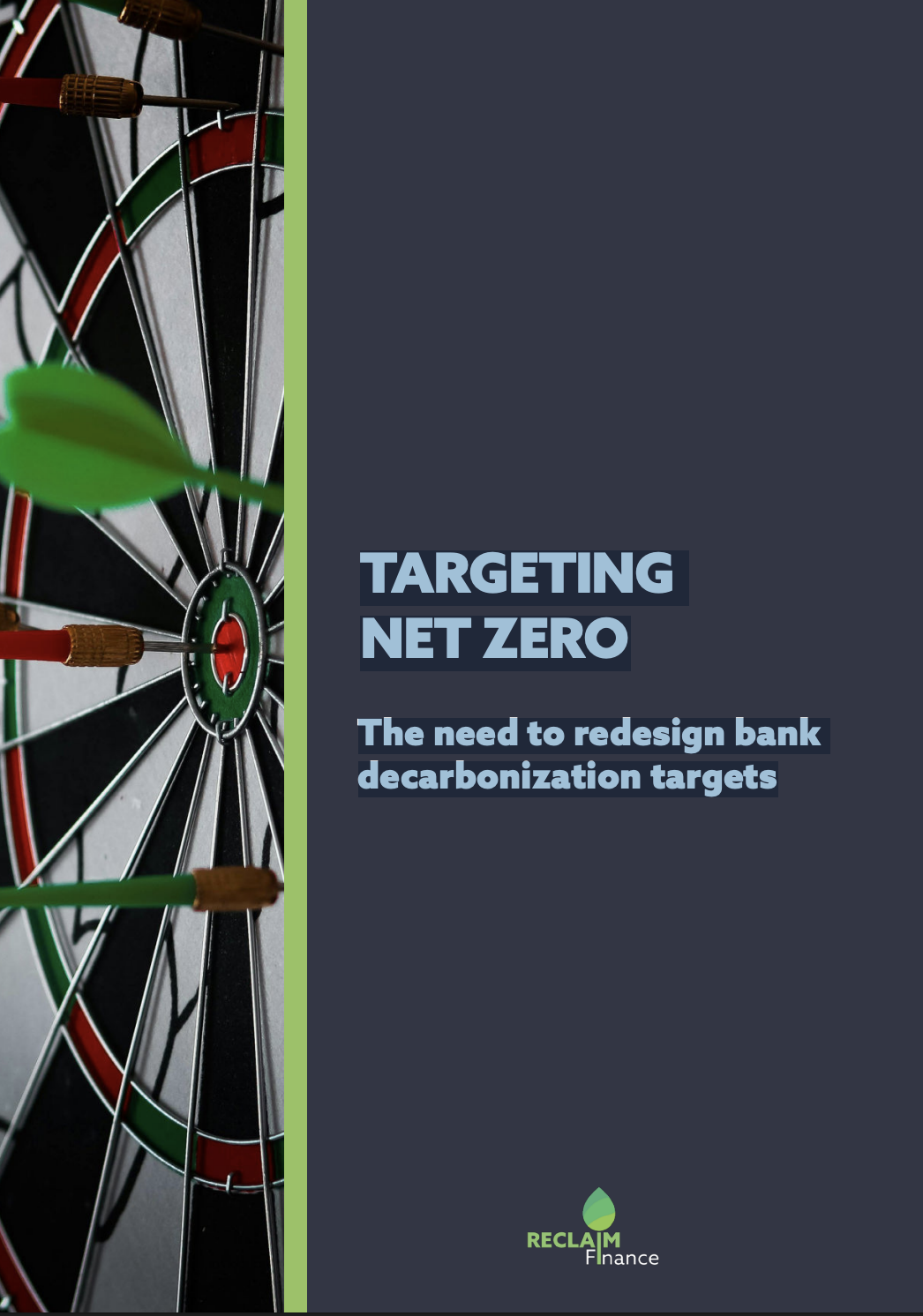
Targeting net zero: The need to redesign bank decarbonization targets
This report examines the limitations of current bank decarbonisation targets and proposes design reforms to align with net zero. It analyses scope coverage, target types, and sector alignment, offering practical recommendations for enhancing climate credibility and effectiveness in financial institutions’ transition planning.

Reducing animal testing in the health sector through strategic investment: Guide for investors
The report outlines how strategic investment can reduce animal testing in the health sector. It provides investors with guidance on promoting transparency, encouraging non-animal methods, and influencing regulation, while highlighting the risks of limited disclosure and misalignment with consumer concerns.
Australian sustainable finance taxonomy (Version 1 - 2025)
The Australian Sustainable Finance Taxonomy (2025) provides a framework classifying economic activities aligned with environmental sustainability goals, particularly climate mitigation. It includes performance-based criteria for key sectors such as agriculture, mining, energy, construction, and transport, facilitating sustainable capital allocation, consistent reporting, and transition planning, thus supporting Australia’s transition to a net-zero emissions economy.
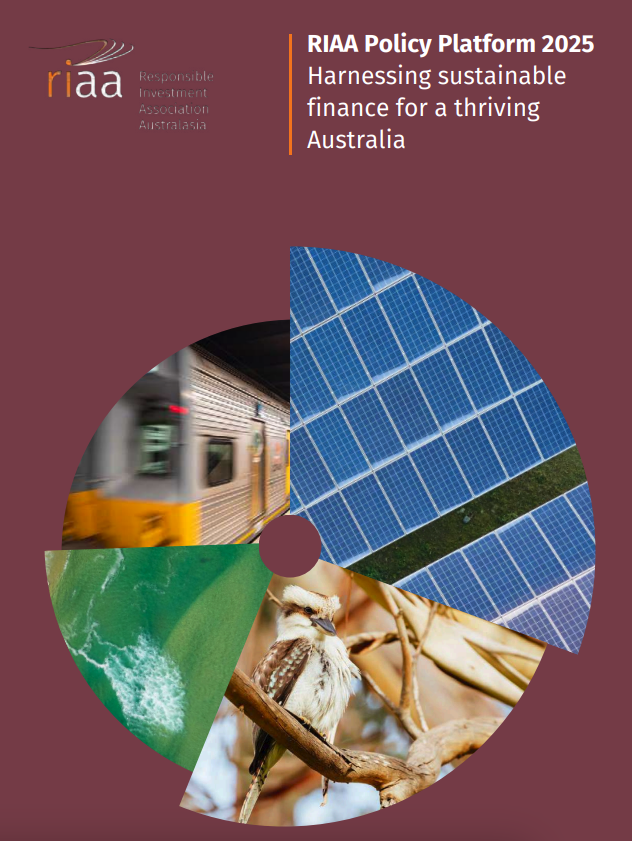
RIAA Policy Platform 2025: Harnessing sustainable finance for a thriving Australia
The RIAA Policy Platform 2025 outlines nine policy priorities and two principles to align Australia’s finance system with sustainability goals. It recommends regulatory reforms, improved data, Indigenous inclusion, and stronger accountability to mobilise capital for a net zero, nature-positive economy that supports long-term economic resilience and societal wellbeing.

Find it, fix it, prevent it: Modern slavery report 2024
CCLA’s 2024 report outlines investor-led efforts to address modern slavery through corporate engagement, policy advocacy, and improved data. Key sectors include construction and agriculture. Progress was made via benchmarking and collaborative initiatives, though disclosure and remedy remain limited. EU legislation and stakeholder coordination are driving further momentum.

ERM's the global regulations radar series
The Global Regulations Radar is a benchmark series providing bi-annual updates on ESG and EHS regulations across major global markets. It outlines emerging regulatory developments, compliance expectations, and reporting frameworks affecting companies with international operations, with coverage spanning sustainability, climate and materials-related regulation.

Artificial intelligence in financial services
AI is reshaping financial services by enhancing efficiency, reducing costs and unlocking new revenue opportunities. With $97 billion in projected investment by 2027, firms must address risks like misinformation and data bias while prioritising governance, regulation and workforce reskilling to ensure responsible, secure and effective AI adoption.
Regulating AI in the financial sector: Recent developments and main challenges
The report outlines AI’s growing use in finance—especially in underwriting, fraud detection, and customer support—highlighting regulatory challenges around explainability, governance, and data security. It discusses evolving global guidance and the need for risk-based, proportionate oversight, particularly as generative AI gains traction in high-impact applications.

Australian Sustainable Finance Capability Framework: Updated pilot version
The updated Australian Sustainable Finance Capability Framework outlines key competencies for roles in sustainable finance across Australia. It integrates First Nations perspectives, focuses on social and environmental sustainability, and guides skill development in areas such as strategy, risk management, and reporting to support sector-wide capability uplift.
The root cause of nature loss: Forests, why they matter, and how to assess deforestation risk in investment portfolios through nature-related data
This report outlines how deforestation, particularly in tropical forests, is a key driver of biodiversity loss and climate change. It presents the risks to institutional investors—physical, transition, and systemic—and offers a framework to assess deforestation exposure in portfolios using nature-related data and metrics across sectors and geographies..


