
Library | ESG issues
Public Policy
Public policy refers to the actions and decisions taken by governments to address societal issues through laws, regulations, and funding priorities. It shapes the business environment by influencing regulatory requirements, market conditions, and corporate responsibilities. Policies related to taxation, labour laws, environmental regulations, and trade agreements can impact business operations, costs, and investment strategies.
Team Altiorem recommends

Refine
484 results
REFINE
SHOW: 16


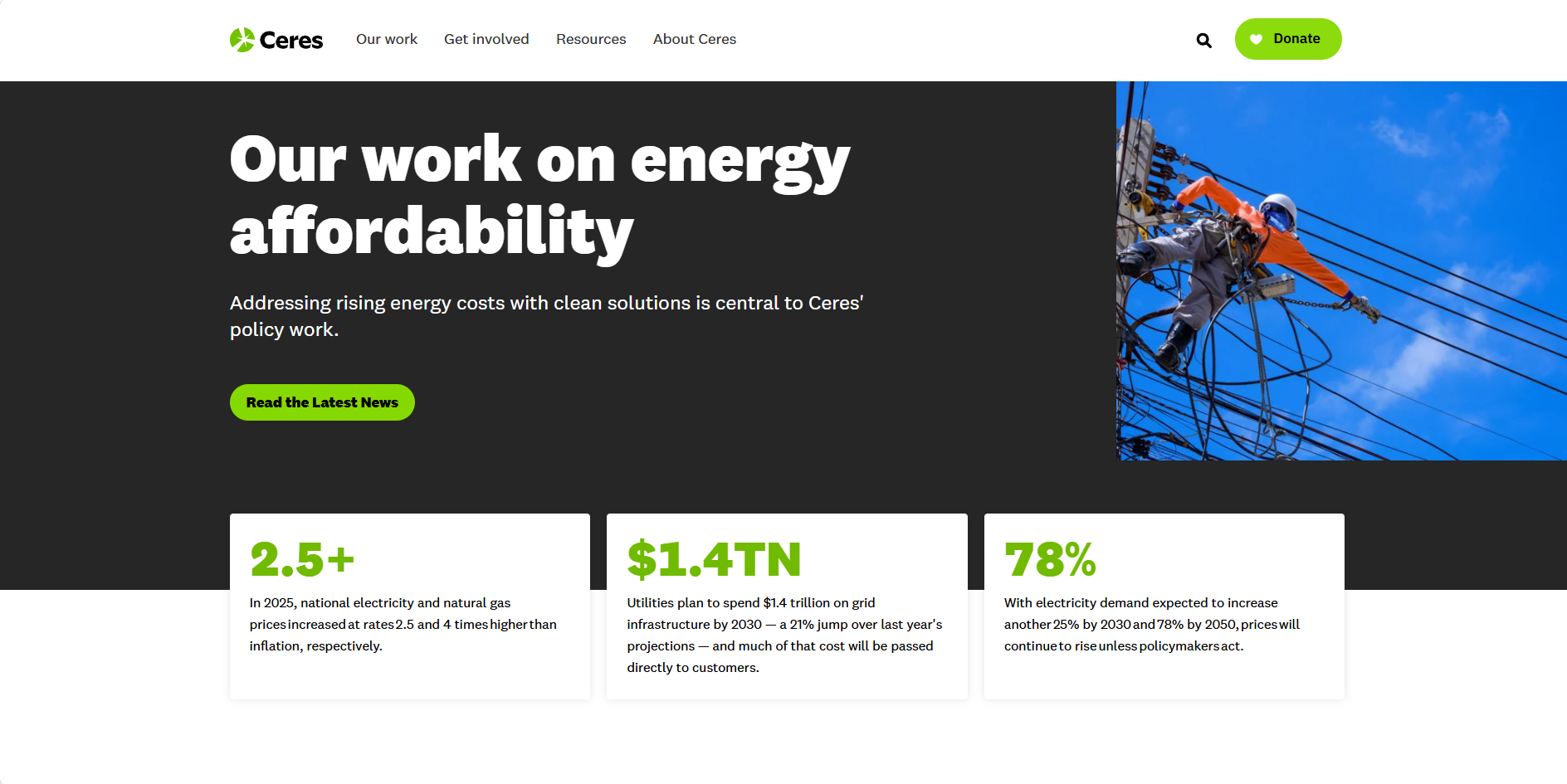
Ceres: Our work on energy affordability
A Ceres initiative and playbook focused on curbing rising energy prices through clean energy expansion, providing policymakers and investors with strategies for a modern, efficient, and affordable energy system.
Global sustainable investment review series
This benchmark series provides a factual mapping of the state of responsible and sustainable investment across major global financial markets. Produced biennially, it offers regional insights and policy recommendations to help finance professionals navigate evolving regulatory frameworks, standardised methodologies, and the transition to a net-zero economy through international cooperation.
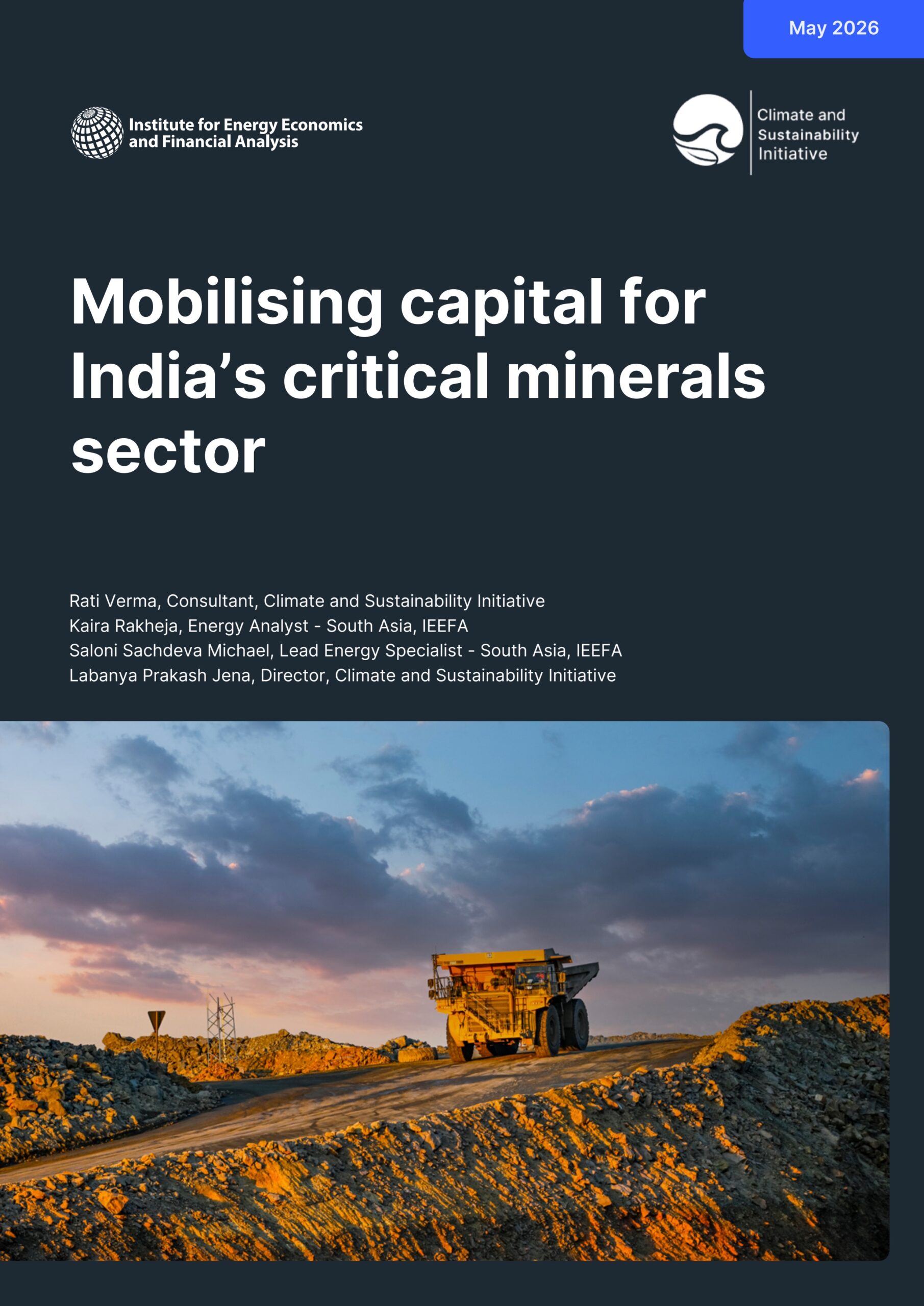
Mobilising capital for India’s critical minerals sector
This report examines financing challenges in India's critical minerals sector across upstream, midstream, and recycling segments. It evaluates the National Critical Mineral Mission's role in addressing capital gaps and suggests de-risking projects to ensure commercial viability and support India’s energy transition goals through strategic policy and international partnerships.
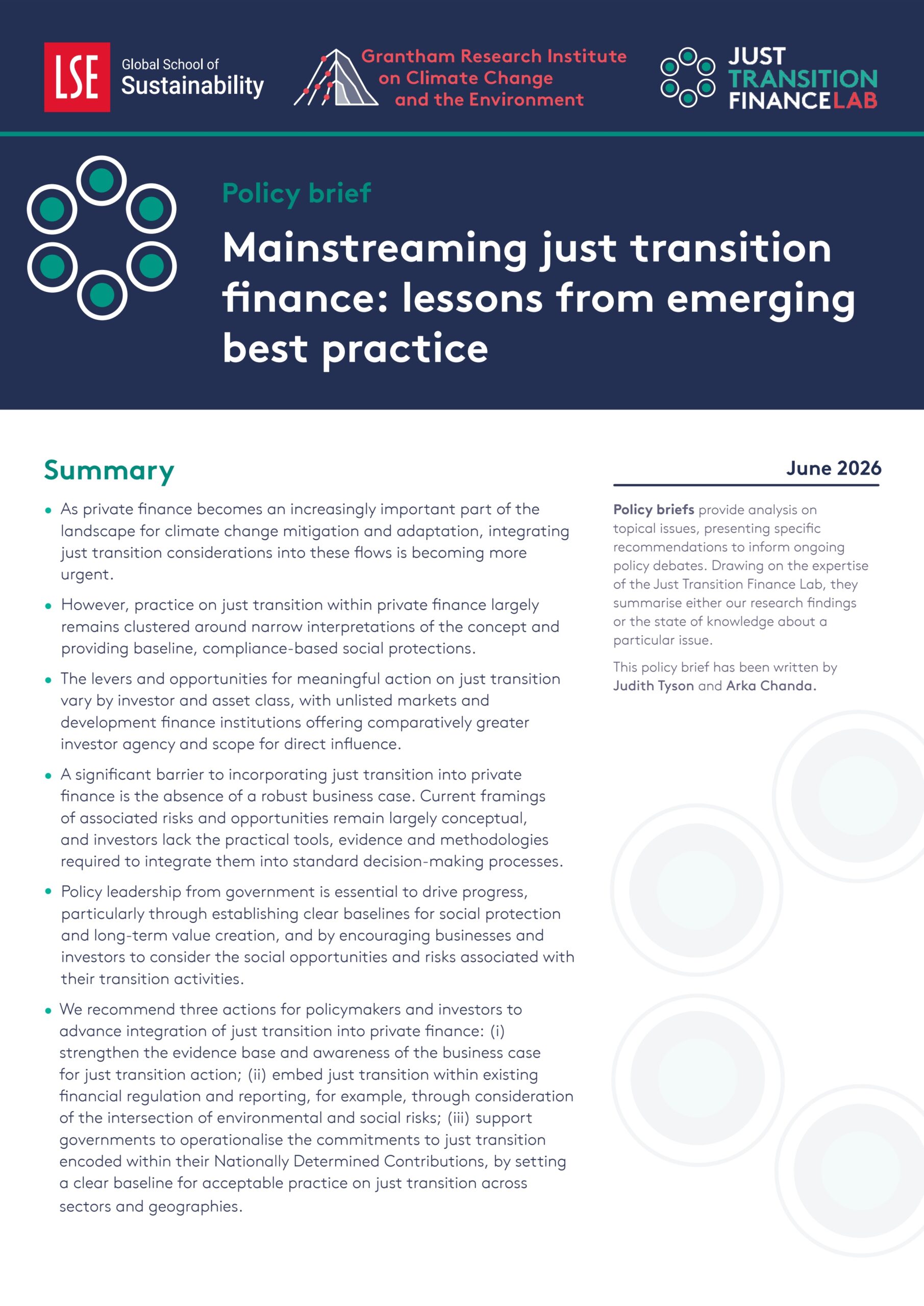
Mainstreaming just transition finance: Lessons from emerging best practice
This report examines the integration of just transition principles into private finance. It highlights structural barriers, including the lack of robust business cases and quantifiable evidence. Recommendations include embedding just transition into existing regulatory frameworks, strengthening the evidence base for commercial benefits, and aligning private incentives with national commitments.
Assessing climate finance quality in practice: Lessons from six cases
This research report analyses six case studies to determine what constitutes high-quality public climate finance. It introduces a two-pronged framework assessing design, delivery, and results. Findings emphasise context-specific calibration, the importance of building enabling environments, and identifying data gaps that hinder systematic reporting across public climate finance providers.
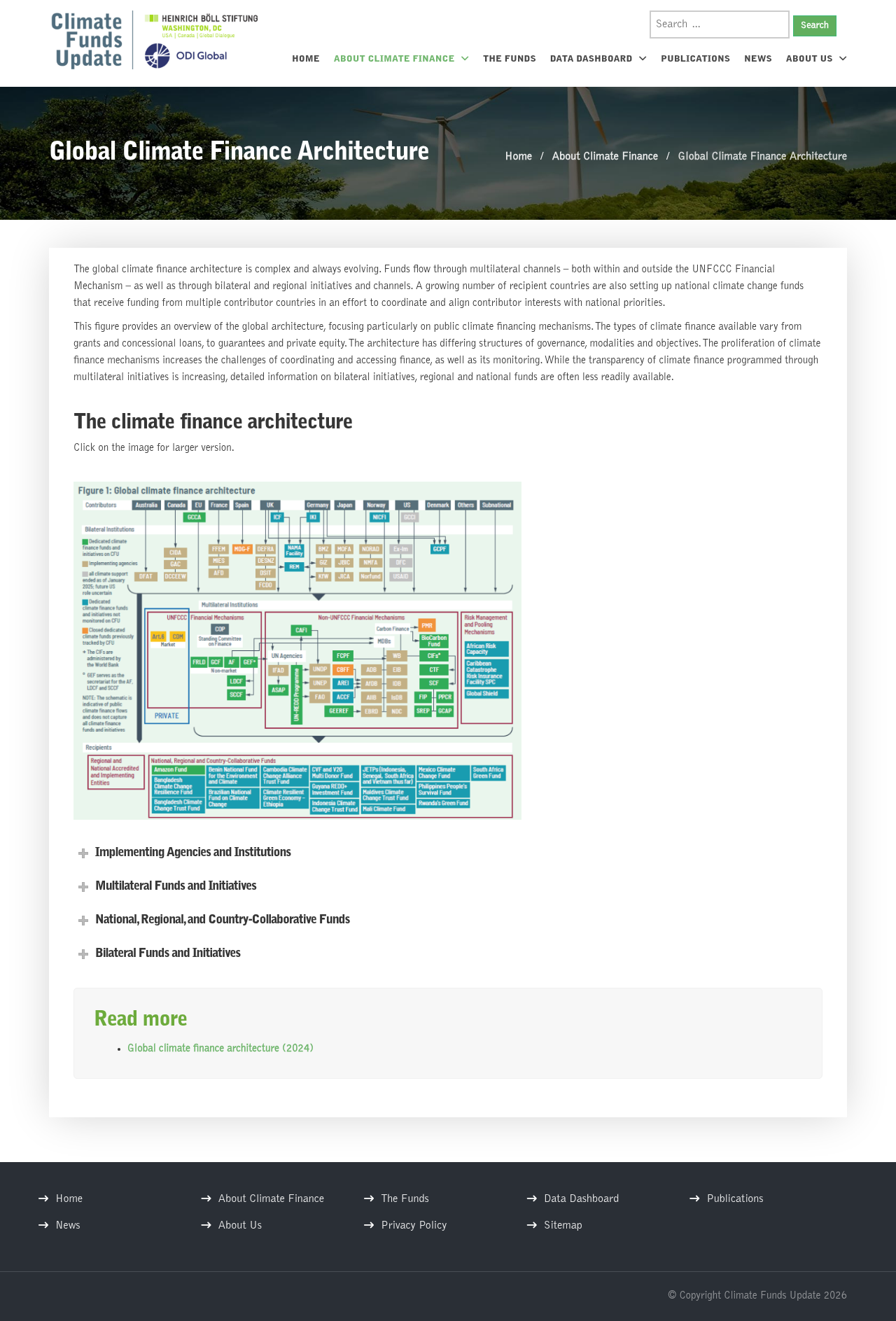
Global Climate Finance Architecture
Climate Funds Update tracks the complex global climate finance architecture, monitoring multilateral, bilateral, and regional funds. It provides critical insights into how international capital is channelled toward climate action in developing nations, supporting ESG analysis and investment context.
Mapping social and environmental due diligence legislation
This OECD report maps 21 legislative measures across 11 jurisdictions concerning social and environmental due diligence. It identifies key areas of convergence and divergence in regulatory scope and requirements. The findings aim to support international policy co-operation, reduce implementation complexity, and promote consistent global enforcement approaches.
Global critical minerals outlook series
The Global Critical Minerals Outlook is an annual series published by the IEA that tracks market, investment, technology, and policy trends across critical mineral supply chains. Each edition provides medium- and long-term demand and supply projections for key energy minerals, covering supply security, concentration risks, and diversification developments.
Global energy review series
The Global Energy Review is an annual benchmark series published by the International Energy Agency (IEA) that assesses trends across the entire energy sector, covering all fuels, technologies, regions, and energy-related CO2 emissions for the preceding calendar year.
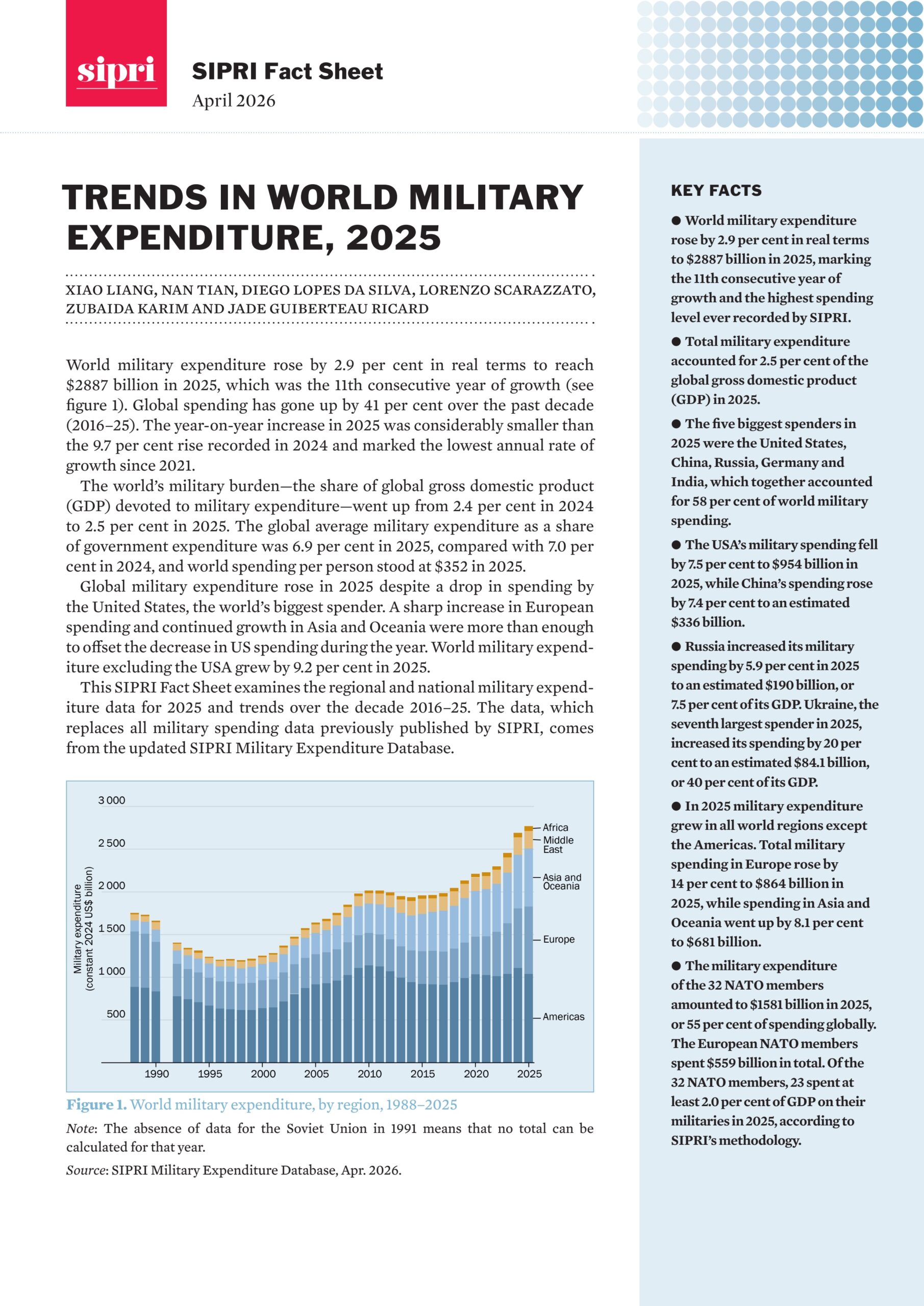
Trends in world military expenditure series
A benchmark series by SIPRI tracking annual global military expenditure across countries and regions. Published as an annual fact sheet, it provides data on spending levels, military burdens as a share of GDP, and decade-long trends to support evidence-based analysis of defence economics worldwide.
Global report on food crises series
The Global Report on Food Crises is an annual benchmark series tracking acute food insecurity, malnutrition and forced displacement in countries facing food crises. Produced by FAO, WFP and the Global Network Against Food Crises, it delivers consensus-based, multi-agency analysis to guide humanitarian and development decision-making globally.
A well-adapted UK: The fourth independent assessment of UK climate risk (CCRA4-IA)
This report assesses the UK’s climate risks to 2050, identifies priority adaptation actions across key sectors, and outlines investment, policy and governance measures to strengthen resilience. It provides evidence-based recommendations to support climate adaptation planning and reduce long-term economic and societal impacts.
Transition Acceleration Framework (TAF)
TAF is a forward-looking analytical framework by Rhodium Group that evaluates where climate investment and policy will accelerate decarbonisation.
AI data centers and electricity demand: Taming the energy guzzlers
This paper examines AI data centre electricity demand and its costs for ratepayers and the environment. It finds that Big Tech market capitalisations have risen far above predicted levels since ChatGPT's 2022 launch, while data centres drive up electricity prices and fossil fuel use. Regulatory reforms and innovations are recommended.
Carbon tariffs, emissions leakage, and production relocation
This paper examines whether carbon tariffs prevent emissions leakage from firm relocation in a North-South duopoly model. It finds that carbon tariffs combined with export rebates form the optimal carbon tax regime, preventing leakage when the northern firm's emissions intensity exceeds fifty percent of the southern firm's, and can benefit both countries.
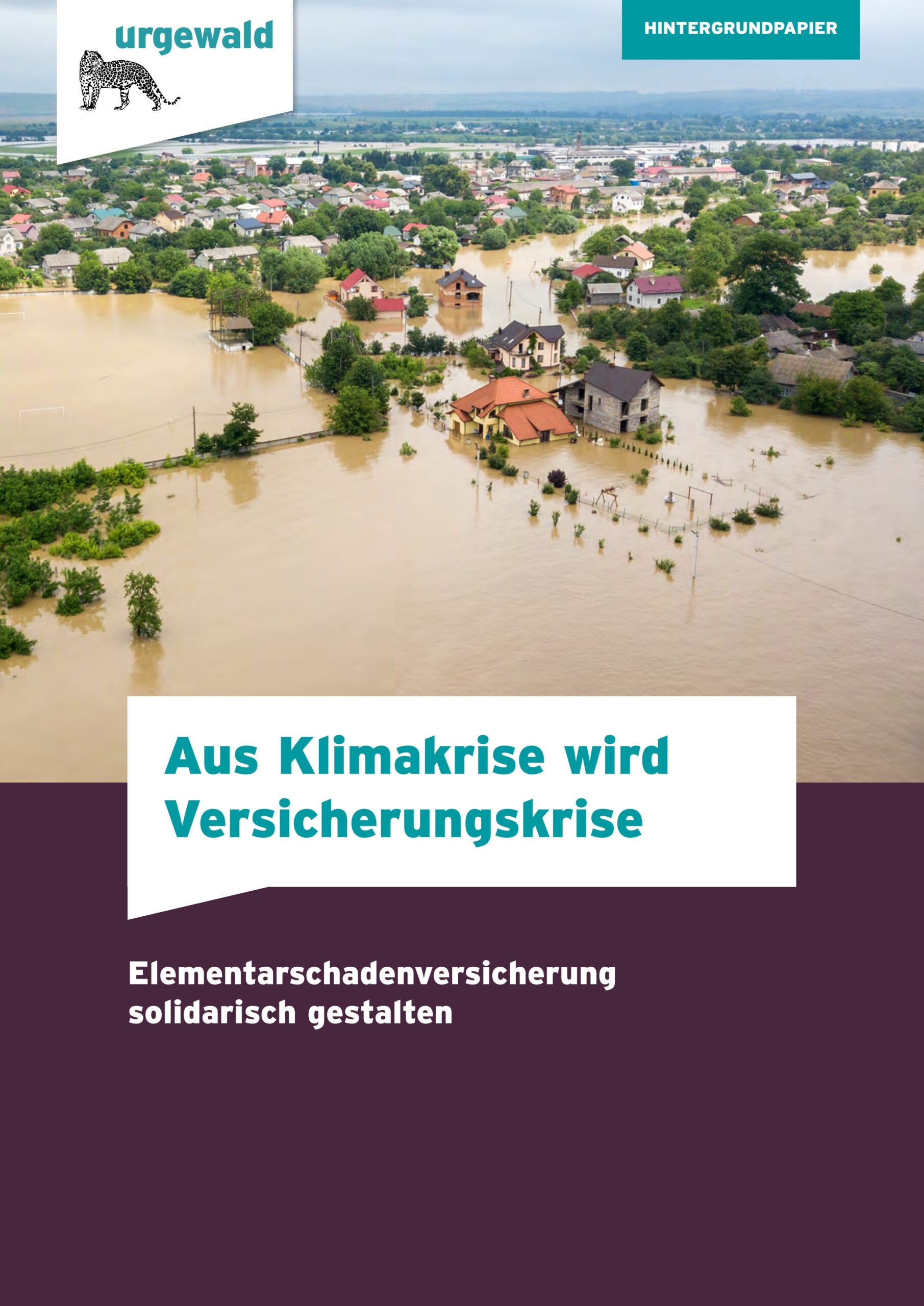
From climate crisis to insurance crisis: Designing solidarity-based natural disaster insurance
This report examines rising climate-related insurance losses and Germany's lack of comprehensive natural disaster coverage, with only 57% of residential buildings insured against such risks. It analyses international public-private insurance models — particularly France's CatNat system — and recommends a solidarity-based approach alongside measures to hold the fossil fuel industry financially accountable.


