
Library | ESG issues
Public Policy
Public policy refers to the actions and decisions taken by governments to address societal issues through laws, regulations, and funding priorities. It shapes the business environment by influencing regulatory requirements, market conditions, and corporate responsibilities. Policies related to taxation, labour laws, environmental regulations, and trade agreements can impact business operations, costs, and investment strategies.
Team Altiorem recommends

Refine
484 results
REFINE
SHOW: 16


Rust in motion: The political environmental trap of vehicle tax exemptions
This research examines Brazil's vehicle tax exemptions, finding that lower age thresholds increase fleet age, pollution and infant health risks. It identifies a 'political environmental trap', where raising exemption ages leads to significant electoral penalties for incumbents, despite the policies resulting in a net welfare loss.

Reuters Institute digital news report series
This research series provides a comprehensive annual analysis of digital news consumption globally. It tracks audience trends across 48 markets, focusing on trust, platform usage, and the transition to digital formats. This benchmark series informs stakeholders about the evolving information environment and changing news habits across diverse demographics.
Unlocking catalytic capital in Australia
This report examines the role of catalytic capital in Australia, exploring how flexible, risk-tolerant investment can mobilise private capital for social and environmental impact. It defines the current market, identifies barriers to growth, and provides case studies of successful deployment across philanthropic, government, and institutional sectors.

Urban planning for the circular economy: A spatial turn in theory and practice
This report examines how urban planning can operationalise the circular economy by addressing spatial dimensions. Drawing on European city experiences, it explores circular developments, infrastructure, land management and multi-level governance. It provides strategic directions for integrating circularity into core planning instruments to support systemic, territorially grounded transitions.

Oil market report series
This monthly series provides a comprehensive analysis of global oil market fundamentals, including supply, demand, refinery throughputs, and price developments. Produced by the International Energy Agency, it offers detailed data and forecasts to support evidence-based decision-making. This document is part of a benchmark series.
Optimal flood insurance in a second-best world: Fiscal spillovers, reclassification risk and moral hazard
This report evaluates the U.S. National Flood Insurance Program's transition to risk-based pricing. It finds that unintended consequences, such as increased ex post disaster spending and household exposure to climate uncertainty, outweigh moral hazard costs. The authors conclude that an optimal premium subsidy of 52% is required.
Systems stewardship: Managing interconnected climate risks for lasting value
This report examines how Australian investors apply systems stewardship to manage interconnected climate risks. It identifies key practices, such as collaborative engagement and policy advocacy, while highlighting barriers like resource constraints. Six recommendations are provided to help investors safeguard long-term returns and support a net-zero transition.
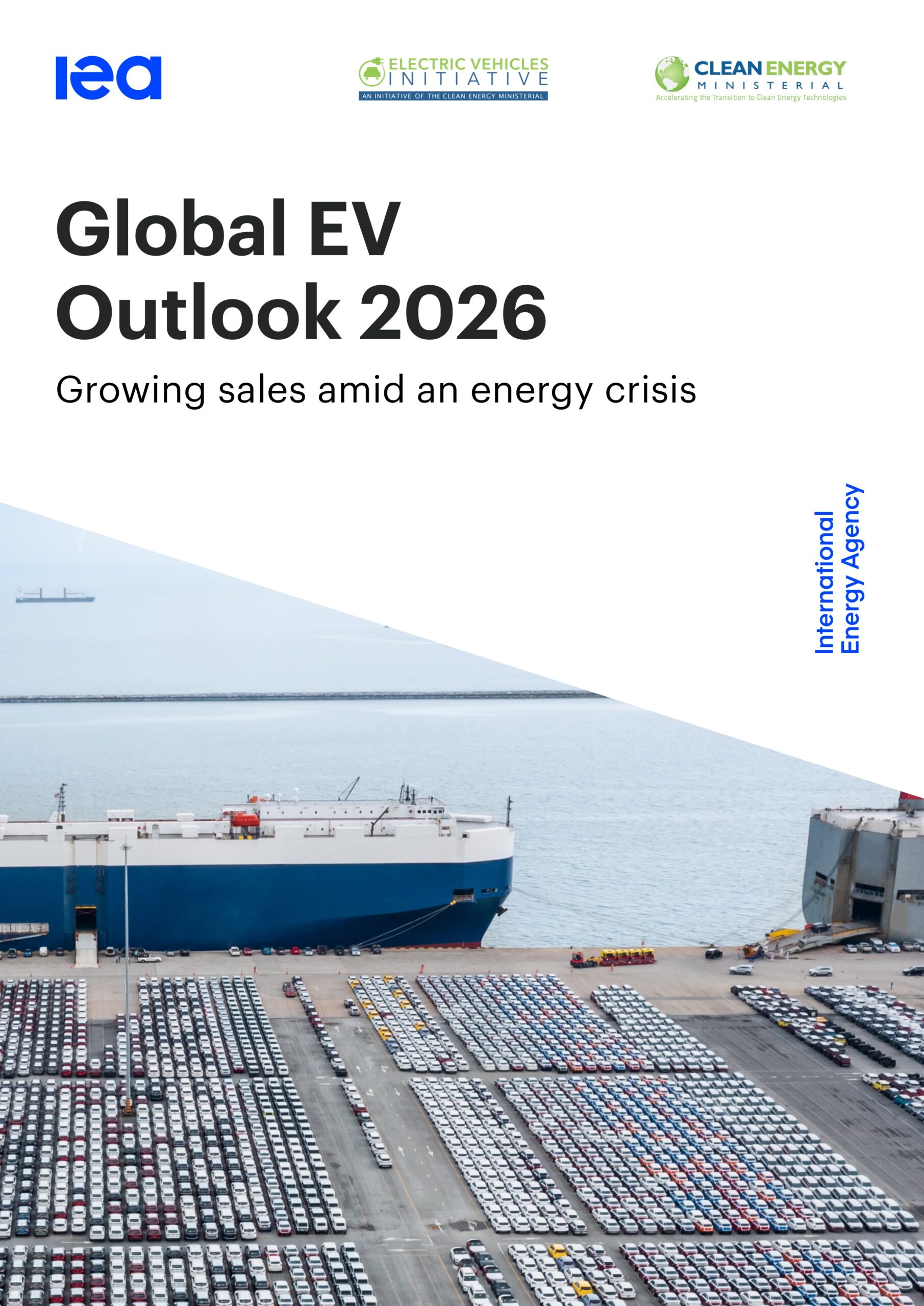
Global EV Outlook series
This benchmark series monitors recent developments in electric mobility across the globe. Produced annually, the report examines deployment of vehicles and infrastructure, battery demand, and policy developments. It evaluates the implications of growing adoption for energy consumption and emissions across major and emerging markets.
The Paris Agreement ten years later: Navigating climate uncertainty and tipping points
This research evaluates the Paris Agreement ten years on, highlighting critical implementation and ambition gaps. It identifies a triple-track crisis involving geophysical inertia, cognitive barriers, and policy lags. The report proposes a precautionary paradigm using technological and financial levers to navigate climate uncertainty and prevent irreversible tipping points.
Industrial policies for multi-stage production: The battle for battery-powered vehicles
This research analyses industrial policies for the multi-stage electric vehicle supply chain. It evaluates consumer subsidies and local content requirements, finding that while protectionist measures expand domestic production, they can significantly increase costs and reduce overall adoption compared to unconditional subsidies that maximise scale economies.
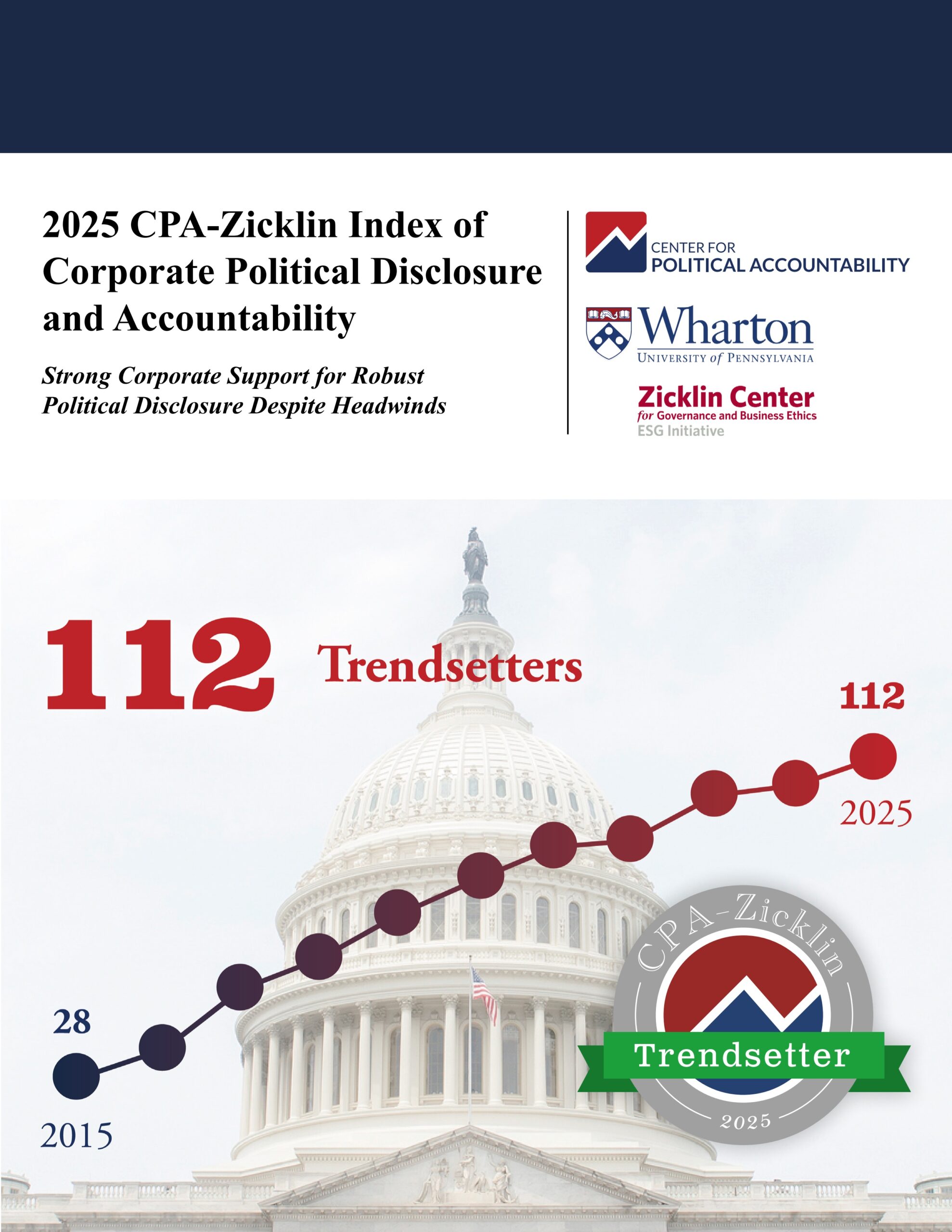
CPA-Zicklin Index of Corporate Political Disclosure and Accountability
This benchmark series evaluates corporate political disclosure and accountability practices among major US companies. It provides a structured analysis of transparency, board oversight, and spending policies for the S&P 500 and Russell 1000, enabling stakeholders to assess political risk and governance standards across different industries.
ASEAN sustainable finance state of the market series
This series by the Climate Bonds Initiative examines the development of sustainable finance markets across ASEAN. It covers green, social, sustainability and sustainability-linked debt instruments, alongside market structures, taxonomies, transition finance and policy developments supporting sustainable capital markets across the region.
Why shareholder-driven corporate social responsibility failed
This report analyses why shareholder-led corporate social responsibility failed in the early 2020s. It argues that political forces blocking government regulation also dismantle private CSR initiatives. Using the BlackRock-Texas conflict as evidence, it concludes that direct political action is the only viable path for systemic change.
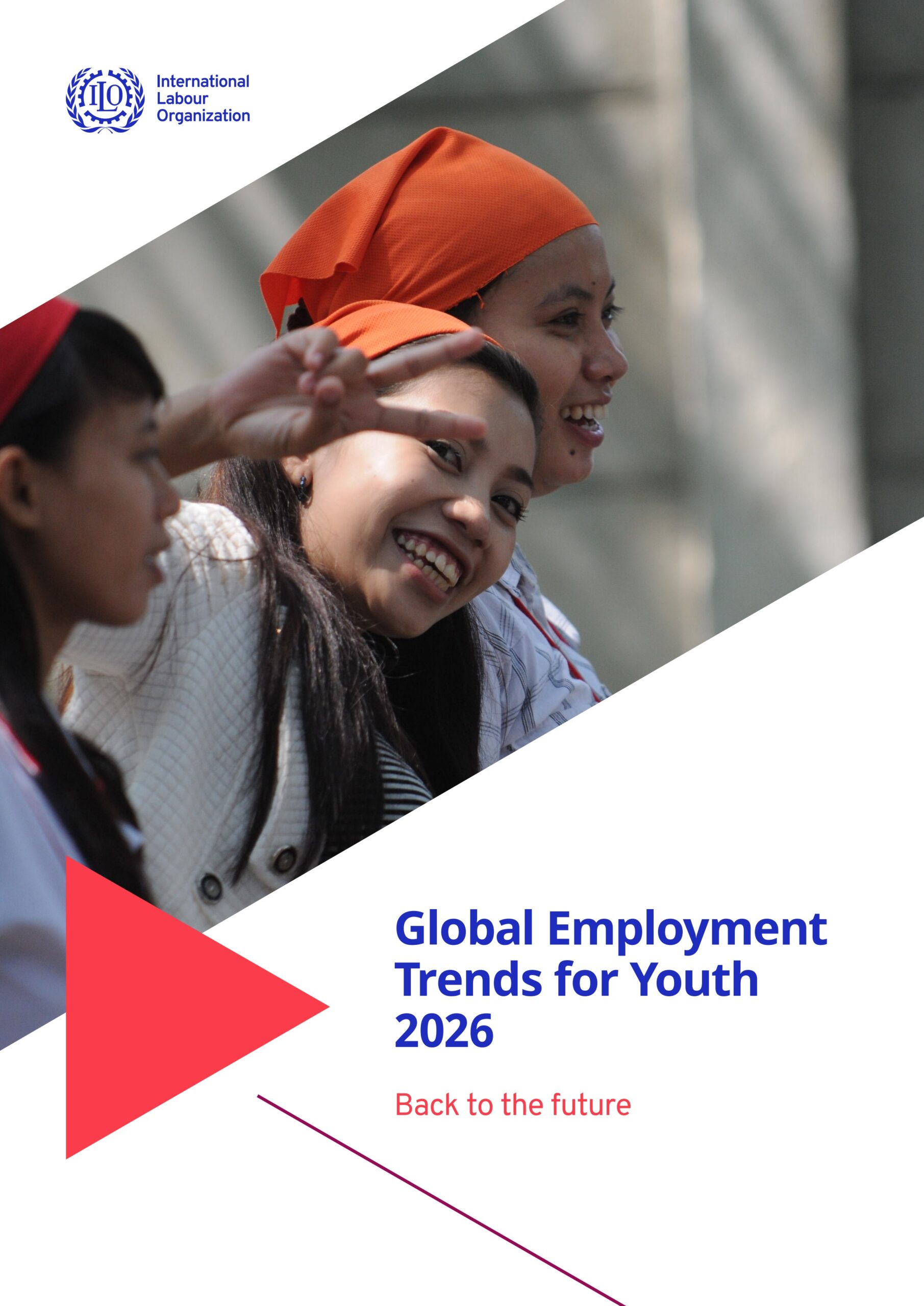
Global employment trends for youth 2026: Back to the future
The Global Employment Trends for Youth 2026 report highlights a stalled post-pandemic recovery, with global youth unemployment reaching 12.4 per cent. It examines rising NEET rates, artificial intelligence impacts, and job experience inflation, while advocating for bold, adaptive policies to ensure secure, decent work pathways for young people.
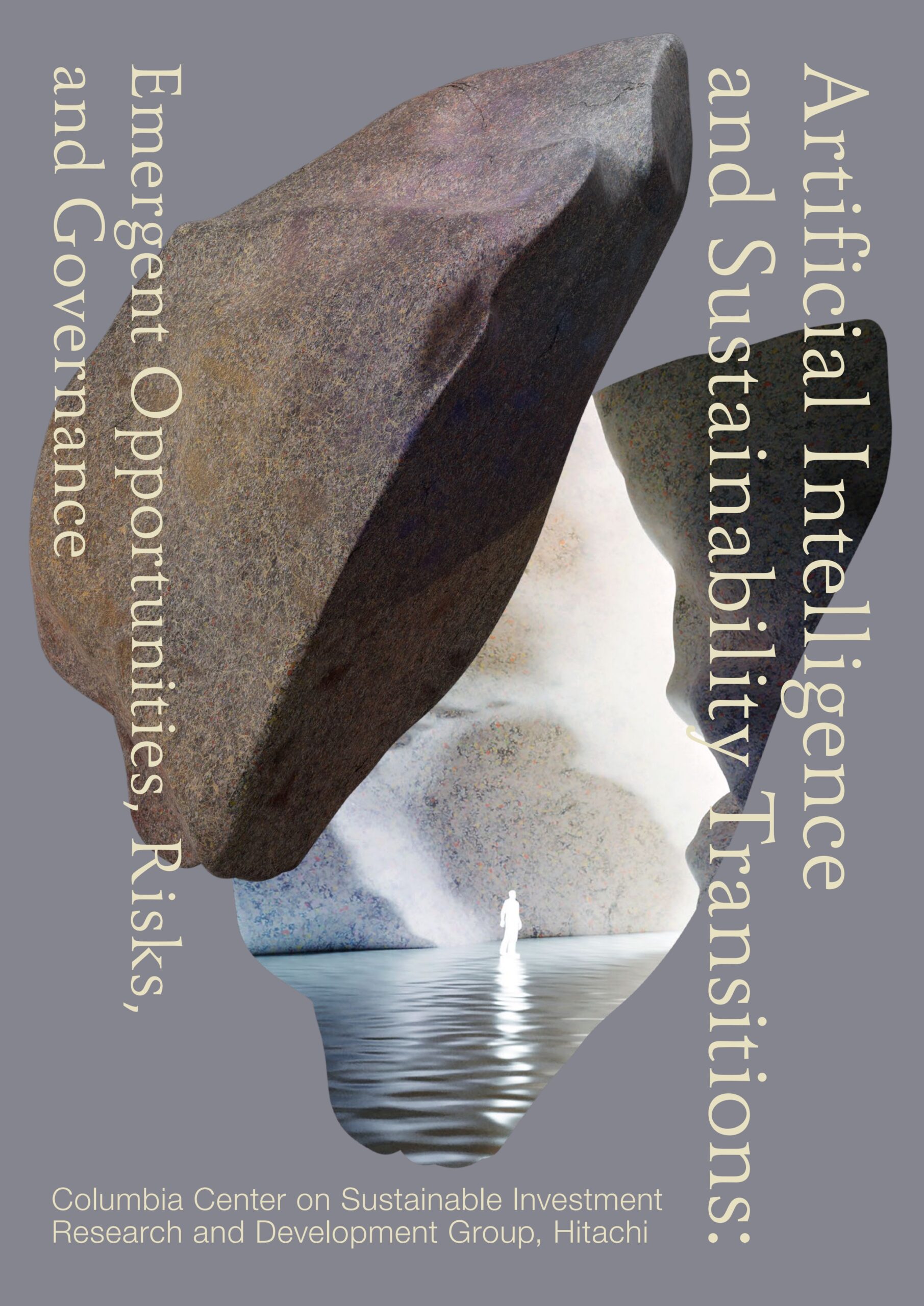
Artificial intelligence and sustainability transitions: Emergent opportunities, risks, and governance
This report examines the intersection of artificial intelligence and sustainability transitions, detailing opportunities and risks across environment, energy, labour, finance, and democracy. It proposes a three-layered governance framework and a phased roadmap for global scientific alignment, interim safety measures, and a binding international framework convention to ensure societal well-being.
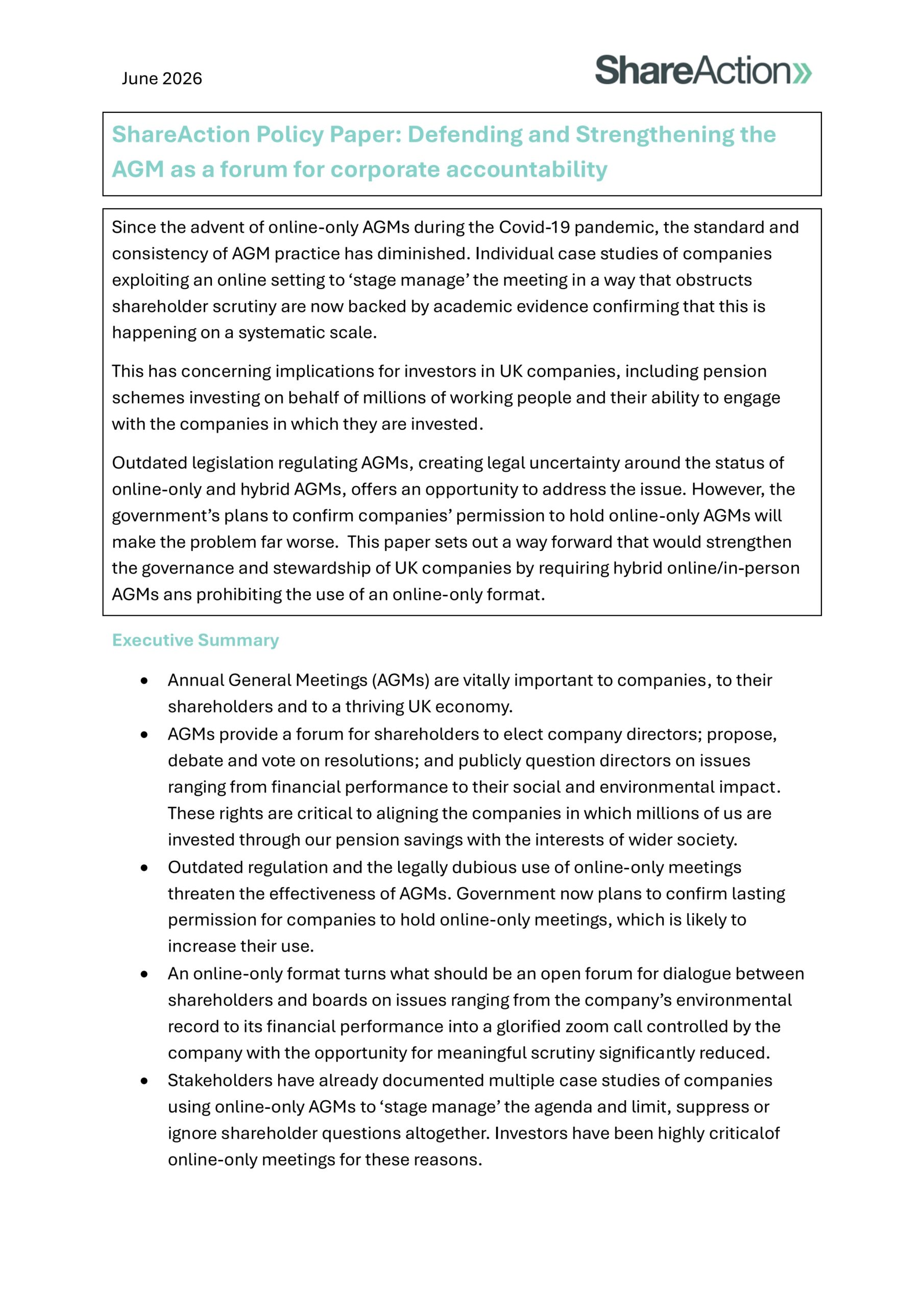
ShareAction policy paper: Defending and strengthening the AGM as a forum for corporate accountability
This ShareAction report advocates for mandatory hybrid AGMs to ensure corporate accountability. It argues that online-only formats diminish shareholder scrutiny and enable management to stage-manage proceedings. The document recommends amending the 2006 Companies Act and provides case studies of poor virtual AGM practices across several major companies.


