
Library | ESG issues
Public Policy
Public policy refers to the actions and decisions taken by governments to address societal issues through laws, regulations, and funding priorities. It shapes the business environment by influencing regulatory requirements, market conditions, and corporate responsibilities. Policies related to taxation, labour laws, environmental regulations, and trade agreements can impact business operations, costs, and investment strategies.
Team Altiorem recommends

Refine
484 results
REFINE
SHOW: 16


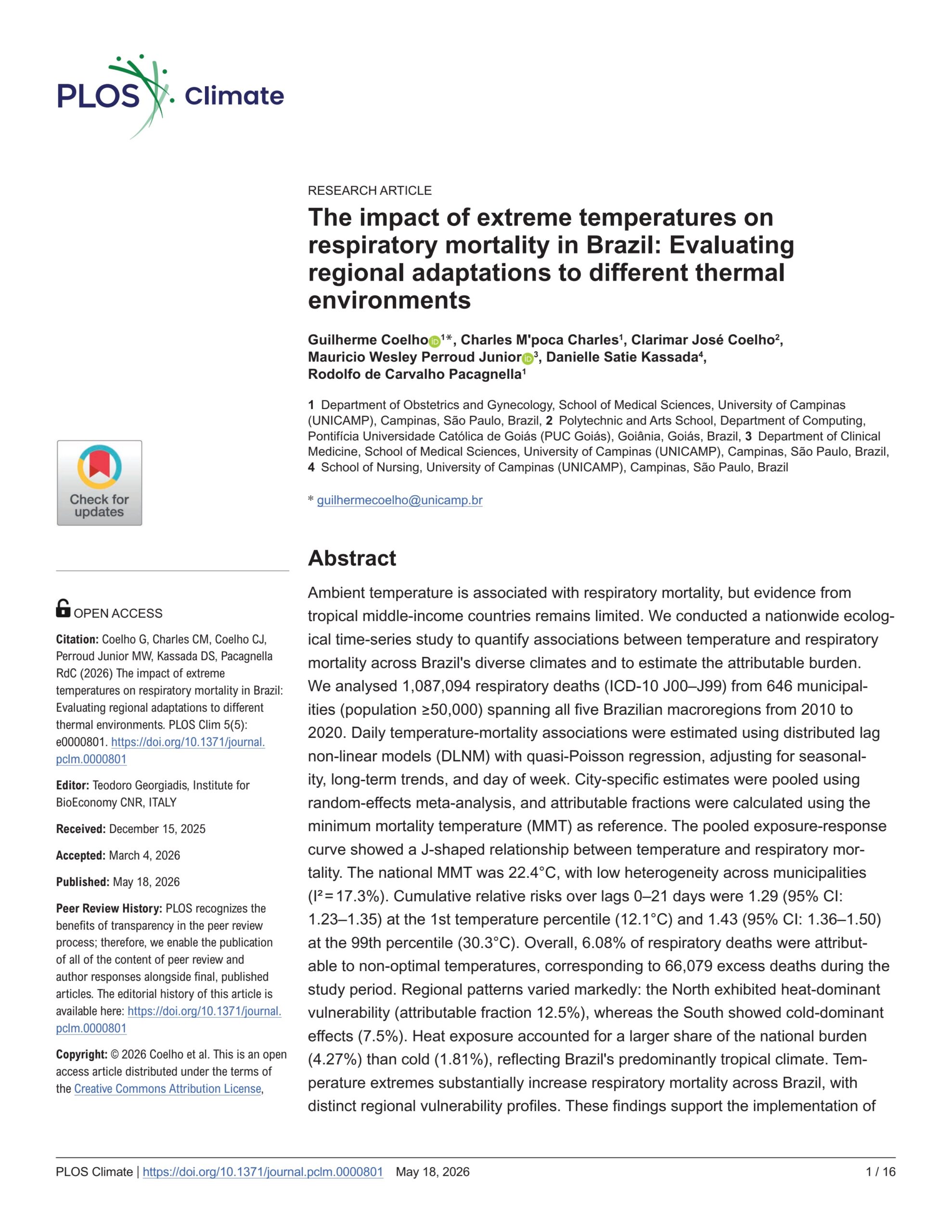
The impact of extreme temperatures on respiratory mortality in Brazil: Evaluating regional adaptations to different thermal environments
This report analyses the impact of extreme temperatures on respiratory mortality across 646 Brazilian municipalities from 2010 to 2020. Findings reveal a J-shaped exposure-response curve, with heat-related deaths dominating in tropical northern regions, whilst cold-related mortality predominates in the subtropical south, underscoring the need for region-specific climate adaptation policies.
Market-shaping states: A new theory of public sector capacities and capabilities
This report introduces a market-shaping theory of the public sector, arguing that governments must act as proactive co-creators of public value. It presents a three-layered framework of structural capacities, organisational routines, and dynamic capabilities to help states navigate socio-technical challenges, steer innovation, and drive sustainable societal transformations.
Leaning on uncertainty: Are European countries overrelying on carbon removals to reach climate targets?
This report analyses the climate strategies of six European countries and the European Commission, revealing a risky overreliance on unproven carbon dioxide removal technologies. It highlights fragmented planning, absent feasibility assessments, and policies contradicting scientific advice, warning that current approaches threaten effective climate action.
Mobilising trade associations as a force for good: A playbook for companies
This playbook outlines a five-step framework for companies to manage their indirect policy engagement through trade associations. It provides guidance on articulating science-based climate policy priorities, assessing association alignment, engaging to drive improvement, and rigorously reviewing memberships to ensure they support corporate sustainability targets.
Fiscal policy and transition risk
This report uses an environmental dynamic stochastic general equilibrium model to analyse how climate policies interact with pre-existing labour and capital taxes. It finds that transition risks depend on policy design, financing choices, and financial frictions, highlighting critical differences between carbon taxes and abatement subsidies.
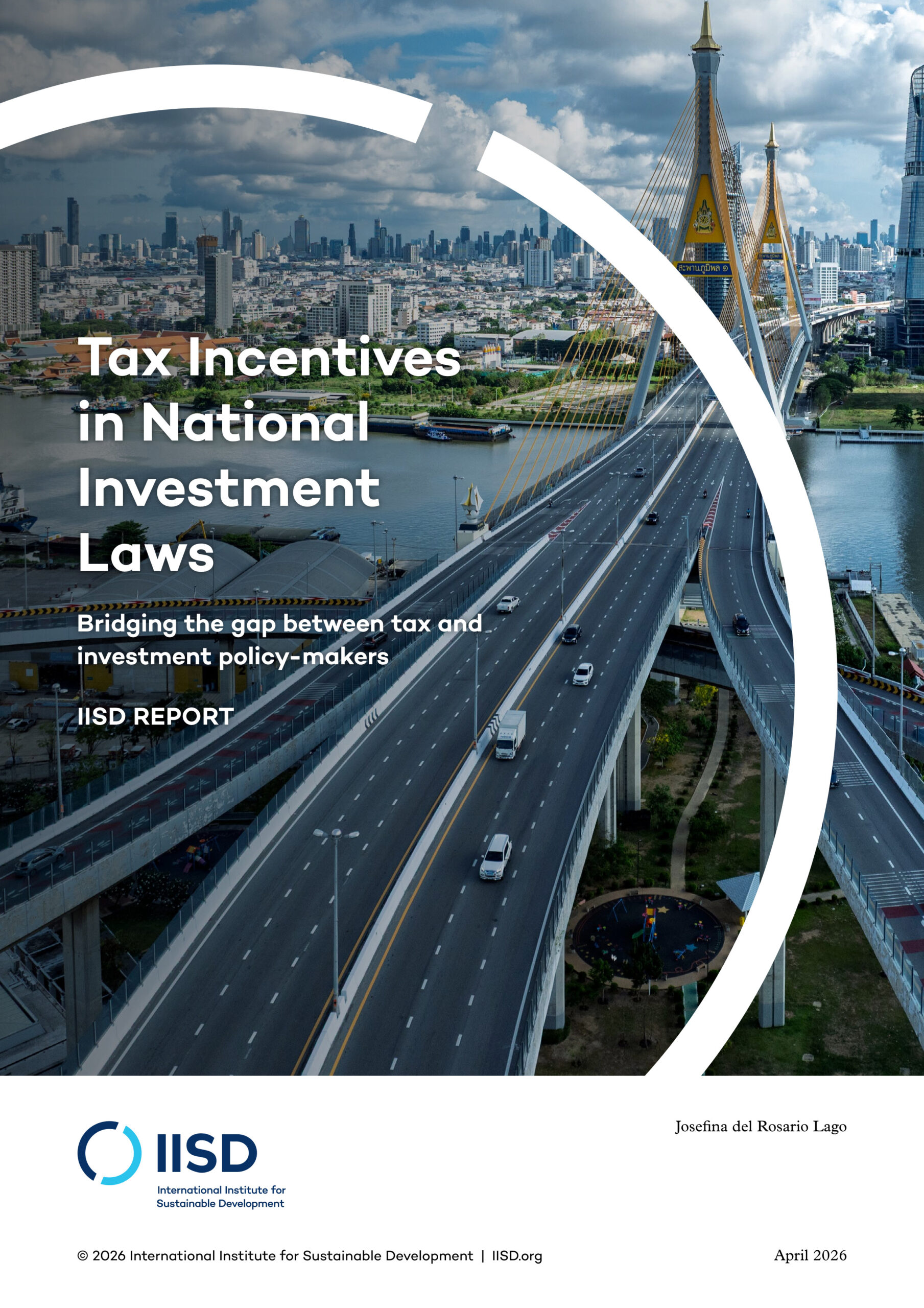
Tax Incentives in national investment laws: Bridging the gap between tax and investment policy-makers
This report analyses how tax incentives are embedded and governed within national investment laws across emerging markets and developing economies. It highlights coordination gaps between investment and tax authorities, the dominance of tax holidays, and the need for stronger anti-cumulation safeguards to prevent unintended revenue losses.
Integrating climate considerations into environmental impact assessments: Lessons from Latin America and Asia
This report analyses the integration of climate change considerations into environmental impact assessment (EIA) regimes across 20 economies in Latin America and Asia. It evaluates legislative frameworks and climate litigation trends, recommending stronger statutory requirements, detailed technical guidance, and comprehensive assessments of both emissions and adaptation risks.
What can investors do about climate change?
This report explores the evolving role of investors in addressing climate change. Drawing on insights from major asset managers, it advocates shifting from market-led targets to a policy-led approach. Investors are advised to focus on realistic stewardship, pragmatic objective-setting, and policy advocacy to effectively manage climate-related financial risks.
Acceleration is not a strategy: A framework for directing AI towards public value before it's too late
This report outlines a framework for European governments to steer artificial intelligence towards public value rather than just accelerating sector growth. It recommends implementing AI directionism by targeting high-impact uses, preparing priority sectors for adoption, curbing big tech monopolies, and ensuring the economic benefits are broadly shared.
Reforming investment contracts: Why policy - makers must act now — and how
This policy brief highlights the urgent need to reform investor–state contracts to support sustainable development. It explores how fragmented frameworks, outdated stabilisation clauses, and tax incentives undermine national laws. The report recommends strengthening interministerial coordination, assessing existing contracts, and developing national model agreements to improve transparency and policy coherence.
24/7 renewables: The economics of firm solar and wind
This report analyses the transition to reliable, round-the-clock renewable energy through solar, wind, and battery storage. Introducing the firm levelised cost of electricity (F-LCOE), it evaluates the cost-competitiveness of hybrid systems against fossil fuels and outlines the necessary policy reforms to support widespread deployment.
Energy security through freight electrification: A rapid response briefing note on policy options for responding to the global fuel crisis
This briefing note outlines policy options to enhance Australia's fuel security through freight electrification. It recommends a phased, five-year, $3 billion programme to deploy up to 50,000 battery electric trucks, displacing one billion litres of diesel annually while leveraging private capital and implementing structural reforms.
Governance: Hard to build, easy to erode: Global trends, business implications and the role of employer and business membership organizations
This report analyses global governance trends from 1996 to 2024, revealing widespread stagnation and persistent risks of backsliding. It highlights the critical link between stable institutional governance, increased foreign direct investment, and the necessary role of business membership organisations in sustaining long-term policy reforms.
Equity in principle, misalignment in practice: Adaptation finance governance in the adaptation fund and green climate fund
The report argues that adaptation finance through the Adaptation Fund and Green Climate Fund formally prioritises equity, vulnerability and country ownership, but remains constrained by voluntary funding, access barriers and project-based delivery, limiting alignment with Global South priorities.
The EU Inc.: Half European, fully digital, and genuinely innovative
The paper analyses the European Commission’s proposed “EU Inc.” framework, a harmonised digital-first company structure for EU start-ups and scale-ups. It assesses governance, financing, codetermination, digital registration and cross-border legal integration within existing EU and national company law frameworks.
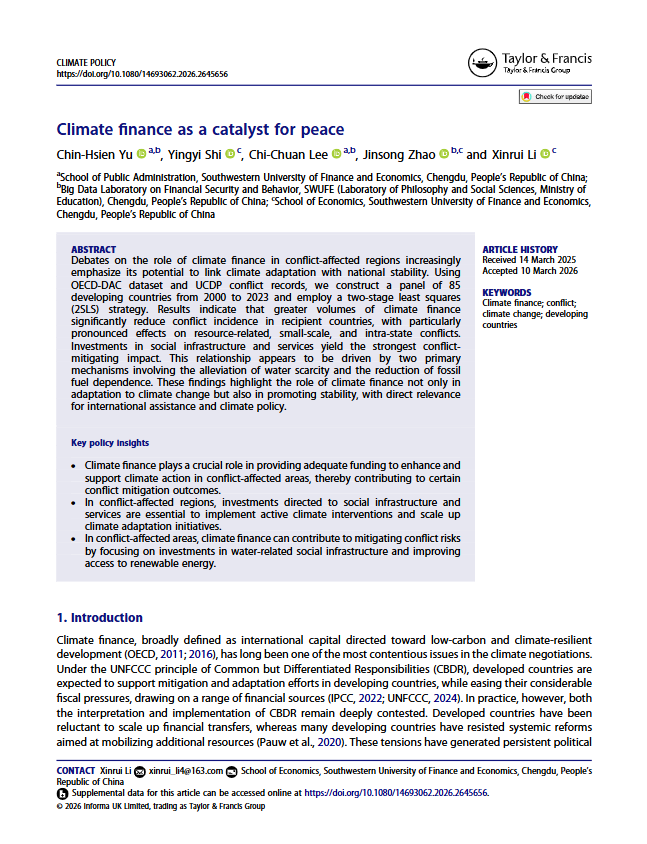
Climate finance as a catalyst for peace
Research across 85 developing countries found climate finance was associated with lower resource-related conflict risk, particularly through reduced water scarcity and greater renewable energy access. The study suggests climate finance may support stability in fragile regions, with stronger effects observed where higher funding levels were directed towards adaptation and social infrastructure.


