
Library | ESG issues
Shareholders & Voting
Shareholders have the right to vote on corporate decisions, including board appointments, mergers, disclosures, and ESG policies. Active ownership through voting and engagement is a key mechanism for aligning corporate actions with investor interests and long-term value creation.
Refine
106 results
REFINE
SHOW: 16


Legal liability vs. proportional representation: What works in improving poor investor protection?
This research evaluates Korean governance reforms, comparing director legal liability with proportional representation. Findings indicate that markets react positively to increased director liability, especially for undervalued firms. Conversely, mandated proportional representation triggers negative reactions, as investors fear boardroom conflicts may hinder strategic decision-making and reduce board cohesion.
Limited impacts of shareholder pressure on climate strategy of fossil firms
This research examines shareholder pressure on US fossil fuel firms’ climate strategies. Using NLP to analyse 10-K filings and SEC regulatory changes, it finds limited impact on substantive reforms. Firms often employ symbolic disclosures or procedural tactics to resist decarbonisation, suggesting that mandatory policy is required for transition.
Does stewardship work in controversial sectors?
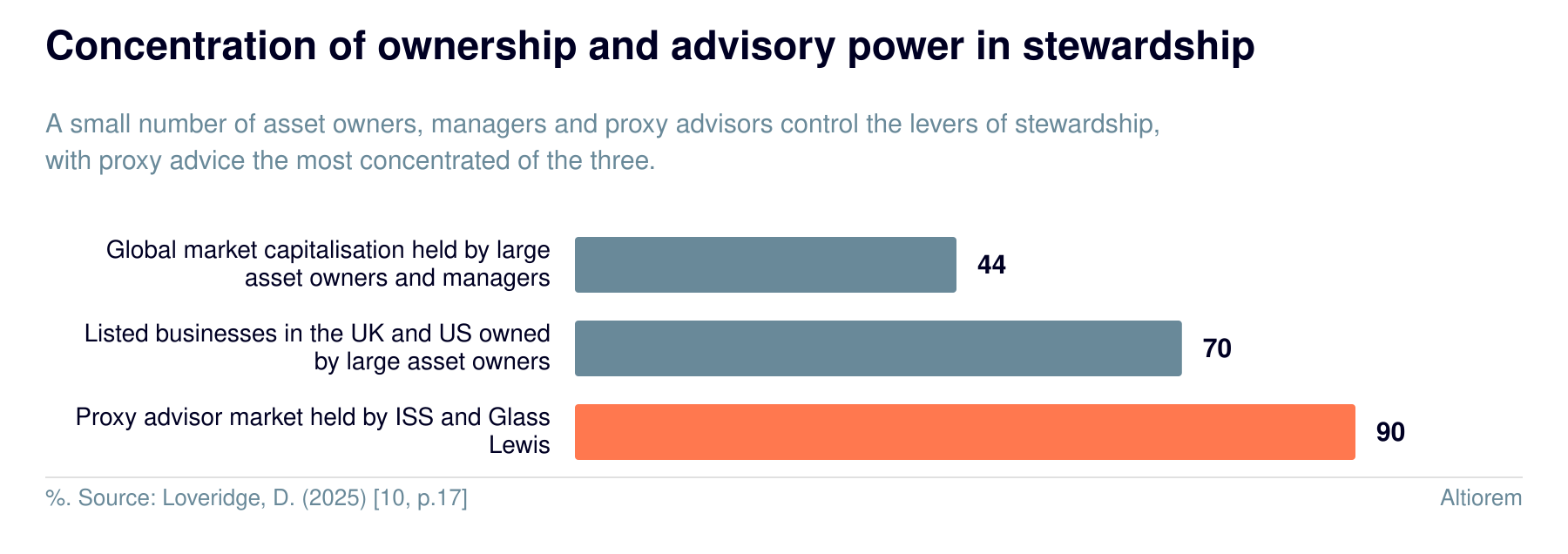
As at 2025 there were 56 stewardship codes worldwide, 49 of them jurisdiction-specific across 24 jurisdictions and six continents, yet the field has not agreed what stewardship is ultimately for. Codes and practitioner guidance converge on process: written policies, prioritisation by severity, escalation, contribution reporting. Legal scholarship published in 2026 questions whether shareholder pressure alone shifts corporate behaviour at all.
Power to the personnel? The impacts of managerial discretion vs. worker democracy in employee recognition
This research evaluates the impacts of worker agency versus managerial discretion in employee recognition via an RCT in India. While worker democracy increased attendance by 11%, managerial discretion improved productivity by 6%. However, managerial control reduced work-related interactions, and worker voting encouraged collusion through reward sharing in exchange for votes.
Why shareholder-driven corporate social responsibility failed
This report analyses why shareholder-led corporate social responsibility failed in the early 2020s. It argues that political forces blocking government regulation also dismantle private CSR initiatives. Using the BlackRock-Texas conflict as evidence, it concludes that direct political action is the only viable path for systemic change.
Templates in the EU Inc. regulation proposal
This research evaluates the European Commission’s Proposal for an optional 28th corporate law regime. It argues that proposed model articles of association fail to support venture capital-backed firms. The authors identify four shortcomings regarding scope, process, logic, and safe-harbour effects, suggesting a dedicated drafting track and broader coverage.
An engaged market: The 2026 state of stewardship report, prepared by the Aotearoa New Zealand stewardship code
This report examines stewardship reporting across New Zealand's investment market for 2025. Representing 20 signatories with $3.8 trillion in assets, it highlights maturing practices in collaborative engagement, escalation, and voting transparency. The document notes increased integration of te ao Māori and provides guidance on strengthening stewardship and voting policies.
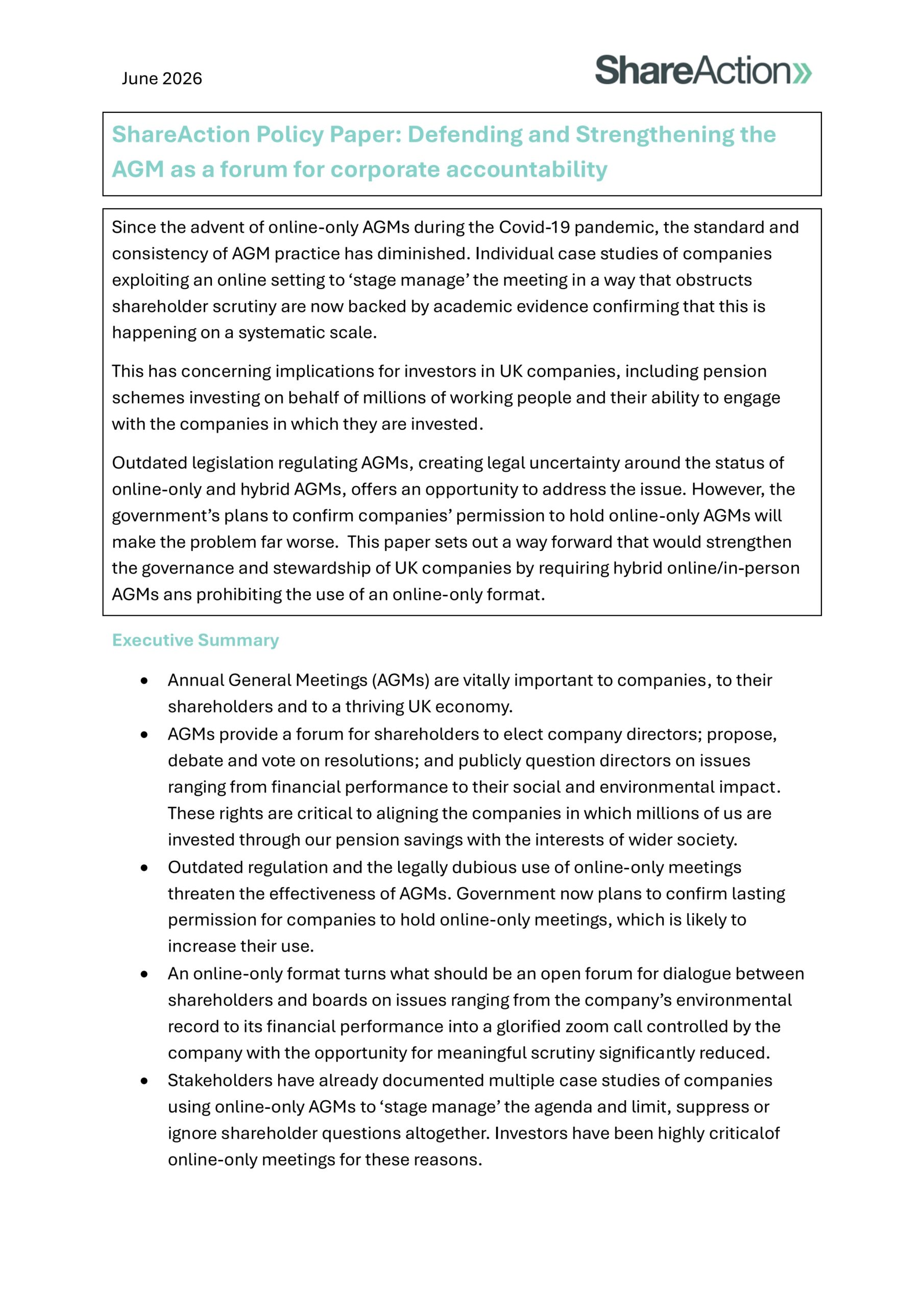
ShareAction policy paper: Defending and strengthening the AGM as a forum for corporate accountability
This ShareAction report advocates for mandatory hybrid AGMs to ensure corporate accountability. It argues that online-only formats diminish shareholder scrutiny and enable management to stage-manage proceedings. The document recommends amending the 2006 Companies Act and provides case studies of poor virtual AGM practices across several major companies.
Fragmentation of shareholder power
This research examines how fund proliferation and stewardship decentralisation affect corporate governance. It finds that supply-driven growth weakens oversight, while demand-driven expansion by incumbents can strengthen it. Competitive adoption of pass-through voting improves investor preference alignment but often reduces monitoring incentives and firm value.
Shareholder proposals and corporate governance in a season of regulatory uncertainty
This report analyses the 2025–2026 proxy season following the SEC's suspension of its no-action review process. Shareholders filed approximately 20% fewer proposals; companies filed over 100 fewer exclusion notices. Exclusions disproportionately affected novel and revised proposals, with proponents increasingly turning to litigation and alternative strategies to preserve shareholder rights.
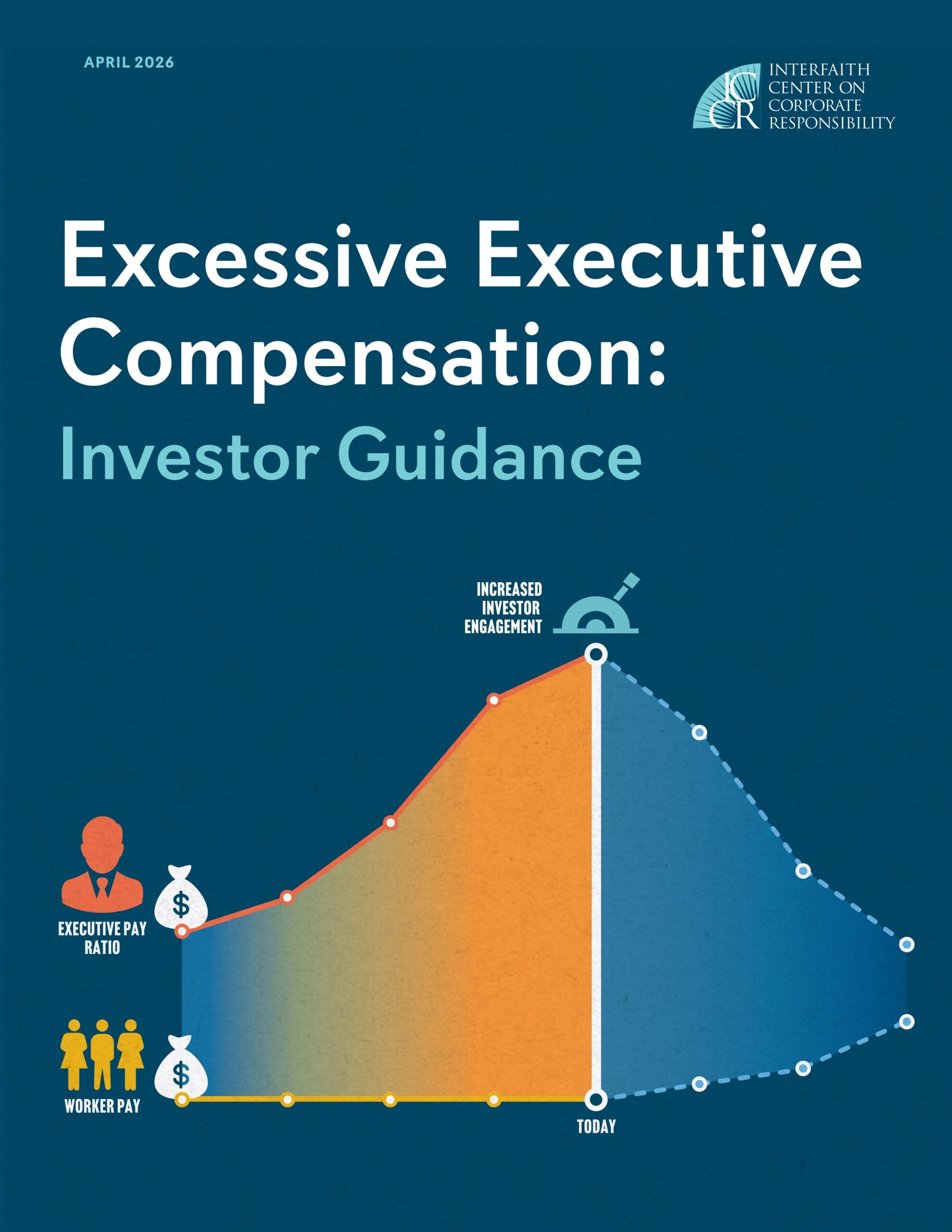
Excessive executive compensation: Investor guidance
Published by ICCR in April 2026, this report provides investor guidance on addressing excessive executive compensation. It outlines proxy voting guidelines, pay thresholds, and stewardship frameworks to help investors challenge the growing gap between CEO and worker pay, and promote greater accountability and long-term value creation.

Passing the baton: Creating value through CEO succession at family businesses
This McKinsey report analyses CEO succession at family-owned businesses, drawing on 200 publicly traded and 170 private FOBs globally. It finds that succession on average erodes shareholder value, but top-performing FOBs can achieve the opposite by applying 11 critical practices spanning five foundational and six distinctive areas.
Voice without influence? Global investor voting rationale disclosures in Korea
This study examines whether global institutional investors’ voting rationale disclosures influence Korean firms’ gender diversity and climate-related policies. It finds stronger investor focus on board gender diversity than climate risk, limited influence on large firms, greater impact on smaller firms’ emissions reductions, and evidence that voting rationales affect the credibility of sustainability reporting.
Socially-minded investors and corporate behavior
This report examines whether socially-minded investors influence corporate behaviour through voting, managerial incentives, or identity investing. It concludes that existing channels offer limited impact and evaluates potential legal reforms, such as binding shareholder votes and mandatory disclosures, to better align corporate actions with these investors' preferences.
Optional shareholder voting
This paper examines optional shareholder voting by institutional managers (IMs) using newly available SEC data on say-on-pay votes. Only 44% of IMs vote, yet their aggregate voting footprint is twice that of mutual funds. IMs use voting as a monitoring tool, with larger positions associated with greater opposition to management.
Legal form and corporate outcomes: Evidence from the societas europaea
Study finds Societas Europaea adoption improves firms’ international positioning, increasing foreign investor ownership and cross-border acquisitions. However, markets generally react negatively, information asymmetry rises, and shareholder returns weaken post-adoption, suggesting governance flexibility and supranational identity benefits may be offset by uncertainty and potential minority shareholder concerns.


