
Library | ESG issues
Stakeholder Engagement
Stakeholder engagement in sustainable finance ensures financial decision-making is informed by stakeholder perspectives, improving ESG risk management and responsible investment. Financial institutions, investors, and asset managers engage with communities, regulators, and civil society to assess material risks, enhance stewardship, and align capital flows with sustainability goals. Proactive engagement mitigates financial risks related to ESG issues, strengthens accountability, and supports regulatory compliance. It also creates investment opportunities in sustainable finance, including impact investing, climate transition funding, and nature-positive strategies.
Team Altiorem recommends

Refine
427 results
REFINE
SHOW: 16


200 and counting: Global financial institutions are exiting coal
Financial institutions (FI) across the world are increasingly recognising the risks and opportunities connected to coal, and many are reducing their exposure to the industry. The number of FIs withdrawing from coal is rapidly increasing, and this report catalogues the global trend towards coal withdrawal.

Corporate resilience and response to COVID-19
This paper explores COVID-19's impact on corporate resilience and the effectiveness of corporate responses. Analysis of 2,000 companies shows that firms that invested in stakeholder relations performed better. The study reveals machine learning-linked big data provides new means to measure corporate responses and crisis management.

Collaborative investor engagement with policymakers: Changing the rules of the game?
This report explores why and how institutional investors engage with governments and the challenges they face in the process. The authors analyse 11 case studies and identify drivers such as managing investment risks and fulfilling fiduciary duties, as well as challenges like limited influence on governments. The findings contribute to the sustainable finance and public policy literature.

Queensland social enterprise strategy
The Queensland Social Enterprise Strategy is a government initiative designed to drive economic and social growth through job creation, improved market access, and making connections in the social enterprise sector. The strategy highlights key areas of focus and outlines a range of actions to help Queensland social enterprises flourish.

Insurance regulation for sustainable development: Protecting human rights against climate risks and natural hazards
This report argues that insurance regulation has a critical role to play in protecting human rights against climate risk and natural hazards. Among its recommendations, the report calls for the proper pricing of climate risks, broader coverage from insurance, and the alignment of investments with the Sustainable Development Goals (SDGs).
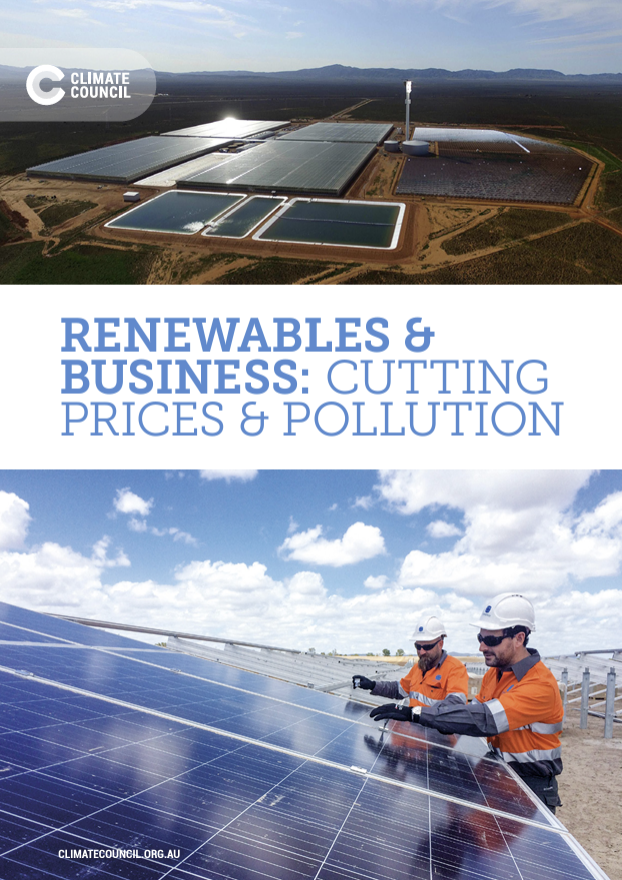
Renewables and business: Cutting prices and pollution
This report shows how investment in renewable energy can reduce exposure to volatile electricity prices and future price hikes. Over 46,000 businesses have already invested in large solar installations, and 40% of businesses are considering similar initiatives. Local and State Governments are also supporting business investment in clean, affordable and reliable renewable energy.

Global compact local networks: Accelerating national SDG implementation
The report emphasizes the role of responsible business in advancing the Sustainable Development Goals (SDGs) and highlights the importance of local networks in mobilizing a global movement of companies committed to advancing the SDGs through capacity-building, awareness-raising, and collaboration.

Integrating child rights across the ASX: A UNICEF investor tool benchmarking report series
This benchmark report series, "Integrating Child Rights across the ASX," by UNICEF and Ethical Partners Funds Management, assesses and guides ASX companies on integrating children's rights into ESG practices, offering a framework and practical steps for improvement.

Navigating a new era of business and human rights
This book highlights the intersection of corporate practices and human rights. It explores evolving challenges, regulatory landscapes, and the importance of collaborative, ethical business conduct. Key themes include transparency, state roles, and the human rights-based approach, offering insights for stakeholders to navigate this complex field.

We know our lives are in danger: Environment of fear in South Africa's mining-affected communities
This report highlights how mining has affected South African communities and examines the legal framework and community engagement procedures relating to mining activity. It discusses the impacts of mining on communities in terms of health, environment, livelihoods and social cohesion, as well as the high levels of violence in these communities.

The biomass blind spot
This report highlights the financial and reputational risks associated with the biomass power sector's impact on climate change. The report provides recommendations for investors and banks engaged with the sector, including not providing financial support for new biomass power infrastructure.

Reinventing capitalism: A transformation agenda
This issue brief by World Business Council for Sustainable Development (WBCSD) explores the need for a reinvented capitalism that prioritises true value over value extraction. It examines the unsustainable outcomes of contemporary capitalism and presents a transformation agenda to help steer businesses towards a sustainable global economy.
Mapping ocean governance and regulation
This report provides an overview of ocean governance and regulations through the lenses of ocean-based industries, addressing international governance, key industries, emerging issues and regulatory developments, cross-cutting challenges and the role of the private sector through the UN Global Compact Action Platform for Sustainable Ocean Business.

Business reporting on the SDGs: An analysis of the goals and targets 2022
This report offers a comprehensive overview of the Sustainable Development Goals and how businesses can align their practices with these goals through transparent disclosures and disclosures reporting. This 2022 edition provides actionable steps for businesses to contribute to sustainable development.

Shifting the financial system: Accelerating sustainable finance at banks
This report provides insights from banking professionals on accelerating sustainable finance amid the challenges and opportunities of the global climate crisis. It analyses the role of banks in fostering sustainability, providing capital to low-carbon solutions, and aligning with Paris Agreement targets. The report gives recommendations for addressing climate change.

The dangers of buybacks: Mitigating common pitfalls
This report explores the rising trend of share buybacks, analysing their benefits and pitfalls. It offers practical tools, guidelines, and measures to mitigate the risks, improve transparency, and ensure buybacks match long-term company strategies.


