
Library | SDGs
GOAL 03: Good Health and Well-being
Refine
83 results
REFINE
SHOW: 16


Tobacco Supply Chain Database
The Tobacco Supply Chain tool is a publicly accessible database mapping the global tobacco supply chain from agriculture to retail by identifying companies, processes and countries involved.
The Hotspot Analysis Tool for Sustainable Consumption and Production (SCP-HAT)
SCP-HAT (Sustainable Consumption and Production Hotspots Analysis Tool) is an online tool that maps national and sector-level “hotspots” of unsustainable production and consumption using input-output and lifecycle methodologies.

Tobacco tactics
Tobacco Tactics is a knowledge-exchange platform from the University of Bath’s Tobacco Control Research Group. It compiles rigorous academic research and monitoring on the global tobacco industry—its products, influences, themes and companies—in an accessible format.
Tobacco Control Research Group (TCRG)
Tobacco Control Research Group (TCRG) at the University of Bath conducts international, multidisciplinary research into the tobacco industry’s influence on health and policy. TCRG generates evidence to support effective tobacco control, informs public health policy, and provides training on industry monitoring and accountability to advance global health outcomes.
ShareAction's point of no return series
The Point of No Returns benchmark series assesses the world’s largest asset managers on responsible investment across climate, biodiversity, social issues, governance, and stewardship. Published by ShareAction, the series provides rankings, sector-wide analysis, and examples of practice to guide improvement and accountability.
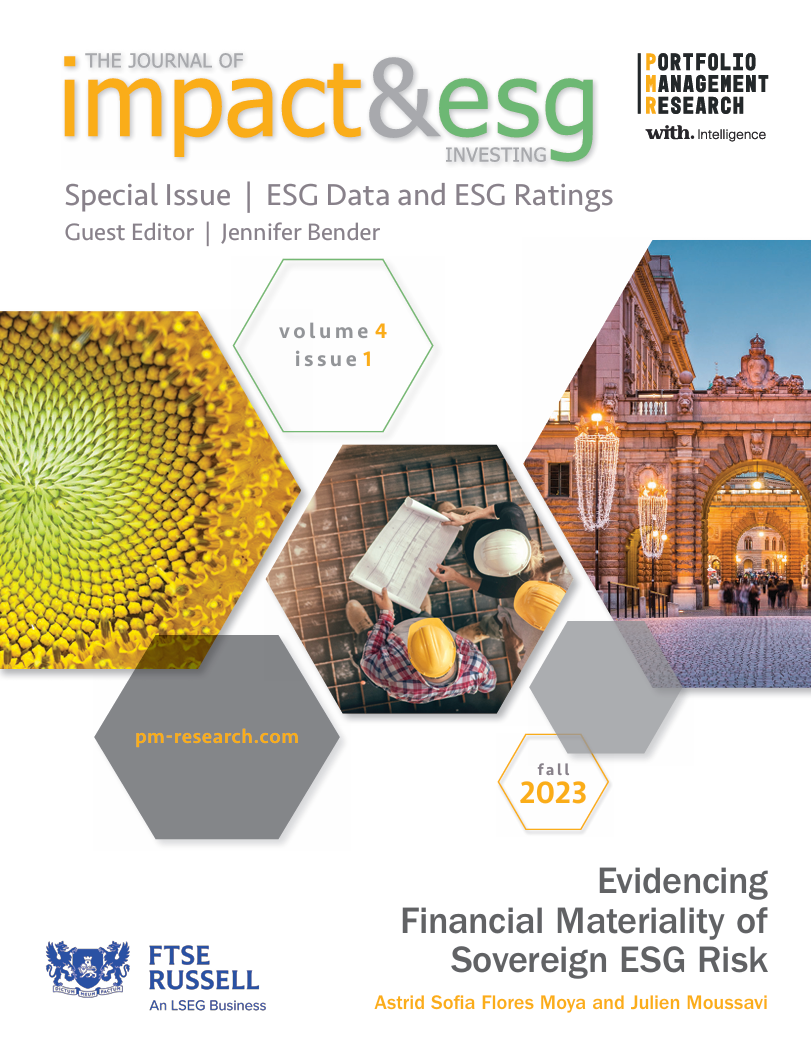
Evidencing financial materiality of sovereign ESG risk
This report analyses the relationship between sovereign ESG risks and credit risk across 70 countries. Using FTSE Russell/Beyond Ratings data and five-year CDS spreads, it finds stronger financial materiality of ESG risks in emerging and high-yield markets, particularly for social and governance factors, with weaker results for environmental risks.
How can pharma get the few promising drugs in development to patients battling superbugs?
This report examines the barriers to bringing new antibiotics to market, highlighting funding gaps, regulatory uncertainty, and weak commercial incentives. It outlines policy solutions to improve access and development, aiming to address the growing threat of antimicrobial resistance (AMR) by supporting viable pathways for pharmaceutical innovation.

Reducing animal testing in the health sector through strategic investment: Guide for investors
The report outlines how strategic investment can reduce animal testing in the health sector. It provides investors with guidance on promoting transparency, encouraging non-animal methods, and influencing regulation, while highlighting the risks of limited disclosure and misalignment with consumer concerns.
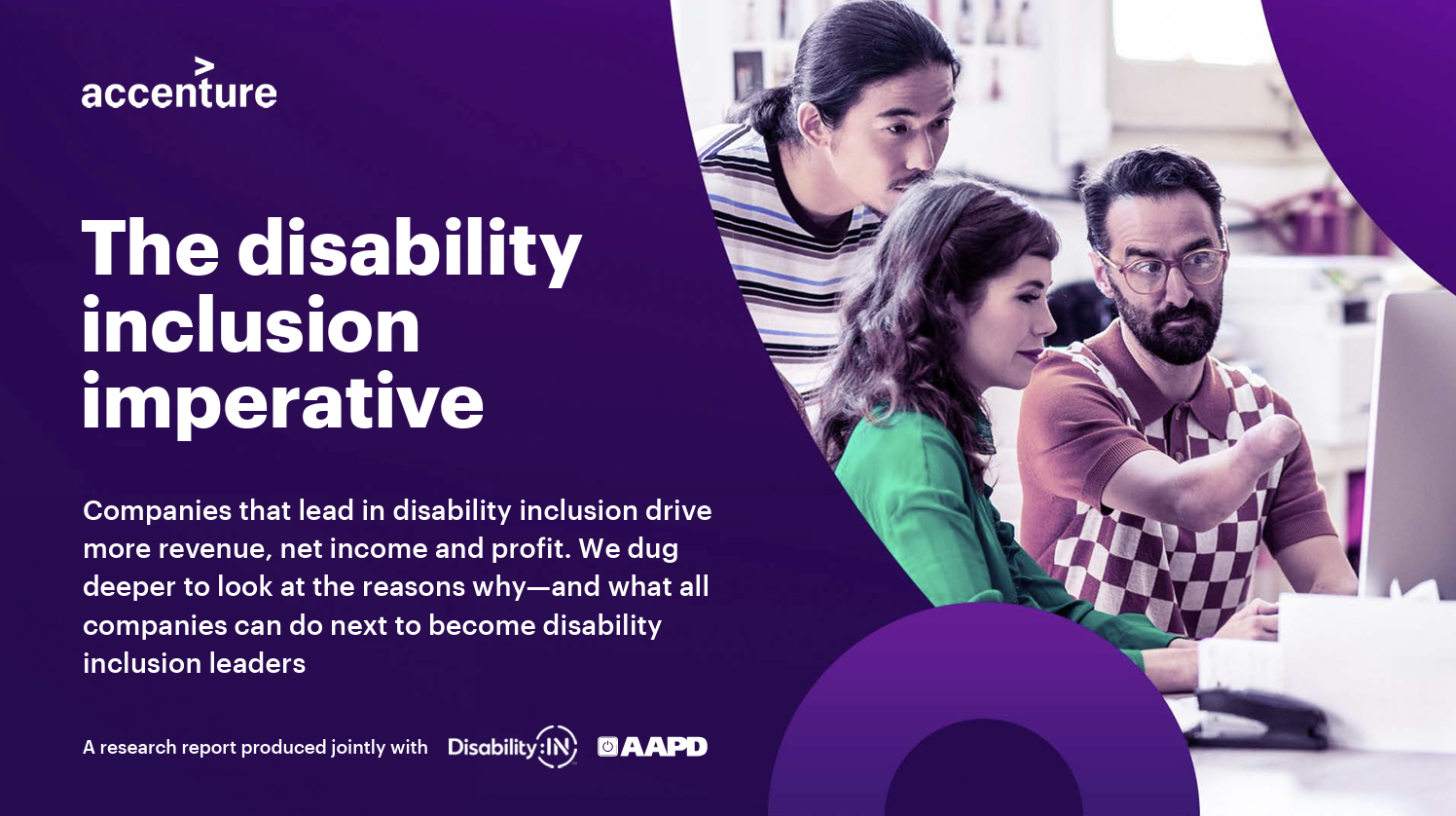
The disability inclusion imperative
Companies excelling in disability inclusion earn higher revenue, profit, and productivity. Despite rising interest, action lags. Barriers include disclosure fears and cost assumptions. The report introduces a five-part “A List” framework—Access, Awareness, Advocacy, Action, Accountability—to guide inclusive practices and improve organisational and financial outcomes.
Disability:IN's disability equality index
The Disability Equality Index is a benchmark series assessing corporate performance in disability inclusion across multiple markets. It provides organisations with a structured tool to evaluate, compare, and enhance their inclusive practices aligned with sustainability and governance expectations.

Disability:IN
Disability:IN is a global nonprofit organisation advancing disability inclusion in business. It partners with leading companies to promote inclusive practices through initiatives like the Disability Equality Index, supplier diversity certification for disability-owned businesses, and leadership development programs. Disability:IN also hosts an annual Global Conference & Expo.
The International Federation of Red Cross and Red Crescent Societies (IFRC)
The International Federation of Red Cross and Red Crescent Societies (IFRC) is the world's largest humanitarian network, supporting local Red Cross and Red Crescent action in over 191 countries. With more than 16 million volunteers, the IFRC acts before, during, and after disasters and health emergencies to meet the needs and improve the lives of vulnerable people worldwide.
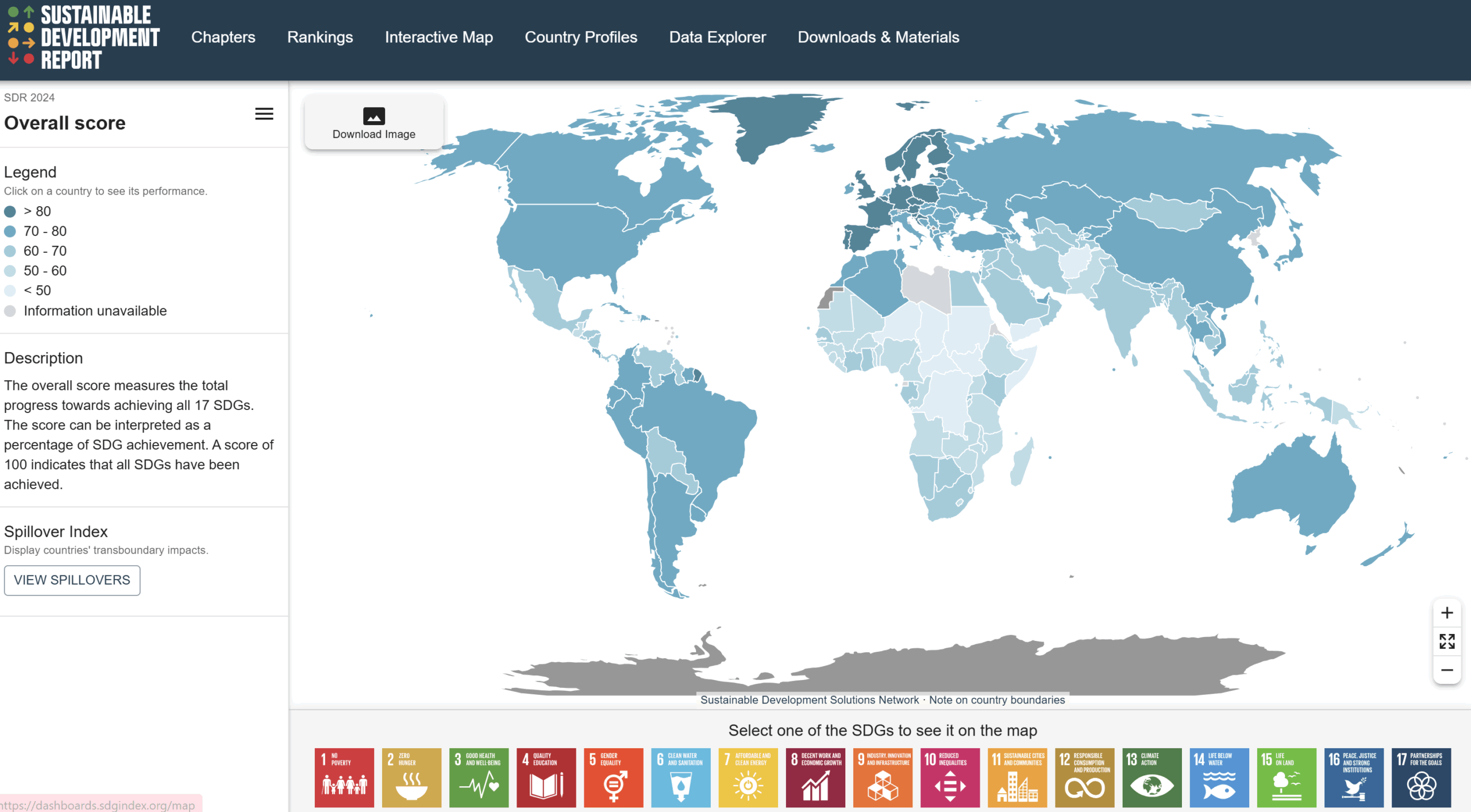
Sustainable development report interactive map
The Sustainable Development Report's interactive map evaluates the progress of all 193 UN Member States towards the 17 Sustainable Development Goals. Each country's performance is scored, with 100 indicating full achievement. Users can explore individual goals and assess transboundary impacts through the Spillover Index.
UN Environment Programme's emissions gap report series
This benchmark report, produced by the United Nations Environment Programme, assesses the discrepancy between projected and necessary global greenhouse gas emissions to meet the Paris Agreement targets. It highlights the urgent need for enhanced mitigation actions and tracks progress on national commitments and policy implementations.

Leveraging food security and environmental sustainability in achieving Sustainable Development Goals: Evidence from a global perspective
The study investigates the relationship between food security, environmental sustainability, and Sustainable Development Goals (SDGs) in 63 countries from 2010–2021. Key findings highlight that promoting agricultural exports, sustainable farming, and reducing food imports positively impact economic growth and alleviate poverty. Environmental degradation negatively affects growth, affirming the need for green policies to achieve SDGs inclusively.

Global Food and Nutrition Security Dashboard
The Global Food and Nutrition Security Dashboard, developed by the World Bank, G7, and partners, offers timely, high-quality data on food crises at both country and global levels. It provides insights into food insecurity, nutrition, and related indicators, supporting informed decision-making and policy development.


