
Library | SDGs
GOAL 08: Decent Work and Economic Growth
Refine
542 results
REFINE
SHOW: 16


Assessment of the six largest pesticide companies’ approaches to addressing biodiversity loss
This assessment evaluates the approaches of six leading pesticide companies toward addressing biodiversity loss. None of the companies has committed to phasing out highly hazardous pesticides, and progress in reporting and disclosure is limited. Investors are urged to heed recommendations and use the report to guide engagements.

Constructive corporate engagements: From a corporate perspective
This research focuses on constructive corporate engagement. This report analyses survey results from 100 senior company directors and interviews with ten executives to examine the drivers of successful engagements. Insights include the importance of collaborating with companies, focusing on material issues, and using standard metrics for success.

The climate benefits of plastic waste management in India and Southeast Asia: Investing in waste management and recycling solutions in India and Southeast Asia could reduce GHG emissions by 229 million tonnes by 2030
The Circulate Initiative's GHG calculator indicates that improved waste management and recycling could reduce GHG emissions by 229 million tonnes by 2030. Mismanaged plastic waste rates in six Southeast Asian countries range from 50% to 75%. This sector is crucial for transitioning to a low-carbon economy, attracting climate-focused investors.

Five insights for avoiding global collapse: What a 50-year-old model of the world taught me about a way forward for us today
This book analyses a 50-year-old model of the world to provide five insights for avoiding global collapse. The book examines societal pressures, the role of technology, governance structures, and finance that contribute to earth's ecosystem health and sustenance.

Queensland social enterprise strategy
The Queensland Social Enterprise Strategy is a government initiative designed to drive economic and social growth through job creation, improved market access, and making connections in the social enterprise sector. The strategy highlights key areas of focus and outlines a range of actions to help Queensland social enterprises flourish.
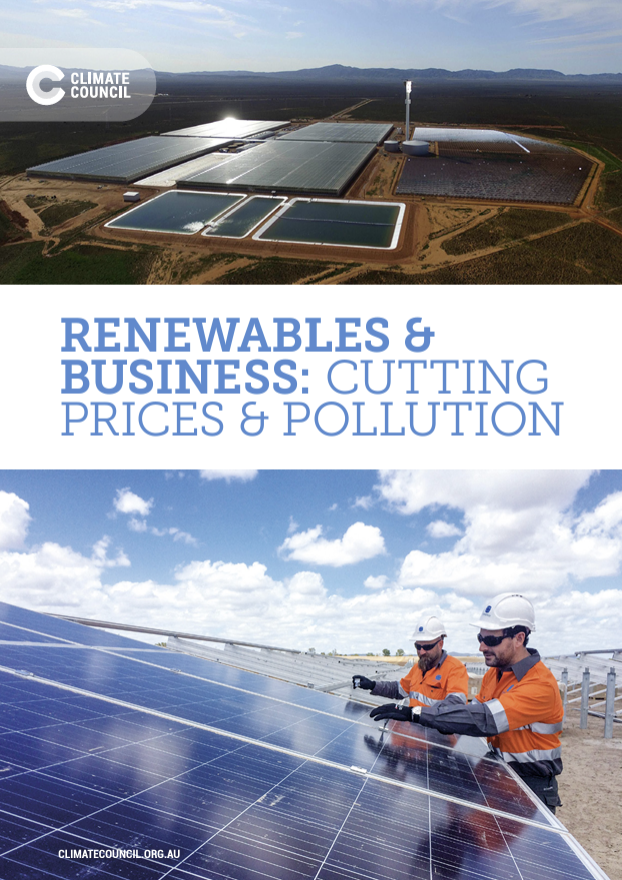
Renewables and business: Cutting prices and pollution
This report shows how investment in renewable energy can reduce exposure to volatile electricity prices and future price hikes. Over 46,000 businesses have already invested in large solar installations, and 40% of businesses are considering similar initiatives. Local and State Governments are also supporting business investment in clean, affordable and reliable renewable energy.

Innovation and resilience: A global snapshot of social enterprise responses to Covid-19
This report offers a global overview of social enterprise responses to the Covid-19 pandemic. It identifies innovation and agility as critical factors for survival. However, it notes that women-led and youth-led social enterprises face higher closure rates, greater reductions in activity, and more limited access to government support.

Growth-positive zero-emission pathways to 2050
This paper presents pathways to achieving growth positive zero-emission targets by 2050. The report concludes that significant action is required globally to achieve the low-carbon transition required to limit temperature increases to 1.5 °C, including the refashioning of multiple fundamental socio-economic systems and the international co-operation of decision-makers.

Global compact local networks: Accelerating national SDG implementation
The report emphasizes the role of responsible business in advancing the Sustainable Development Goals (SDGs) and highlights the importance of local networks in mobilizing a global movement of companies committed to advancing the SDGs through capacity-building, awareness-raising, and collaboration.

Delivering through diversity
This report shows that strong financial performance correlates with greater representation of women and ethnically/culturally diverse individuals in the leadership of large companies. Companies that invest in inclusion and diversity not only align with social justice but may also achieve competitive advantage and growth.

Looking for something that isn’t there: A case study of an early attempt at ESG integration in investment decision making
This report explores the challenges of incorporating Environmental, Social, and Governance (ESG) issues into investment analysis and decision-making. Through a case study of an early attempt at ESG integration in an equity investment team, the authors highlight fundamental discontinuities between financial and ESG accounting inscriptions, and question the adequacy of current regulatory efforts.

The material footprint of nations
This research paper explores consumption-based indicators of resource use, asserting that developed countries have increased the use of natural resources at a slower rate than economic growth, but this is untrue. Material Footprint (MF) uncovers the full material requirements of nations, offering insights into actual resource productivity.

Seriously stressed and stranded: The burden of non-performing assets in India's thermal power sector
India's thermal power sector holds $40-60bn of non-performing or stranded assets, taking away capital from critical sustainable investment. Low-cost renewable energy and a reliance on coal-fired generation is creating difficulties for the banking sector. The economics of low-cost renewables will bring significant financial implications for the country's thermal power reliance.

Navigating the reporting landscape
This guide provides an introduction to sustainability-related reporting for finance professionals. It covers mandatory reporting requirements and reporting frameworks, as well as key reporting components for sustainability. The guide also explores recent developments in reporting standards and the accounting profession, highlighting the future of corporate reporting.

Shareholder primacy: The main barrier to sustainable companies
This report analyses the role of company law in achieving sustainable development, focusing on the dominance of shareholder primacy and its impact on corporate decision-making. It evaluates barriers to integrating sustainability, and provides possible ways forward. An essential comparative analysis for academics and professionals interested in promoting sustainable business practices.

Directors' liability and climate risk: White paper on India
This paper explores the legal obligations of directors in addressing climate risk and mitigating their environmental impact. This report studies the duties of directors in relation to trust and loyalty, competence, disclosure, and their application in the context of climate risk, according to existing company and securities laws in India.


