
Library | SASB Sustainability Sector
Capital Markets
Refine
620 results
REFINE
SHOW: 16



KanataQ Ltd
KanataQ Ltd provides climate and nature risk analytics for financial institutions, corporates and investors. It develops data-driven models, scenarios and tools to assess physical and transition risks, support regulatory reporting, and inform strategic decision-making across climate, ESG and sustainable finance, using forward-looking insights aligned with global climate frameworks and standards.

Climate fiduciaries: part I – the climate prisoner’s dilemma
This article explores how climate change is reshaping fiduciary duty for pension funds, through court cases, legal analysis, and the concept of systemic risk. It introduces the “climate prisoner’s dilemma,” arguing that climate-aware investment may be shifting from discretionary to obligatory for long-term fiduciaries.

Nature Enters the Boardroom: Why Directors Are Paying Attention
Drawing on Australia’s first national study of board-level engagement with nature, this article shows how directors are treating nature as a material governance and financial issue. It highlights how boards are extending climate governance systems to manage nature-related risks, adopt frameworks like TNFD, and build resilience and long-term value despite policy uncertainty.
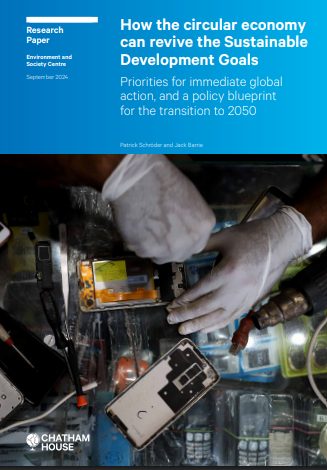
How the circular economy can revive the sustainable development goals: Priorities for immediate global action, and a policy blueprint for the transition to 2050
This report argues that embedding circular economy principles within the Sustainable Development Goals could revive stalled progress. It outlines five global policy priorities and proposes a 2050 blueprint linking circularity, inclusive growth, trade, finance and standards to post-2030 development agendas.
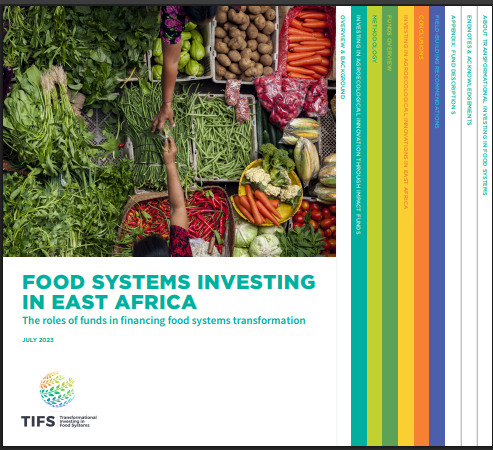
Food systems investing in East Africa: The roles of funds in financing food systems transformation
This report analyses 23 impact funds investing in East African food systems, assessing their design, impact alignment, and financing roles. It identifies gaps, good practices, and recommendations to strengthen agroecological and regenerative food systems investing.
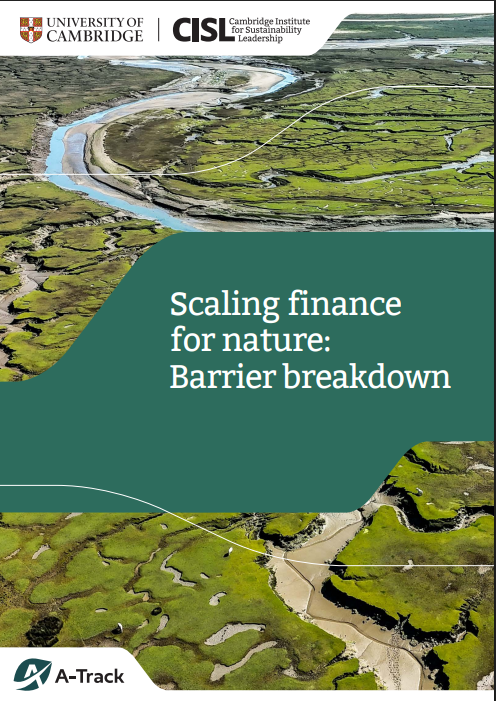
Scaling finance for nature: Barrier breakdown
This report analyses barriers to scaling private finance for nature, highlighting a US$700 billion annual biodiversity finance gap. It clarifies nature-positive finance, assesses risk–return challenges, regulatory gaps and data issues, and outlines instruments to redirect capital from harmful activities towards halting and reversing nature loss.
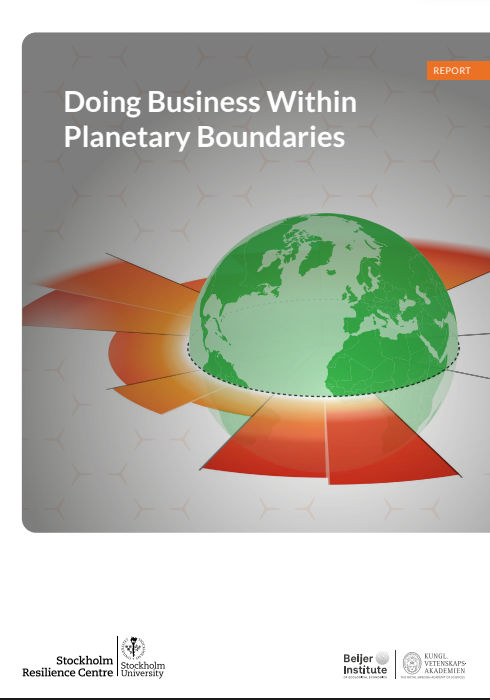
Doing business within planetary boundaries
This report argues that corporate reporting must incorporate absolute, location-specific environmental impacts aligned with planetary boundaries. It proposes science-based disclosures and the Earth System Impact score to improve assessment of cumulative nature-related risks, support credible investment decisions, and enhance comparability beyond carbon-focused metrics.
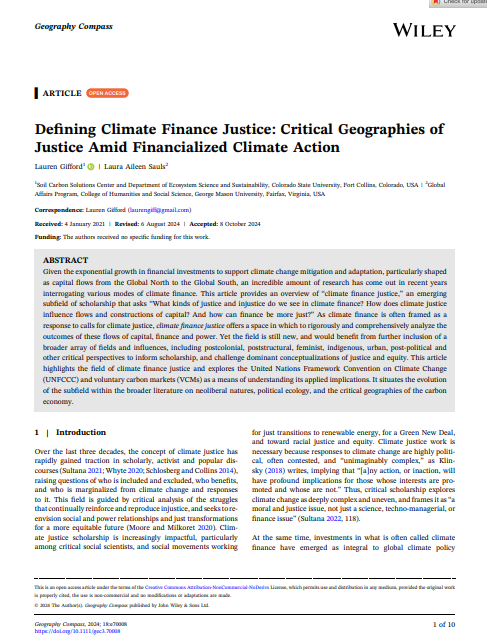
Defining climate finance justice: Critical geographies of justice amid financialized climate action
The article defines “climate finance justice” as a framework for analysing how financialised climate action shapes equity, power, and outcomes. It critiques climate finance mechanisms, including UNFCCC processes and voluntary carbon markets, and argues for justice-centred approaches that address historical responsibility, governance, and uneven impacts.
Time to plan for a future beyond 1.5 degrees
The report argues that limiting warming to 1.5°C is no longer realistic and may hinder preparedness. It calls for acknowledging higher warming scenarios, accelerating mitigation, and adopting disruptive policy, financial, and governance approaches to manage climate and nature risks in a likely 2°C-plus world.
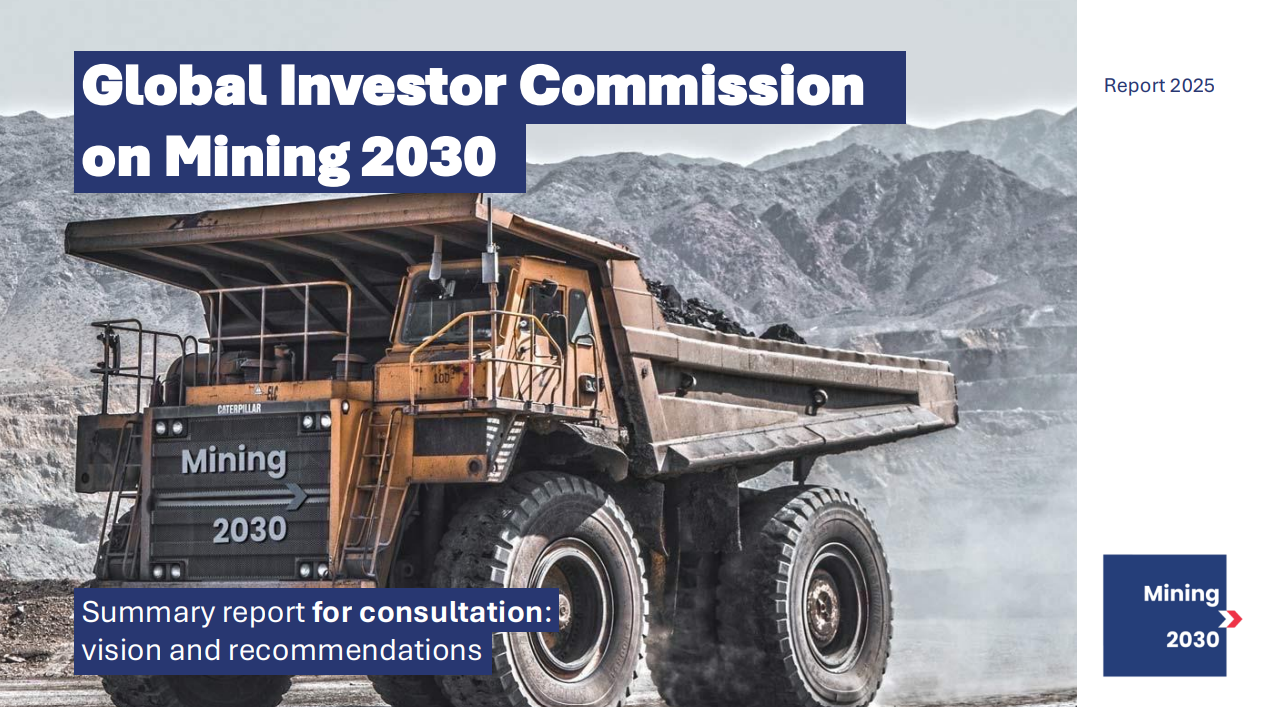
Global investor commission on mining 2030
The report outlines an investor-led 10-year vision for a responsible, resilient mining sector. It sets goals to align capital, governance and stewardship with social and environmental standards, supporting mineral supply for the low-carbon transition while managing risk and long-term value.
Notice on the application of the sustainable finance framework and the Corporate Sustainability Due Diligence Directive to the defence sector
The European Commission clarifies that the EU sustainable finance framework and Corporate Sustainability Due Diligence Directive apply neutrally to the defence sector. Defence investments are permitted, assessed case by case, with disclosure and due diligence obligations focused on risk mitigation and exclusion limited to internationally prohibited weapons.
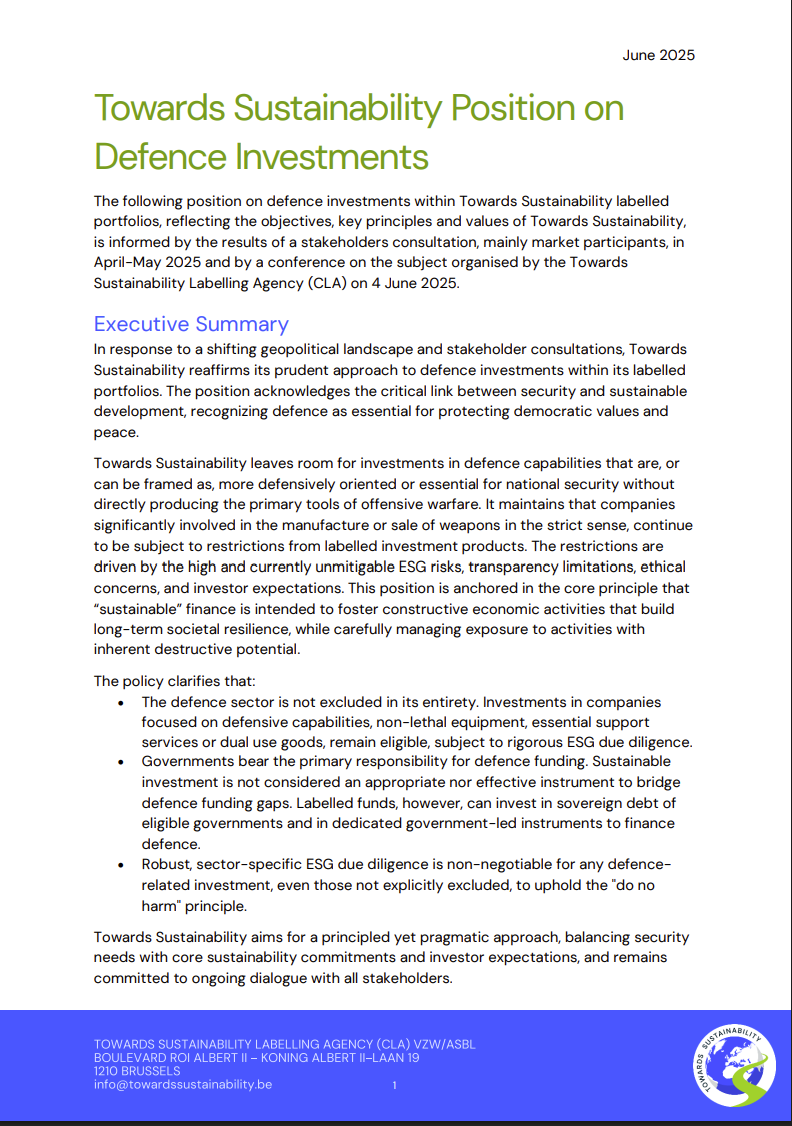
Towards sustainability position on defence investments
The report sets a pragmatic policy on defence investments for Towards Sustainability-labelled funds, permitting defensive, non-lethal and dual-use activities with strict ESG due diligence, while excluding weapons producers. It affirms defence funding as primarily a government responsibility.
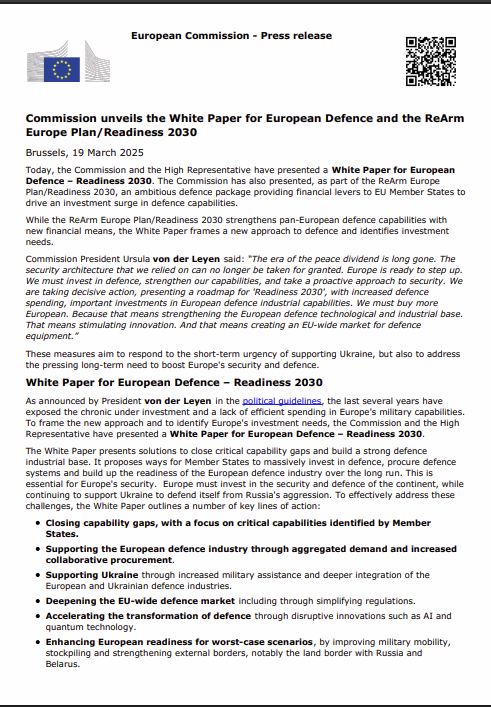
Commission unveils the white paper for european defence and the rearm europe plan readiness 2030
The report outlines the EU’s White Paper on European Defence and the ReArm Europe Plan, targeting defence readiness by 2030 through closing capability gaps, strengthening the defence industrial base, and mobilising over €800 billion via public, EU, and private funding mechanisms.
BPI France: European Defence Bond Framework
Bpifrance’s European Defence Bond Framework defines principles for issuing use-of-proceeds bonds financing eligible defence-sector projects, mainly SMEs, to support European sovereignty. It details eligibility criteria, exclusions, ESG safeguards, governance, reporting, and proceeds management, while stating the bonds are not ICMA-aligned sustainable instruments.
Finance for war: Finance for peace: How values based banks foster peace in a world of increasing conflict
The report analyses global financial links to arms production, showing significant funding for weapons despite rising conflict. It contrasts this with values-based banks, particularly GABV members, which largely exclude arms financing, arguing divestment supports peace, reduces risk, and aligns finance with social and environmental objectives.
Integrating nature & biodiversity into investment: An asset owner perspective
The report examines how asset owners integrate nature and biodiversity into investment. Based on interviews with 20 global asset owners and managers, it finds growing recognition of financial materiality, limited governance and data maturity, early TNFD adoption, and reliance on climate-aligned ESG processes.


