
Library | SASB Sustainability Sector
Chemicals
Refine
73 results
REFINE
SHOW: 16


Rethinking climate change: How humanity can choose to reduce emissions 90% by 2035 through the disruption of energy, transportation, and food with existing technologies
This report examines how existing technologies in energy, transportation, and food could lead to a 90% reduction in greenhouse gas emissions by 2035. Using the Seba Technology Disruption Framework, they forecast disruptive changes and identify how markets could drive emissions mitigation.

OECD due diligence guidance for responsible supply chain of minerals from conflict-affected and high-risk areas
The paper provides recommendations for companies operating in mineral supply chains. The guidance outlines a five-step framework for supply chain due diligence, including risk identification and assessment, implementation of risk mitigation strategies, and reporting on due diligence efforts.

Prioritising nature-related disclosures: Considerations for high-risk sectors
This report outlines information on high-risk sectors for nature-related disclosures and their dependencies and impacts. It identifies sectors with the greatest risk and vulnerabilities and provides sector-based insights to deploy financial risk management and report nature-related financial disclosure in a consistent and meaningful manner.

Financing environmental and energy transitions for regions and cities: Creating local solutions for global challenges
This report presents recommendations for bridging the gap between financial institutions' lack of structures for local initiatives and subnational governments' lack of knowledge to take that role. It proposes adapting finance data to include integrated value.

Climate governance study 2024: Moving from vision to action
This study reveals that Australian directors increasingly prioritise climate change as a material governance issue. However, stakeholders are pulling in a variety of directions, making it challenging for organisations to execute their climate strategies. Policy uncertainty poses the most significant obstacle for climate governance, although the implementation of mandatory climate reporting from July 2025 presents an opportunity for greater accountability.

UN Environment Programme's adaptation gap report series
The Adaptation Gap Report series provides yearly updates on global progress in climate change adaptation. It assesses the status of adaptation planning, implementation, and finance, highlighting the increasing gap between the need for adaptation and the actions taken.

Recommendations of the Taskforce on Nature-related Financial Disclosures
This report aims to provide a unified approach to the disclosure of natural dependencies, impacts and risks for financial institutions and corporates. As the issue of natural loss and climate change continues to grow, a harmonised way of tackling these risks needs to be agreed to safeguard against material impacts.
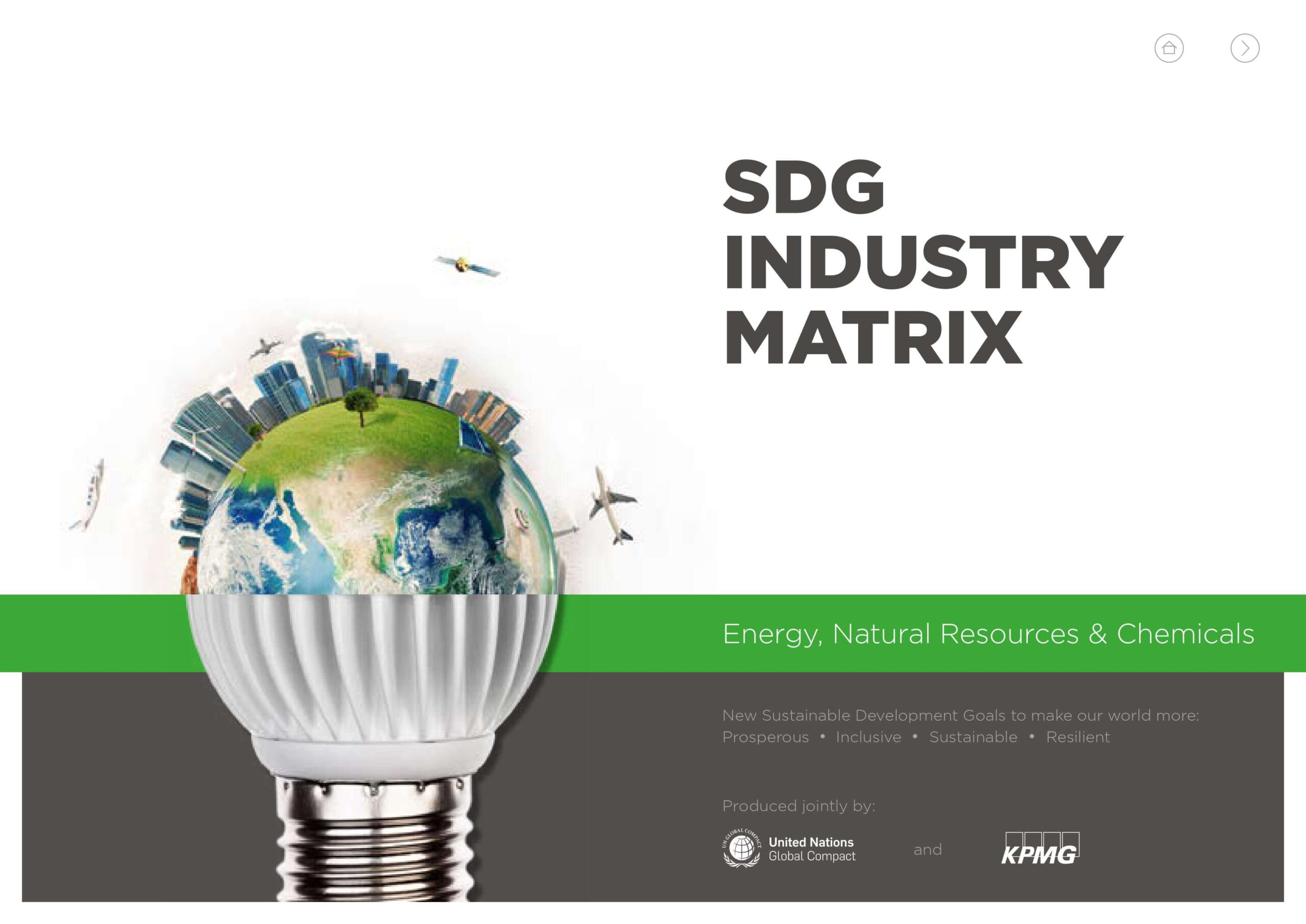
SDG Industry Matrix: Energy, natural resources and chemicals
The Industry Matrix aims to inspire and inform the private sector, driving it towards inclusiveness and sustainable prosperity by identifying opportunities for greater social and environmental change. This Matrix applies to industries involved in energy, natural resources and chemicals, outlining ways that companies can create value for shareholders as well as society.

Circular economy: From review of theories and practices to development of implementation tools
The paper provides an overview of the literature on Circular Economy theoretical approaches, strategies and implementation cases. After analysing different Circular Economy approaches and the underlying principles, the paper then proceeds with developing tools for Circular Economy implementation. The tools discussed include a strategies database and an implementation database.


