
Library | SASB Sustainability Sector
Infrastructure
Refine
142 results
REFINE
SHOW: 16


Mobilising investment for climate adaptation
This report assesses Australia’s escalating climate risks and argues for scaling adaptation investment. It recommends improved valuation methods, a nationally coordinated adaptation investment framework, and diversified public-private financing mechanisms to reduce long-term economic damage and enhance resilience.
Climate and catastrophe insight series
The Climate and Catastrophe Insight is an annual research series that provides a consistent global view of natural disaster activity and climate-related catastrophe trends. It examines impacts on people, assets and economies to support risk assessment, resilience planning and long-term decision-making.
Sustainable Finance Roundup January 2026: Geopolitics, Energy Transitions, and Systemic Risk
This month’s sustainable finance article roundup examines a landscape increasingly shaped by geopolitics and climate risk, as near-term fragmentation, energy security, and affordability pressures collide with intensifying long-term threats from climate change, biodiversity loss, and water stress. The works featured analyse how these dynamics are reshaping capital allocation, disclosure, and resilience planning, demonstrating the growing need for sustainable finance to integrate geopolitical risk with real-economy transition.
Benchmarking impact: Australian impact investor insights activity and performance series
Benchmarking Impact is a benchmark series that provides a structured, recurring assessment of Australia’s impact investing market. It examines investor activity, market practices, and product development to support comparability over time and inform understanding of how impact investing is evolving across the financial system.
Banking on climate chaos series
The Banking on Climate Chaos is a multi-year research series assessing how major global banks finance fossil fuel activities. It provides a consistent framework to review lending and underwriting linked to fossil fuels and expansion, supporting year-on-year comparison and broader analysis of banking practices.
City-scale climate hazards at 1.5°C, 2.0°C, and 3.0°C of global warming
City-Scale Climate Hazard Indicators under Warming Scenarios is a global dataset by the World Resources Institute providing projected heat and precipitation hazard indicators for 996 large cities under 1.5°C, 2.0°C and 3.0°C warming scenarios, supporting climate risk and urban planning analysis.
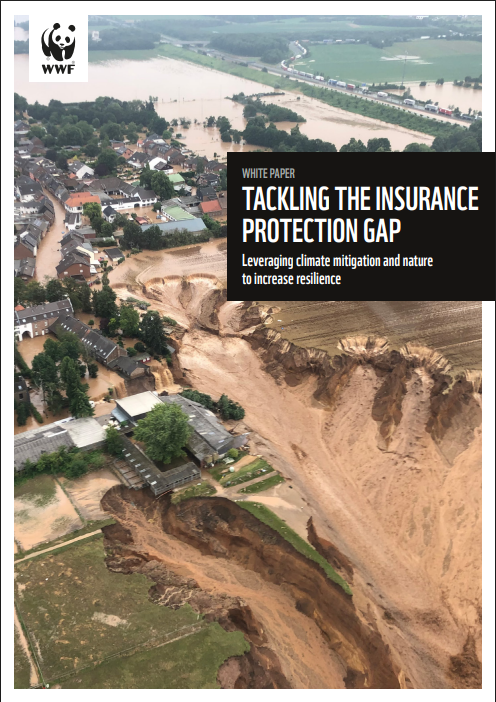
Tackling the insurance protection gap: Leveraging climate mitigation and nature to increase resilience
This white paper analyses how climate change and nature loss are widening insurance protection gaps in advanced economies. It outlines impacts on affordability and coverage, and recommends combining climate mitigation, nature-based solutions, and regulatory reforms to strengthen resilience and maintain insurability.
Deutsches Klimaportal
Deutsches Klimaportal’s Bauwesen section offers streamlined access to German climate services and data relevant to the built environment, drawn from national providers. It supports climate adaptation planning and decision-making for the construction sector with factual climate information and tools.
Global Infrastructure Risk Model and Resilience Index (GIRI)
The Global Infrastructure Risk Model and Resilience Index (GIRI) is a public, probabilistic model estimating infrastructure risk from major geological and climate hazards and resilience across sectors. It provides metrics like Average Annual Loss to inform national infrastructure risk assessment and resilience planning.

Nature Enters the Boardroom: Why Directors Are Paying Attention
Drawing on Australia’s first national study of board-level engagement with nature, this article shows how directors are treating nature as a material governance and financial issue. It highlights how boards are extending climate governance systems to manage nature-related risks, adopt frameworks like TNFD, and build resilience and long-term value despite policy uncertainty.
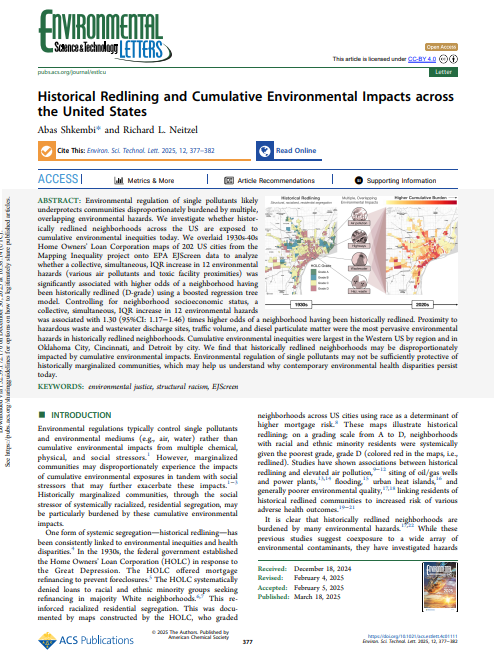
Historical redlining and cumulative environmental impacts across the United States
This study analyses 202 US cities, linking historic redlining to higher present-day cumulative environmental burdens. Using EJScreen data and modelling, it finds redlined neighbourhoods face significantly greater combined pollution exposures, particularly from traffic, hazardous waste and wastewater sites, with strongest disparities in western regions.
The Climate Resilience Investment Framework (CRIF)
IIGCC’s Climate Resilience Investment Framework provides investors with a structured approach to manage physical climate risks, integrate adaptation into portfolios, and guide asset-level, portfolio, and policy actions, prioritising real estate and infrastructure through a process-based methodology aligned with financial materiality.
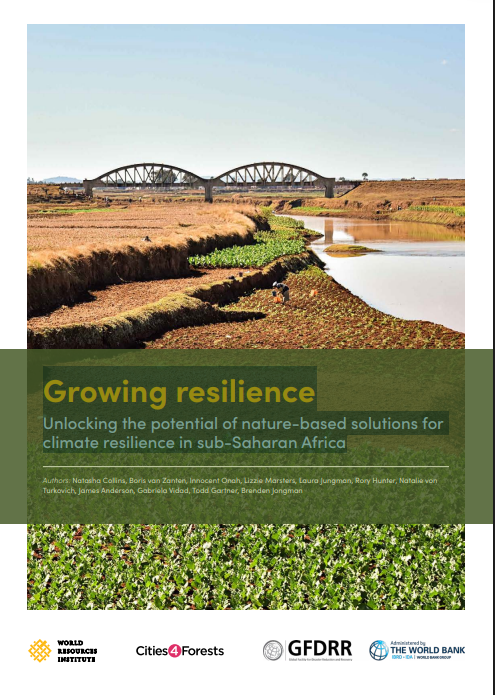
Growing resilience: Unlocking the potential of nature-based solutions for climate resilience in sub-Saharan Africa
The report assesses nature-based solutions for climate resilience in sub-Saharan Africa, reviewing nearly 300 projects. It finds growing adoption but insufficient scale, highlighting financing, policy, and capacity gaps, and recommends integrating NBS into infrastructure planning, diversifying funding, and strengthening social inclusion and local capability.
Climate X
Climate X is a climate risk analytics company providing asset-level physical climate risk data and scenario analysis. It supports financial institutions, insurers and corporates with decision-making, stress testing and regulatory alignment using proprietary climate models and geospatial intelligence.
Sustainable Finance Roundup December 2025: Nature, Regulation, and the Hardening of Risk
This month’s sustainable finance roundup traces the shift from ambition to enforcement, as climate and nature risks become financial, regulatory and legal realities. It covers Australia’s environmental law reforms, the embedding of climate and nature risk through prudential supervision, disclosure and shareholder pressure, and insurer warnings on the limits of insurability. It also highlights how markets are responding to deforestation and biodiversity risk, and how litigation and regulation are reshaping governance and long-term financial resilience.
International round table: Financing climate action at city level
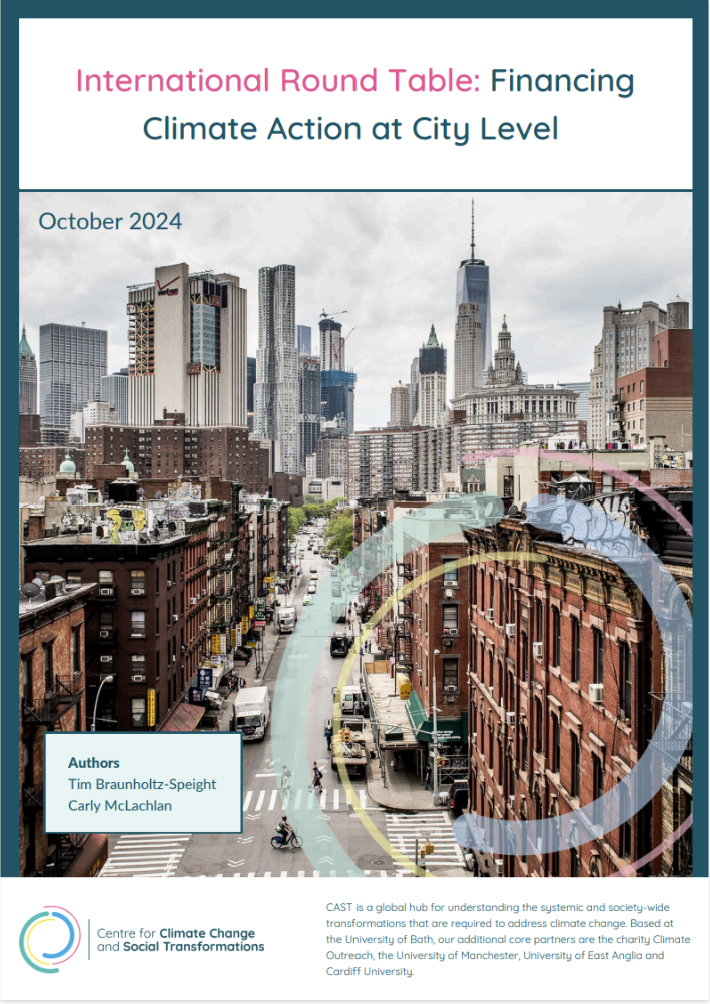
This report synthesises discussions from an international round table on financing city-level climate action, highlighting how local governments overcome fiscal constraints through tailored funding scales, partnerships, innovative revenue mechanisms, and long-term approaches to deliver major decarbonisation programmes across Europe and North America.


