
Library | Finance relevance
General / All finance professionals
Refine
898 results
REFINE
SHOW: 16


Xinjiang supply chain business advisory addendum
This US Government advisory highlights continuing reports of forced labour and human rights abuses in the Xinjiang Uyghur Autonomous Region, China, and reminds businesses of their obligations under relevant US laws. The report contains information on risks in supply chains and implementation and enforcement of relevant laws.

Future of waste
This report examines the future of waste reduction, the environmental and financial impacts of waste, and investment opportunities in waste management globally. The report provides regional, country, and sector insights on companies most affected by waste and ways for mainstream companies to proactively manage waste and pollution.

Rethinking climate change: How humanity can choose to reduce emissions 90% by 2035 through the disruption of energy, transportation, and food with existing technologies
This report examines how existing technologies in energy, transportation, and food could lead to a 90% reduction in greenhouse gas emissions by 2035. Using the Seba Technology Disruption Framework, they forecast disruptive changes and identify how markets could drive emissions mitigation.

Unused tools: How central banks are fueling the climate crisis
This report dissects the role of central banks in fossil fuel finance and climate change, presenting 10 criteria for assessment and analysing 12 central banks worldwide. While there is increased recognition among global central banks of the severity of climate change, they continue to prop up fossil fuels and largely maintain an industrial structure that uncritically exacerbates the climate crisis.
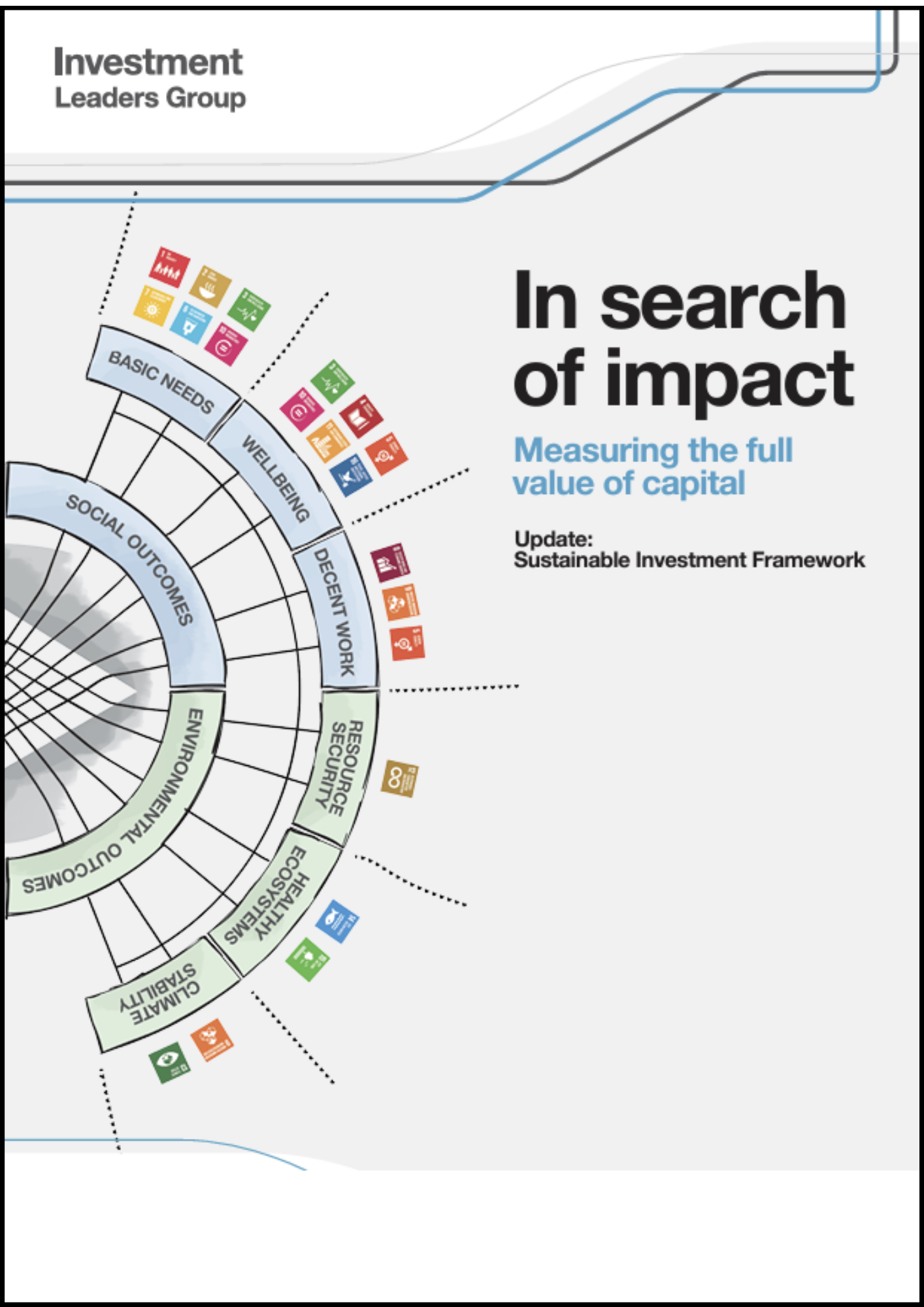
In search of impact: Measuring the full value of capital
This report outlines a sustainable investment framework, designed to empower individuals and organisations to better understand and make informed investment choices. The framework utilises six themes to communicate the impact of financial flows into the economy and contains theoretically grounded metrics that can be practically applied.

The comprehensive business case for sustainability
Sustainable businesses redefine the corporate ecosystem by creating value for all stakeholders, including employees, shareholders, supply chains, civil society, and the planet. Managing sustainability risks requires making investment decisions today for longer-term capacity building and developing adaptive strategies. Significant cost reductions can result from improving operational efficiency, and sustainable companies deliver significant positive financial performance.

Opportunity NOCs: How investors can jumpstart energy transitions in national oil companies
This report outlines how national oil companies (NOCs) must begin decarbonising to meet the goals of the Paris Agreement, and how investors can influence and incentivise the energy transition. It shows that NOCs constitute half of the world’s oil and gas production and control two-thirds of global reserves, making them of great interest to investors.

The economic impact of ESG ratings
This report examines the impact of ESG ratings on fund holdings, stock returns, and firm behaviour. The study finds that only MSCI ESG ratings can explain the holdings of US ESG funds, and slow, gradual responses in ownership suggest that fund managers mainly use ESG ratings to comply with ESG mandates.

The climate crisis is a child rights crisis: Introducing the Children's Climate Risk Index
The report highlights how one billion children are at extreme risk due to climate change with small island states and countries already facing existential threats. It is a call to action for businesses and governments to reduce greenhouse gas emissions and commit to sustainable practices.

New EU guidance helps companies to combat forced labour in supply chains
The guide provides practical advice on identifying, preventing, mitigating, and addressing forced labour's risk and translating international standards into concrete action. The guidance is in line with the previously published EU trade strategy and upcoming legislation on Sustainable Corporate Governance.

Human rights risks in Xinjiang Uyghur autonomous region: Practical guidance from investors
The guide sheds light on the ongoing human rights crisis in the Uyghur region of China, exposing a multitude of risks for investors. The report gives practical recommendations on how to assess exposure, engage with portfolio companies, and collaborate with stakeholders.

Why and how investors should act on human rights
This report outlines how institutional investors can respect human rights as defined by international standards. The six principles of ESG investing, such as incorporating ESG issues into decision-making processes and seeking appropriate disclosure help to promote acceptance of human rights in the investment industry.

Do socially responsible firms walk the talk?
This study evaluates U.S. firms that signed the Business Roundtable's stakeholder capitalism pledge. Despite claims of social responsibility, signatories performed worse on environmental, labor, and governance metrics than peers, both before and after signing. The results suggest these public commitments lacked substance and may have been strategic signaling.

An integrated framework to assess greenwashing
Companies, nonprofits, and governments are increasingly engaging in greenwashing despite regulations for misleading advertisements. This report provides a framework for detecting greenwashing in such claims for all actors, whether non-commercial or non-advertisements.

SDG action manager technical guide
This guide provides businesses with a web-based impact management solution to take action on the Sustainable Development Goals (SDGs) through 2030. The guide describes the overall structure, module design, baseline module, SDG-specific modules, scoring methodology, and development process of the SDG Action Manager in a concise manner.

Collision course: The risks companies face when their political spending and core values conflict, and how to address them
The paper warns companies that their political spending may put them at risk of reputational damage and possible backlash. Their report gives specific examples, and outlines recommendations and policies that allow businesses to align their core values with political expenditures, while developing safeguards to protect their reputations.


