
Library | Finance relevance
Impact investors
Refine
595 results
REFINE
SHOW: 16



Government Pension Investment Fund (GPIF)
Government Pension Investment Fund (GPIF) is an independent administrative institution in Japan. It manages and invests pension reserve funds under Japan’s Employees’ Pension Insurance and National Pension Acts. GPIF seeks long-term, diversified returns while emphasising ESG investment and stewardship in public pension finance.
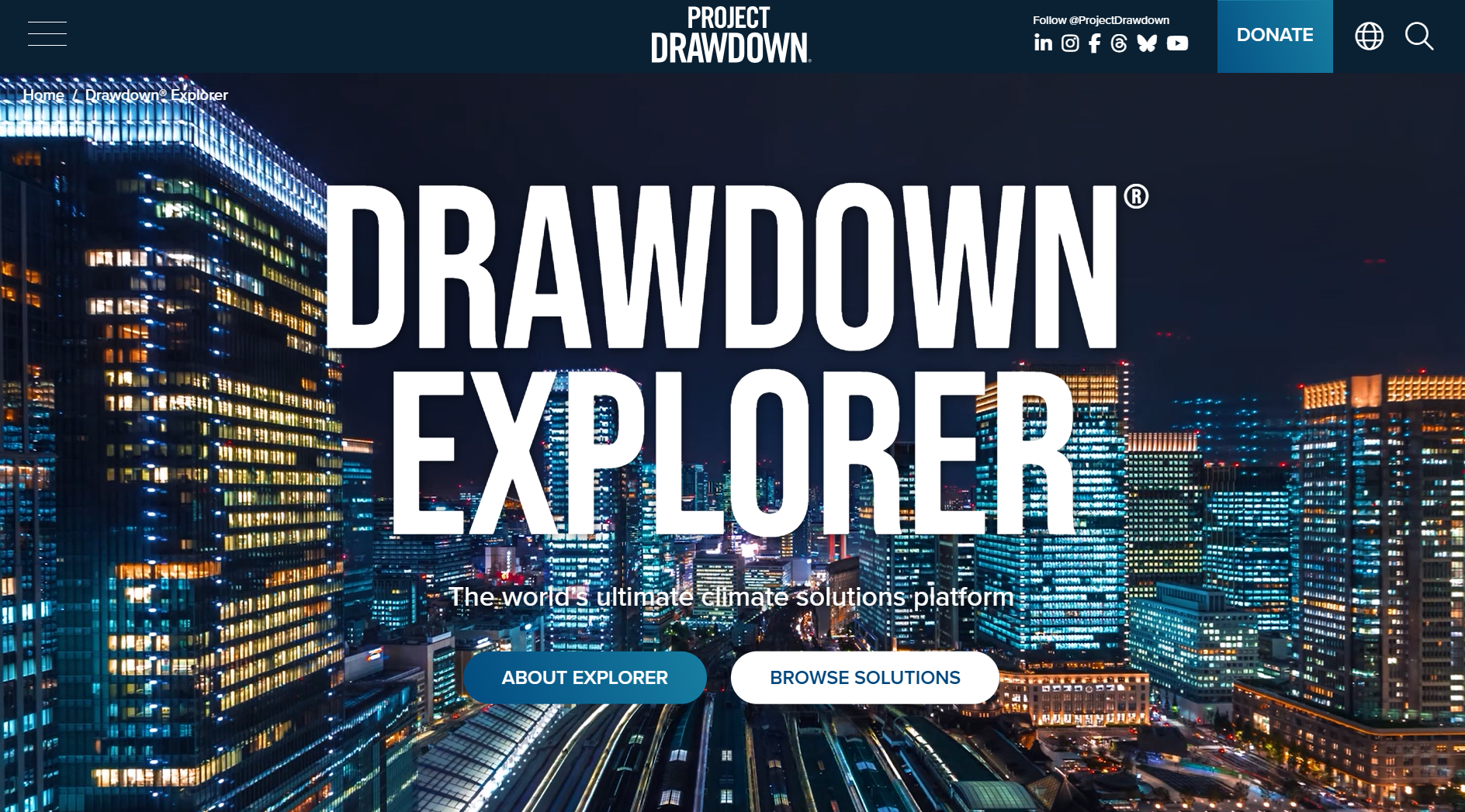
Drawdown Explorer
Drawdown Explorer is an interactive platform that catalogues climate mitigation solutions, ranking them by their emissions impact, cost, and readiness.

Ethical investing disclosure guidance
This report summarises draft guidance from New Zealand’s Financial Markets Authority on ethical investment disclosure. It sets expectations under the FMC Act, warns against greenwashing, and outlines principles of clarity, substantiation, consistency, and management of third-party involvement to improve transparency and accuracy for investors.

EDHEC Climate Institute
EDHEC Climate Institute (ECI) equips finance professionals and decision-makers with climate risk research, tools and scenario analysis. It focuses on physical risks, transition risks, green assets, resilience technologies and climate policy. ECI bridges academia, industry and public stakeholders to support low-emission investment strategies.

EDHEC Business School
EDHEC Business School is an international, triple-accredited (AACSB, AMBA, EQUIS) business school with campuses in Lille, Nice, Paris, London and Singapore. It offers a broad portfolio of programmes like BBA, master's in management, MSc, MBA, PhD and executive education, emphasising research, global partnerships and real-world impact.
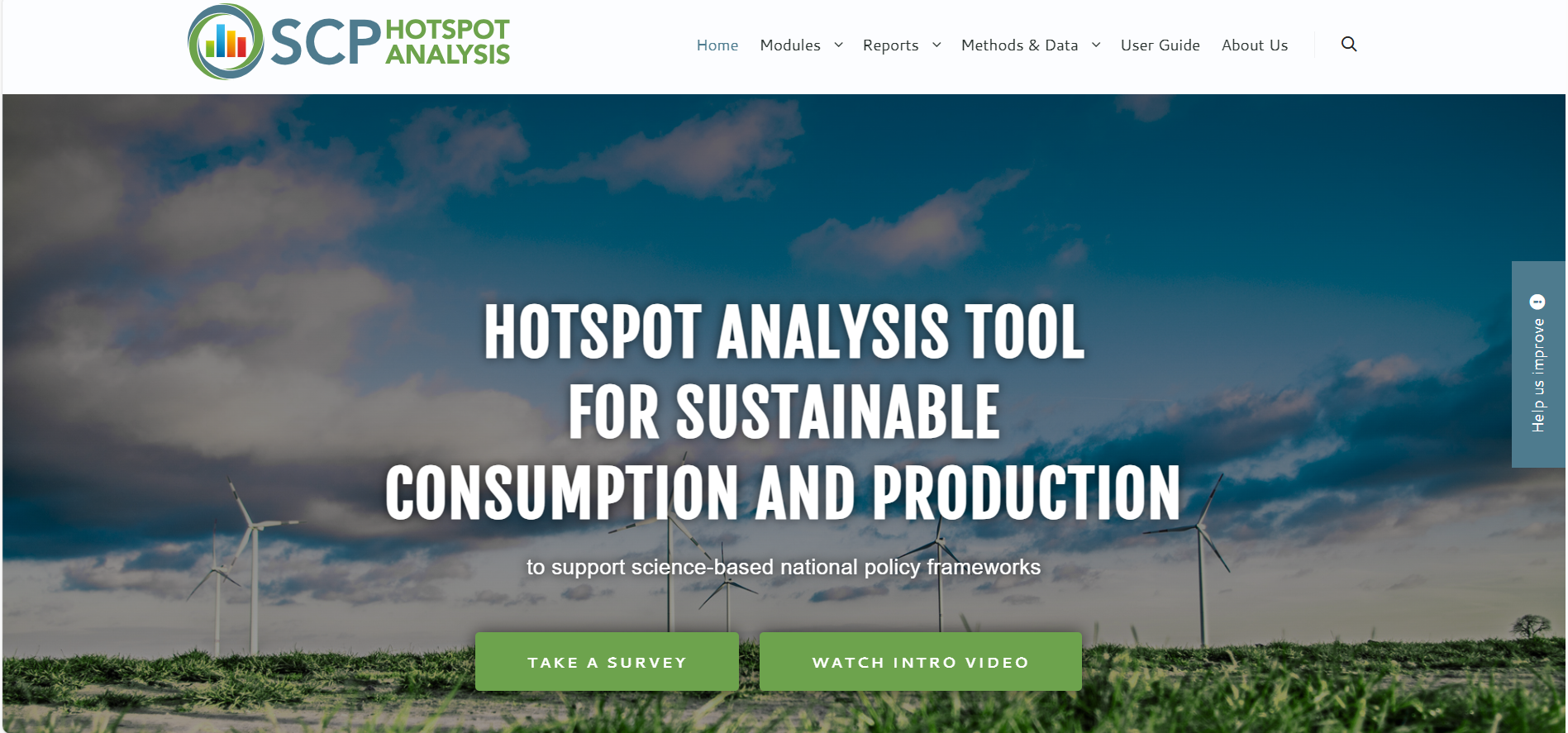
The Hotspot Analysis Tool for Sustainable Consumption and Production (SCP-HAT)
SCP-HAT (Sustainable Consumption and Production Hotspots Analysis Tool) is an online tool that maps national and sector-level “hotspots” of unsustainable production and consumption using input-output and lifecycle methodologies.
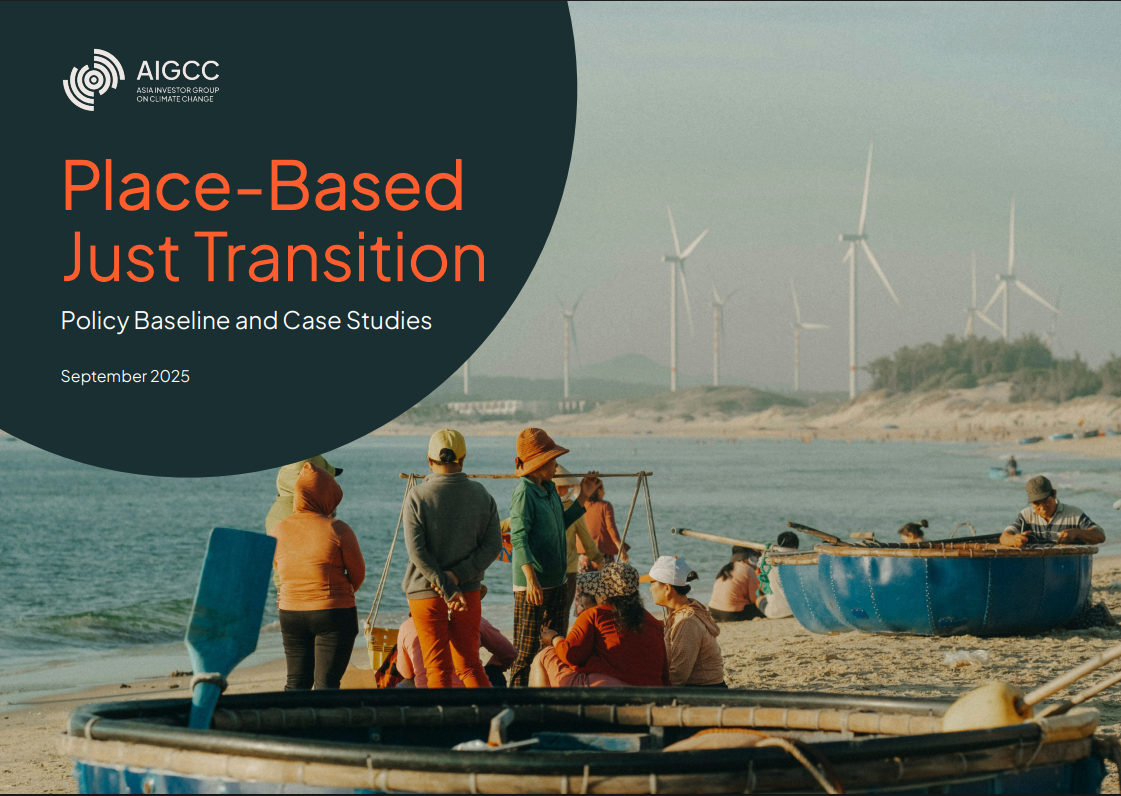
Place-based just transition: Policy baseline and case studies
This report from the Asia Investor Group on Climate Change analyses place-based just transition policies in India, Indonesia, Malaysia and Japan. It outlines market-specific policy baselines, labour and social dynamics, financing needs and case studies, providing investors and policymakers with insights into ensuring equitable low-carbon transitions in Asia.
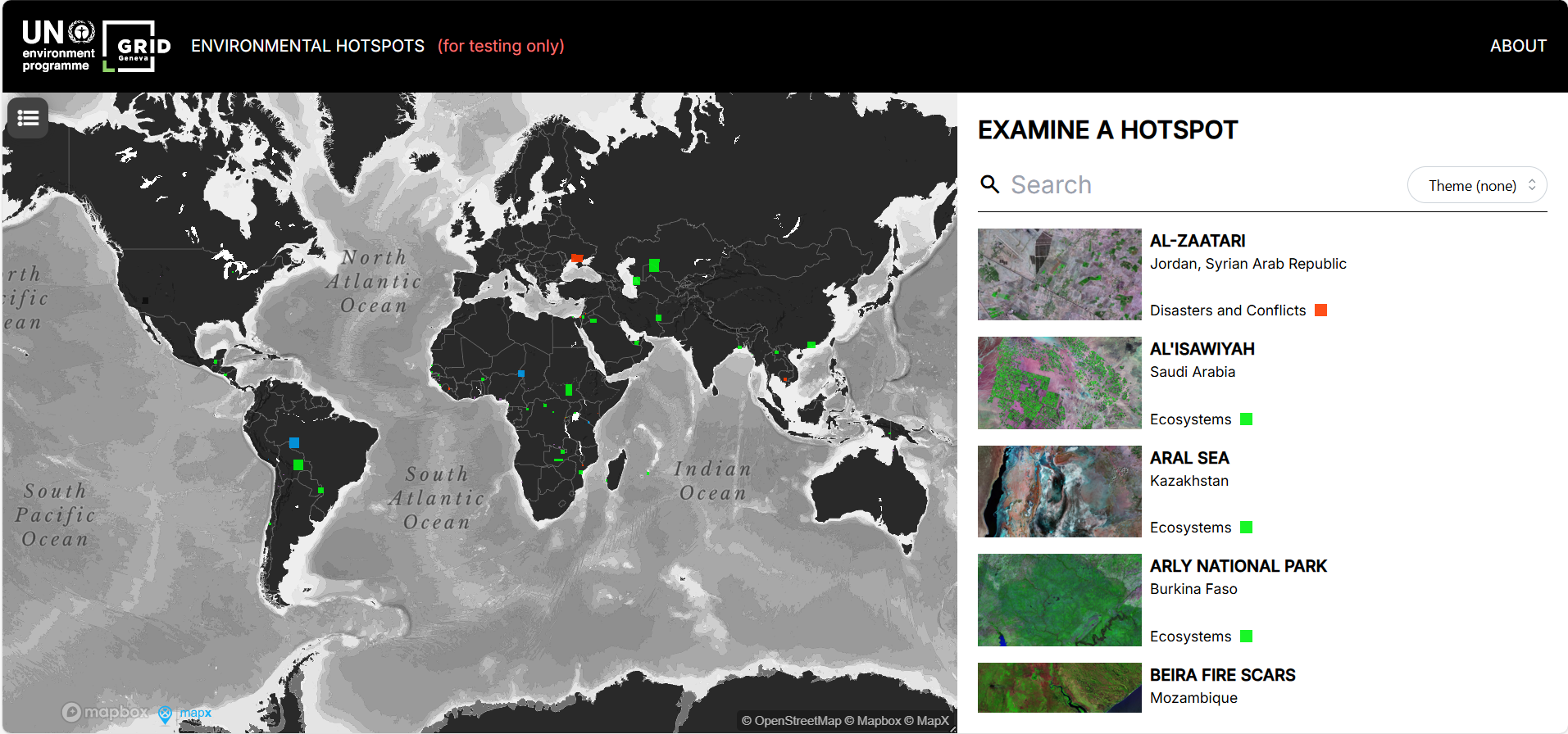
Environmental hotspots
The Environmental Hotspots tool by UNEP offers an interactive map of high-risk ecological zones worldwide, allowing users to explore environmental pressures across sectors (e.g. ecosystems, resource extraction).

Convention on International Trade in Endangered Species of Wild Fauna and Flora
Convention on International Trade in Endangered Species of Wild Fauna and Flora (CITES) is a global treaty regulating international trade in wildlife to ensure species survival in the wild. It enforces permit systems, categorises species under appendices, and supports cooperation among 185 Parties in biodiversity conservation.
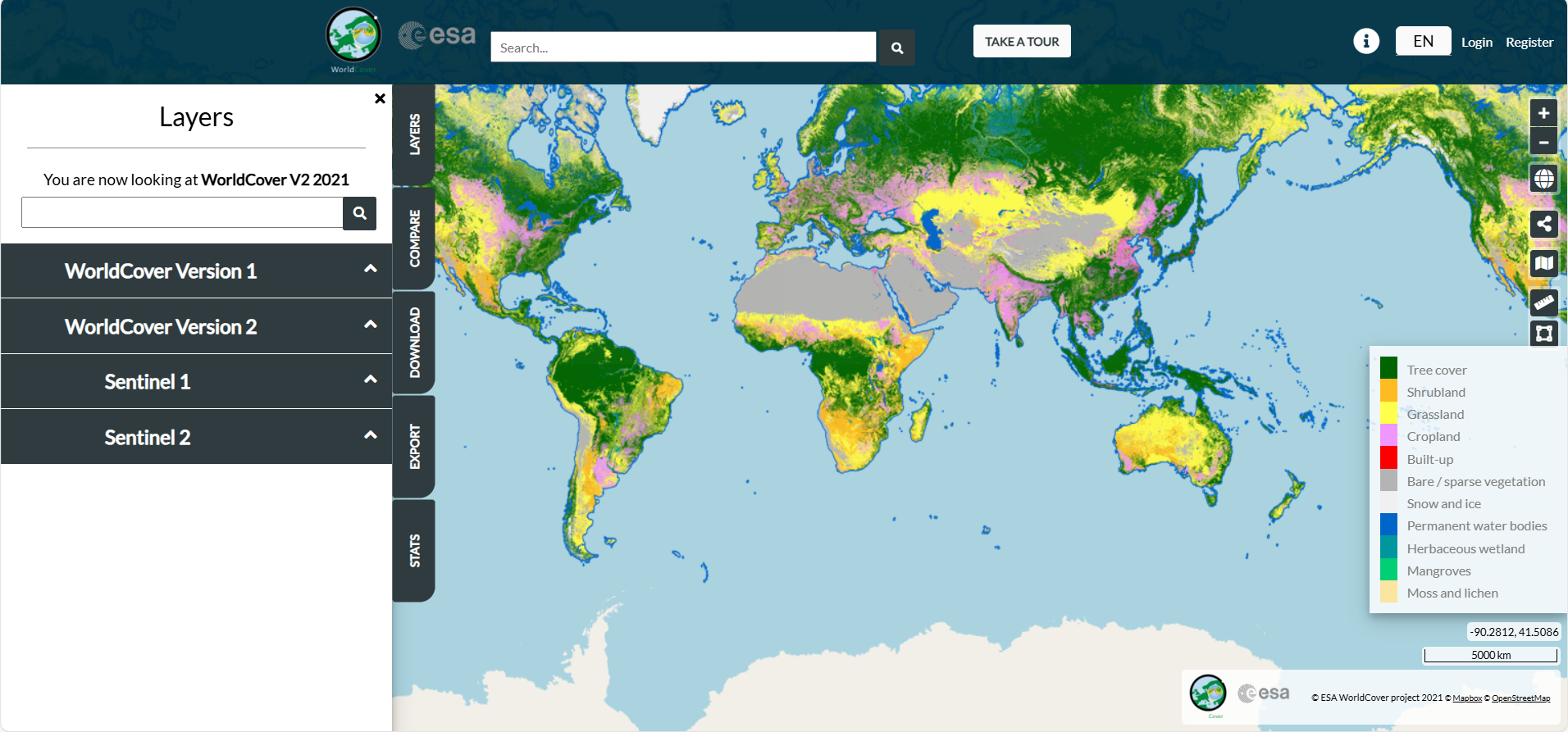
ESA WorldCover
The ESA WorldCover viewer offers an interactive web-map of global land cover at 10 m resolution, enabling overlay of Sentinel-1/2 composites, statistics by region, and download of data tiles, all without software installation.

WorldCover
WorldCover offers free, high-resolution global land cover maps at 10 m resolution for 2020 and 2021, via Sentinel-1 and Sentinel-2 data, under Creative Commons license. It supports environmental monitoring, climate research, land-use planning and biodiversity analysis.
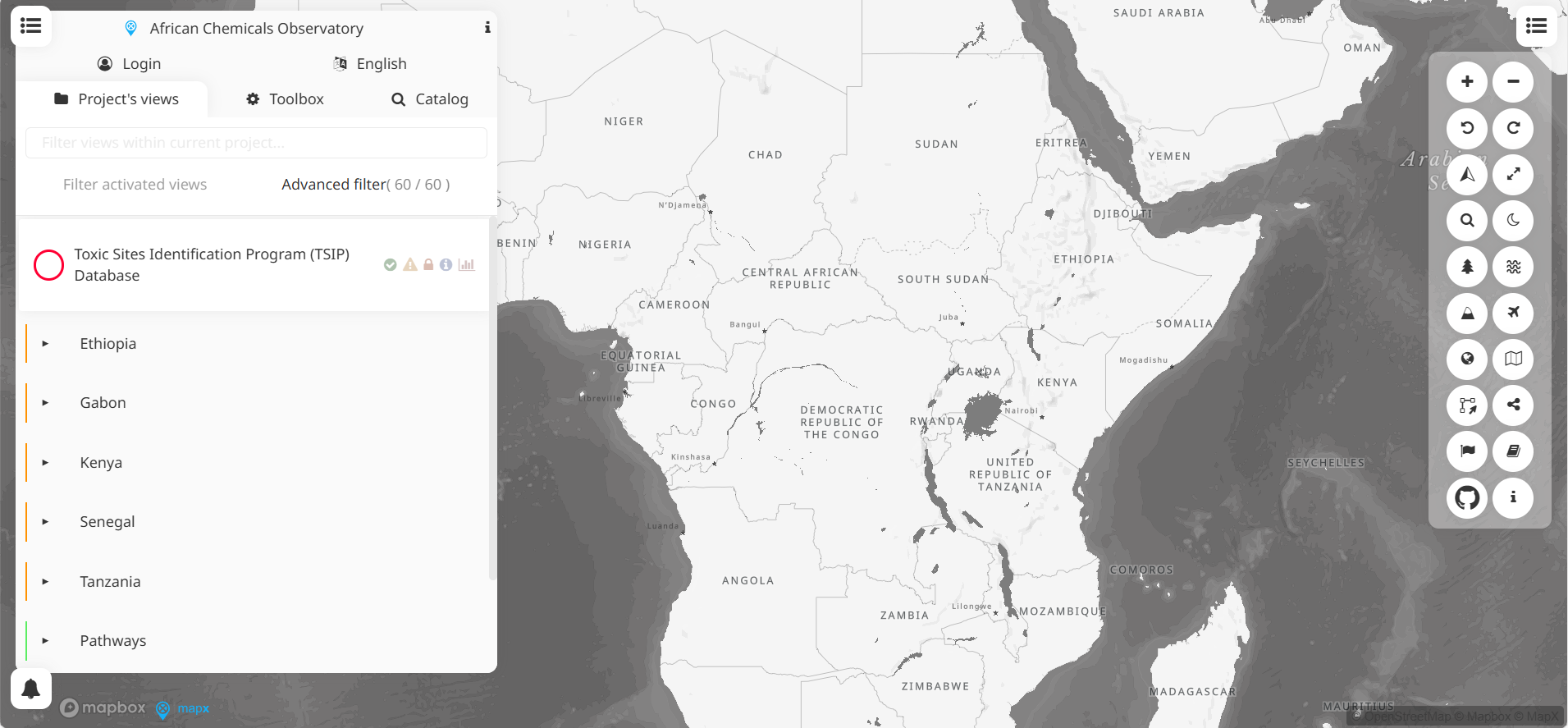
African chemical observatory
MapX is an open-source, cloud-based geospatial platform for visualising, analysing and managing environmental data. Developed by UNEP/GRID-Geneva, it supports decision-making in biodiversity, climate, land use and disaster risk, through map views, dashboards and storytelling tools.
Federal Ministry of Economic Affairs and Climate Action (BMWK)
Federal Ministry for Economic Affairs and Climate Action (BMWK) is a German government body responsible for economic policy, industrial strategy, energy transition, digitalisation, and climate action. It develops regulations, promotes innovation, supports businesses, and coordinates international cooperation to strengthen Germany’s economic growth while advancing sustainability and climate neutrality goals.

National Bureau of Economic Research (NBER)
National Bureau of Economic Research (NBER) is a US-based nonpartisan economic research organisation producing working papers, conferences, datasets and publications on macroeconomics, labour markets, health economics and public policy. It supports scholars and policymakers with in-depth empirical research.
Enel: Industry case studies: Electric utility
This report presents Enel’s case study on implementing CFO Principles for the SDGs. It outlines historical drivers, sustainability disruption, strategic responses, and SDG investments, highlighting decarbonisation, electrification, and financial performance assessment. The report details Enel’s renewable energy expansion, SDG alignment, and integration of sustainability outcomes with financial results.
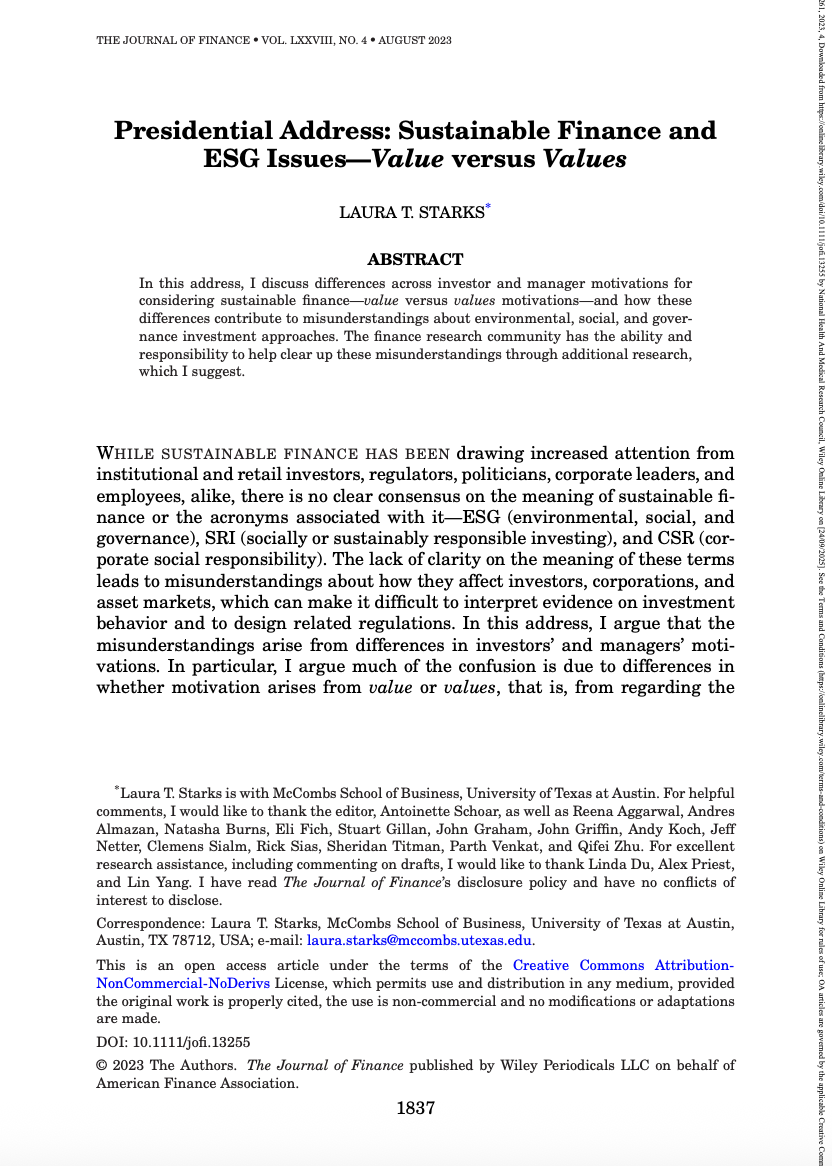
Presidential address: Sustainable finance and ESG issues: Value versus values
This report examines how investor and manager motivations—driven by either financial value or personal values—shape sustainable finance and ESG practices. It highlights definitional ambiguities, performance debates, and cultural differences, calling for clearer research to distinguish pecuniary risk-return considerations from non-pecuniary preferences in ESG investing.


