
Library | Finance relevance
Investment managers / asset managers
Refine
1146 results
REFINE
SHOW: 16


Carbon Tracker Initiative
Carbon Tracker’s Reports page hosts research analysing how supply, demand and climate policy affect fossil-fuel exposed companies and markets. It provides scenario analysis, methodological frameworks and sector-specific insights for investors and policymakers on climate-related financial risk and the energy transition.
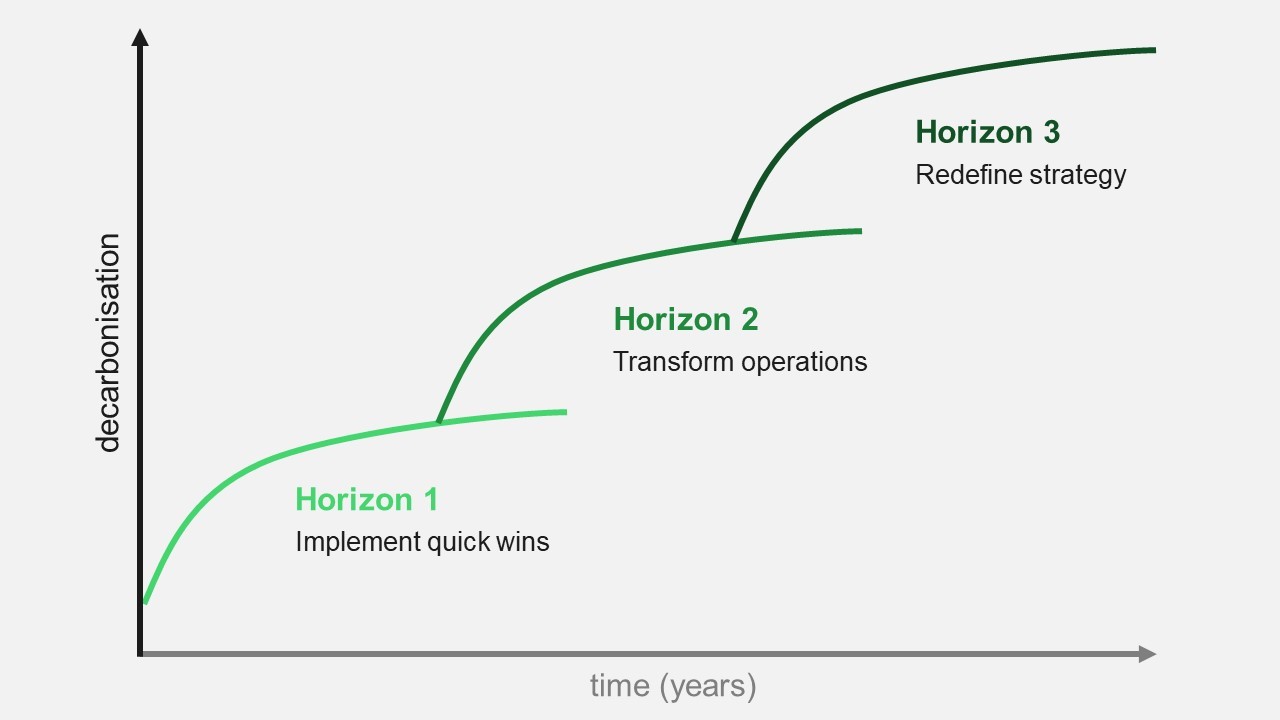
The Three Horizons of Decarbonisation
This article presents the Three Horizons of Decarbonisation framework, helping companies distinguish between short-term efficiency measures, operational transformation, and fundamental business model shifts. It explains how clear horizon identification improves capital allocation, stakeholder engagement, and the likelihood that net zero plans translate into meaningful action.
Global pension transparency benchmark
The Global Pension Transparency Benchmark is a benchmark series initiated in 2021 that assesses how clearly major pension funds disclose information on value-generation for stakeholders. It evaluates public disclosures across four equally weighted factors — governance and organisation, performance, costs and responsible investing — using a structured scoring methodology. The purpose is to promote better transparency and accountability in pension reporting. Finance professionals can use the benchmark to compare disclosure practices, inform improvements in fund reporting and align with evolving global standards.
Nature-based risk assessment: Integrating project-related finance
Guidance from UNEP FI and the Equator Principles on integrating project-related finance into nature-based risk assessments. It outlines frameworks, governance and disclosure expectations to help financial institutions identify, assess and manage biodiversity, water and pollution-related risks at project and portfolio levels.
Future energy scenarios: Pathways to Net Zero
Future Energy Scenarios 2025 provides independent pathways for Great Britain’s energy system to reach net zero by 2050. It models demand, supply, flexibility and emissions across electricity, gas and hydrogen, assessing costs, infrastructure needs, carbon budgets and policy choices under varying levels of electrification, hydrogen deployment and consumer engagement.

Systems-informed stewardship: Reimagining investment stewardship for a sustainable future series
This series sets out a systems-informed framework for reimagining investment stewardship. It examines stewardship as an interconnected system shaped by policies, practices, resource flows, relationships, power dynamics and mental models, and proposes practical shifts to embed responsibility, design for complexity, and manage for long-term sustainability outcomes.

Systems-informed stewardship part III: Reimagining stewardship for a sustainable future
This article presents systems-informed stewardship as a new approach to advancing sustainability across the finance sector. It outlines two interdependent lenses and three practical shifts, embedding responsibility, designing for complexity, and managing adaptively to improve stewardship effectiveness.
Global trends in climate change litigation series
This series reviews global developments in climate change litigation, tracking case numbers, jurisdictions, claimant and defendant trends, and evolving legal strategies. Drawing on international litigation databases, it analyses patterns in claims against governments and corporations, highlighting emerging themes in climate governance, accountability and legal risk.
The production gap series
This benchmark series examines the gap between governments’ planned fossil fuel production and pathways consistent with international climate goals. It assesses alignment with temperature limits by reviewing national production plans and policy signals, providing a consistent framework to track progress and comparability across editions.
Sustainable finance progress tracker series
This benchmark series provides an annual, independent assessment of progress in implementing Australia’s sustainable finance roadmap and action plan. It tracks policy, regulatory, market and institutional developments, offering a consistent framework to monitor how the financial system is aligning with sustainability objectives over time.
China sustainable investment review series
The China Sustainable Investment Review is a recurring research series that provides a structured overview of the development of China’s sustainable investment market. It examines policy evolution, market practices, product types, and ESG integration across financial institutions using publicly available information.
The MSCI sustainability institute net-zero tracker series
The MSCI Sustainability Institute Net-Zero Tracker is a periodic benchmark series that monitors how listed companies align with global climate goals. It provides a consistent framework for assessing emissions pathways, transition readiness, disclosure practices and climate-related investment context across markets and sectors.
Too-big-to-strand? Bond versus bank financing in the transition to a low-carbon economy
The paper shows bond markets price fossil fuel stranding risk, while syndicated bank loans do not. Firms substitute bonds with bank loans as climate policy risk rises, concentrating exposure in large banks and raising “too-big-to-strand” regulatory concerns.
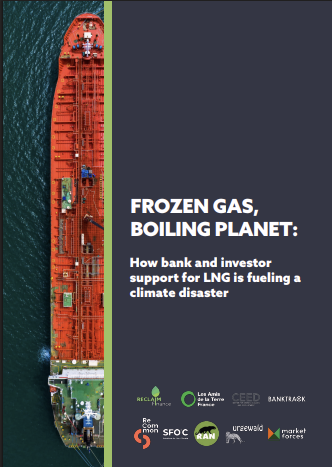
Frozen gas, boiling planet: How bank and investor support for LNG is fueling a climate disaster
The report analyses bank and investor financing of LNG expansion, finding US$213 billion in bank support and US$252 billion in investor exposure since 2021. It concludes this financing drives overcapacity, climate risk and misalignment with 1.5 °C pathways.

Climate change & the engagement gap: Why investors must do more than move the needle, and how they can
This report argues that climate change poses systemic risks to diversified portfolios and that conventional ESG engagement is insufficient. It proposes investor-led, enterprise-agnostic “guardrails” to limit greenhouse gas emissions, protect overall economic value, and complement inadequate regulation.
Energy and AI
The IEA’s Energy and AI report examines AI’s rising electricity demand and its capacity to improve energy efficiency, security and innovation. It assesses data centres, grids and end-uses, highlighting skills, infrastructure and policy needs to manage costs, emissions and resilience globally.


