
Library | Sustainable Finance Practices
Fixing financial and economic systems
Resources focused on transforming financial and economic systems to prioritise human well-being, equity, and environmental sustainability. Includes systemic change models such as degrowth, green growth, doughnut economics, and limits to growth.
Team Altiorem recommends

Refine
379 results
REFINE
SHOW: 16


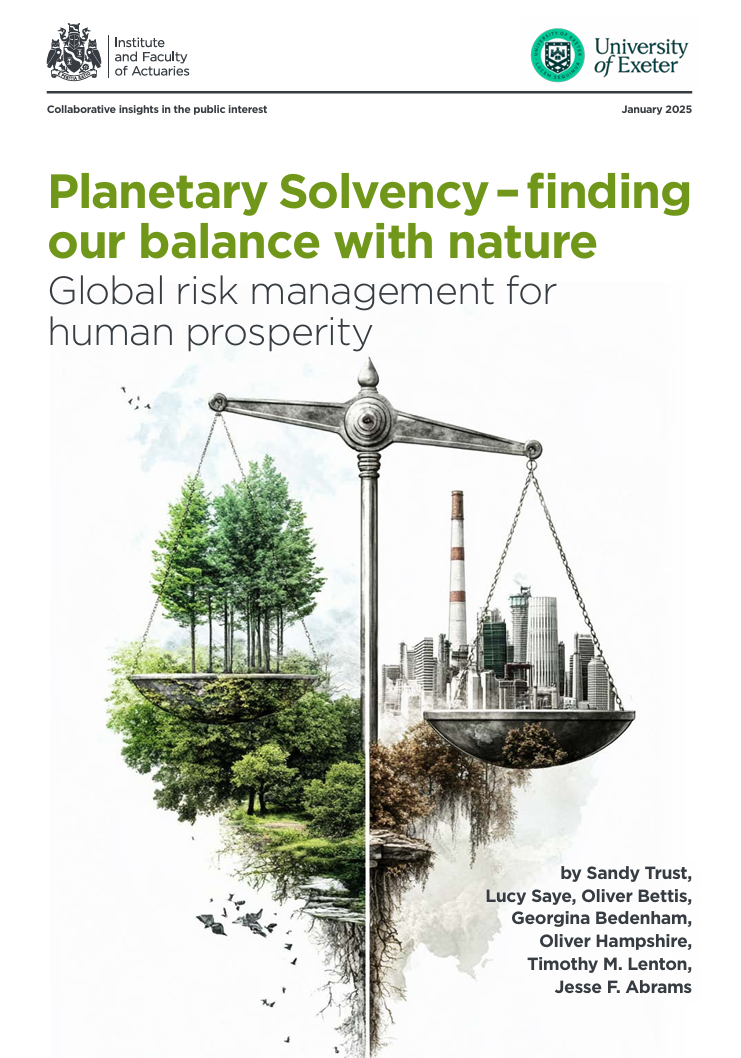
Planetary solvency – finding our balance with nature
This report outlines how climate and nature risks threaten the Earth system that underpins economies and societies. It proposes a Planetary Solvency framework, using risk-led assessment principles to inform policymakers of escalating systemic risks, tipping points and mitigation needs, emphasising the urgency of realistic global risk management to avoid severe disruption.

Redefining progress: Global lessons for an Australian approach to wellbeing
A scan of global wellbeing frameworks shows how countries integrate measurement, policymaking and accountability to support long-term social, economic and environmental outcomes. The report outlines lessons for designing an Australian approach that embeds wellbeing across government systems, decision-making and reporting.
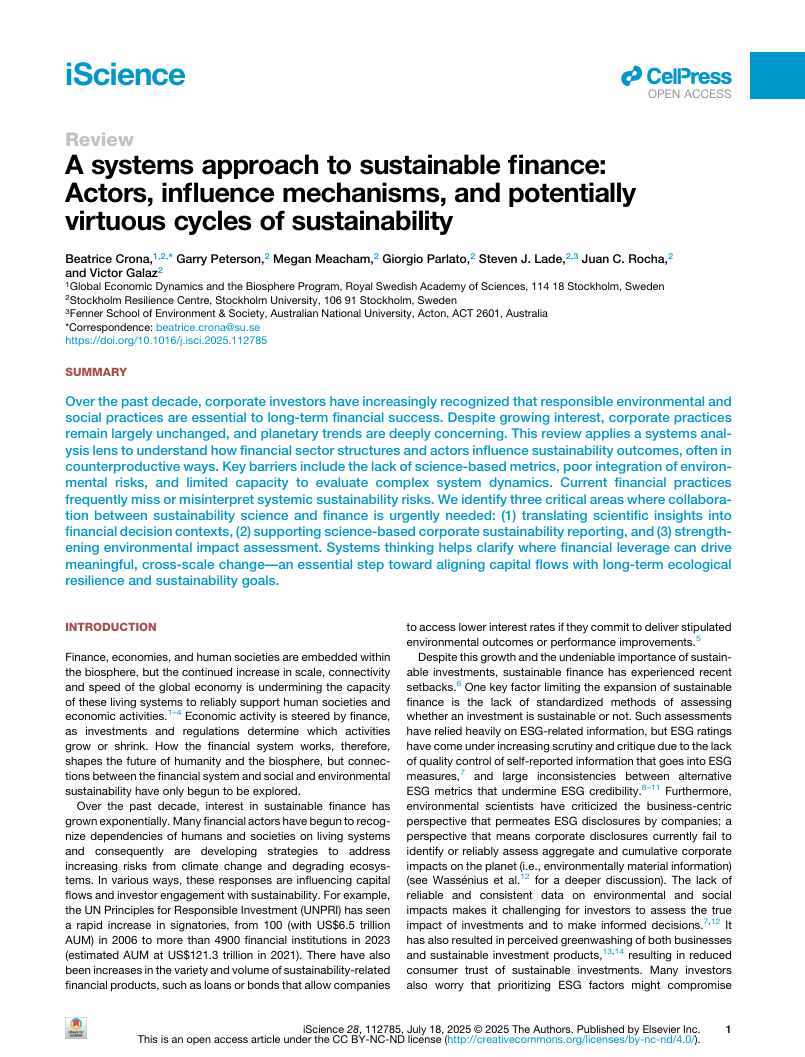
A systems approach to sustainable finance: Actors, influence mechanisms, and potentially virtuous cycles of sustainability
This review examines how financial sector structures and actors influence sustainability outcomes through a systems lens. It identifies barriers such as inadequate metrics, poor risk integration, and limited understanding of complex dynamics, while highlighting collaboration opportunities between finance and science to align capital flows with long-term ecological resilience.
Value chain collaboration: Unlocking circular markets in Australia
This report by Circular Australia and Arup identifies opportunities to build circular markets across five key Australian value chains—lithium batteries, PET bottles, green steel, low-carbon concrete, and textiles. It outlines current barriers, future pathways, and policy recommendations to improve resource efficiency, reduce emissions, and strengthen national economic resilience.

Circular Australia
Circular Australia is an independent not-for-profit organisation accelerating the shift to a circular economy across Australia by 2035. It supports businesses, government and researchers through data-driven reports, education programmes, taskforces and pilot projects to design out waste, keep materials in use and regenerate natural systems.

Forum for the Future
Forum for the Future is a global sustainability organisation collaborating with business, governments and civil society to accelerate transitions in food, energy and the purpose of business. Founded in 1996, the organisation applies futures thinking and systems change to support a just and regenerative future for people and planet.

Sustainable Finance Roundup October 2025: Carbon Markets, Targets, and the Cost of Resilience
This month’s sustainability roundup traces a rapidly evolving landscape in climate finance and accountability, spotlighting the weaknesses exposed by Hurricane Melissa’s disaster-risk finance system alongside new policy frameworks now reshaping sustainable investment. It highlights how vulnerable nations continue to bear the costs of climate impacts, how regulatory reforms such as Australia’s 2035 emissions target and global disclosure regimes are embedding accountability, and how renewed scrutiny of carbon markets is driving the search for credible, incentive-based pathways to real decarbonisation.
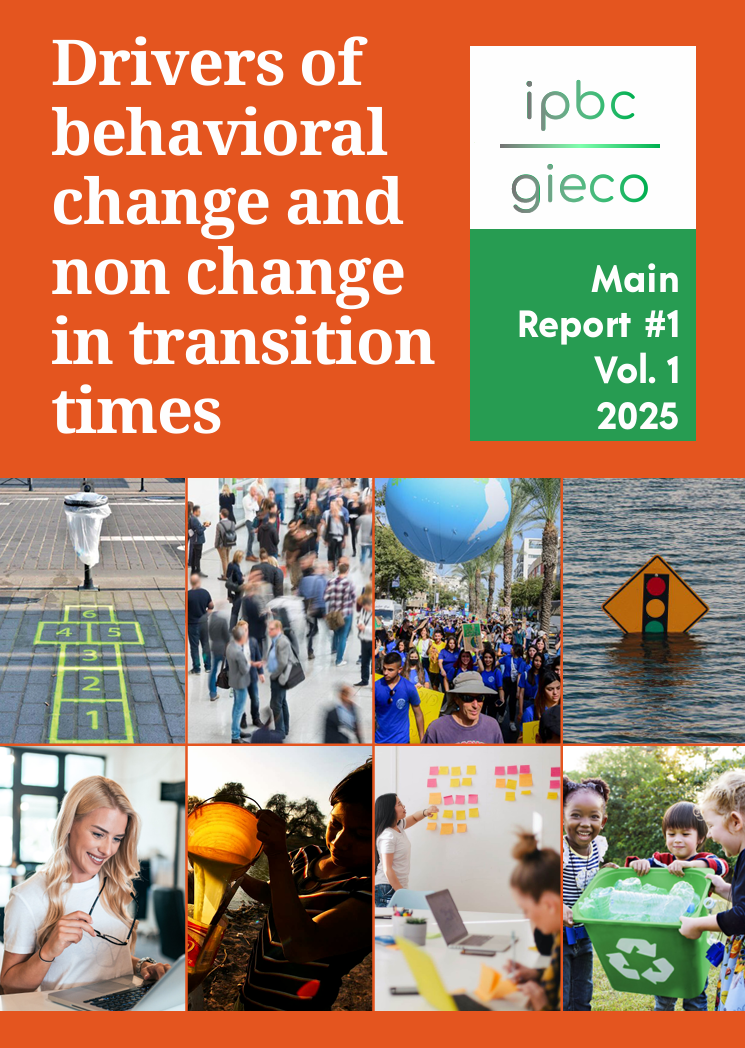
Drivers of behavioral change and non change in transition times
The Drivers of Behavioural Change and Non-Change in Transition Times report, published by IpBc/GIECo in 2025, examines psychological, social, and organisational factors influencing why individuals and institutions act—or fail to act—on sustainability. Drawing on behavioural science, it identifies mindsets, emotions, implicit cognition, and systemic barriers as key determinants of ecological and climate-related behavioural shifts.
Sustainable development report series
The Sustainable Development Report is a benchmark series that tracks global and national progress toward achieving the UN Sustainable Development Goals (SDGs). Produced annually by the Sustainable Development Solutions Network (SDSN) and partners, it presents the SDG Index and Dashboards, offering comparable data, analysis, and trends for all UN member states.

Principles for an effective wellbeing budget
This report summarises principles for developing a wellbeing-focused federal budget in Australia. It recommends integrating wellbeing goals into policy and budgeting, strengthening data and accountability, investing in long-term and preventative analysis, enhancing public service capability, and ensuring ongoing community engagement to guide decision-making and measure progress.
How the concept of “Regenerative Good Growth” could help increase public and policy engagement and speed transitions to Net Zero and nature recovery
The report introduces the concept of Regenerative Good Growth (RGG) as an alternative to extractive GDP-focused models. It argues that economic progress should regenerate five renewable capitals, natural, social, human, cultural, and sustainable physical, while ensuring fairness, engagement, and reduced environmental harm. RGG promotes inclusive, low-carbon, and nature-positive transitions through diverse public participation.

International Resource Panel
International Resource Panel (IRP) is a science-policy platform established by United Nations Environment Programme in 2007. It produces peer-reviewed assessments and data such as the Global Material Flows Database to guide governments, industry and civil society on resource efficiency, sustainable use, circular economy and environmental impact.
ShareAction's point of no return series
The Point of No Returns benchmark series assesses the world’s largest asset managers on responsible investment across climate, biodiversity, social issues, governance, and stewardship. Published by ShareAction, the series provides rankings, sector-wide analysis, and examples of practice to guide improvement and accountability.

Rocky Mountain Institute (RMI)
Rocky Mountain Institute (RMI) is an independent, non‑partisan, non‑profit focused on transforming global energy systems. It delivers market‑driven, clean energy and decarbonisation solutions—spanning policy, industry and communities—to advance affordable, zero‑carbon futures. RMI supports rapid energy transition and sustainable development through research, analysis and global collaboration.

Potsdam Institute for Climate Impact Research (PIK)
Potsdam Institute for Climate Impact Research (PIK) is a leading interdisciplinary German research institute advancing the science of climate impacts and global sustainability. With around 480 international staff, PIK conducts Earth-system modelling, integrated analysis and policy advisory to support evidence-based climate solutions. Member of the Leibniz Association.

Counterproductive sustainable investing: The impact elasticity of brown and green firms
Sustainable investing strategies that reallocate capital from brown to green firms may unintentionally worsen environmental outcomes. This study finds that green firms show minimal environmental improvement from lower capital costs, while brown firms become more polluting when financially constrained. Current investment approaches offer weak incentives for impactful emissions reductions.


