
Library | Sustainable Finance Practices
Laws and regulations
Government policies, legislation, and regulatory frameworks that shape sustainable finance practice, including mandatory disclosure rules, climate law, financial regulation, and ESG-related requirements.
Refine
190 results
REFINE
SHOW: 16


RIAA policy platform: Sustainable finance for a thriving Aotearoa New Zealand 2023 and beyond
This report outlines RIAA’s policy platform to strengthen sustainable finance in Aotearoa New Zealand. It recommends a national strategy, clearer ESG disclosures, taxonomy alignment with global standards, anti-greenwashing measures, Māori inclusion, human rights protections, and alignment with biodiversity and the Sustainable Development Goals.

Corporate climate litigation in Australasia: (Re)shaping the private law-climate interface
The report examines how corporate climate litigation in Australia and New Zealand is shaping private law. It highlights legal actions involving directors’ duties, disclosure obligations, consumer protections, and tort law. The analysis shows incremental adaptations in private law to address climate change impacts, especially through anti-greenwashing and climate accountability claims.

University of Adelaide
The University of Adelaide, established in 1874, is Australia's third-oldest university and a member of the prestigious Group of Eight. Ranked among the top 100 globally, it offers a diverse range of undergraduate and postgraduate programs. Located in Adelaide, South Australia, the university is renowned for its research excellence and vibrant campus life.
RIAA Policy Platform 2025: Harnessing sustainable finance for a thriving Australia
The RIAA Policy Platform 2025 outlines nine policy priorities and two principles to align Australia’s finance system with sustainability goals. It recommends regulatory reforms, improved data, Indigenous inclusion, and stronger accountability to mobilise capital for a net zero, nature-positive economy that supports long-term economic resilience and societal wellbeing.

Find it, fix it, prevent it: Modern slavery report 2024
CCLA’s 2024 report outlines investor-led efforts to address modern slavery through corporate engagement, policy advocacy, and improved data. Key sectors include construction and agriculture. Progress was made via benchmarking and collaborative initiatives, though disclosure and remedy remain limited. EU legislation and stakeholder coordination are driving further momentum.
ERM's the global regulations radar series
This bi-annual update outlines key ESG and EHS regulations across major regions, detailing compliance timelines, reporting standards, and emerging legislative trends. It highlights increasing global alignment on sustainability disclosures and regulatory developments in climate risk, human rights, and environmental protection, including new rules in the EU, US, Canada, and APAC.
Regulating AI in the financial sector: Recent developments and main challenges
The report outlines AI’s growing use in finance—especially in underwriting, fraud detection, and customer support—highlighting regulatory challenges around explainability, governance, and data security. It discusses evolving global guidance and the need for risk-based, proportionate oversight, particularly as generative AI gains traction in high-impact applications.
Nature-related financial disclosures: Frequently asked questions
This FAQ guide explains key concepts in nature-related financial disclosures, including biodiversity, dependencies, impacts, and the TNFD framework. It outlines disclosure requirements, materiality, governance responsibilities, and greenwashing risks, offering practical insights for businesses preparing for future regulatory expectations and aligning with international sustainability standards.
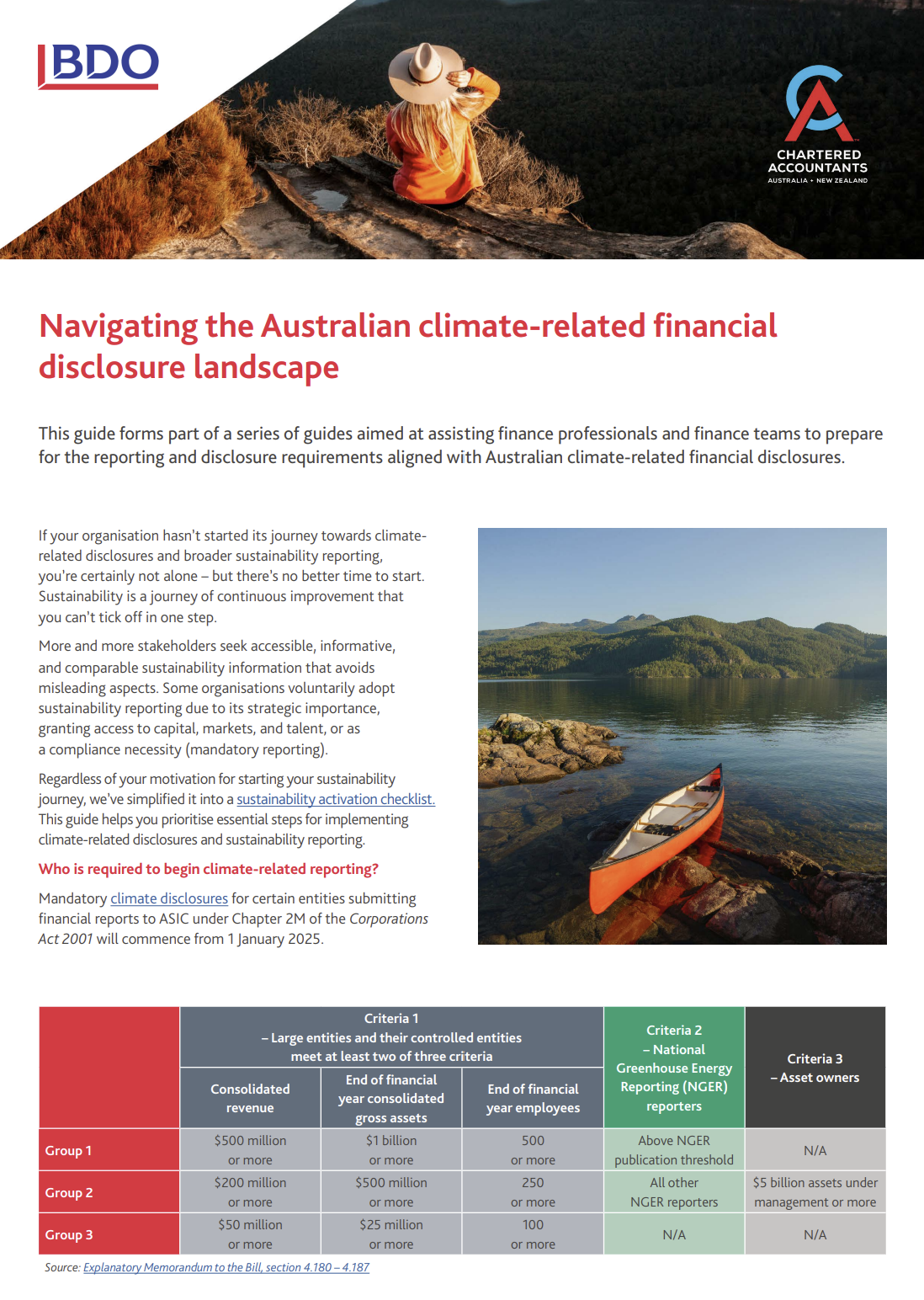
Navigating the Australian climate-related financial disclosure landscape
This guide outlines Australia’s new climate-related financial disclosure requirements commencing in 2025. It defines reporting thresholds, timelines, and compliance pathways for entities based on size and emissions reporting status, and details implementation steps aligned with AASB and IFRS standards for climate and sustainability reporting.

Critical mineral series: Sustainability considerations for investors in copper mining
This report examines copper’s role in the energy transition, highlighting growing demand, environmental and human rights risks, and evolving global regulations. It evaluates mining companies’ sustainability performance using biodiversity, governance, and modern slavery metrics, offering insights for responsible investment aligned with international standards and long-term ESG considerations.
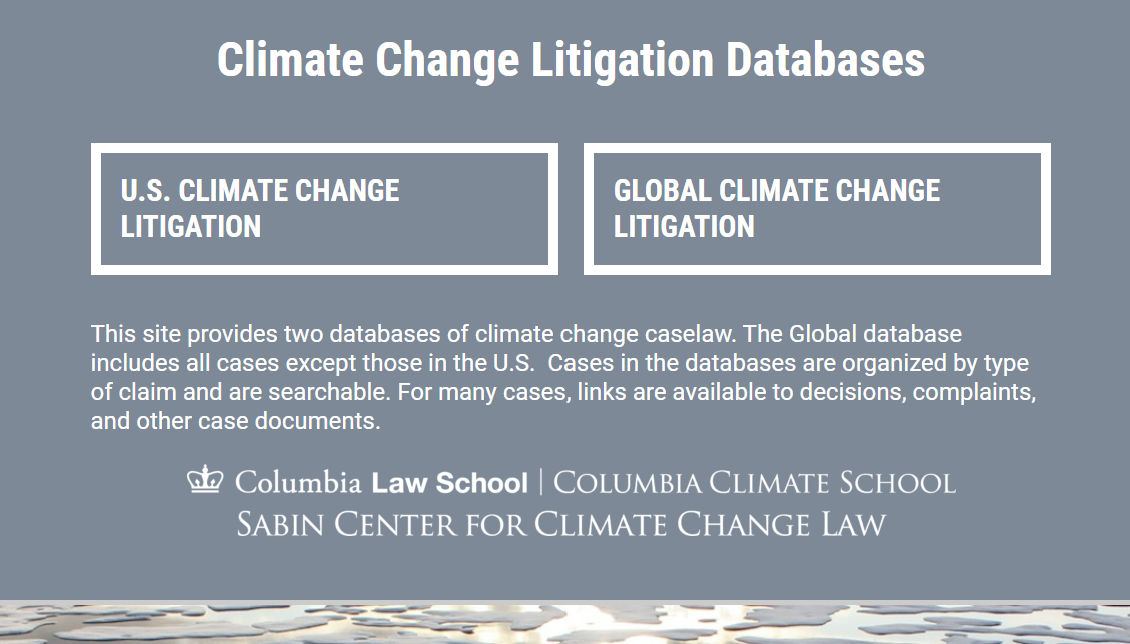
Climate change litigation databases
The Climate Change Litigation Database is an online tool providing access to a comprehensive collection of global climate change litigation cases. It is designed to support legal and finance professionals by offering detailed information and insights into climate-related legal actions and decisions worldwide.
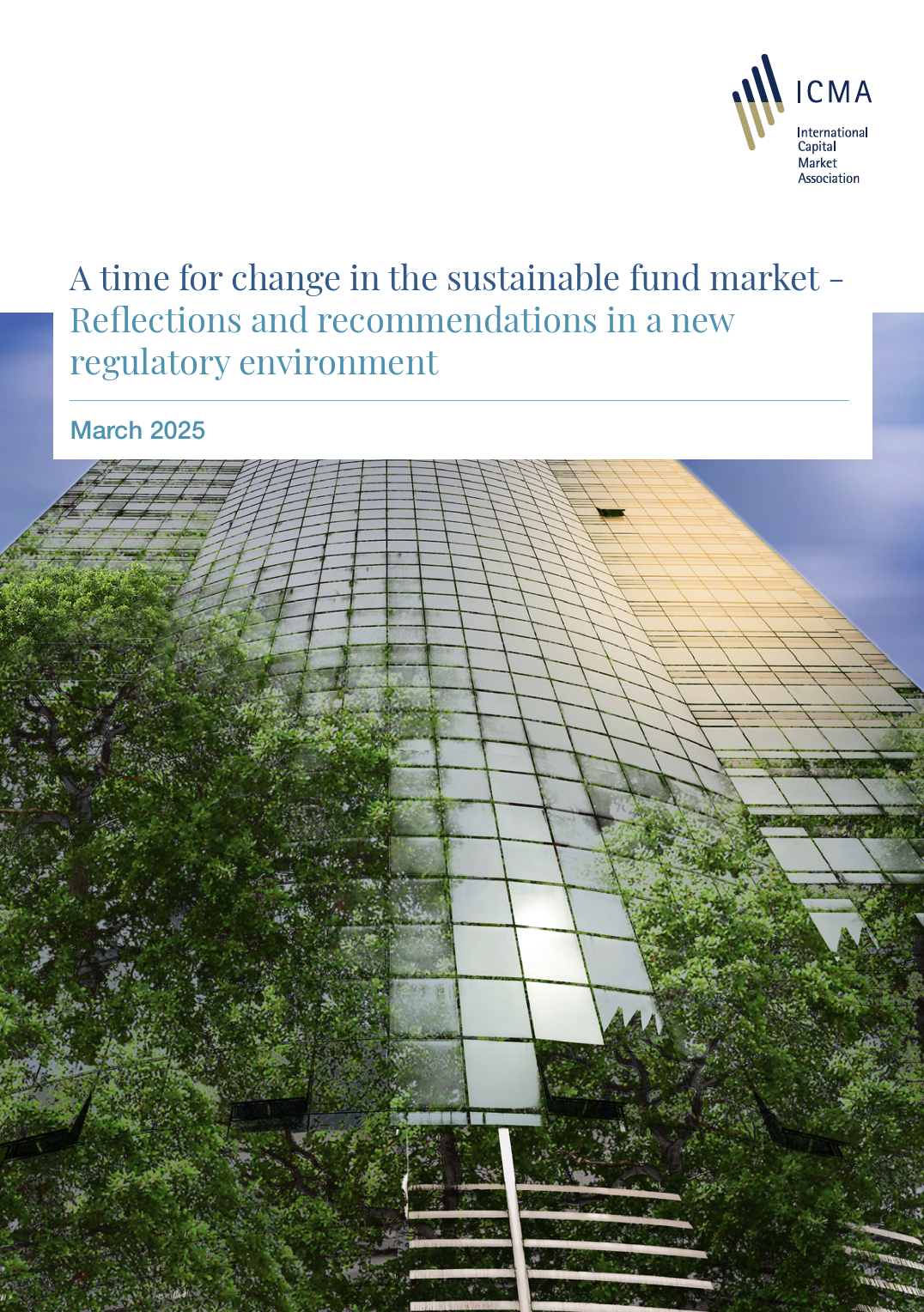
A time for change in the sustainable fund market: Reflections and recommendations in a new regulatory environment
The report examines recent regulatory shifts in Europe and the UK affecting sustainable funds. It outlines rebranding impacts, highlights inconsistencies in fund categorisation, and stresses the need for broader sustainability definitions beyond the EU Taxonomy to avoid constraining investment opportunities and to better accommodate transition-related financial products.
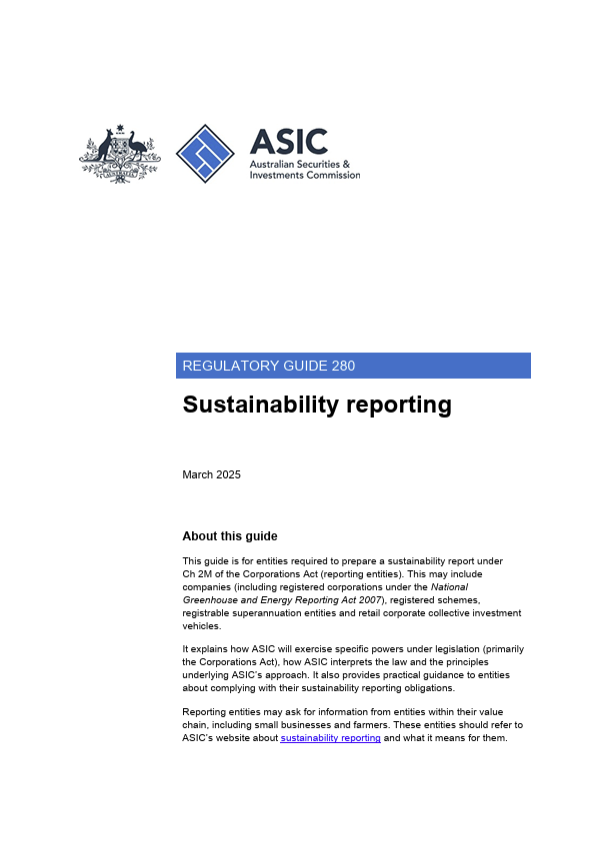
Regulatory guide (RG) 280: Sustainability reporting
ASIC’s Regulatory Guide 280 outlines the framework for sustainability reporting in accordance with ISSB Standards. It details expectations for listed and unlisted entities, implementation timelines, assurance requirements, and guidance on materiality, governance, and transition planning, aiming to improve transparency and consistency in climate-related and sustainability disclosures across Australia.
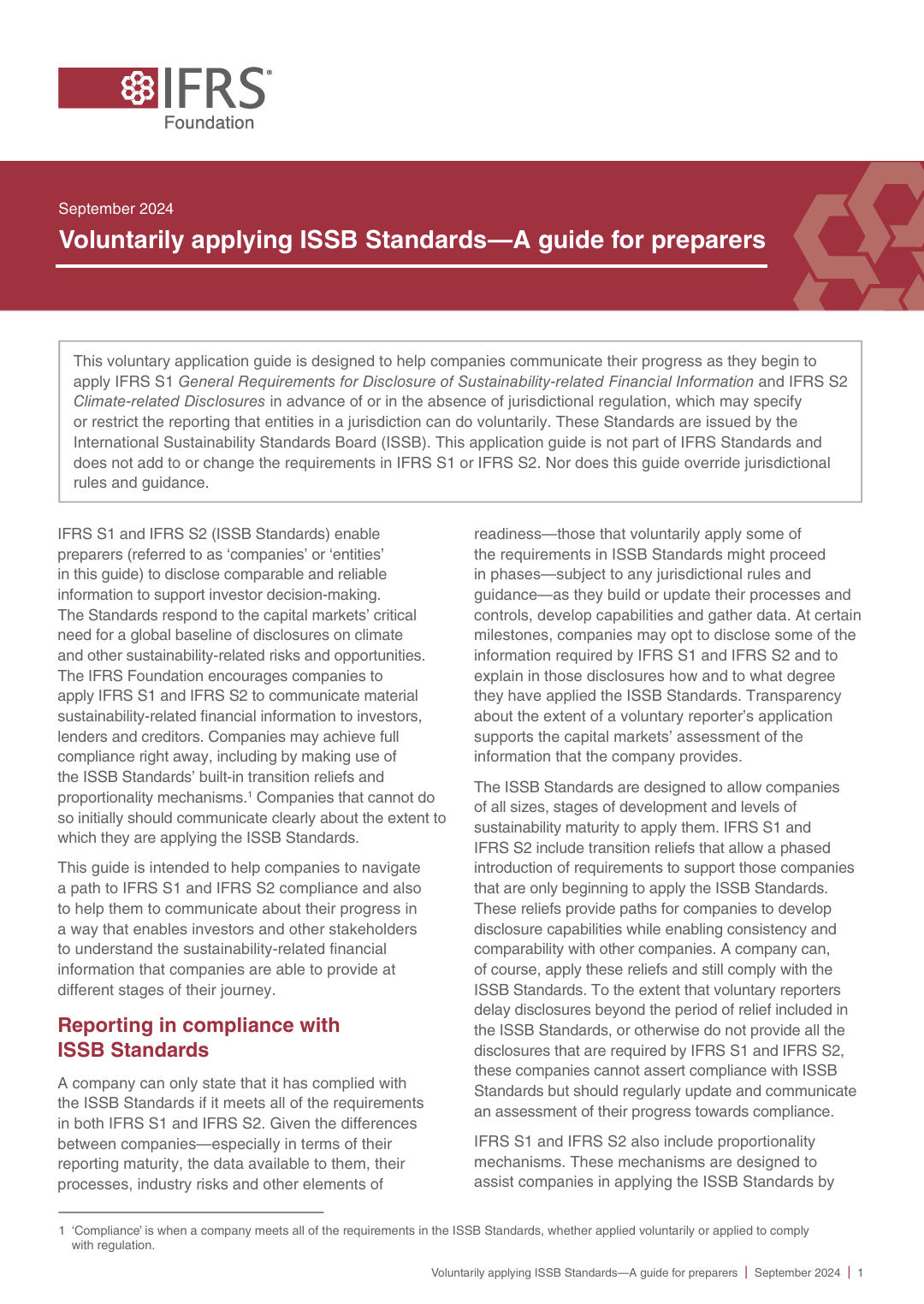
Voluntarily applying ISSB Standards—A guide for preparers
The guide assists entities in voluntarily adopting IFRS S1 and IFRS S2, facilitating consistent disclosure of sustainability-related financial information. It outlines transition reliefs and proportionality mechanisms to ease initial compliance challenges, aiding preparers in effectively communicating sustainability progress to investors and stakeholders regardless of jurisdictional regulations.
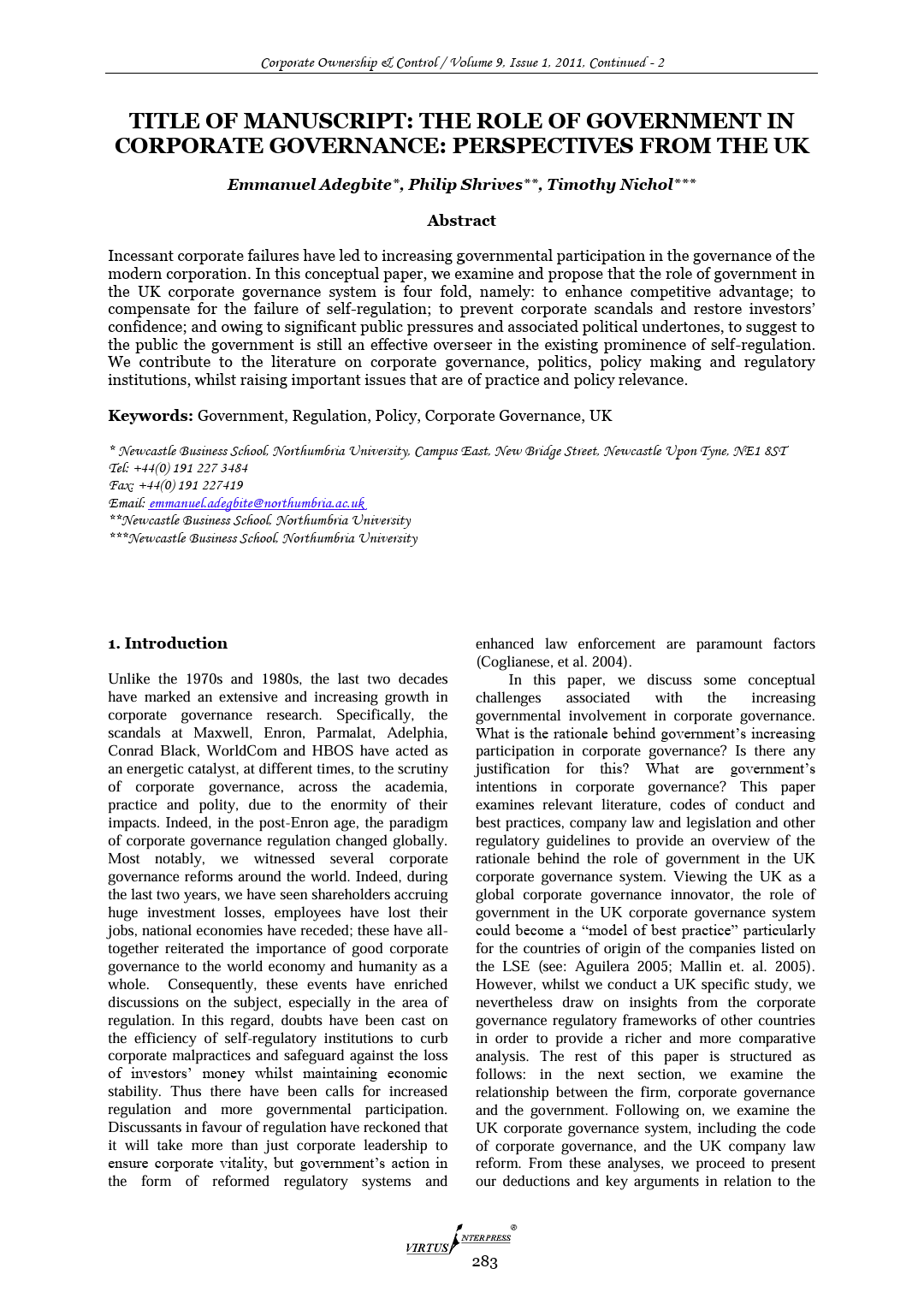
The role of government in corporate governance: Perspectives from the UK
The report examines the UK government's role in corporate governance, identifying four key functions: enhancing competitive advantage, compensating for self-regulation failures, preventing corporate scandals, and reassuring the public of its oversight. It evaluates regulatory frameworks, corporate failures, and policy developments, highlighting implications for governance, politics, and economic stability.

EU taxonomy navigator
The EU Sustainable Finance Taxonomy is a classification system that defines environmentally sustainable economic activities. It helps investors, companies, and policymakers assess sustainability performance and align financial flows with climate and environmental objectives. The tool supports transparency and comparability in sustainable finance, aiding compliance with EU sustainability regulations.


