

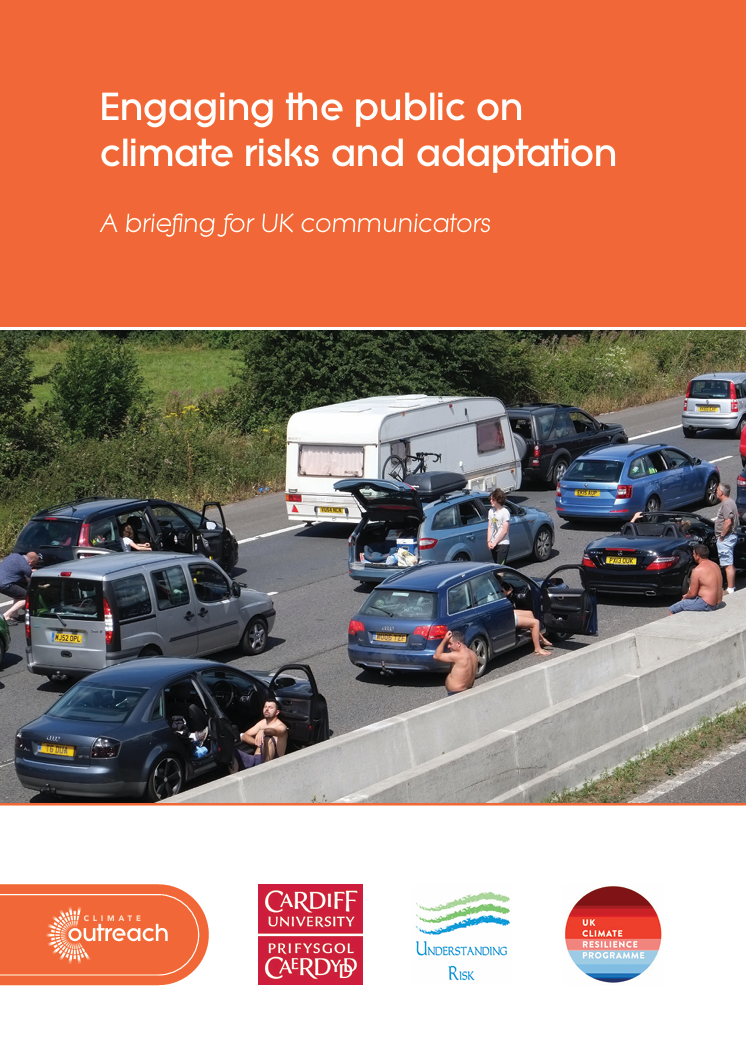
Engaging the public on climate risks and adaptation: A briefing for UK communicators
This briefing summarises UK public attitudes to climate risks and adaptation, highlighting rising concern, strong policy support, and the importance of communication strategies. It emphasises linking climate impacts to lived experience, health, and values to strengthen public engagement and support for adaptation and mitigation.
Please login or join for free to read more.

OVERVIEW
Seven recommendations for communicators and practitioners working to engage the public on climate risks and adaptation
The report synthesises RESiL RISK survey findings into seven evidence-based recommendations for improving public engagement on climate risks and adaptation. It highlights rising concern, strong policy support, and the need to align communication with public values, lived experiences, and practical solutions to build a social mandate for adaptation.
Climate change concern is at an all-time high, and adaptation policies are supported across the political spectrum
Climate concern has increased significantly in the UK, with over 85% recognising human causes and climate change ranked among top national issues. Adaptation policies attract over 75% support and show minimal political division. These conditions provide a favourable baseline for communication and policy development.
Climate impacts are increasingly salient, with a surge in concern around extreme heat
Public concern about heatwaves has risen sharply, with over 70% expecting increased frequency by mid-century compared with 42% in 2013. Around 70% report personal experience of heat discomfort. Communicators should use shared experiences to highlight risks and connect local and global climate impacts.
Climate change is getting ‘closer to home’
Perceived psychological distance is declining, with more people recognising present-day impacts. Around 60% support declaring a climate emergency. Engagement should emphasise relevance to daily life, connect to shared values, and demonstrate practical adaptation actions to build confidence and collective efficacy.
Framing messages – Concerns about mitigation and adaptation reinforce each other
Support for mitigation and adaptation is closely linked, with around half favouring equal prioritisation. There is little evidence that discussing adaptation reduces support for emissions reduction. Communication should avoid technical terms and instead focus on clear, practical outcomes that integrate both approaches.
Health risks, wellbeing and adaptation
Health and wellbeing are prioritised in adaptation policy preferences, with emphasis on protecting vulnerable groups and maintaining essential services. Communication should link climate impacts to health risks such as heat stress, air pollution, and mental health effects, while addressing low public awareness through clear explanations.
Climate conversations need to go beyond discussions of emissions targets
Adaptation is tangible and locally relevant, making it suitable for public dialogue and citizen engagement. The report highlights the importance of incorporating fairness and equity considerations, particularly as vulnerable communities face greater risks. A “just adaptation” approach should complement mitigation-focused transitions.
From concern to commitment – Deepening public engagement on climate change
Despite increased concern, deeper engagement remains limited. Indicators such as environmental identity and moral concern have not significantly improved since 2016. Communication should therefore focus on aligning climate issues with values, identity, and social norms to translate concern into sustained commitment.
Conclusion
Effective engagement requires integrating social science insights into communication and policy. Linking climate risks to shared values, health, and lived experience can strengthen engagement. Collaboration between researchers, communicators, and policymakers is essential to embed adaptation in public discourse and support long-term resilience planning.




