

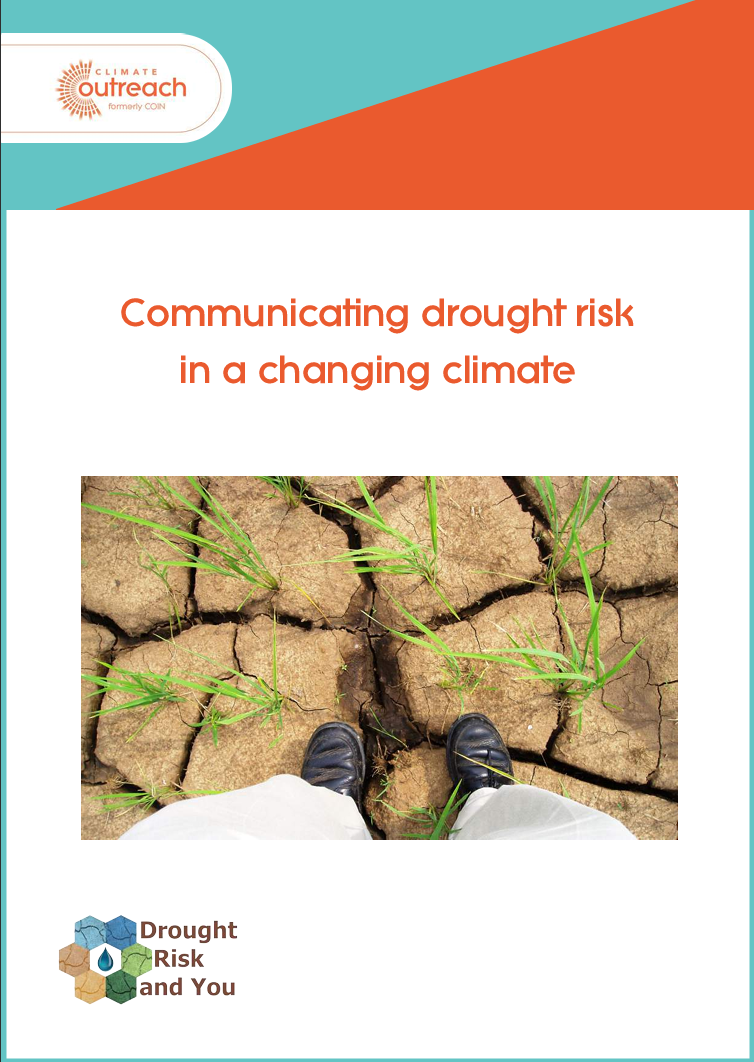
Communicating drought risk in a changing climate
Examines public perceptions of drought risk and provides evidence-based guidance for communicating climate-related drought in the UK. Emphasises audience values, narratives, trusted messengers, and linking local impacts to broader climate change to improve engagement and support for adaptation measures.
Please login or join for free to read more.

OVERVIEW
Introduction
This report summarises research on communicating drought risk in a changing climate, focusing on the UK. It examines challenges in engaging the public on drought relative to other climate risks and provides evidence-based guidance to improve communication effectiveness by integrating scientific insights with audience values and community knowledge.
How does the public perceive drought risks?
While many recognise that climate change may increase drought frequency and intensity, concern about drought is lower than for flooding. Survey evidence shows only 6% cited hot or dry weather as a reason for concern, compared with 26% referencing flooding or heavy rain. Public concern is therefore uneven and influenced by recent experiences, though there is broad support for climate adaptation investment regardless of beliefs.
The role of timing in shaping perceptions of drought risk
Perceptions of drought risk are strongly shaped by timing. Research conducted shortly after major flooding events shows heightened concern for floods rather than drought. This temporal bias highlights the importance of aligning communication with current public experiences and framing drought within wider climate variability, including links between drought and flooding cycles.
Principles for communicating drough trisks in a changing climate
There is no single effective communication strategy. Scientific information alone is insufficient; engagement improves when messages align with audience values and are conveyed through clear narratives. Communicators should recognise different types of drought and ensure audiences understand them consistently.
Narratives are critical for engagement, combining relatable stories with scientific accuracy. Visuals can support communication but should balance impact with clarity, avoiding disengagement. Local framing increases relevance, though excessive localisation may reduce perceived broader importance.
Trusted messengers, including peers and community representatives, are more effective than distant authorities. Messages linking drought to tangible impacts, such as health or water availability, enhance relevance.
Communications should prioritise solutions and co-benefits rather than fear-based messaging, which can backfire. Managing uncertainty is essential: emphasising known risks and likelihoods is more effective than focusing on unknowns. Framing drought within broader climate risks and highlighting actionable steps supports engagement and behavioural change.
Practical guides from water companies
Water companies provide applied examples of drought communication. Effective approaches include early engagement before water restrictions are introduced, helping customers understand water management challenges and encouraging conservation behaviours. Ongoing communication, clear messaging, and collaboration with stakeholders are key to building trust and ensuring public receptiveness to necessary measures.
Conclusions
Drought remains a relatively low-salience risk for the public, presenting communication challenges. However, there is strong support for protecting economic activities, such as food production, from climate impacts.
Effective communication requires understanding audience values, using narratives and visuals, selecting trusted messengers, and balancing local and global framing. Emphasising actionable solutions, co-benefits, and clear risk information improves engagement, while avoiding overemphasis on uncertainty or fear. These principles are applicable to broader climate risk communication.




