

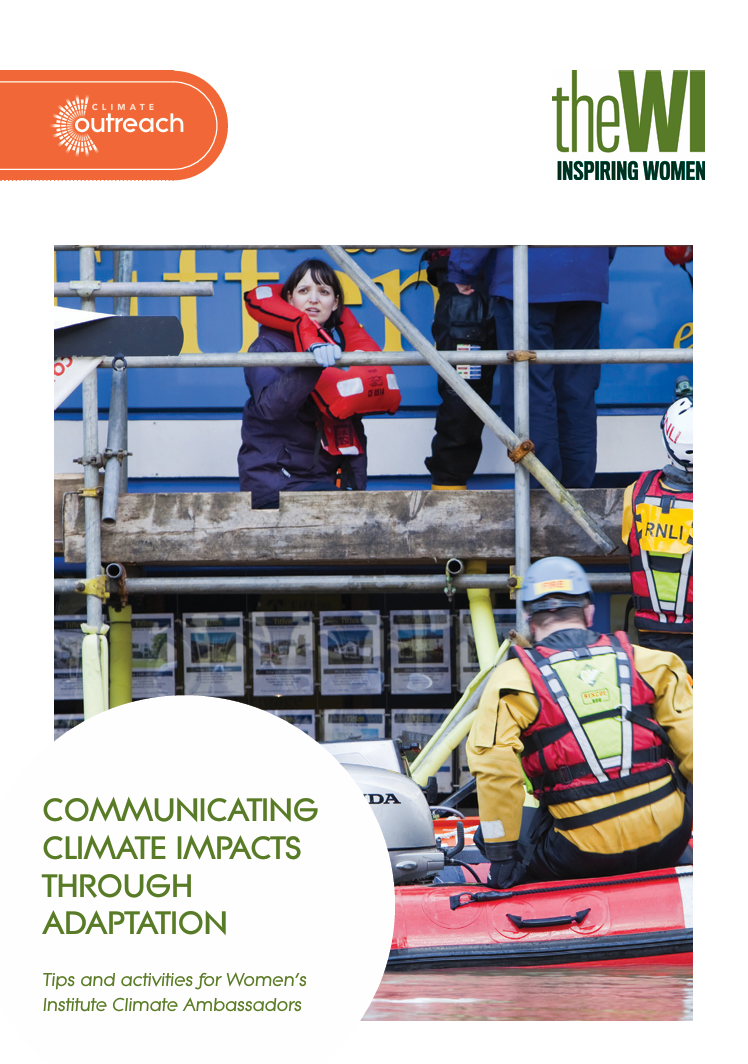
Communicating climate impacts through adaptation: Tips and activities for women's institute climate ambassadors
Guide outlines evidence-based strategies for communicating climate impacts through adaptation, emphasising values-led narratives, trusted messengers, and relatable imagery. It provides practical activities and case studies enabling community engagement on risks such as flooding, drought and heatwaves, encouraging locally relevant, action-oriented responses.
Please login or join for free to read more.

OVERVIEW
About climate outreach and the WI and their climate ambassadors
The report is produced by Climate Outreach, a research organisation specialising in climate communication, in collaboration with the Women’s Institute (WI). It targets WI Climate Ambassadors, a UK-based volunteer network engaging communities on climate change. The guidance draws on 15 years of research and stakeholder engagement, supported by academic input and workshops with approximately 80 ambassadors.
How to communicate climate impacts – A guide
The report emphasises that effective climate communication should be values-led rather than data-driven. Evidence shows people respond more to narratives aligned with their identities, emotions and values than to abstract statistics. Messages should connect climate impacts to immediate concerns such as children, wildlife and vulnerable populations.
It recommends combining risk information with practical actions to avoid disengagement caused by fear. Communication should use narrative structures (beginning, problem, resolution), trusted messengers with shared identity, and clear statements of scientific consensus (e.g. 97% agreement on human-caused climate change). Visual communication should prioritise relatable, human-centred imagery rather than distant symbols like polar bears.
Communicating climate impacts – Ideas for activities
The report provides practical, community-based activities to communicate climate impacts while encouraging adaptation. These activities focus on UK-specific risks including flooding, droughts and heatwaves, and are designed to be participatory and locally relevant.
For droughts, projections indicate increasing severity, with a quarter of England’s rivers at risk of drying and potential water shortages within 25 years. Activities include citizen science initiatives such as recording seasonal changes (e.g. Nature’s Calendar) and wildlife gardening to support biodiversity under stress. These actions aim to raise awareness and enable local adaptation.
Flood-related activities address rising risks from increased rainfall and sea-level rise. Data indicates 5.2 million households in England are at risk, yet fewer than 10% recognise this. Recommended actions include developing community flood plans and implementing natural flood defences such as tree planting, which can reduce flood levels by up to 20%. These activities integrate local knowledge and collective action.
For heatwaves, the report highlights increasing frequency and severity, with vulnerable groups such as older people and children most at risk. The 2003 European heatwave caused 70,000 deaths, and recent UK summers have been among the hottest on record. Suggested actions include community awareness campaigns and support systems for vulnerable populations, using public health guidance.
Case study: The impact of a WI climate ambassador
A case study demonstrates how local engagement can influence policy and community awareness. A WI ambassador initiated meetings with a Member of Parliament, leading to ongoing dialogue, public events, and increased political attention to climate issues. This illustrates the effectiveness of trusted local actors in driving both behavioural and institutional change.
Tips for running a successful event
The report provides operational guidance for organising community events. Key recommendations include leveraging trusted relationships, using local media, clearly communicating benefits, and ensuring accessibility. Practical considerations such as venue suitability, timing, participant engagement formats, and provision of refreshments are highlighted to maximise attendance and impact.
Useful additional resources and appendix
The report outlines actions supporting mitigation alongside adaptation. High-impact behavioural changes include reducing car use (1,000–5,300 kg CO₂e annually), avoiding flights (700–2,800 kg), adopting plant-based diets (300–1,600 kg), and improving household energy efficiency. It also emphasises the role of civic engagement in influencing systemic change.
The appendix confirms the guidance is evidence-based, combining academic research with practitioner experience. It distinguishes between mitigation (reducing emissions) and adaptation (responding to impacts), noting that the report primarily focuses on adaptation while also supporting behavioural change.




