
Library | Sustainable Finance Practices
Effective communication and greenwash
Tools and strategies for transparent communication on sustainability performance, with guidance on identifying and preventing greenwashing and advancing consumer education and financial literacy.
Team Altiorem recommends


Refine
121 results
REFINE
SHOW: 16


Taskforce on official standards and the Green Bond Principles. Phase 1: Comparison of the Green Bond Principles and the European Green Bond Standard
This report compares the voluntary Green Bond Principles with the regulatory European Green Bond Standard. It identifies high proximity and synergy between the frameworks, providing guidance on how issuers can navigate both sets of requirements to enhance transparency and facilitate global investor recognition in the sustainable finance market.
Greenwashing as aspirational signaling: From burden to benefit?
This research analyses the transition of sustainability disclosures from voluntary practices to mandatory legal frameworks in the US and EU. It examines the 'greenwashing enforcement gap' and argues that aspirational signalling, despite inaccuracies, can drive institutional change and attract a prosocial workforce to improve corporate conduct.
Guidance for voluntary climate change mitigation
This guidance outlines expectations for voluntary climate change mitigation in New Zealand. It details six core principles for high-integrity carbon credits, including additionality and permanence. It distinguishes between contribution and exclusive-use claims and clarifies the role of the New Zealand Emissions Trading Scheme and Nationally Determined Contributions.
Limited impacts of shareholder pressure on climate strategy of fossil firms
This research examines shareholder pressure on US fossil fuel firms’ climate strategies. Using NLP to analyse 10-K filings and SEC regulatory changes, it finds limited impact on substantive reforms. Firms often employ symbolic disclosures or procedural tactics to resist decarbonisation, suggesting that mandatory policy is required for transition.
Oxford-GlobeScan global corporate affairs survey series
This benchmark series provides an overview of opinions, trends, and challenges within the corporate affairs function. Produced annually, the research captures insights from senior professionals globally to track the evolution of the corporate affairs agenda, focusing on reputation, sustainability, geoeconomics, and stakeholder engagement.
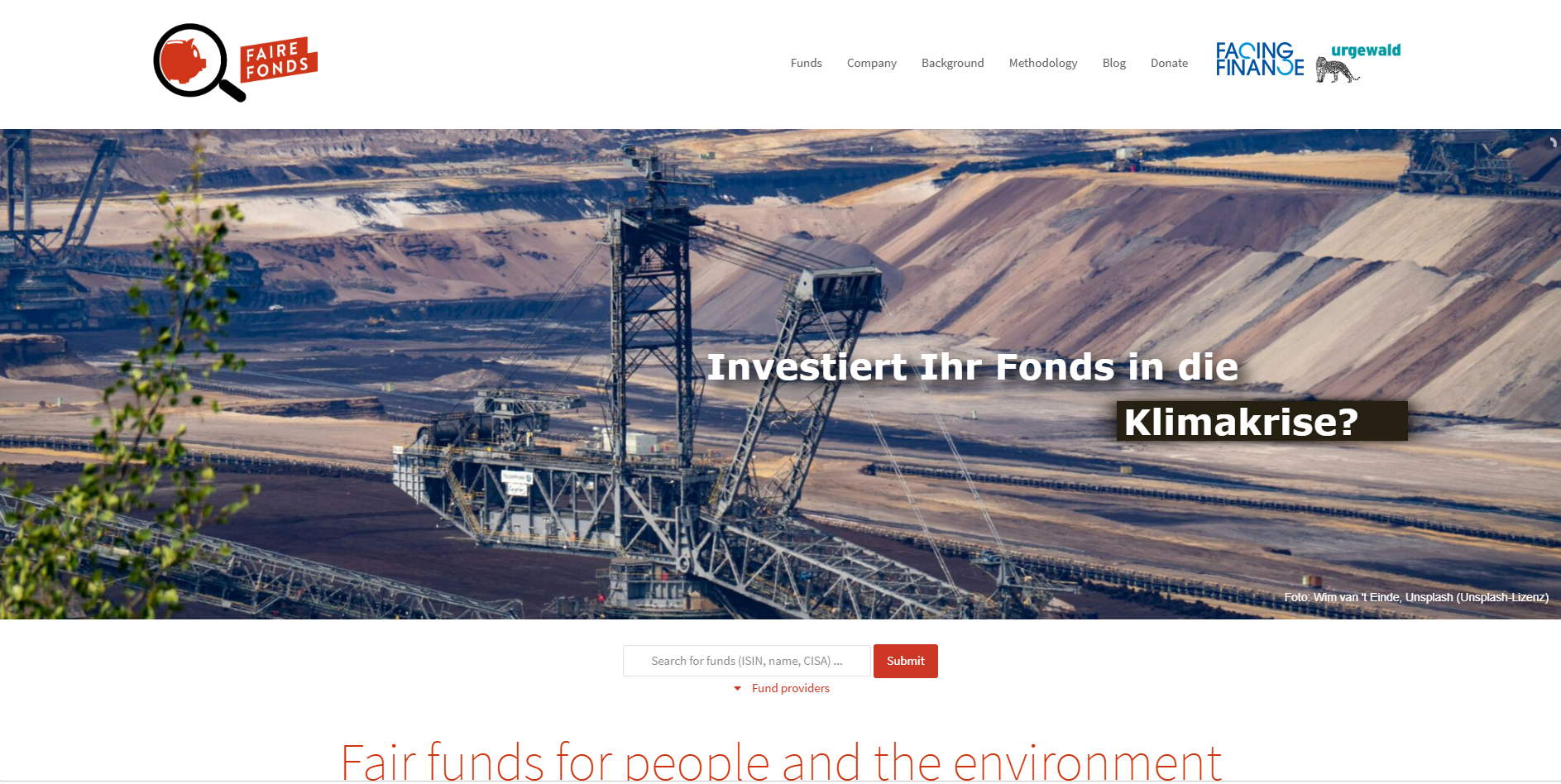
Faire Fonds Database
The Faire Fonds Database is a screening tool from Facing Finance and urgewald that analyses thousands of retail funds for controversial holdings. It identifies exposure to sectors like fossil fuels and weapons while highlighting potential greenwashing in ESG-labelled products.
What do sustainability disclosures disclose?
This research analyses over 15,000 sustainability disclosures from Russell 3000 firms. It finds that while reporting has surged since 2015, informative quality has declined. Adoption of voluntary standards yields mixed results, correlating with reduced 'fluff' but lower narrative specificity. Improvements primarily reflect selection effects rather than organisational learning.
Seeing the goal, missing the truth: Human accountability for AI bias
Research demonstrates that Large Language Models exhibit purpose-conditioned bias when informed of downstream tasks. Goal-aware prompting leads to in-sample overfitting and inflated performance before knowledge cutoffs. Results indicate that disclosing objectives compromises neutrality, necessitating the separation of measurement and evaluation in AI-assisted workflows to ensure statistical validity.
Climate-related disclosures: Insights from our reviews 2026
This Financial Markets Authority report reviews 62 climate statements from the second reporting period in Aotearoa New Zealand. It identifies improvements in reporting structures but highlights gaps in physical risk analysis and assurance compliance. Future monitoring will focus on education to improve data substantiation and risk disclosure quality.
ICMA's guidance handbooks series
This guidance series provides a comprehensive set of questions and answers regarding the application of the Green Bond Principles, Social Bond Principles, Sustainability Bond Guidelines, and Sustainability-Linked Bond Principles. It serves as a benchmark series for the sustainable bond market, promoting transparency and standardisation across various financial debt instruments.
Environmental claims, climate promises, and ‘greenwashing’ by meat and dairy companies
This research examines environmental claims from 33 major meat and dairy companies. It finds that 98% of 1,233 identified claims constitute greenwashing. While most claims are climate-related, many are unverifiable future promises lacking scientific evidence. The industry’s sustainability reporting often mimics tactics used by the fossil fuel sector.
The emancipatory potential of biodiversity reporting: Evidence from the United Kingdom and South Africa
This research evaluates the emancipatory potential of biodiversity reporting within the United Kingdom and South Africa. Analysing disclosures from 2018 to 2022, it finds significant increases in reporting intensity. The study presents a principles-based framework to distinguish between compliance-oriented disclosures and transformative, action-oriented environmental reporting.

Rate the raters series
Rate the Raters is a benchmark series by the ERM Sustainability Institute tracking corporate perceptions of ESG rating agencies. It examines quality, usefulness, trust, and engagement with ESG raters across regions and industries, offering a longitudinal view of the evolving ESG ratings landscape for companies and investors.
Ratings insights: Understanding the global green bond index
Sustainable Fitch maps its framework and entity-level ratings to the Bloomberg MSCI Global Green Bond Index, covering 88% of index bonds. While index constituents show stronger framework quality and ICMA alignment than the broader market, many high-quality and transition-relevant bonds sit outside the benchmark due to financial eligibility constraints.
Credible climate financing and fossil fuel phase-out commitments are possible but remain marginal amongst major financial institutions
WBA's analysis of 400 major financial institutions finds that transition planning is emerging but capital allocation to low-carbon solutions and fossil fuel phase-out commitments remain marginal. Only two institutions demonstrate robust fossil-fuel restrictions, and low-carbon activities account for an average of just 2.7% of total financed activities globally.
Ethical & impactful usage of AI
This report by Do Harvey outlines an ethical framework for AI usage, highlighting environmental impacts, security risks, and bias concerns. It advocates for transparent, client-opt-in adoption underpinned by human oversight, and summarises five modes of AI use to guide teams in making values-aligned, informed decisions.


