
Library | Tag
case studies
Refine
649 results
REFINE
SHOW: 16


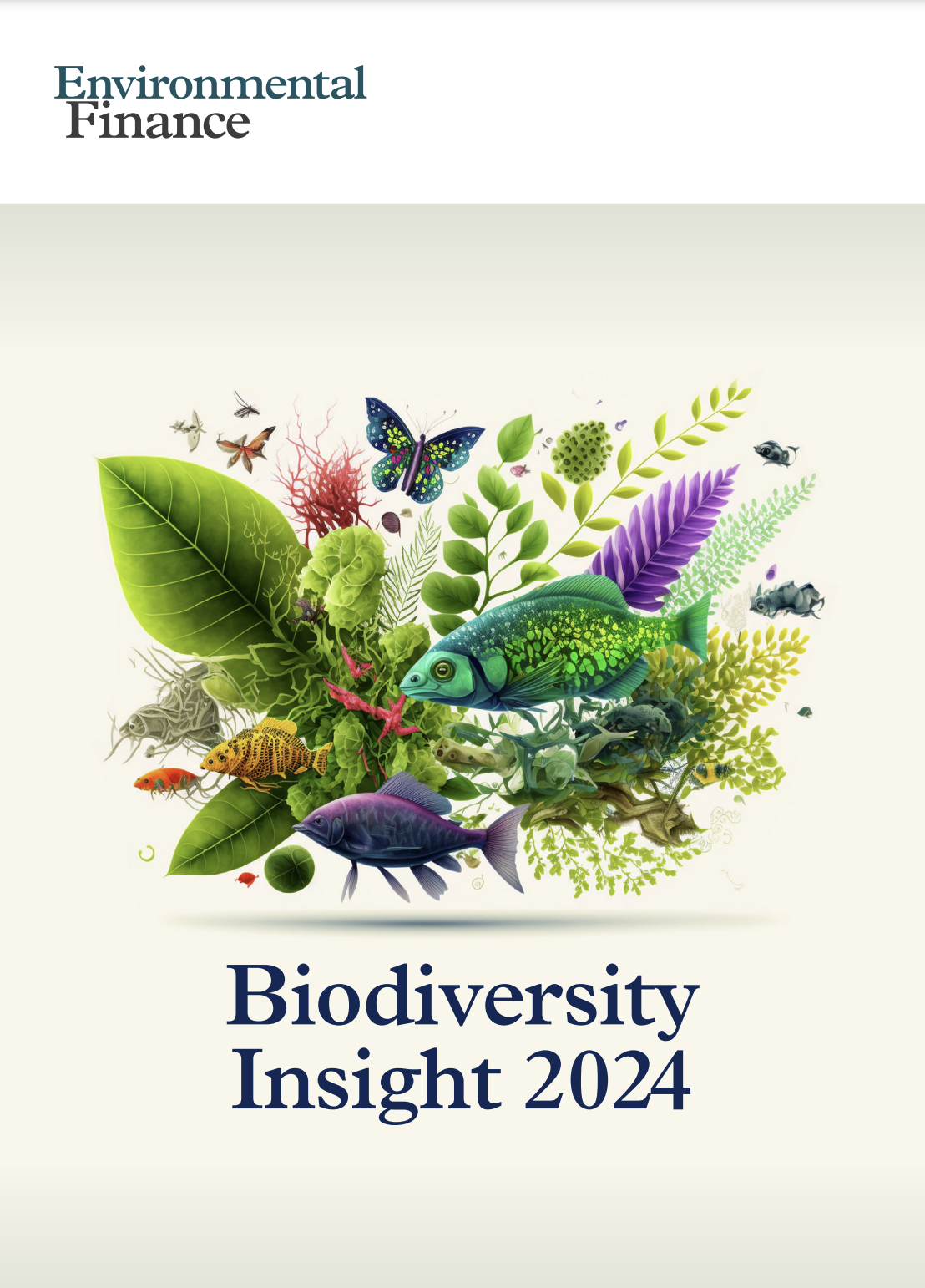
Environmental Finance's biodiversity insight series
This series explores the evolving role of biodiversity in sustainable finance, investment strategies, and regulatory developments. It examines biodiversity risk, natural capital investment, reporting frameworks, and financial instruments supporting conservation efforts. The series provides insights into emerging market mechanisms, data challenges, and the integration of biodiversity considerations into financial decision-making.
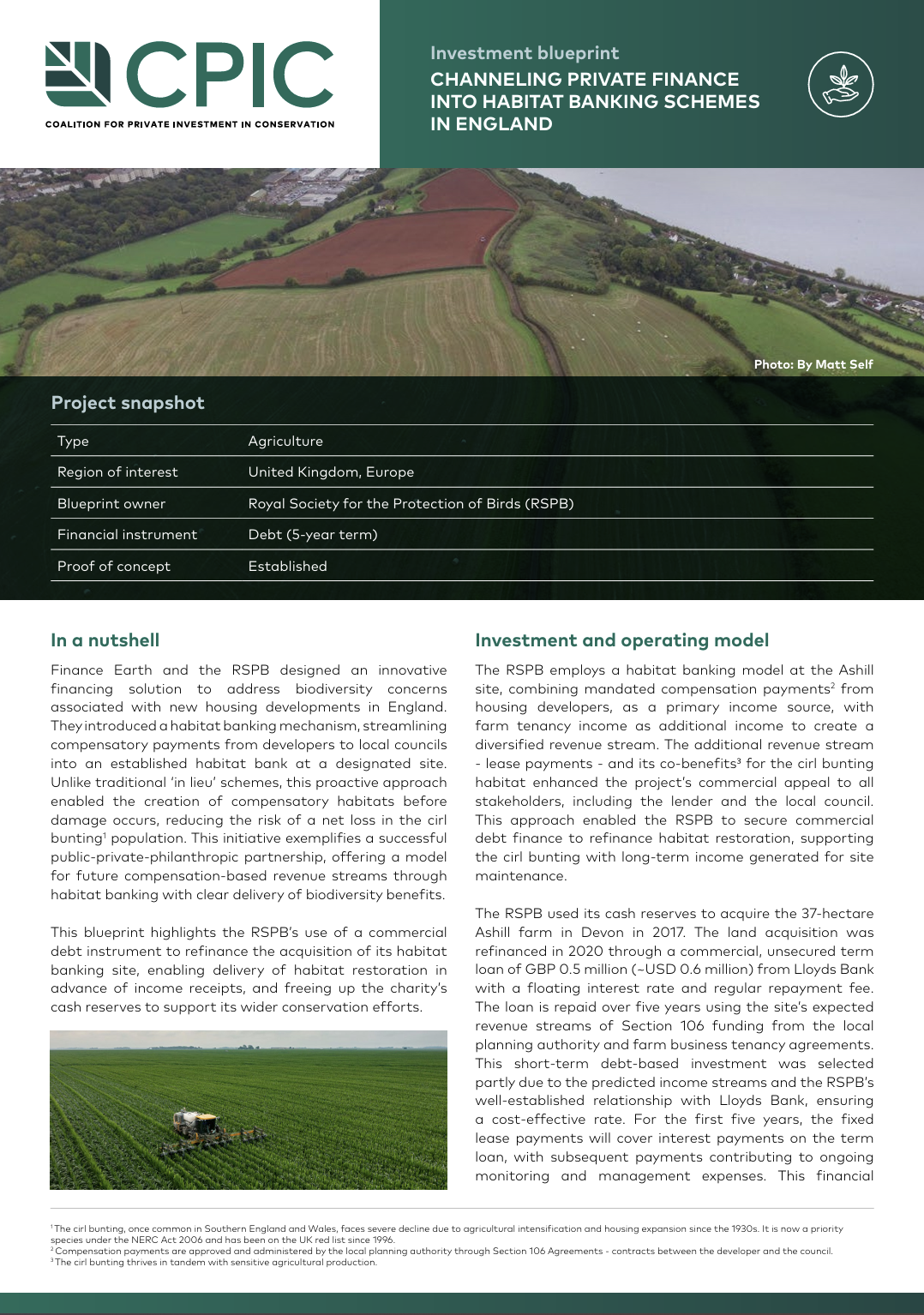
Channeling private finance into habitat banking schemes in England
This case study outlines the use of hybrid bonds to finance organic dairy farms. It provides investors with insights into sustainable agriculture investments that promote environmental stewardship and offer attractive financial returns.
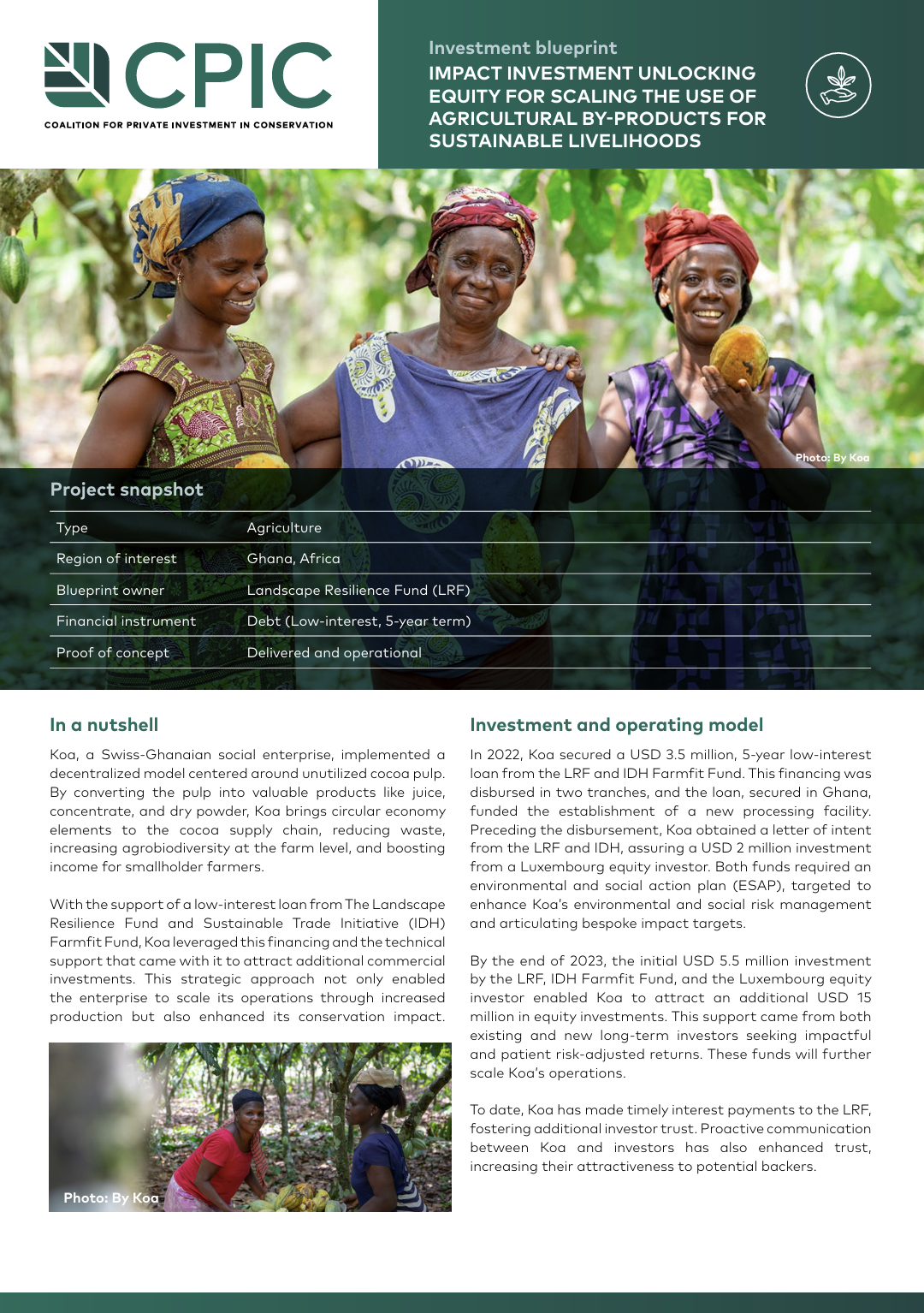
Impact investment unlocking equity for scaling the use of agriculture by-products for sustainable livelihoods
This blueprint provides a model for using private finance to develop compensatory habitats through habitat banking. It demonstrates how investors can generate returns while contributing to biodiversity conservation and habitat restoration.
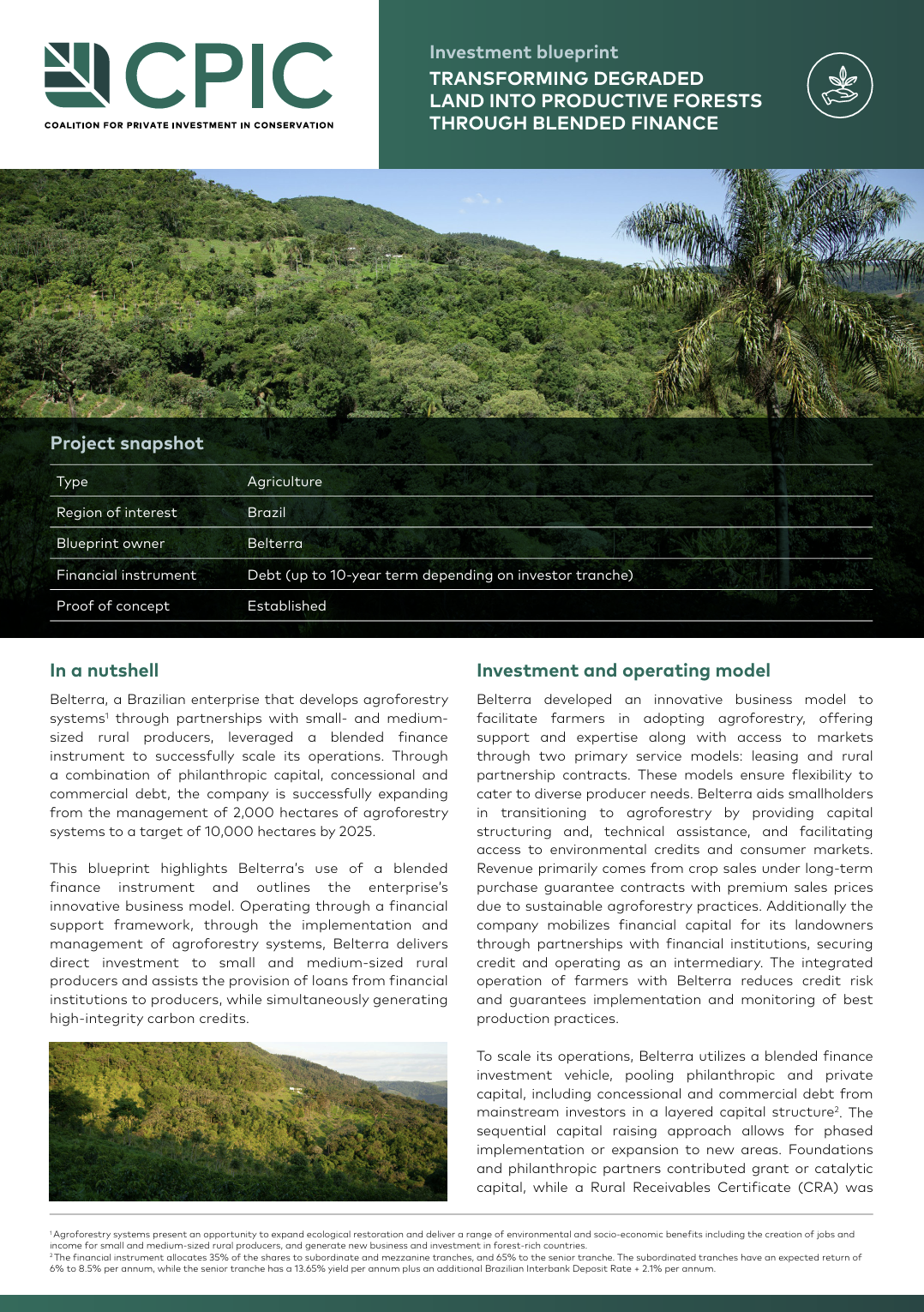
Investment blueprint: Transforming degraded land into productive forests through blended finance
This case study offers a blueprint for impact investment in sustainable cocoa supply chains. It highlights strategies for improving environmental and social outcomes in cocoa production, providing investors with opportunities to support sustainable agriculture while achieving financial returns.
Conservation investment blueprint: Forest Resilience Bond developed based on the case study of Blue Forest Conservation
This blueprint provides a model for using blended finance to support agroforestry projects. It illustrates how investors can combine public and private capital to develop sustainable agroforestry practices, achieving both economic and environmental benefits.
Conservation investment blueprint: Forest landscape conservation, restoration, and sustainable timber production
This blueprint contributes to the conservation and restoration of forest ecosystems – achieved by investors purchasing forests, or purchasing land and reforesting; with the express goal of sustainably managing those forests in adherence to relevant sustainability or management certifications.
Conservation investment blueprint: Nb community forestry
This blueprint outlines a community forestry project that sells timber sourced from small holding forestry plots and community collectives. It provides a fair price to primary producers and provides them with support to produce timber through the sustainable forestry management techniques, in accordance with FSC guidelines.
Conservation investment blueprint: Smallholder forestry vehicle - Kilifi, Kenya
This blueprint provides investors with a framework for supporting community forestry projects. It emphasises the role of community engagement in sustainable forest management, offering strategies to achieve both financial returns and conservation outcomes.
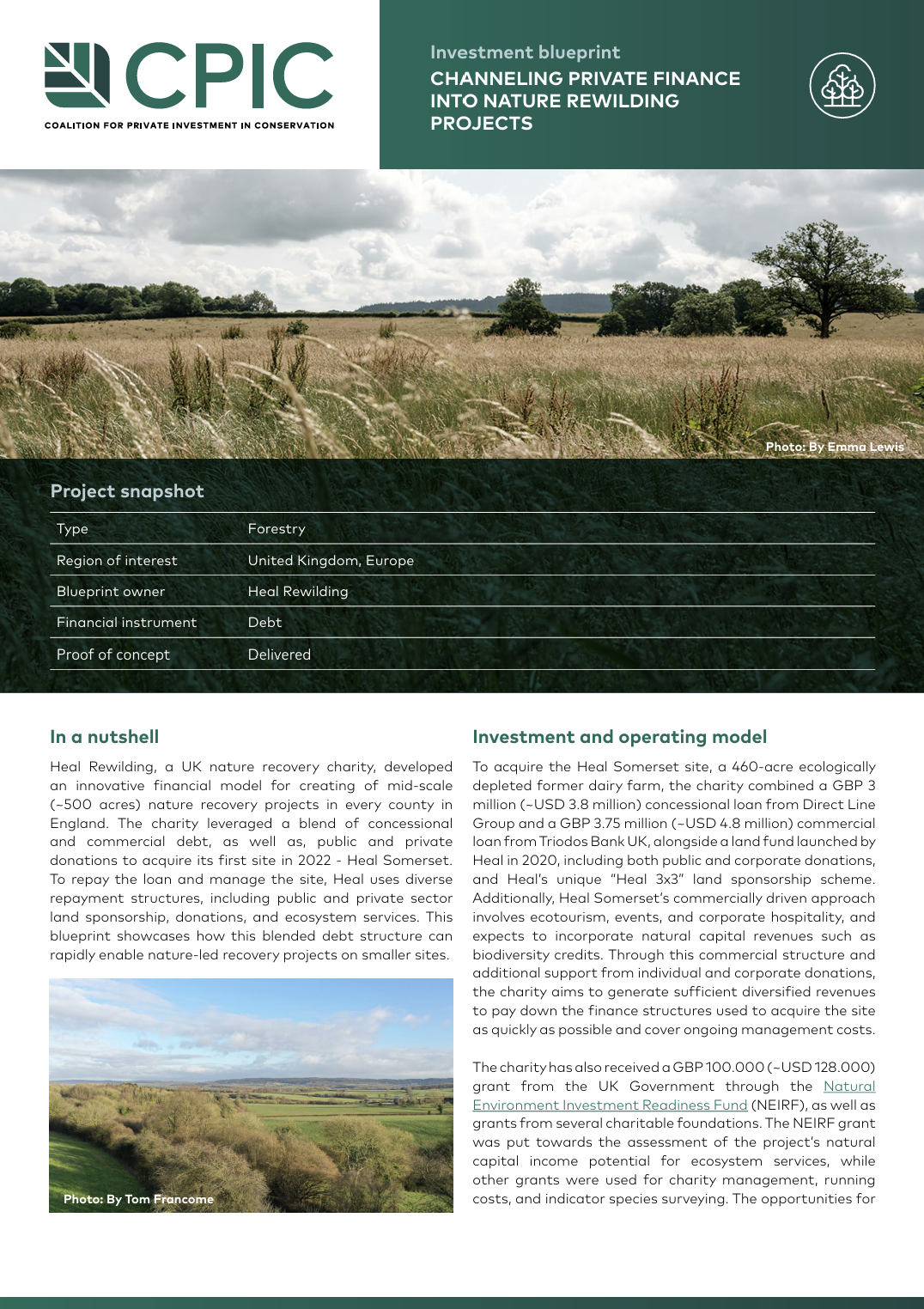
Investment blueprint: Channeling private finance into nature rewilding projects
This case study offers investors a blueprint for developing smallholder forestry projects. It highlights successful investment strategies that support sustainable forestry practices among smallholder farmers, promoting economic development and environmental conservation.
Bankable nature solutions
This report aims to support readers in understanding Bankable Nature Solutions (BNS) and start identifying and developing their own BNS project by providing Blueprints for Bankable Nature Solutions from across the globe to adapt to and mitigate climate change and to help our living planet thrive.
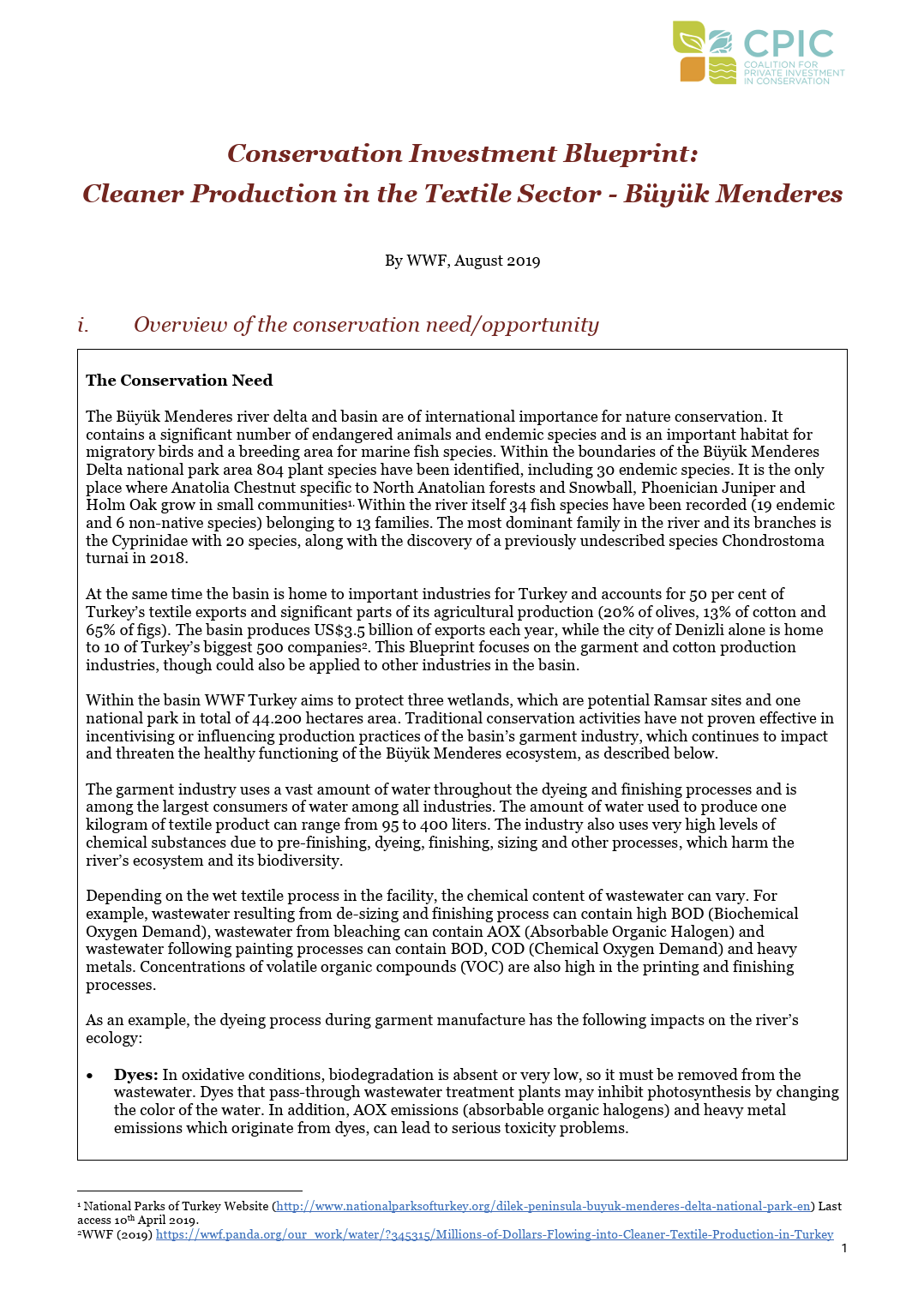
Conservation investment blueprint: Cleaner production in the textile sector - Büyük Menderes
The report outlines a conservation investment blueprint aimed at reducing water and chemical pollution in Turkey’s Büyük Menderes River Basin by improving cleaner production practices in the textile sector. It details financial models, stakeholder incentives, and replicability to enhance ecosystem health while maintaining industry competitiveness and regulatory compliance.
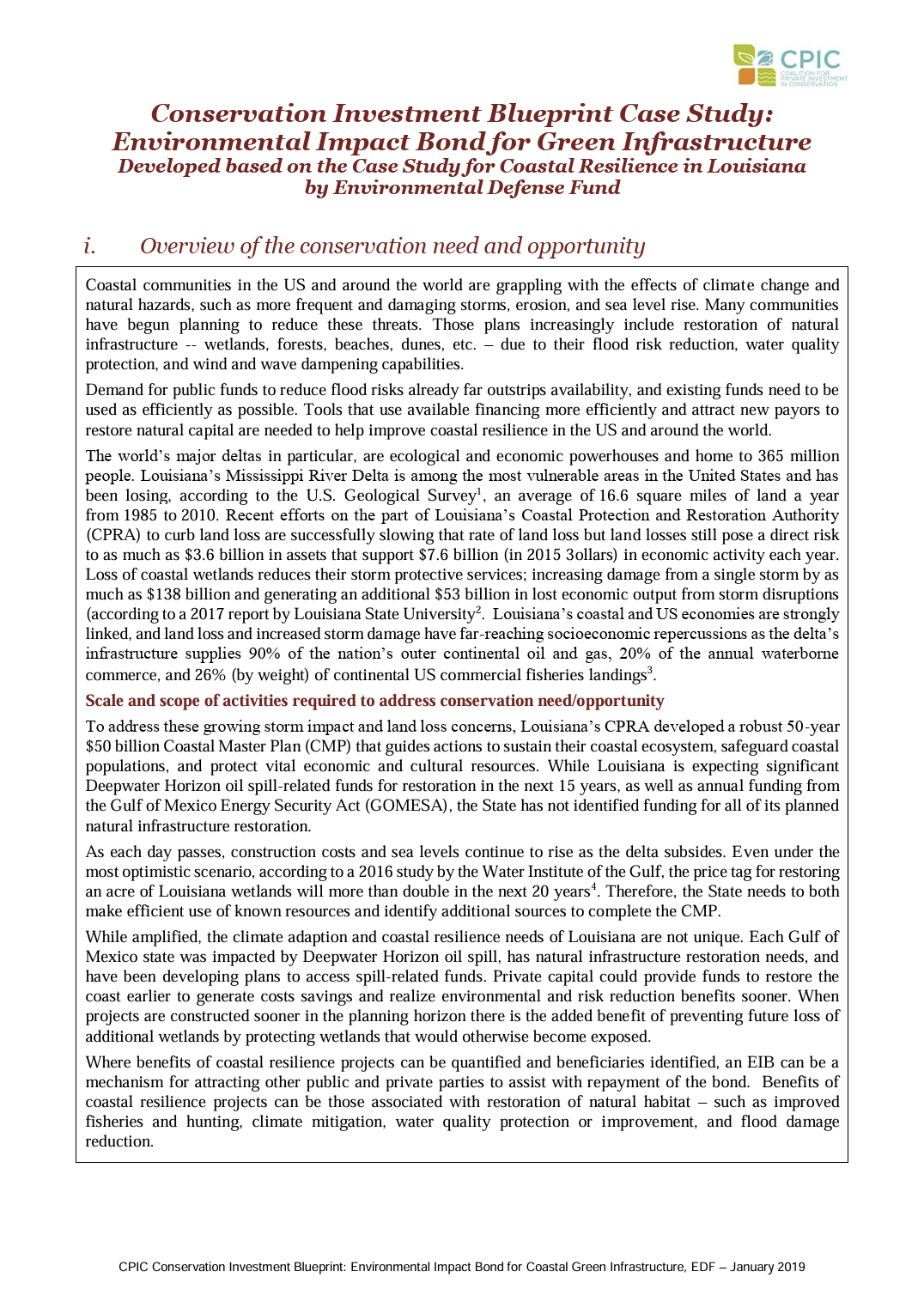
Conservation investment blueprint: Environmental impact bond for green infrastructure - coastal resilience
This case study outlines the Environmental Impact Bond (EIB) model for funding coastal resilience projects. It focuses on Louisiana’s wetland restoration to mitigate storm damage and land loss. The EIB attracts private investment, enabling earlier project implementation, cost savings, and ecological benefits. It aligns financial incentives with conservation goals through performance-based returns.
Environment, equity and just transition for emerging aviation fuels
The report analyses the environmental, equity, and just transition challenges of emerging aviation fuels. It highlights the sector’s carbon footprint, workforce impacts, and policy needs, advocating for transparent regulations, equitable resource distribution, and community engagement to ensure a sustainable and fair transition to low-emission aviation.

Conservation investment blueprint: Environmental impact bond for green infrastructure
This blueprint details the application of Environmental Impact Bonds (EIBs) to finance green infrastructure projects. It illustrates how EIBs can be used to attract private investment to public infrastructure projects that offer significant environmental benefits, such as enhanced stormwater management and increased urban resilience. The document provides a framework for structuring these bonds to ensure both financial returns and positive environmental outcomes.

Conservation investment blueprint: Public-private partnership for marine protected areas developed based on the case study of blue finance
The report outlines a conservation investment blueprint using public-private partnerships (PPPs) to manage marine protected areas (MPAs). Blue Finance structures collaborative management agreements and sustainable financing mechanisms to enhance marine biodiversity, support local economies, and improve climate resilience. The model combines impact investment, tourism revenues, and government collaboration for long-term MPA sustainability.

When the bee stings: Counting the cost of nature-related risks
In collaboration with the TNFD, and aligned with its newly released recommendations, BloombergNEF has examined 10 instances of companies suffering material financial losses, the threat of such losses and share price pressure from poorly handled interactions with nature. The case studies demonstrate the financial importance of a business understanding and managing its impacts and dependencies on the natural world.


