
Library | Location
Australia
Refine
479 results
REFINE
SHOW: 16


Our Watch: Change the story and key frameworks
Change the Story is an evidence-based national framework developed by Our Watch to guide the primary prevention of violence against women in Australia. It examines social, economic and cultural drivers of gender inequality and outlines coordinated actions across institutions and communities to address these underlying causes.
Our Watch
Our Watch is an Australian not-for-profit organisation leading primary prevention of violence against women and children. It promotes gender equality through research, frameworks, education and workplace programmes. Initiatives such as “Change the Story” support policy and practice change, helping organisations address drivers of gender-based violence across communities, workplaces and institutions.
Sectoral roadmaps as the backbone of transition planning: Linking NDCs, finance and the real economy
Sectoral roadmaps translate national climate targets into sector-specific decarbonisation pathways, guiding policy, investment and corporate transition plans. They align real-economy activity with finance, reduce uncertainty, and support risk assessment and capital allocation, strengthening the credibility and implementation of whole-economy transition planning.

Finding Nature
Finding Nature is an Australia-based sustainability and ESG community supporting professionals and organisations through expert programs, events and podcasts. It fosters connection, knowledge-sharing and practical action to address climate, social and environmental challenges, helping participants build capability, drive culture change and achieve meaningful sustainability impact.
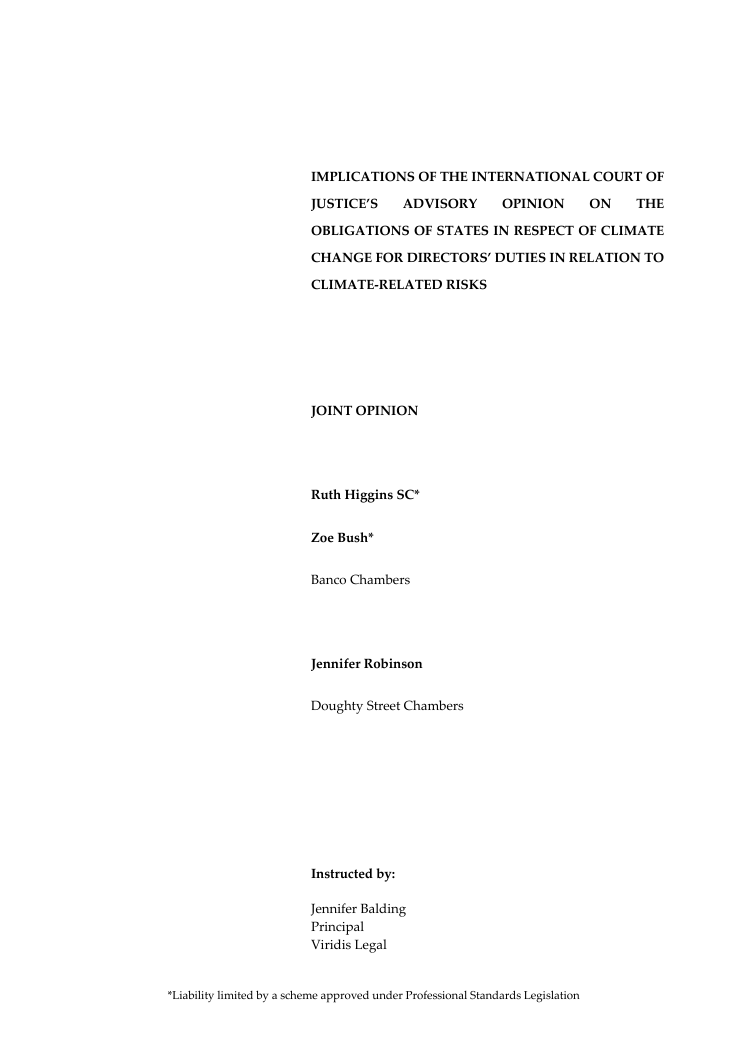
Implications of the International Court of Justice’s Advisory Opinion on Climate Change for directors’ duties in relation to climate-related risks
Examines how the ICJ’s climate advisory opinion may elevate climate-related risks and regulatory pressures, increasing directors’ duty of care. Highlights litigation, disclosure, and transition risks, particularly for emissions-intensive sectors, and emphasises informed decision-making and accurate reporting to mitigate liability.
Forever wild series
This series outlines the Forever Wild Initiative’s approach to financing and managing large-scale wilderness landscapes through blended capital models, community co-design, and nature-based enterprises. It documents the development of equitable nature finance structures that integrate conservation, economic activity, and social outcomes across landscapes.

Forever Wild
Forever Wild is an Australian initiative focused on protecting large wilderness landscapes through nature finance and community-based solutions. It develops investment models that support biodiversity, Indigenous communities and sustainable livelihoods, while promoting conservation, climate action and nature-based enterprise across globally significant ecosystems.
Framing and language for effective climate conversations
Guide outlines how framing and language influence climate engagement, especially among ‘middle ground’ audiences. It emphasises aligning messages with shared values, avoiding polarising or technical language, and using practical, relatable framing to build support for emissions reduction and climate action.
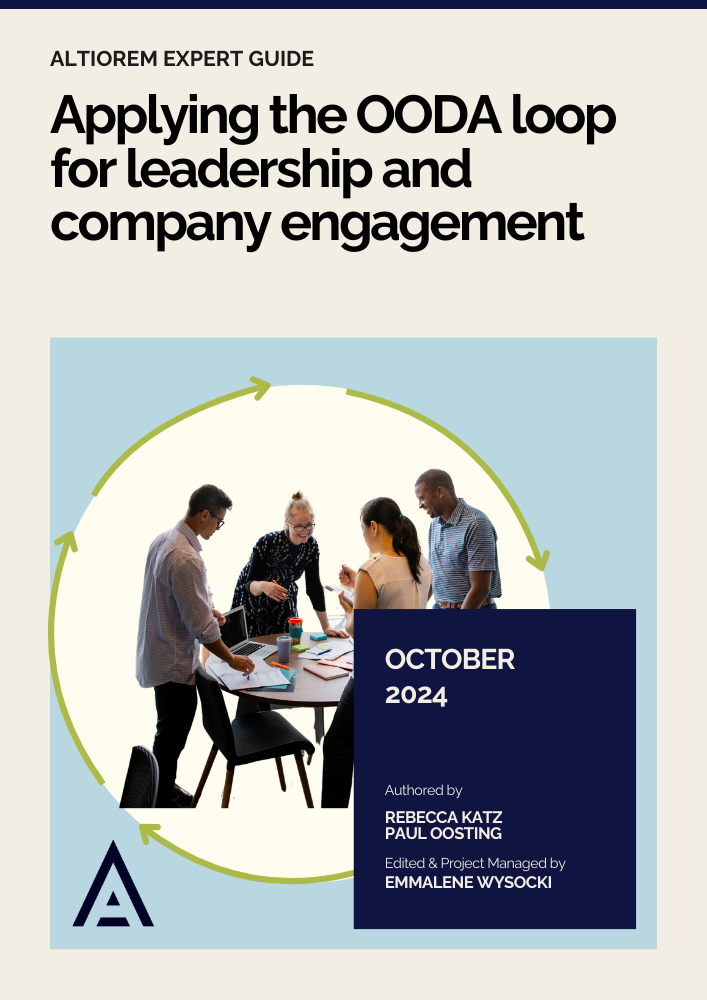
Applying the OODA loop for leadership and company engagement
This guide explains applying the OODA (Observe, Orient, Decide, Act) loop to strengthen strategic leadership and company engagement in sustainable finance, enabling adaptive decision-making, stakeholder alignment, and iterative responses to ESG challenges, illustrated through practical steps and a case study of corporate transition.
Driving positive social change through co-operatives and mutual enterprises (CMEs)
This guide explains how co-operatives and mutual enterprises can support social change through democratic governance, member focus and long-term value. It argues they can improve stability, competition and sustainability in finance, while noting challenges including regulation, capital raising and market awareness.
Good practices for handling whistleblower disclosures
ASIC report outlines good practices for whistleblower programmes, based on a review of selected firms. It highlights governance, culture, training, monitoring, and use of disclosures to improve performance, alongside executive accountability and board oversight to ensure compliance with Corporations Act requirements.
Australian taxonomy-aligned debt guidance: Issuing use-of-proceeds debt under the Australian sustainable finance taxonomy
Guidance explains applying the Australian sustainable finance taxonomy to use-of-proceeds debt, outlining classification, allocation, and disclosure requirements. It details technical screening criteria, Do No Significant Harm and social safeguards, and supports consistent, transparent identification of climate-aligned investments for issuers and investors.
Mind the gap: An insurance climate vulnerability assessment
APRA assesses Australia’s home insurance protection gap under climate scenarios, finding affordability pressures may increase uninsured households from one in seven to one in four by 2050. Rising weather risks and economic factors drive premiums, widening financial system risks, particularly in regional areas, with implications for households, insurers and banks.
The Climateworks guide to credibility for corporate climate transition plans
Provides an Australian-focused framework for assessing the credibility of corporate climate transition plans, outlining principles, criteria and disclosure expectations. It supports companies, investors and regulators in evaluating emissions targets, governance, strategy alignment and risk management within mandatory climate reporting and net zero transition planning.

Climateworks Centre
Climateworks Centre is an independent non-profit climate research organisation based at Monash University. It develops evidence-based solutions to support net zero emissions across Australia, Southeast Asia and the Pacific, advising governments, businesses and investors on decarbonisation, sustainable finance, and climate transition strategies.
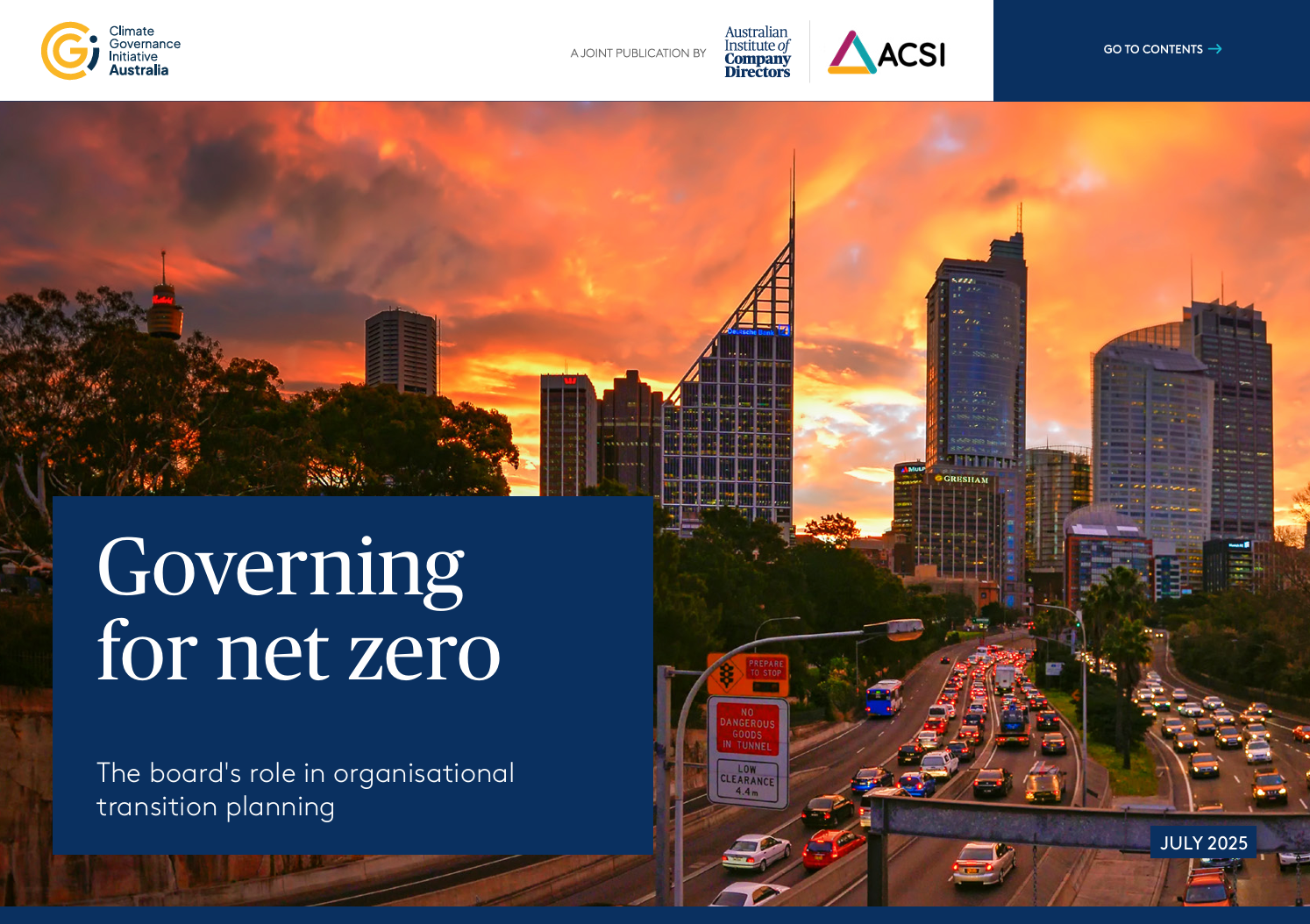
Governing for net zero: The board's role in organisational transition planning
This report guides Australian boards on integrating net zero transition planning into strategy, governance, disclosure and stakeholder engagement. It outlines directors’ legal duties, mandatory climate reporting requirements, and practical oversight questions to help organisations manage climate-related risks, opportunities and implementation.


