
Library | Location
Germany
Refine
185 results
REFINE
SHOW: 16


Sustainability at a turning point: Consumers are pushing companies to pivot
This research of 14,000 people from 9 countries discovered that 93% say that the COVID-19 pandemic has changed their perception of environmental sustainability. Individuals are, as a result, looking to invest in companies that prioritise environmental responsibility and expect them to communicate sustainability benchmarks and future plans clearly. In addition, more than half of consumers would work for a company that values sustainability, which is increasingly becoming a top hiring consideration.

Time to accelerate: Capital mobilisation for the SDGs in emerging markets
This progress report details two years of capital mobilisation for the Sustainable Development Goals (SDGs) in emerging markets. It highlights the need for government and private investors to take action if the SDG financing gap is to be closed, and outlines strategies for scaling private investment and reducing investment risks.

Future of waste
This report examines the future of waste reduction, the environmental and financial impacts of waste, and investment opportunities in waste management globally. The report provides regional, country, and sector insights on companies most affected by waste and ways for mainstream companies to proactively manage waste and pollution.

Unused tools: How central banks are fueling the climate crisis
This report dissects the role of central banks in fossil fuel finance and climate change, presenting 10 criteria for assessment and analysing 12 central banks worldwide. While there is increased recognition among global central banks of the severity of climate change, they continue to prop up fossil fuels and largely maintain an industrial structure that uncritically exacerbates the climate crisis.
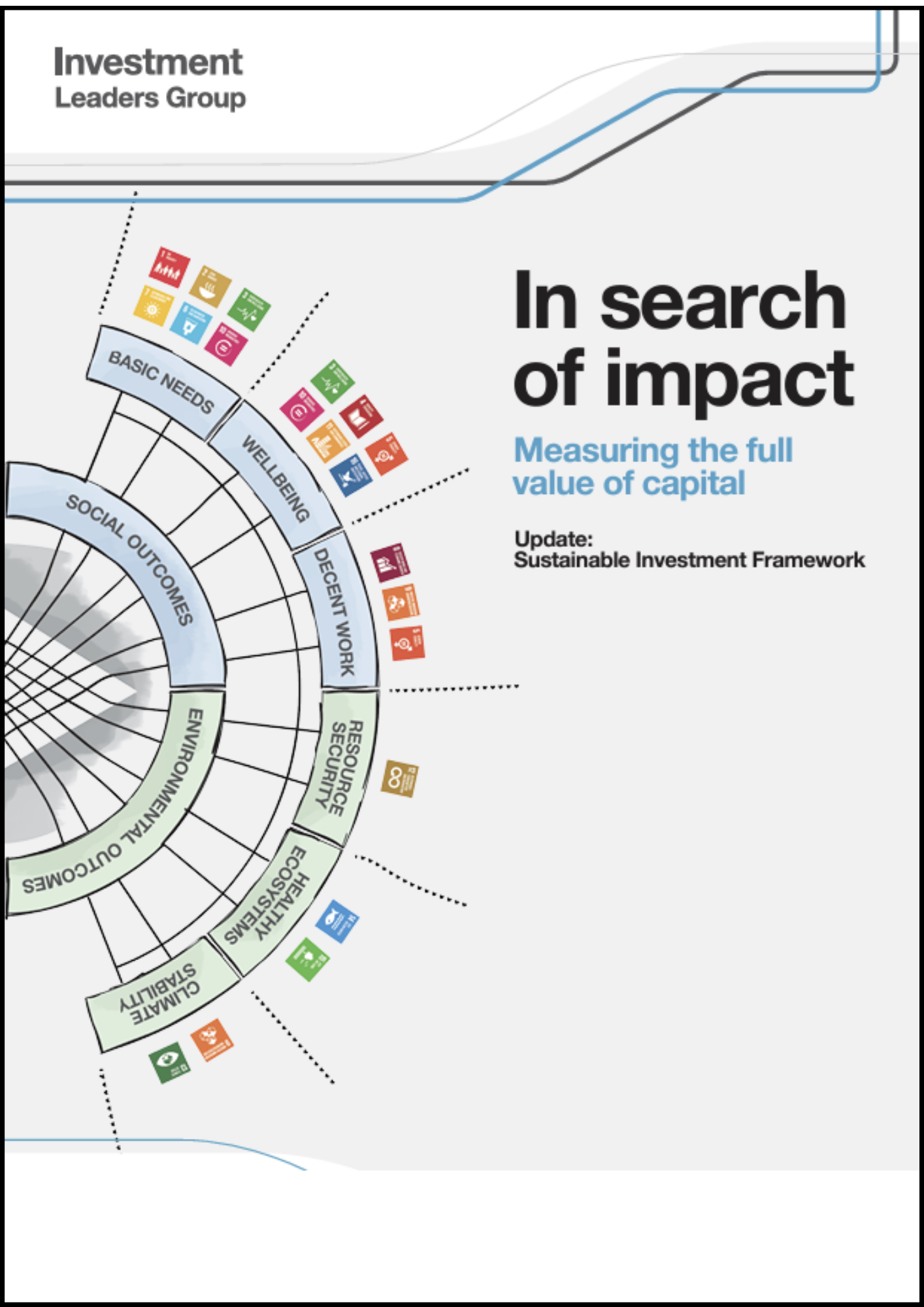
In search of impact: Measuring the full value of capital
This report outlines a sustainable investment framework, designed to empower individuals and organisations to better understand and make informed investment choices. The framework utilises six themes to communicate the impact of financial flows into the economy and contains theoretically grounded metrics that can be practically applied.

At the crossroads: 10 years of implementing the UN Guiding Principles on Business and Human Rights in Australia
The report examines the implementation and impact of the UN Guiding Principles on Business and Human Rights in Australia over the past decade.

Market review of environmental impact claims of retail investment funds in Europe
This report explores the environmental impact claims made by European retail investment funds and assesses their accuracy and possible ramifications. Findings reveal a high prevalence of misleading claims and a need for better guidance and regulation to address the issue. Short and long-term recommendations are proposed.

Impact investing for pensions
This report analyses the growth of impact investing strategies among European pension funds. The report examines challenges and opportunities, regulatory restrictions, impact measurement and management, private equity case studies, and emerging investments in affordable and social housing.
Stocktake of financial authorities’ experience in including physical and transition climate risks as part of their financial stability monitoring
This report examines the extent to which financial authorities consider climate-related risks in their financial stability monitoring and contains information on the channels that the authorities use to manage the risks and the quantification of climate-related risks to financial stability.

Sustainable corporate governance and non-financial disclosure in Europe: Does the gender diversity matter?
This study explores the link between boardroom gender diversity and Environmental, Social and Governance (ESG) disclosure in European listed firms. The results show that having women directors improves ESG practices, potentially enhancing sustainable value creation for firms. The study recommends policy actions promoting gender equality in decision-making roles to further enhance corporate transparency and accountability.

Increasing female participation on boards: Effects on sustainability reporting
This study explores the relationship between board gender diversity and sustainability reporting using data from 2,116 banks over a ten-year period. Results indicate that having 22–50% female board members positively affects ESG disclosure, but beyond 50%, negative effects appear. It suggests that banks should mandate quotas to promote sustainable disclosure.

Adaptation, loss and damage: A global climate impact fund for climate justice
This report delves into climate justice amid anthropogenic climate change, advocating for a pilot Global Climate Impact Fund (GCIF). The fund aims to distribute the financial responsibility for the climate change transition based on attribution and contribution studies, employing standardised criteria. The report emphasises prioritising long-term resilience and sustainable development pathways.

Commonland
Commonland pioneers transformative landscape restoration, fostering sustainable development. With a focus on regenerative practices, Commonland contributes to global sustainability, offering practical solutions for resilient landscapes and thriving communities.

Roots of Impact
Roots of Impact is a dynamic organisation committed to advancing social impact through innovative finance solutions. Explore their website for insights into impact investing, outcomes-based financing, and transformative partnerships.

Systemiq
Systemiq is a sustainable development organisation dedicated to transforming economic systems. Focused on environmental and social impact, they collaborate with businesses, investors, and governments to drive positive change. Explore their innovative solutions for a resilient and regenerative future.

The state of AI governance in Australia
This report reveals that Australian organisations lack structured governance around AI systems. Corporate leaders should invest in expertise, create a comprehensive AI strategy, implement addressing risks and support a human-centered culture. The appropriate governance of AI systems is critical for corporate leaders to mitigate risks.


