Overview
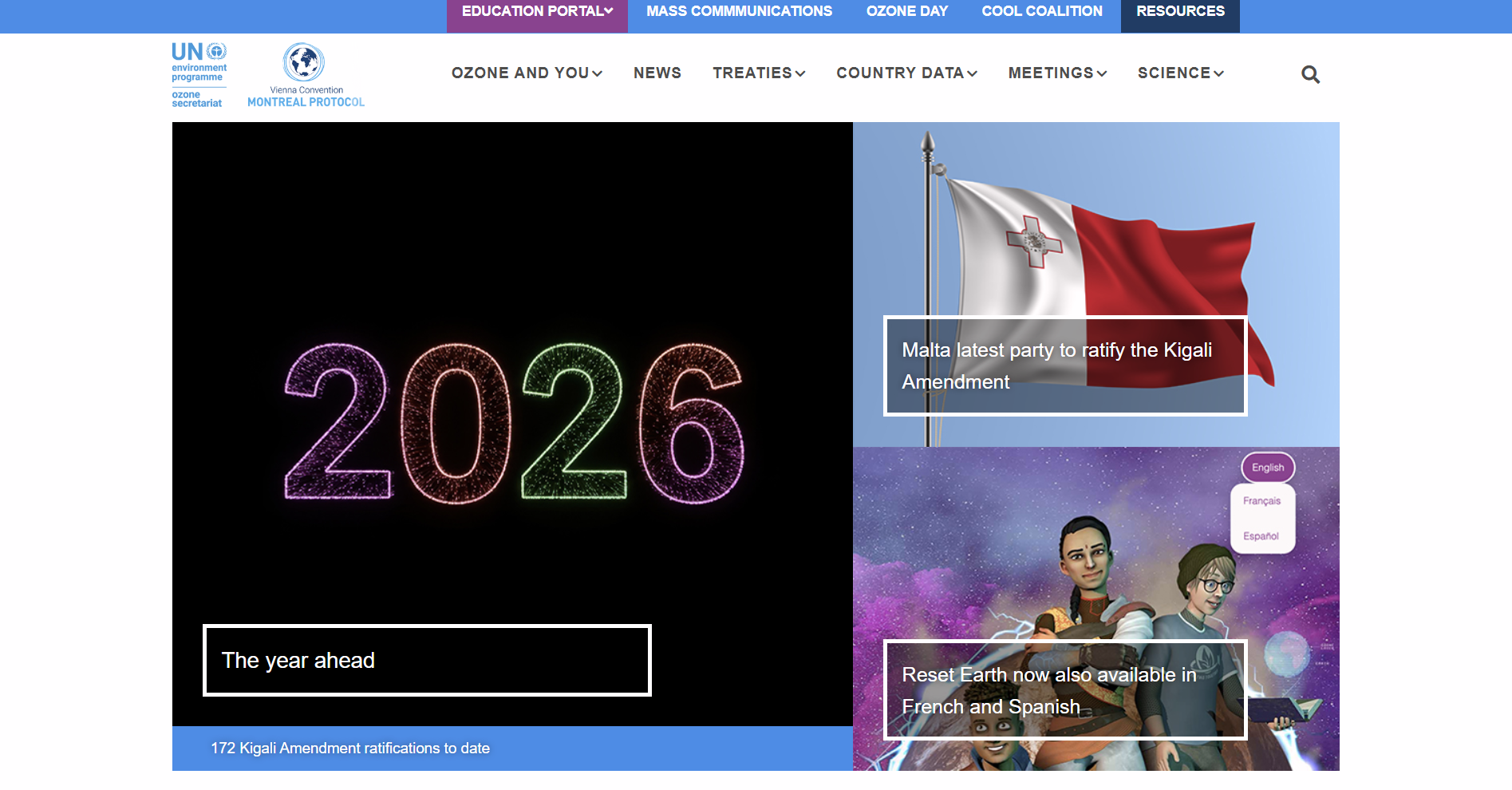
The UNEP Ozone Secretariat website is an official information portal supporting the implementation of the Montreal Protocol and its amendments. It provides authoritative data, policy documentation and compliance information on ozone-depleting substances and related climate pollutants. Finance professionals may find it relevant for assessing regulatory risk, environmental exposure and long-term climate transition trends linked to chemicals management.
Organisation behind the tool
The tool is developed and maintained by the United Nations Environment Programme (UNEP) through its Ozone Secretariat. The Secretariat administers the Montreal Protocol on Substances that Deplete the Ozone Layer and supports parties in meeting their legal and reporting obligations under the treaty.
What the tool does
- Provides access to international agreements, amendments and decisions under the Montreal Protocol.
- Publishes data and reports on production and consumption of ozone-depleting substances and hydrofluorocarbons (HFCs).
- Tracks country-level compliance and phase-out progress.
- Hosts guidance materials, meeting documents and policy resources for governments.
- Shares updates on scientific, technical and economic assessments related to ozone protection.
Target audience
The primary users are national governments, regulators and policymakers responsible for chemicals management and environmental compliance. Other users include researchers, international organisations, industry stakeholders and analysts seeking authoritative environmental and regulatory data.
Relevance to finance professionals
Risk assessment
- Supports evaluation of regulatory and transition risks linked to chemicals, refrigeration, cooling and manufacturing sectors.
- Informs exposure to policy changes affecting supply chains and industrial assets.
ESG analysis
- Provides credible environmental data relevant to climate, pollution and compliance indicators.
- Supports assessment of corporate alignment with international environmental agreements.
Market and commodity insights
- Offers context on phasedown timelines that may affect chemicals, cooling technologies and related infrastructure markets.
Investment context
- Helps identify long-term environmental policy trends influencing capital allocation, technology shifts and stranded asset risk.