
Library | Resource Types
Research
We summarise credible research and reports on sustainable finance and ESG issues. Our summaries, along with our AI ChatBot saves members time reading large reports, to focus on knowledge building and action.
Refine
1834 results
REFINE
SHOW: 16


Navigating global risks in the Pacific 2026
A Pacific-focused commentary drawing on the World Economic Forum's Global Risks Report 2026, examining how geopolitical fragmentation, digital transformation, climate volatility and workforce pressures are reshaping operating environments across Australia, New Zealand and the broader Pacific region.
A guide to the New Zealand emissions trading scheme: 2026 update: Design, evolution, and current state
This guide outlines the design, evolution, and current state of the New Zealand Emissions Trading Scheme as of March 2026. It covers sectoral coverage, unit supply, price controls, free allocation, forestry, and emissions trends, including recent legislative changes to agricultural obligations and the 2050 biogenic methane target.

The hidden benefit of ESG
This study examines 2,386 U.S.-listed firms from 2016 to 2021 and finds a causal link between higher ESG scores and fewer financial statement restatements in the post-2019 Business Roundtable Statement period. The findings position ESG as a rational risk management tool and challenge the premise underlying anti-ESG legislation.

Five differentiators of outperforming family-owned businesses in India
McKinsey analysed about 300 publicly listed Indian family-owned businesses to identify five differentiators of top performers: core operational excellence, effective generational transition, portfolio diversification, talent and culture, and robust governance. FOBs contribute more than 75 percent of India's GDP and outperform non-family-owned businesses on revenue growth and shareholder returns.

Passing the baton: Creating value through CEO succession at family businesses
This McKinsey report analyses CEO succession at family-owned businesses, drawing on 200 publicly traded and 170 private FOBs globally. It finds that succession on average erodes shareholder value, but top-performing FOBs can achieve the opposite by applying 11 critical practices spanning five foundational and six distinctive areas.
Voice without influence? Global investor voting rationale disclosures in Korea
This study examines whether global institutional investors’ voting rationale disclosures influence Korean firms’ gender diversity and climate-related policies. It finds stronger investor focus on board gender diversity than climate risk, limited influence on large firms, greater impact on smaller firms’ emissions reductions, and evidence that voting rationales affect the credibility of sustainability reporting.
Trust, financial literacy, and financial behaviors: Shaping retirement security
This NBER working paper examines how trust in financial institutions and government programmes, and financial literacy, shape retirement security for Americans aged 50+. Using 2020 Health and Retirement Study data, it finds trust in financial institutions supports retirement saving, while trust in government programmes reduces private saving, with notable racial disparities.
Sustainability-related disclosure guidance
New Zealand's Financial Markets Authority guidance on sustainability-related disclosure for financial product issuers. Covers fair dealing obligations under the Financial Markets Conduct Act 2013, addressing greenwashing and greenhushing risks, with practical guidance on clear claims, substantiation, consistent messaging and third-party management.
Beyond net zero: The rise of transition plans and what they tell investors
This Sustainable Fitch report examines the rise of corporate transition plans, driven by regulatory requirements and investor demand. It reviews six mainstream transition planning frameworks, finding alignment on core principles but variation in detail, and analyses around 40 entities, revealing strong Scope 1 and 2 targets but patchy Scope 3 commitments and limited transition revenue.
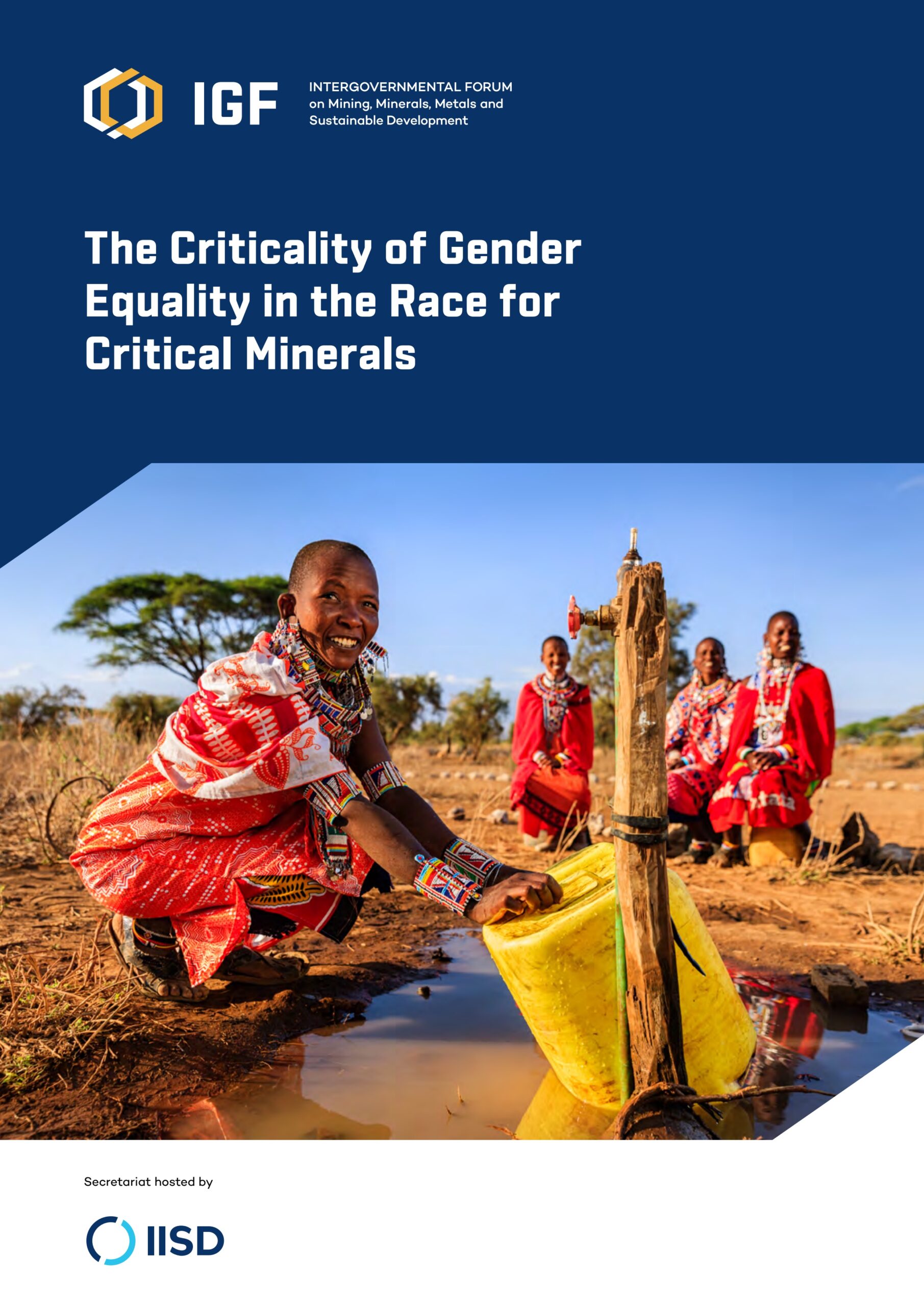
The criticality of gender equality in the race for critical minerals
This report explores how the rising demand for critical minerals risks exacerbating long-standing gender inequalities within the mining sector. It provides factual recommendations for governments and organisations to implement gender-responsive impact assessments, inclusive consultation, and equitable benefit-sharing mechanisms to safeguard women's rights globally.
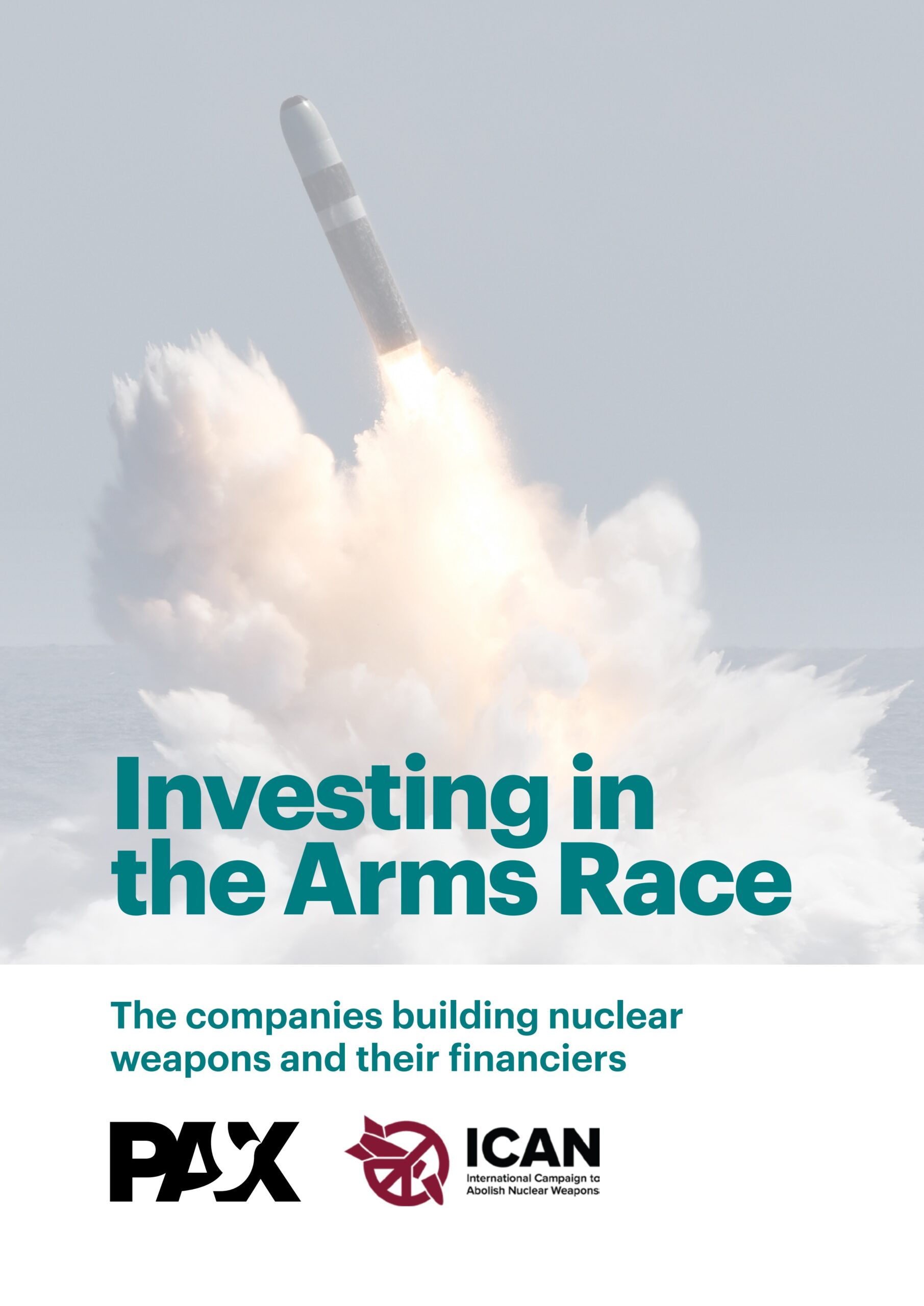
Investing in the arms race: The companies building nuclear weapons and their financiers
This report analyses 25 companies producing nuclear weapons and their financial backers. Highlighting over $1 trillion in total investments and financing from 301 institutions, it urges the financial sector to use its leverage to reject nuclear armament and make choices that benefit global security and humanity.
From fragmentation to insight: Why data convergence matters for scaling impact
This report examines the need for data convergence in impact investing to address fragmentation. It advocates adopting a structured, Theory of Change-based data model to standardise information across portfolios. Such a structure enhances interoperability, streamlines data management, and enables advanced analytics, ultimately improving decision-making and scaling impact effectively.
Productivity and decent work: Achieving synergies between social and economic dimensions at the enterprise level
This research brief examines the relationship between corporate social responsibility and human resource management in enhancing enterprise productivity and decent work. It provides an overview of current literature, explores how aligning social and economic dimensions creates synergies, and identifies key gaps for future research to support sustainable development.
Sustainable finance and corporate law: Lessons from the US
This report analyses the trajectory of sustainable finance and corporate law in the US. It focuses on the SEC's proposed climate disclosure rule and California's state-level reporting mandates, examining the political and institutional challenges these initiatives face and the implications of a federalist approach for corporate compliance.
Forging a global clean steel economy: Leveraging trade to reduce the green premium
This report examines how decarbonising the global steel industry requires separating ironmaking from steelmaking. By leveraging international trade, countries can co-locate energy-intensive processes in resource-rich regions like Brazil, Australia, and India. This strategic approach reduces production costs and helps lower the green premium for clean steel.
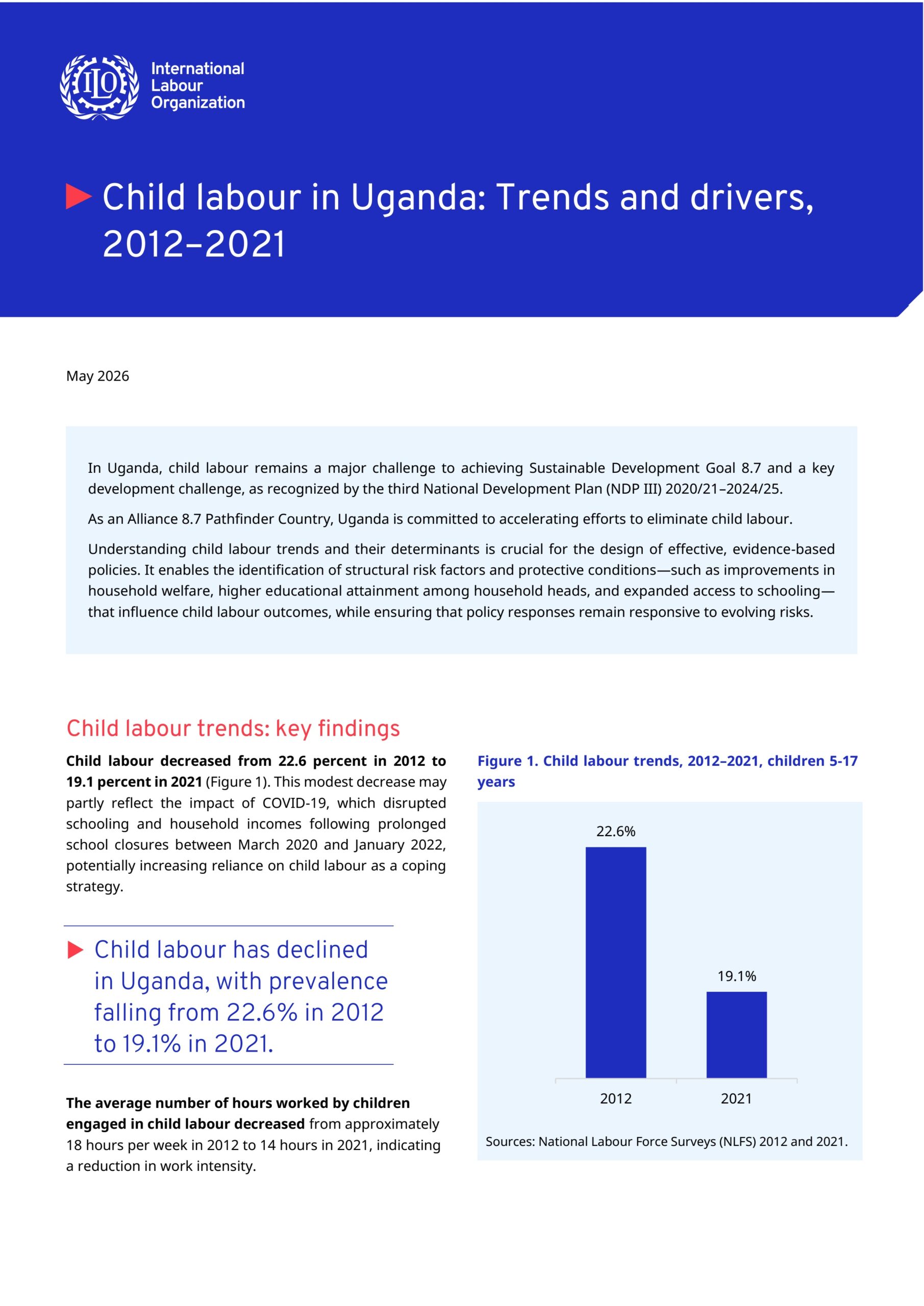
Child labour in Uganda: Trends and drivers, 2012–2021
This report analyses child labour trends in Uganda from 2012 to 2021, noting a decline in overall prevalence but highlighting persistent regional, gender, and age disparities. It examines underlying socio-economic drivers and outlines policy implications, recommending expanded social protection, educational access, and gender-responsive multisectoral interventions.


