
Library | Resource Types
Research
We summarise credible research and reports on sustainable finance and ESG issues. Our summaries, along with our AI ChatBot saves members time reading large reports, to focus on knowledge building and action.
Refine
1831 results
REFINE
SHOW: 16


Expanding the investible market for adaptation: The value and path for institutional investors
This report examines the business case for institutional investors to prioritise climate adaptation. It identifies a multi-billion dollar annual financing gap and outlines how resilience expertise enhances investment performance. A framework of recommendations is provided to help investors navigate asset, network, and economy-level resilience within the Australian context.
Just adaptation: An introduction for institutional investors
This report introduces institutional investors to 'just adaptation', highlighting the financial materiality of fair and equitable climate resilience. It outlines how incorporating social equity into adaptation strategies protects long-term returns, maintains social licence, and identifies priority actions for investors to support vulnerable communities while managing systemic climate risks.
Worlds apart: Contrasting US-China approaches to scaling clean technology manufacturing
Global clean technology manufacturing investment has declined significantly, led by pullbacks in China and the United States. While China addresses overcapacity, US investment reversed following the One Big Beautiful Bill Act. This report explores the diverging drivers, policy shifts, and future competitive landscape for both nations.
Circular economy practice in India: Three case studies
This report examines India’s transition to a circular economy, highlighting policy frameworks like Extended Producer Responsibility and NITI Aayog’s strategic focus areas. Through case studies of Siemens, Tata Steel, and Volvo Construction Equipment, it demonstrates how circular principles drive resource efficiency, waste reduction, and business value.
2026 Sustainable investment trends
This report analyses sustainable investment trends for 2026, examining physical climate risk, the energy transition, and Asia’s leadership. It addresses the influence of artificial intelligence on power demand and emission targets, alongside structural challenges in the health care and food production sectors, highlighting resilience and adaptation as key priorities.

Who funds and who pays: The funding of solar geoengineering, 2020–2025
This report examines the dramatic tenfold increase in solar geoengineering funding between 2020 and 2025. It highlights the dominance of US and UK tech billionaires and government agencies in financing research, raising concerns about transparency, democratic oversight, and the marginalisation of Global South interests in climate policy.
Employment in the circular economy: Leveraging circularity to create decent work
This report provides a global baseline for circular economy employment, estimating that 121 to 142 million people work in the sector. Produced by Circle Economy, the ILO, and World Bank Group, it highlights the prevalence of informal work and the need for policies ensuring a just, inclusive transition.
Limited impacts of shareholder pressure on climate strategy of fossil firms
This research examines shareholder pressure on US fossil fuel firms’ climate strategies. Using NLP to analyse 10-K filings and SEC regulatory changes, it finds limited impact on substantive reforms. Firms often employ symbolic disclosures or procedural tactics to resist decarbonisation, suggesting that mandatory policy is required for transition.
Reconsidering supply chains and industrial policy from the economic security perspective
This report analyses supply chain resilience and industrial policy through the lens of economic security. It evaluates market failures in supply chain investment, examines cases of Chinese economic coercion, and assesses Japanese semiconductor subsidies for TSMC and Rapidus, emphasizing the roles of diversification, existing industrial clusters, and international research collaboration.
Role of Japanese firms in the East Asian electronics industry: A supply chain network perspective
This research analyses Japan's position in the East Asian electronics supply chain using network science. While Japan remains a vital upstream supplier of components and equipment, its dominance in mainstream semiconductors has declined. Conversely, Japanese firms maintain strong leadership within automotive clusters and unique electronics-automation-utilities ecosystems.
Financing the energy transition: A credit perspective on India’s power sector
This report examines India’s power sector transition from a credit perspective. It highlights the structural divergence between renewable and thermal assets, identifies bottlenecks in domestic debt markets, and recommends strategies to unlock large-scale financing, including the pivotal role of NTPC and the need for deeper institutional investor participation.
Redirecting sovereign capital to accelerate Indonesia’s energy transition
This report examines Indonesia’s sovereign wealth fund, Danantara, and its role in the energy transition. It highlights the fiscal risks of subsidy-dependent energy SOEs and recommends a strategic shift towards renewables. Drawing on global SWF experiences, it advocates for portfolio diversification to ensure long-term profitability and national energy security.
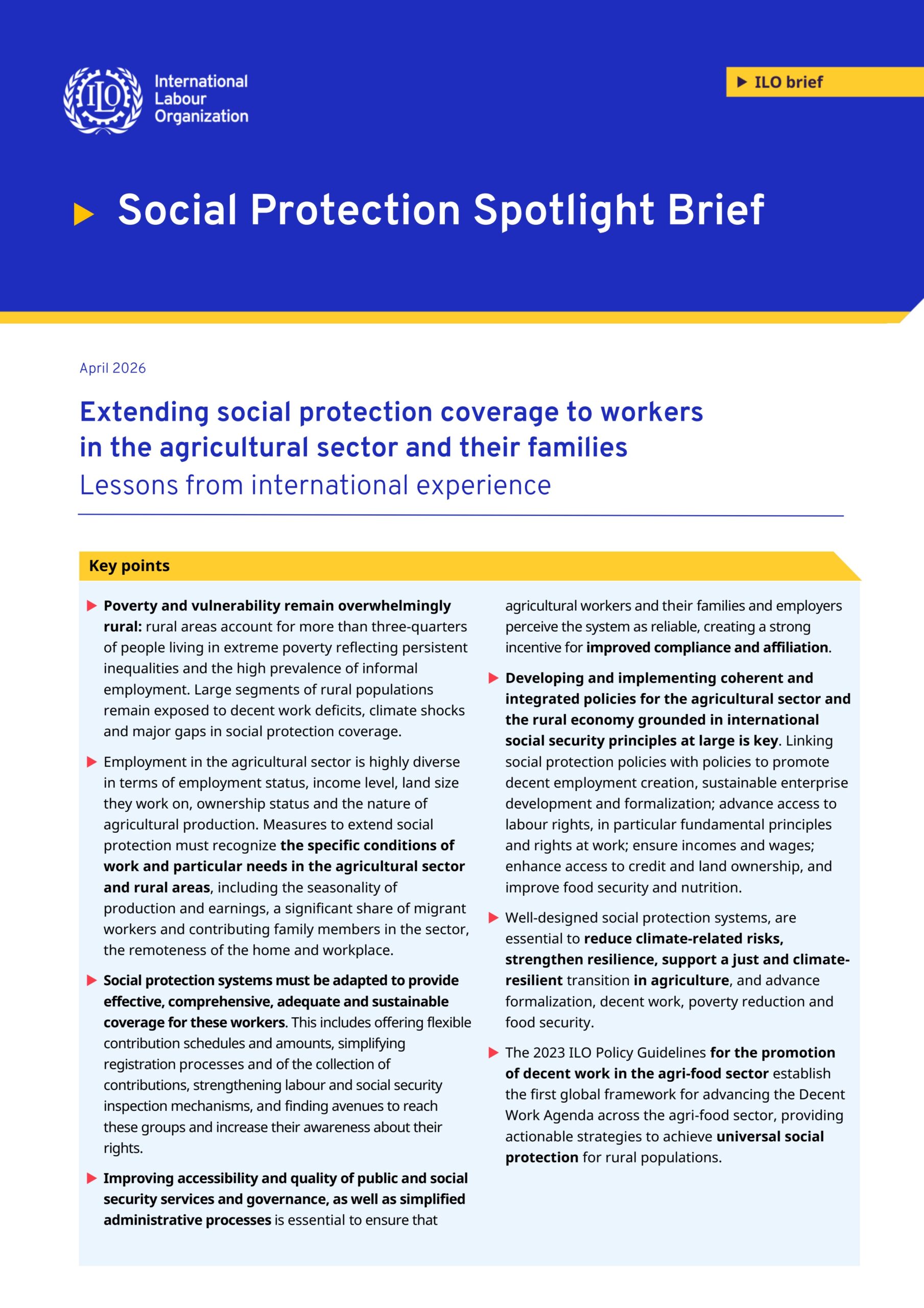
Extending social protection coverage to workers in the agricultural sector and their families: Lessons from international experience
Report examines extending social protection to agricultural workers. Highlighting that rural areas account for more than three-quarters of the extreme poor, it identifies barriers like legal exclusion and informal employment. It presents international solutions, including flexible contribution schedules and mobile service delivery, to achieve universal coverage for rural populations.
AI systems at work: A changing psychosocial work environment
This International Labour Organization report examines the psychosocial risks of AI systems in workplaces. It identifies how algorithmic management and advanced robotics impact mental health, autonomy, and privacy. The paper advocates for integrated regulatory frameworks across labour law and safety standards to protect workers from emerging digital hazards.
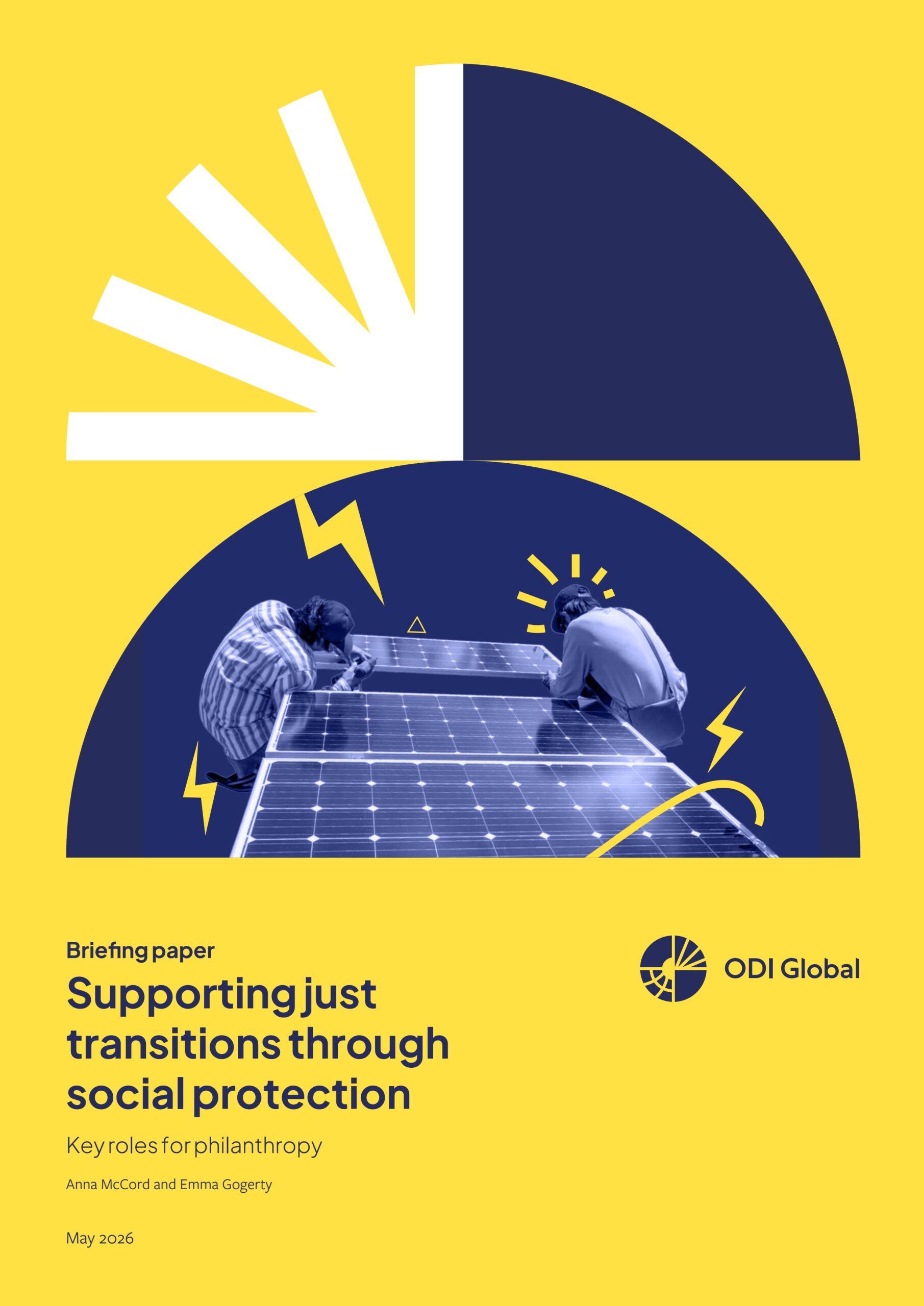
Supporting just transitions through social protection: Key roles for philanthropy
This briefing paper explores how philanthropy can support just transitions to net zero through social protection. It examines the socio-economic risks of decarbonisation, identifies systemic coverage gaps, and highlights catalytic roles for philanthropic capital in capacity building, research, and policy alignment to ensure an inclusive transition.
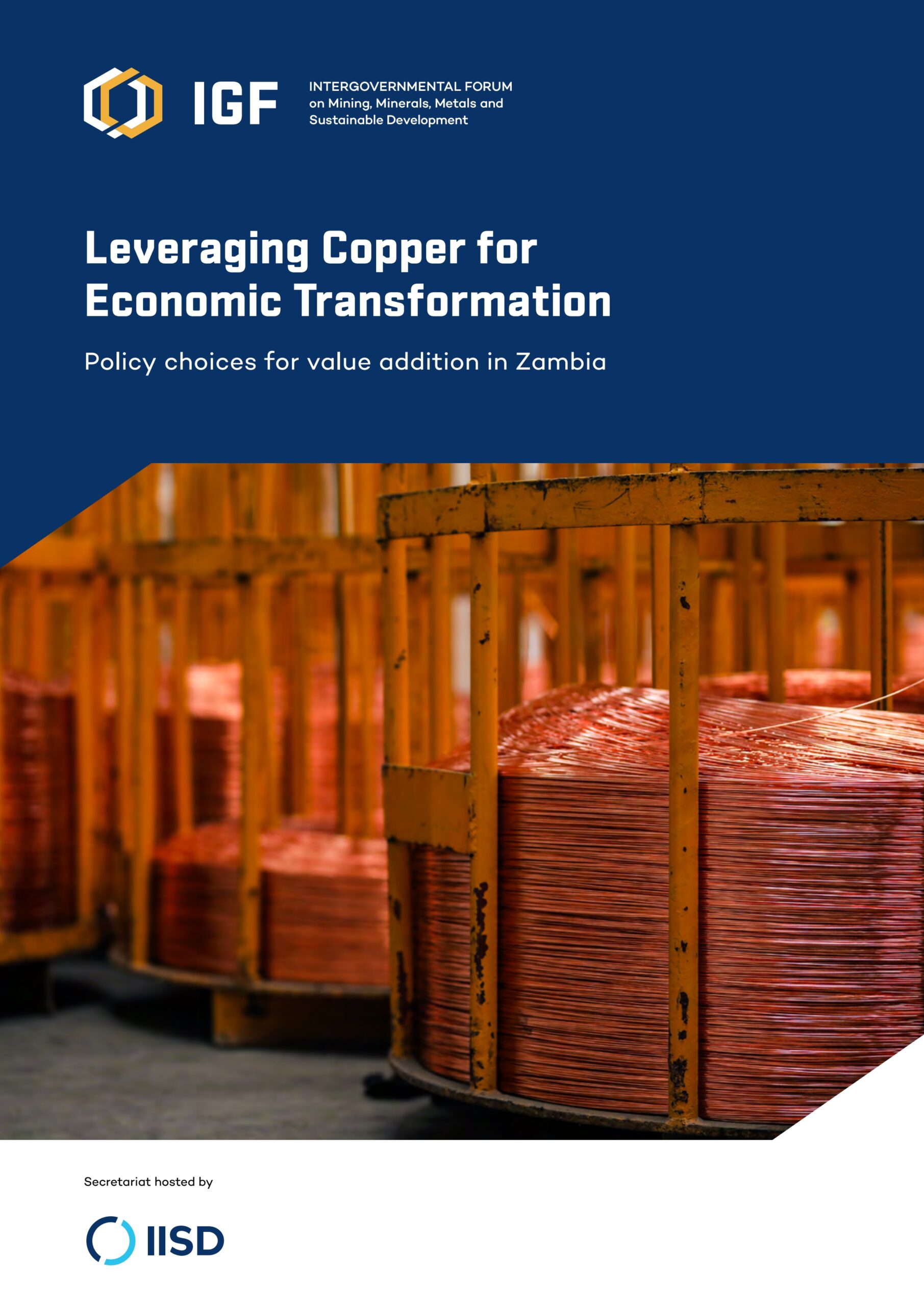
Leveraging copper for economic transformation: Policy choices for value addition in Zambia
This report examines strategies for Zambia to add value to its copper resources. It identifies expanding smelting and refining as immediate opportunities to increase annual exports by USD 3.7 billion by 2030. Success requires addressing binding constraints, primarily unreliable electricity, high finance costs, and trade logistics inefficiencies.


