
Library | Resource Types
Research
We summarise credible research and reports on sustainable finance and ESG issues. Our summaries, along with our AI ChatBot saves members time reading large reports, to focus on knowledge building and action.
Refine
1831 results
REFINE
SHOW: 16


Toward a more human pace for data center development
This research examines the environmental and social impacts of rapid data centre expansion in the United States. It highlights how generative AI infrastructure disproportionately burdens marginalised communities through pollution, increased utility costs, and resource depletion. The authors call for a "more human pace" centred on environmental justice.
AI-driven productivity gains enable more CO₂ emissions than they avoid in a global energy–economy model
Research using a global energy-economy model indicates that AI-driven productivity gains increase net annual CO2 emissions by 0.47–1.8 gigatonnes under parallel adoption. Enabled emissions from fossil sectors consistently exceed avoided emissions from renewables. Achieving net reductions requires renewable productivity gains to be four to five times greater than fossil gains.
Greenwashing as aspirational signaling: From burden to benefit?
This research analyses the transition of sustainability disclosures from voluntary practices to mandatory legal frameworks in the US and EU. It examines the 'greenwashing enforcement gap' and argues that aspirational signalling, despite inaccuracies, can drive institutional change and attract a prosocial workforce to improve corporate conduct.

Connecting nature, climate, and capital: From data to decisions: Natural capital accounting in practice
This research explores Natural Capital Accounting in New Zealand, focusing on the SEEA EA framework. It provides practical steps for businesses to quantify nature-related risks and dependencies. Through case studies, it demonstrates how environmental data informs investment, lending, and strategic management to enhance organisational resilience and long-term value.
Asking better questions on nature: For chief financial officers
This guide helps Chief Financial Officers integrate nature-related issues into financial decision-making. It outlines how to identify dependencies, assess risks and opportunities, and respond to evolving disclosure expectations. The report emphasises nature as a core driver of performance, resilience and long-term value creation within the TNFD framework.
Leveraging technological solutions for human rights due diligence
This report distils lessons from 25 organisations on leveraging technology to strengthen human rights due diligence in value chains. It categorises various tools, provides case studies, and outlines practical steps for responsible AI adoption, emphasising that technology must complement, rather than replace, human judgement and meaningful stakeholder engagement.
International Ethics Standards for Sustainability Assurance (including International Independence Standards) and other revisions to the Code relating to sustainability assurance and reporting
IESBA’s final pronouncement establishes ethics and independence standards for sustainability assurance by introducing Part 5 to the Code. It outlines five fundamental principles and a conceptual framework to address threats, alongside requirements for tax planning, responding to non-compliance, and leader rotation for public interest entities.

Hidden in plain sight: Unlocking actionable insights in client data
CGAP introduces Precision Causal Modelling to help financial providers identify which product configurations work for specific client segments. Piloted across five institutions, the methodology revealed delivery gaps of 32 to 84 percentage points. Key findings highlight the importance of right-sizing loans and monitoring delinquency trajectories to improve client outcomes.
Measuring financial health: A framework
This working paper introduces a multidimensional framework for measuring financial health, grounded in 70 global initiatives. It translates G20/GPFI definitions into 17 indicators across six constructs, providing financial sector authorities with practical tools for diagnostic, evaluative, and early warning analysis using administrative and survey data.

Guidance for voluntary climate change mitigation
This guidance outlines expectations for voluntary climate change mitigation in New Zealand. It details six core principles for high-integrity carbon credits, including additionality and permanence. It distinguishes between contribution and exclusive-use claims and clarifies the role of the New Zealand Emissions Trading Scheme and Nationally Determined Contributions.
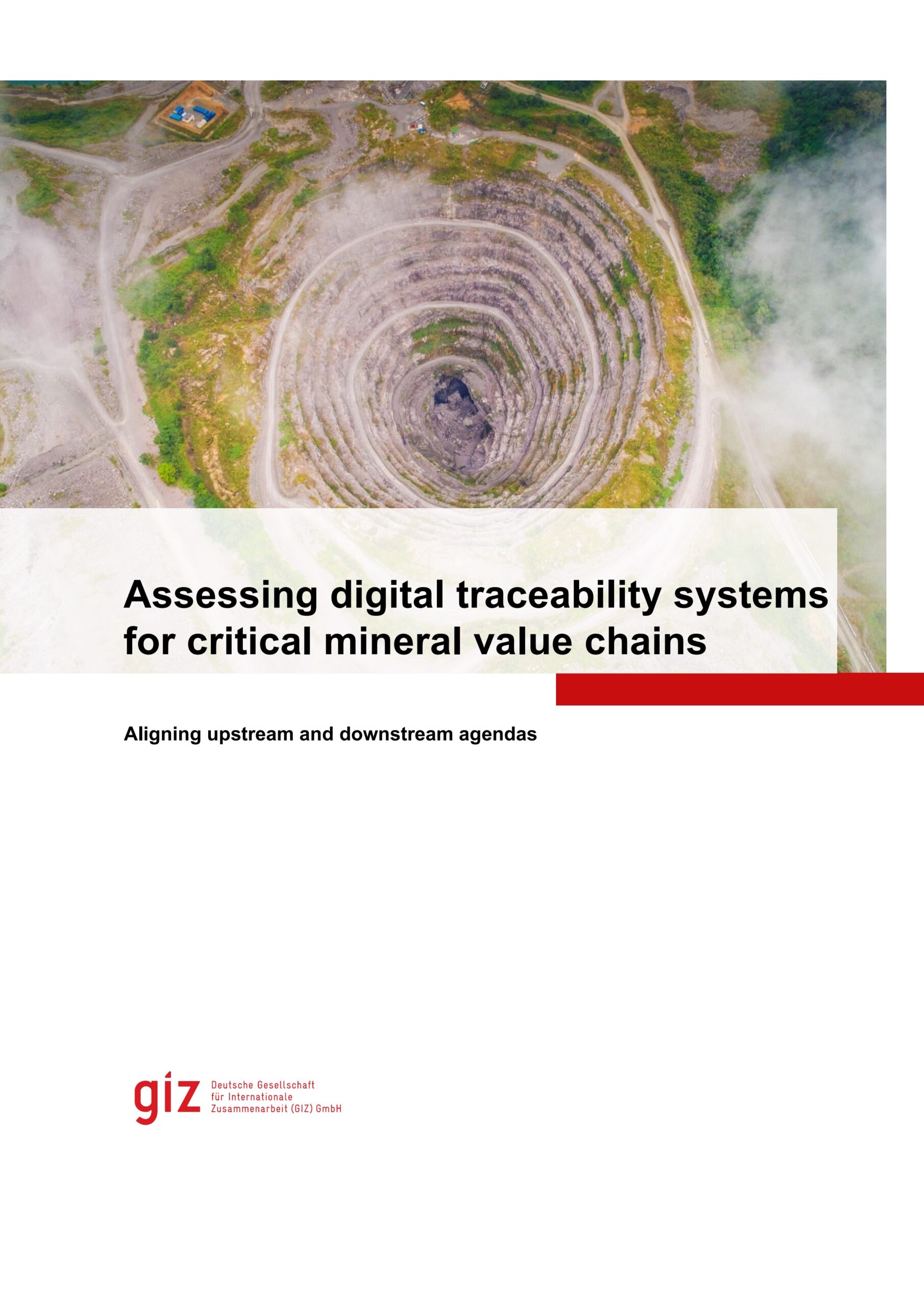
Assessing digital traceability systems for critical mineral value chains: Aligning upstream and downstream agendas
This report assesses digital traceability systems for critical raw materials, evaluating their architecture, feasibility, and impact. It emphasises aligning downstream regulatory demands with upstream producer realities, recommending that traceability should support due diligence and inclusion—particularly for artisanal mining—rather than serving as a standalone compliance burden.
Reframing financial markets as complex systems: Tools for systemic risk analysis, portfolio management, and system-level investing
This report explores financial markets as complex adaptive systems, advocating for modelling techniques like agent-based models and network theory. It highlights how these tools improve systemic risk analysis and portfolio management by capturing non-linear behaviours, herding, and interconnectedness, providing a framework for more resilient and adaptive global financial systems.

Beyond commitments: Assessing real capital deployment for net zero across 26 high-emitting companies, against the IGCC Capital Allocation Alignment Framework
This research assesses capital allocation alignment with net-zero commitments across 26 high-emitting companies using the IGCC Framework. It finds that while climate strategies are strong, capital sourcing and fossil fuel phase-down plans lag. European companies lead in performance, while the Americas and oil and gas sectors trail significantly.
Legal liability vs. proportional representation: What works in improving poor investor protection?
This research evaluates Korean governance reforms, comparing director legal liability with proportional representation. Findings indicate that markets react positively to increased director liability, especially for undervalued firms. Conversely, mandated proportional representation triggers negative reactions, as investors fear boardroom conflicts may hinder strategic decision-making and reduce board cohesion.
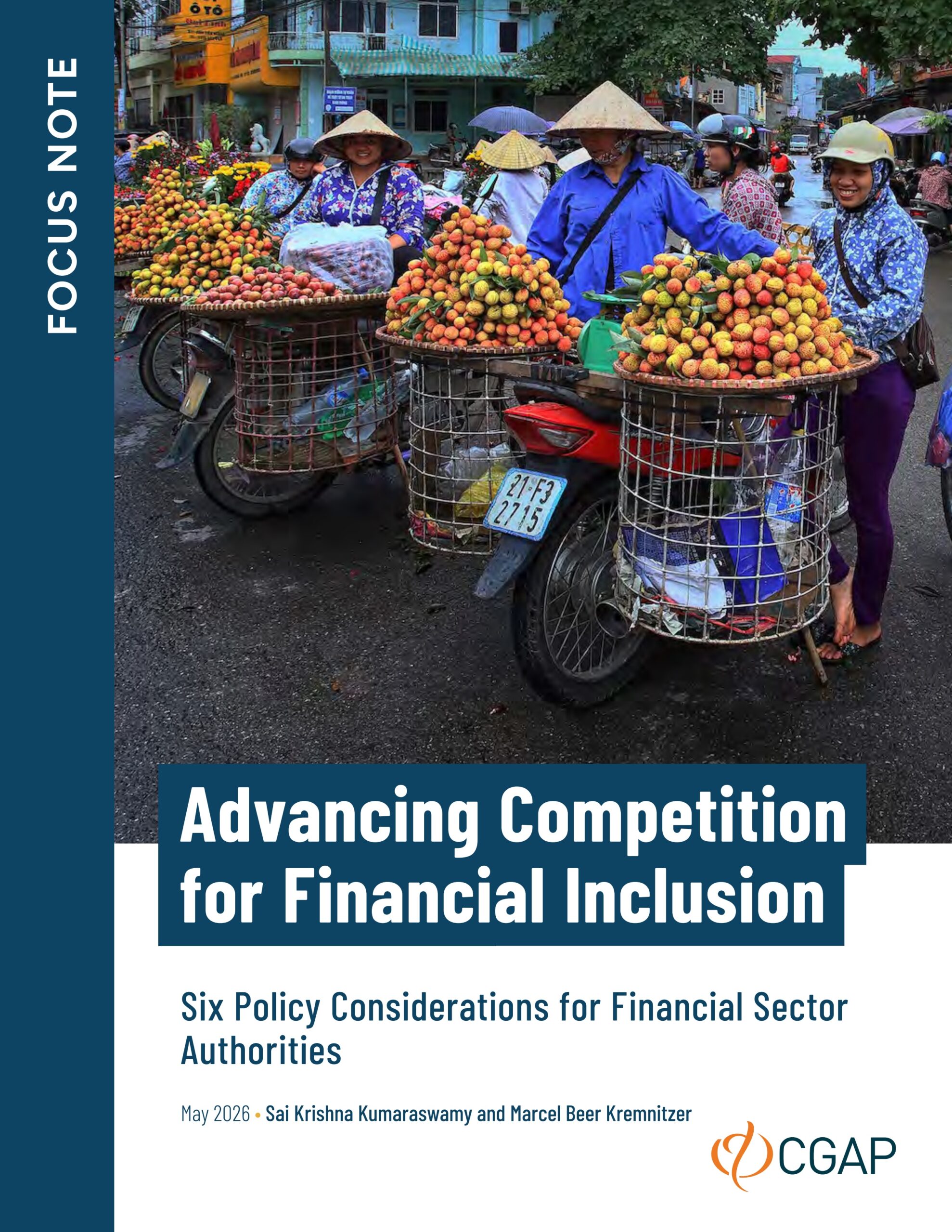
Advancing competition for financial inclusion: Six policy considerations for financial sector authorities
This report provides six policy considerations for financial sector authorities to promote competition and advance financial inclusion. Drawing on eight country case studies, it explains how regulators can use existing mandates, coordinate across sectors, and leverage infrastructure design to address market concentration and support digital financial innovation.
Solutions to protect consumers from fraud in digital finance
Curating 56 successful fraud protection solutions, this report details strategies across intelligence sharing, telecom security, and biometrics. It highlights how AI-driven oversight and multi-sector collaboration, such as Malaysia's NSRC and UK's reimbursement rules, can reduce losses and restore consumer trust in digital financial ecosystems.


