
Library | Resource Types
Research
We summarise credible research and reports on sustainable finance and ESG issues. Our summaries, along with our AI ChatBot saves members time reading large reports, to focus on knowledge building and action.
Refine
1838 results
REFINE
SHOW: 16


The Passives Problem and Paris goals: How index investing trends threaten climate action
This report sheds light on the Passives Problem, highlighting the dangers of an excessively passive investment market. It argues that this trend is hindering progress on mitigating climate change and exacerbating the risks of market instability. The report suggests possible solutions to the problem and examines how investors can align with climate action.

Women decision makers: How can more capital reach women decision makers in emerging markets?
This report explores the barriers preventing women fund managers from receiving capital, particularly local, diverse women. The report outlines recommendations and tools for investors to better support women decision makers.

Xinjiang supply chain business advisory addendum
This US Government advisory highlights continuing reports of forced labour and human rights abuses in the Xinjiang Uyghur Autonomous Region, China, and reminds businesses of their obligations under relevant US laws. The report contains information on risks in supply chains and implementation and enforcement of relevant laws.

Measuring what matters most: Seven systems transformations for benchmarking companies on the SDGs
This report provides guidance on developing benchmarks to transform systems towards achieving Sustainable Development Goals (SDGs). It identifies seven critical transformations: social, agriculture and food, decarbonisation and energy, circular, digital, urban, and financial systems. These benchmarks aim to hold companies accountable and drive meaningful change across industries to support sustainable development.

Future of waste
This report examines the future of waste reduction, the environmental and financial impacts of waste, and investment opportunities in waste management globally. The report provides regional, country, and sector insights on companies most affected by waste and ways for mainstream companies to proactively manage waste and pollution.

Rethinking climate change: How humanity can choose to reduce emissions 90% by 2035 through the disruption of energy, transportation, and food with existing technologies
This report examines how existing technologies in energy, transportation, and food could lead to a 90% reduction in greenhouse gas emissions by 2035. Using the Seba Technology Disruption Framework, they forecast disruptive changes and identify how markets could drive emissions mitigation.

Unused tools: How central banks are fueling the climate crisis
This report dissects the role of central banks in fossil fuel finance and climate change, presenting 10 criteria for assessment and analysing 12 central banks worldwide. While there is increased recognition among global central banks of the severity of climate change, they continue to prop up fossil fuels and largely maintain an industrial structure that uncritically exacerbates the climate crisis.

Beyond compliance in the renewable energy sector: Assessing UK and Australian Modern Slavery Act statements
This report assesses the statements of 60 renewable energy companies under the UK and Australian Modern Slavery Acts, identifying their compliance gaps. Though most firms disclose their modern slavery policy, few extend it beyond tier one, limiting worker protection. The report calls for improved guidance, supply chain transparency, and stronger government enforcement measures.
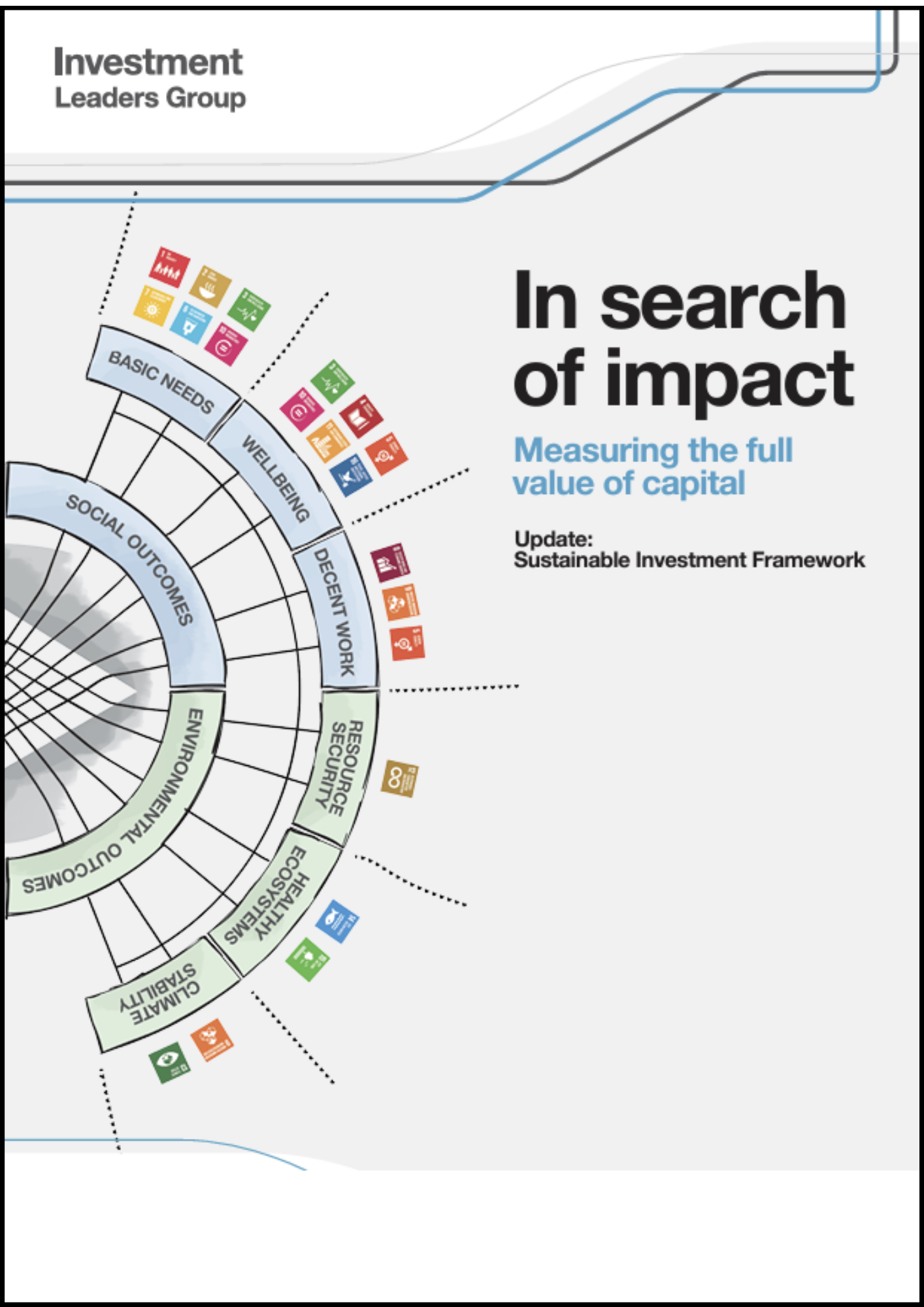
In search of impact: Measuring the full value of capital
This report outlines a sustainable investment framework, designed to empower individuals and organisations to better understand and make informed investment choices. The framework utilises six themes to communicate the impact of financial flows into the economy and contains theoretically grounded metrics that can be practically applied.

The climate crisis is a child rights crisis: Introducing the Children's Climate Risk Index
The report highlights how one billion children are at extreme risk due to climate change with small island states and countries already facing existential threats. It is a call to action for businesses and governments to reduce greenhouse gas emissions and commit to sustainable practices.

The comprehensive business case for sustainability
Sustainable businesses redefine the corporate ecosystem by creating value for all stakeholders, including employees, shareholders, supply chains, civil society, and the planet. Managing sustainability risks requires making investment decisions today for longer-term capacity building and developing adaptive strategies. Significant cost reductions can result from improving operational efficiency, and sustainable companies deliver significant positive financial performance.

New EU guidance helps companies to combat forced labour in supply chains
The guide provides practical advice on identifying, preventing, mitigating, and addressing forced labour's risk and translating international standards into concrete action. The guidance is in line with the previously published EU trade strategy and upcoming legislation on Sustainable Corporate Governance.

Opportunity NOCs: How investors can jumpstart energy transitions in national oil companies
This report outlines how national oil companies (NOCs) must begin decarbonising to meet the goals of the Paris Agreement, and how investors can influence and incentivise the energy transition. It shows that NOCs constitute half of the world’s oil and gas production and control two-thirds of global reserves, making them of great interest to investors.

The economic impact of ESG ratings
This report examines the impact of ESG ratings on fund holdings, stock returns, and firm behaviour. The study finds that only MSCI ESG ratings can explain the holdings of US ESG funds, and slow, gradual responses in ownership suggest that fund managers mainly use ESG ratings to comply with ESG mandates.

Human rights risks in Xinjiang Uyghur autonomous region: Practical guidance from investors
The guide sheds light on the ongoing human rights crisis in the Uyghur region of China, exposing a multitude of risks for investors. The report gives practical recommendations on how to assess exposure, engage with portfolio companies, and collaborate with stakeholders.

Why and how investors should act on human rights
This report outlines how institutional investors can respect human rights as defined by international standards. The six principles of ESG investing, such as incorporating ESG issues into decision-making processes and seeking appropriate disclosure help to promote acceptance of human rights in the investment industry.


