
Library | ESG issues
Environmental
The environmental pillar in ESG (environmental, social, and governance) assesses an organisation’s impact on the planet. It includes issues such as climate change, biodiversity, waste management and water management. Strong environmental practices help businesses reduce risks, comply with regulations, and drive long-term sustainability.
Refine
1899 results
REFINE
SHOW: 16


Transition Acceleration Framework (TAF)
TAF is a forward-looking analytical framework by Rhodium Group that evaluates where climate investment and policy will accelerate decarbonisation.

Plastic footprint guidelines
The Plastic Footprint Network's guidance document presents a science-based methodology for assessing corporate plastic footprints. Developed by over 100 professionals from 35 organisations, the framework comprises 11 modules covering macroplastics and microplastics, providing practitioners with a step-by-step process for measuring plastic leakage and reporting results.
Guidance on integrating deforestation into net zero strategies
This IIGCC guidance supports institutional investors in integrating deforestation, land conversion, and associated human rights risks into net zero strategies. Aligned with the Net Zero Investment Framework 2.0, it provides practical, asset class-specific action points across listed equity, sovereign bonds, real estate, and private equity and debt.
Using scenario analysis for future resilience: Top tips for pension fund chairs and trustees
This guide from Accounting for Sustainability supports pension fund chairs and trustees to move beyond simplified climate scenario analysis. It outlines the limitations of current models, provides practical examples from USS, NBIM and APG, and offers six actionable tips to embed scenario insights into strategic decision making.
AI data centers and electricity demand: Taming the energy guzzlers
This paper examines AI data centre electricity demand and its costs for ratepayers and the environment. It finds that Big Tech market capitalisations have risen far above predicted levels since ChatGPT's 2022 launch, while data centres drive up electricity prices and fossil fuel use. Regulatory reforms and innovations are recommended.
Carbon tariffs, emissions leakage, and production relocation
This paper examines whether carbon tariffs prevent emissions leakage from firm relocation in a North-South duopoly model. It finds that carbon tariffs combined with export rebates form the optimal carbon tax regime, preventing leakage when the northern firm's emissions intensity exceeds fifty percent of the southern firm's, and can benefit both countries.
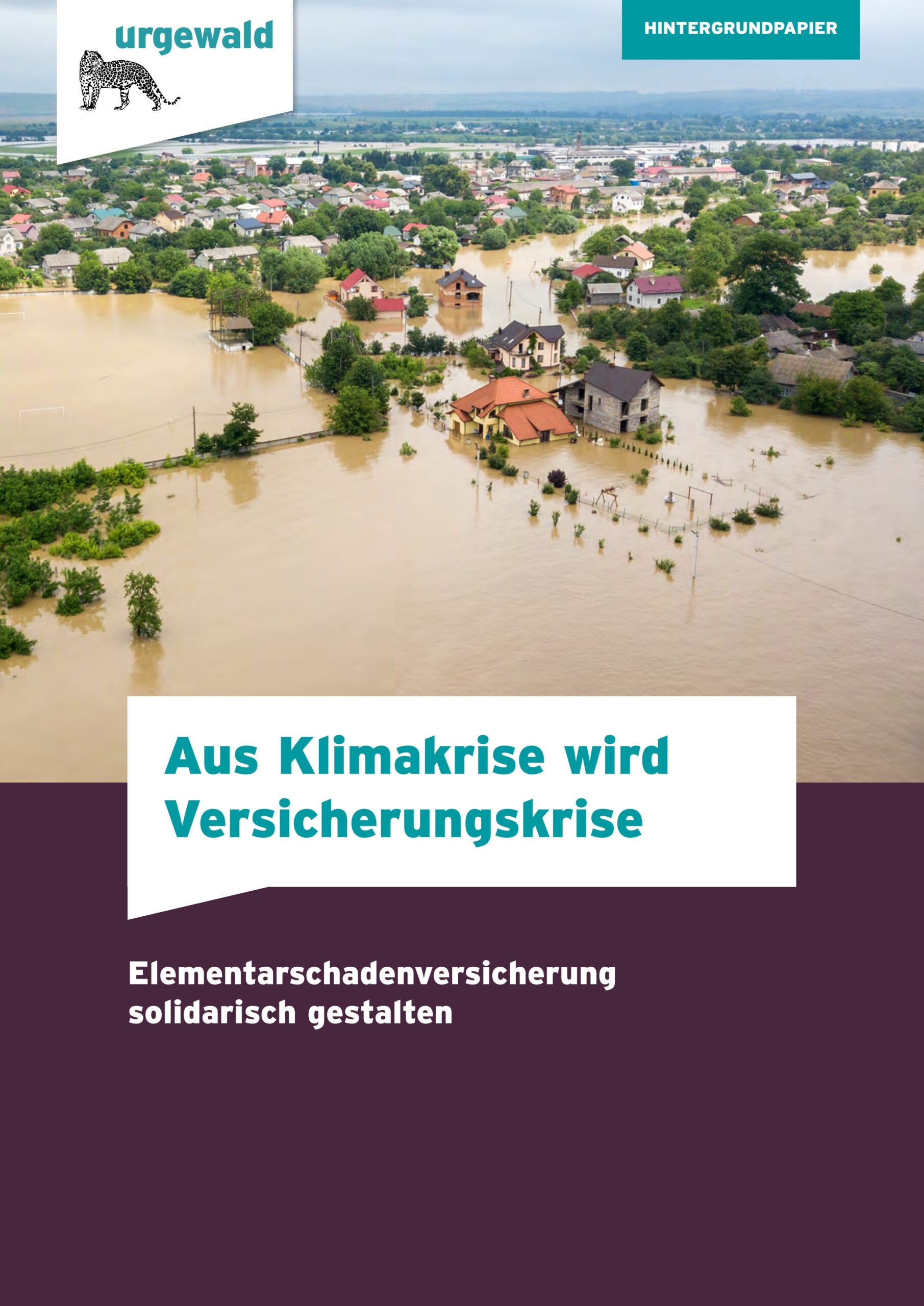
From climate crisis to insurance crisis: Designing solidarity-based natural disaster insurance
This report examines rising climate-related insurance losses and Germany's lack of comprehensive natural disaster coverage, with only 57% of residential buildings insured against such risks. It analyses international public-private insurance models — particularly France's CatNat system — and recommends a solidarity-based approach alongside measures to hold the fossil fuel industry financially accountable.
EDHEC Climate Institute Resource Hub
EDHEC Climate Institute is a climate finance research resource that provides research, analytical tools and data on climate-related financial risks, transition pathways and climate policy. It supports finance professionals with evidence-based insights for investment analysis, risk assessment and decision-making on climate-related issues.
Project Preparation Support Database (PPSD)
Searchable database of project preparation facilities and climate-focused incubators helping developers and investors access support for bankable climate projects.
Looking beyond greenhouse gas emissions: Interlinkages between the commercial vehicle industry and nature
Published by WWF Sweden in collaboration with TRATON GROUP, this report examines the commercial vehicles sector's interlinkages with nature across its full value chain. It analyses six key commodities and value chain stages, identifies nature-related risks for businesses, and calls for sector-wide collaborative action towards a nature-positive future.
Widening the lens: Scaling climate adaptation and resilience through sustainable finance
This report examines climate adaptation and resilience in sustainable finance, highlighting a significant financing gap in emerging markets and limited formal allocation in labelled debt markets. It argues for a broader lens that recognises resilience outcomes already embedded in policy-driven investments, using Ecuador's sovereign housing framework as a case study.
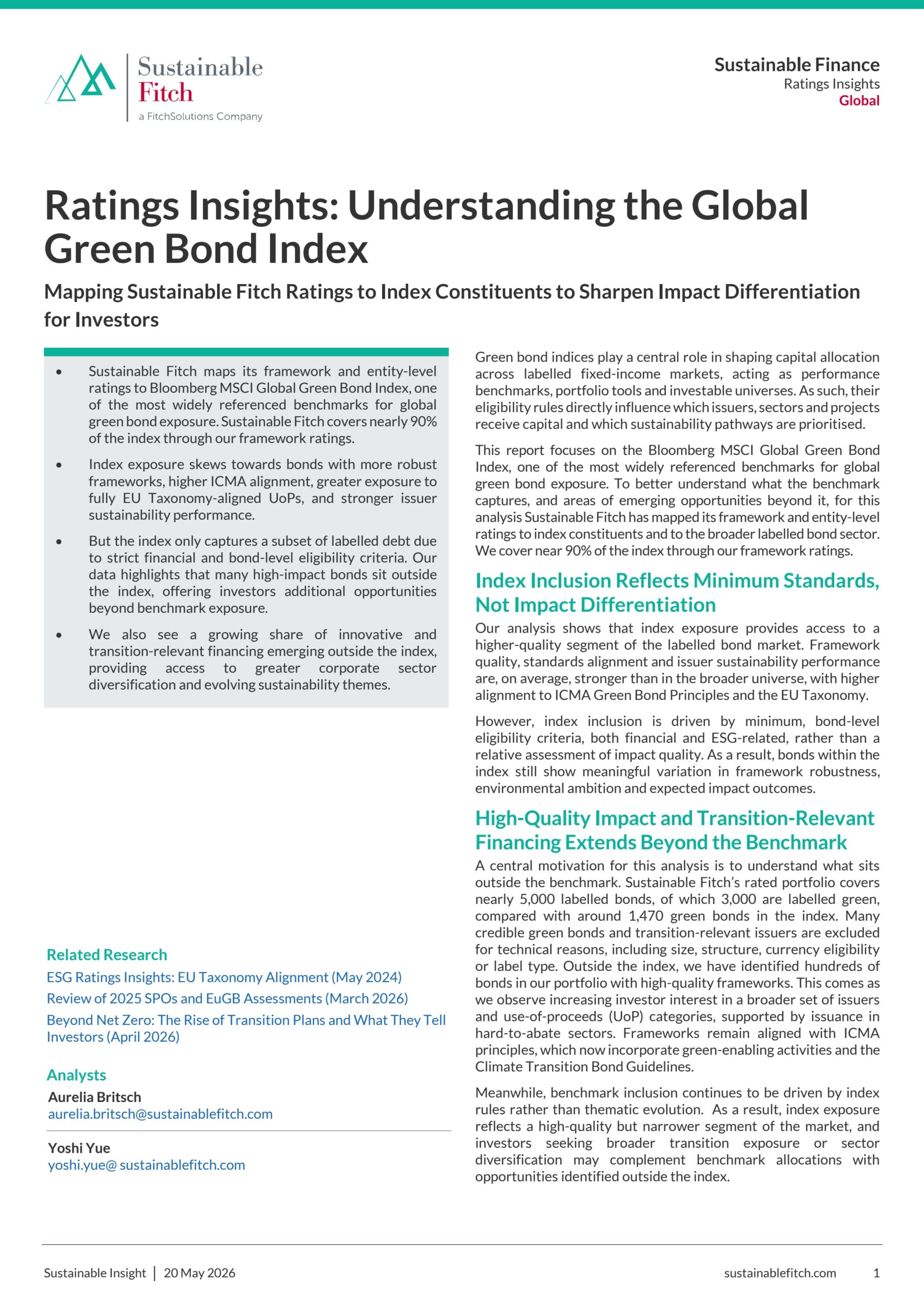
Ratings insights: Understanding the global green bond index
Sustainable Fitch maps its framework and entity-level ratings to the Bloomberg MSCI Global Green Bond Index, covering 88% of index bonds. While index constituents show stronger framework quality and ICMA alignment than the broader market, many high-quality and transition-relevant bonds sit outside the benchmark due to financial eligibility constraints.
Navigating towards water resilience: An introductory guide for central bankers, financial supervisors and regulators
This WWF Greening Financial Regulation Initiative guide introduces central banks, financial supervisors and regulators to the financial risks posed by the global water crisis. It covers physical, transition and systemic risks, emerging responses from the financial sector, available assessment tools, and policy recommendations for integrating water risks into supervisory frameworks.

The ICJ's advisory opinion on climate change
This edited volume analyses the ICJ's July 2025 advisory opinion on climate change obligations, examining its legal framework, due diligence standards, human rights implications, and statehood findings. Contributing authors also assess the opinion's notable silences on historical responsibility, military emissions, and differentiated obligations.
Potential business cases in measuring biodiversity state and impact in agriculture
A joint Mistra FinBio and Svensk Kolinlagring report identifying three business cases linking biodiversity data to agricultural finance: baseline databanks for bank and insurance risk assessment, and an MRV system for biodiversity claims. It highlights the financing gap in regenerative agriculture and outlines potential biodiversity-linked financial products.
Credible climate financing and fossil fuel phase-out commitments are possible but remain marginal amongst major financial institutions
WBA's analysis of 400 major financial institutions finds that transition planning is emerging but capital allocation to low-carbon solutions and fossil fuel phase-out commitments remain marginal. Only two institutions demonstrate robust fossil-fuel restrictions, and low-carbon activities account for an average of just 2.7% of total financed activities globally.


