
Library | ESG issues
Environmental
The environmental pillar in ESG (environmental, social, and governance) assesses an organisation’s impact on the planet. It includes issues such as climate change, biodiversity, waste management and water management. Strong environmental practices help businesses reduce risks, comply with regulations, and drive long-term sustainability.
Refine
1909 results
REFINE
SHOW: 16


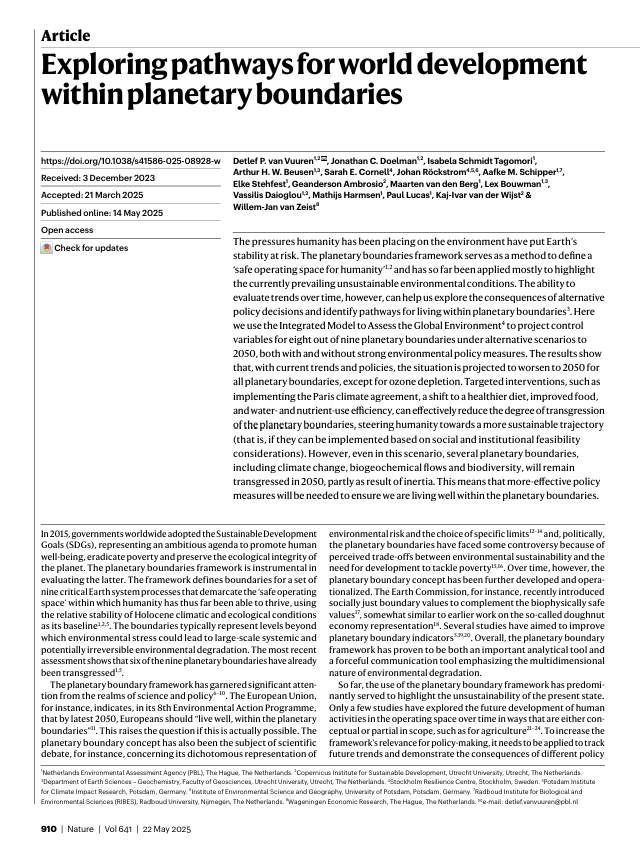
Exploring pathways for world development within planetary boundaries
The report assesses global development scenarios to 2050 using planetary boundaries. Current trends worsen conditions across key Earth system indicators, except ozone depletion. Implementing strong sustainability measures, including climate agreements, diet shifts, and resource efficiency, significantly reduces boundary breaches but still leaves climate, biodiversity, and nutrient flows at risk.
RIAA Policy Platform 2025: Harnessing sustainable finance for a thriving Australia
The RIAA Policy Platform 2025 outlines nine policy priorities and two principles to align Australia’s finance system with sustainability goals. It recommends regulatory reforms, improved data, Indigenous inclusion, and stronger accountability to mobilise capital for a net zero, nature-positive economy that supports long-term economic resilience and societal wellbeing.
Circle Economy's circularity gap report series
The Circularity Gap Report series, launched annually since 2018 by Circle Economy, offers key insights into the global circular economy. Each report focuses on vital topics driving action, from the first global metric in 2018 to industry and country perspectives in subsequent years.
Nature-related financial disclosures: Frequently asked questions
This FAQ guide explains key concepts in nature-related financial disclosures, including biodiversity, dependencies, impacts, and the TNFD framework. It outlines disclosure requirements, materiality, governance responsibilities, and greenwashing risks, offering practical insights for businesses preparing for future regulatory expectations and aligning with international sustainability standards.
Carbon accounting FAQs - August 2023
This FAQ guide by CA ANZ outlines key carbon accounting concepts, including emissions measurement, net zero versus carbon neutral, carbon markets, and related financial and ethical considerations. It supports finance professionals with evolving standards, regulatory requirements, and practical guidance for managing climate-related data and assurance services using science-based methodologies.
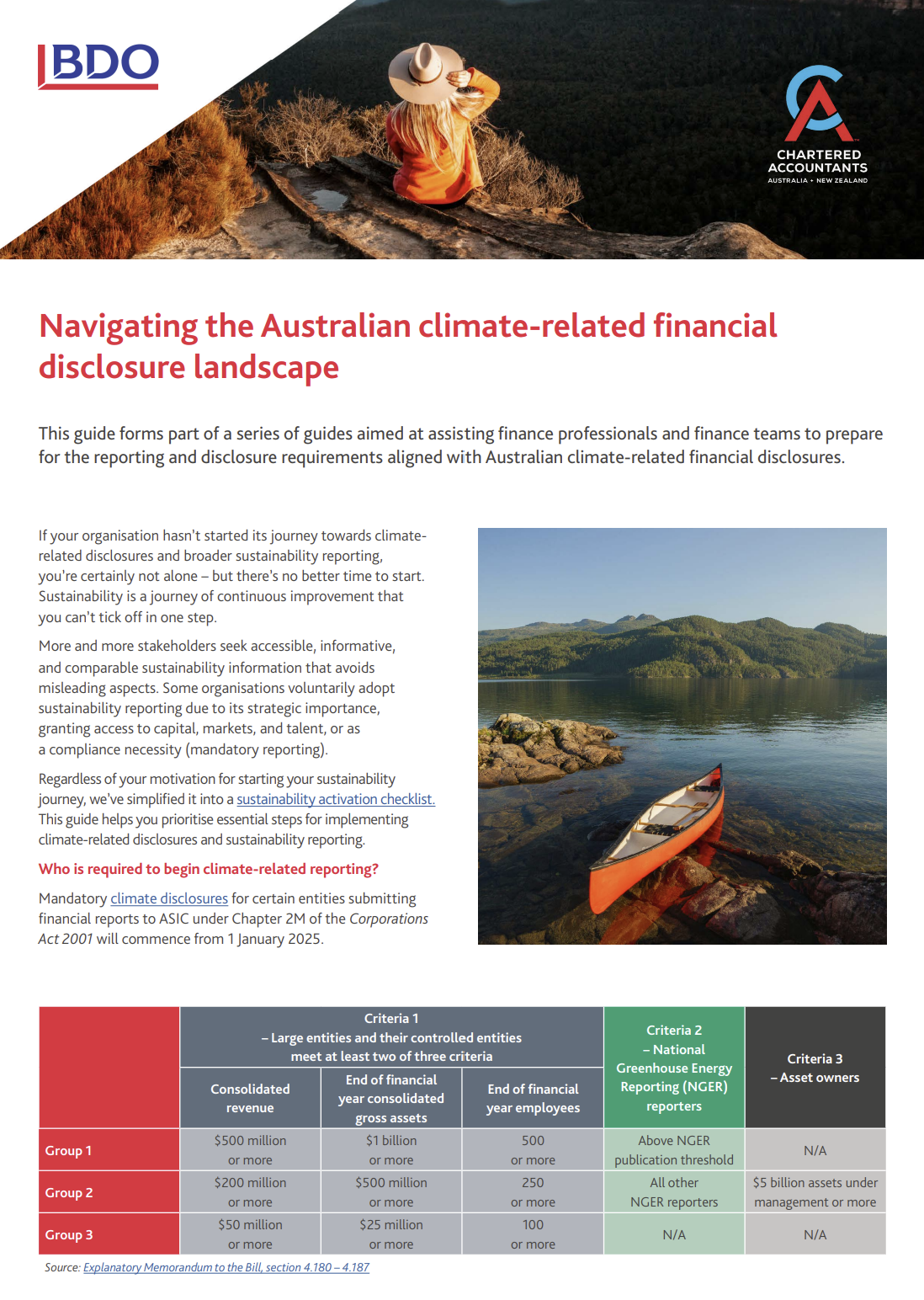
Navigating the Australian climate-related financial disclosure landscape
This guide outlines Australia’s new climate-related financial disclosure requirements commencing in 2025. It defines reporting thresholds, timelines, and compliance pathways for entities based on size and emissions reporting status, and details implementation steps aligned with AASB and IFRS standards for climate and sustainability reporting.

Critical mineral series: Sustainability considerations for investors in copper mining
This report examines copper’s role in the energy transition, highlighting growing demand, environmental and human rights risks, and evolving global regulations. It evaluates mining companies’ sustainability performance using biodiversity, governance, and modern slavery metrics, offering insights for responsible investment aligned with international standards and long-term ESG considerations.
The root cause of nature loss: Forests, why they matter, and how to assess deforestation risk in investment portfolios through nature-related data
This report outlines how deforestation, particularly in tropical forests, is a key driver of biodiversity loss and climate change. It presents the risks to institutional investors—physical, transition, and systemic—and offers a framework to assess deforestation exposure in portfolios using nature-related data and metrics across sectors and geographies..
Putting TNFD to work: Insights from early adopters
This report analyses how early adopters are implementing the TNFD framework, highlighting integration with climate disclosures, flexible use of the LEAP approach, and application of data tools. Insights show how businesses align nature-related risks with strategy and reporting, with regional uptake led by Asia Pacific and Europe.
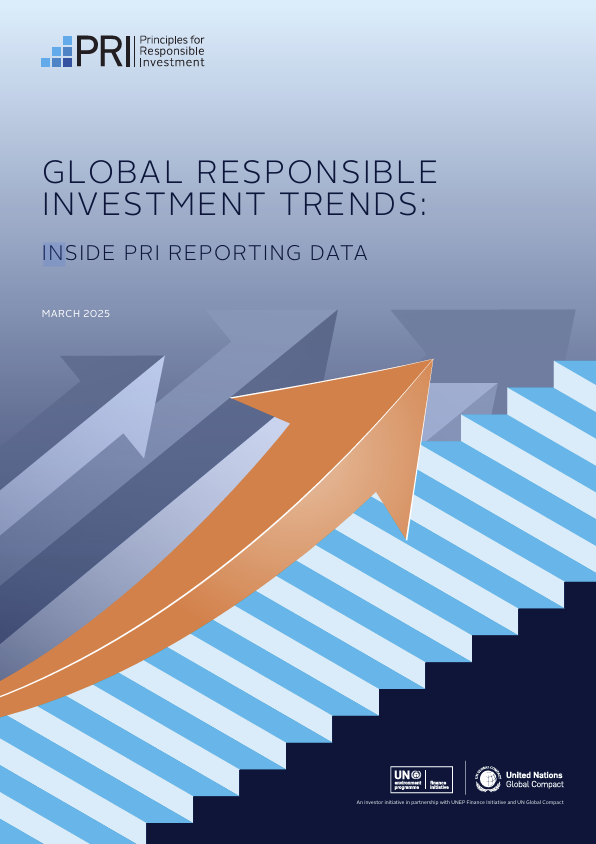
Global responsible investment trends: Inside PRI reporting data 2025
The 2025 PRI report analyses data from 3,048 signatories, highlighting trends in climate risk management, stewardship, and human rights. Asset owners show increased engagement, with climate and social issues gaining priority. Investors continue integrating responsible investment into decision-making and oversight, with varied progress across policy, governance, and disclosure practices.

How just transition can help deliver the Paris Agreement
This report outlines how embedding just transition principles in climate strategies supports equitable decarbonisation. It presents trends, case studies, and a UNDP framework guiding countries to integrate socio-economic considerations into their Nationally Determined Contributions and Long-Term Strategies, promoting inclusive, sustainable development in line with the Paris Agreement.
Pursuing impact within a portfolio: Insights from institutional asset owners
This report explores how institutional asset owners integrate impact goals into portfolio strategy. Through four case studies, it examines aligning financial returns with social and environmental outcomes using an impact lens. It highlights investment approaches addressing climate change, health, regional development and systemic inequality across diverse asset classes and geographies.

Ceres' food emissions 50 company benchmark
A guide for institutional investors on using shareholder engagement to address SDG-related impacts in Mexico's food sector, with benchmarking and recommendations.
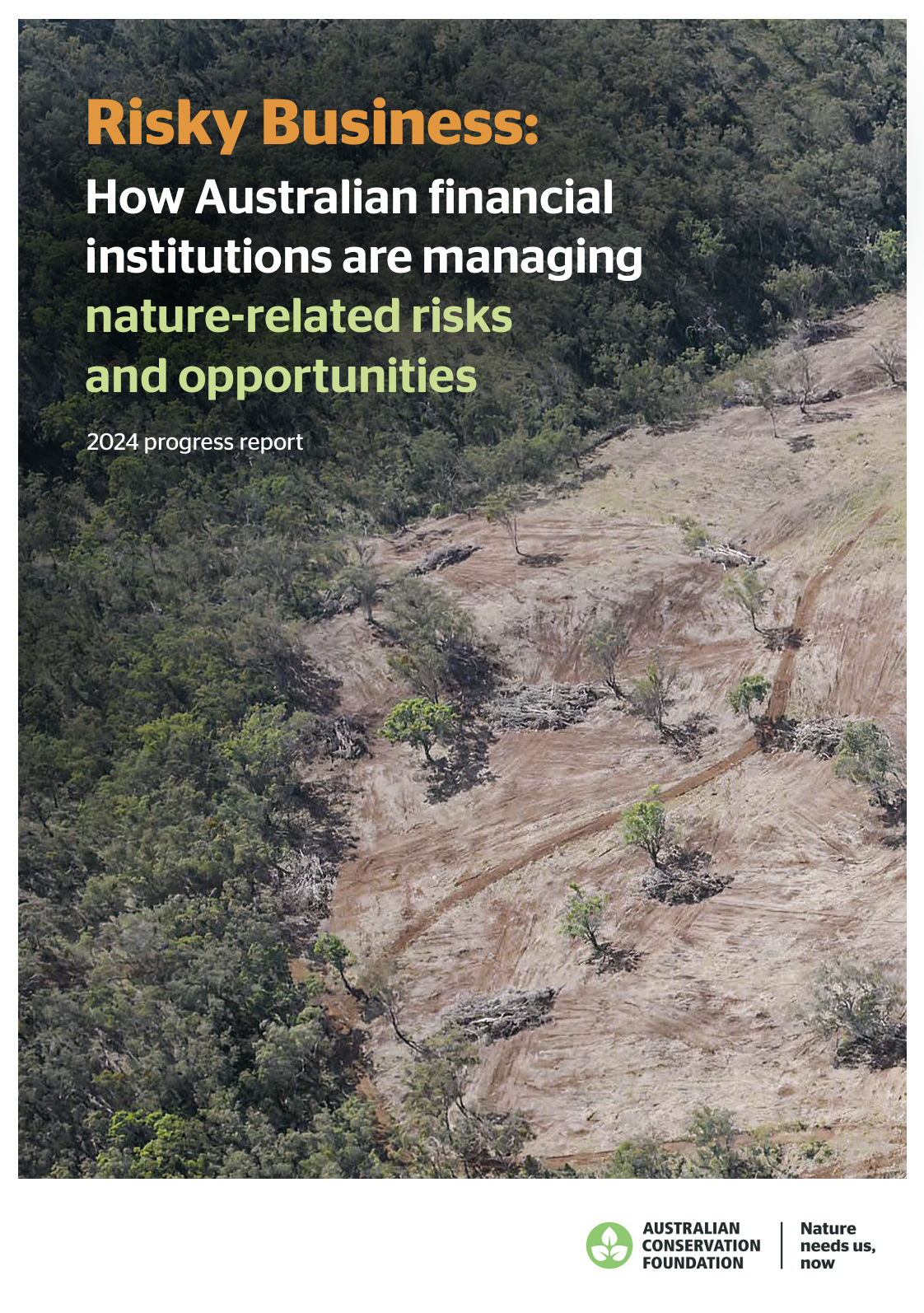
Risky business: How Australian financial institutions are managing nature-related risks and opportunities
This report assesses how ten banks and ten super funds in Australia are addressing nature-related risks and opportunities. It evaluates their strategies, risk management, target setting, and stakeholder engagement, highlighting areas of progress and identifying where further action is needed to mitigate financial risks associated with nature loss.
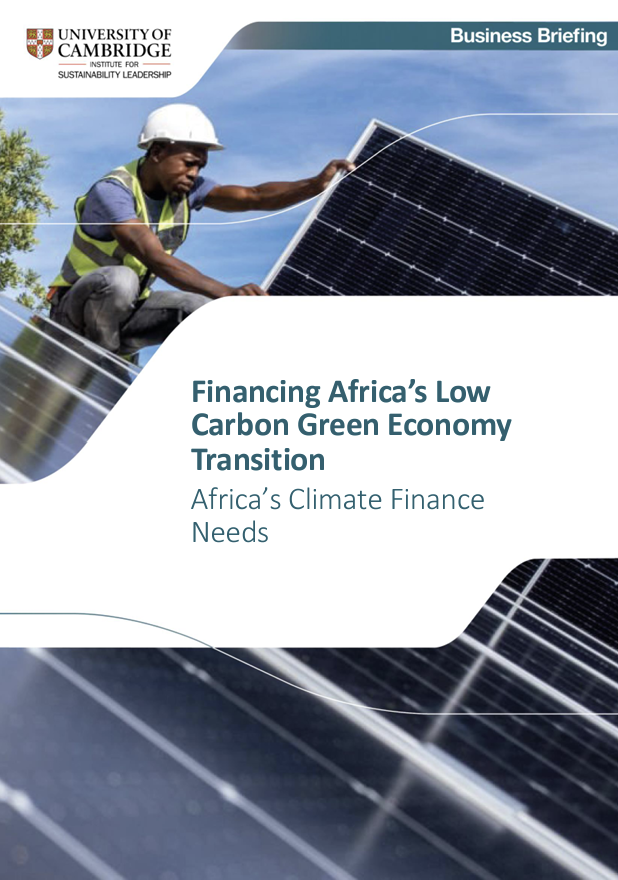
Financing Africa's low carbon green economy transition: Africa's climate finance needs
This report outlines how African states must spend at least US$2.5tn by 2030 to meet climate commitments. It shows that emission reduction makes up close to 80% of spending, with plans for adaptation to climate change costed at US$418 billion.
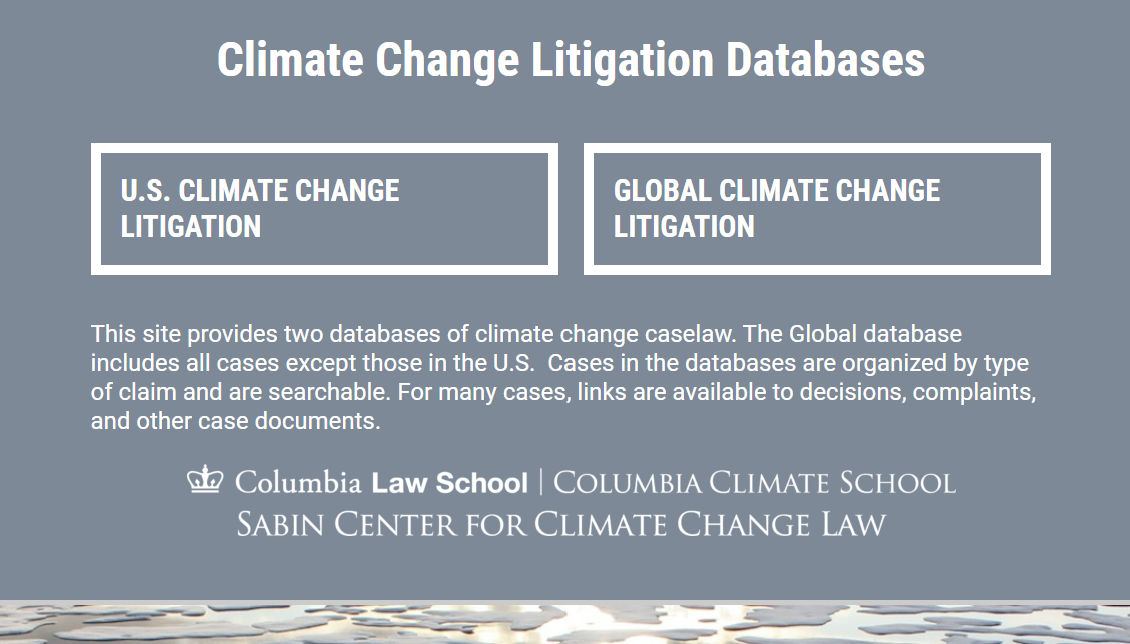
Climate change litigation databases
The Climate Change Litigation Database is an online tool providing access to a comprehensive collection of global climate change litigation cases. It is designed to support legal and finance professionals by offering detailed information and insights into climate-related legal actions and decisions worldwide.


