
Library | ESG issues
Greenhouse Gas Emissions
Greenhouse Gas (GHG) Emissions, including carbon dioxide and methane, trap heat in the atmosphere and drive climate change. Reducing emissions is vital to mitigating global warming risks and aligning with climate targets like the Paris Agreement, influencing long-term corporate and investment strategies.


Refine
519 results
REFINE
SHOW: 16



Peoples' climate vote series
The Peoples’ Climate Vote is a global survey series capturing public perspectives on climate change, policy priorities and collective action. Led by international institutions, it provides a consistent framework to understand how people experience climate impacts and how they expect governments, businesses and global actors to respond.

Banking on climate chaos series
The Banking on Climate Chaos is a multi-year research series assessing how major global banks finance fossil fuel activities. It provides a consistent framework to review lending and underwriting linked to fossil fuels and expansion, supporting year-on-year comparison and broader analysis of banking practices.
Endowment impact benchmark series
The Endowment Impact Benchmark is a benchmark series that provides a structured assessment and benchmarking framework for endowments and foundations. It evaluates policies, governance, management and transparency related to sustainable and impact investing, enabling consistent comparison and ongoing progress tracking across participating institutions.

Net zero atlas series
The COP Net Zero Atlas is an annual research series examining transition and physical climate risks across major economies. It provides a structured framework to assess national climate commitments, policy pathways and exposure to climate hazards, supporting comparative analysis for investors and policymakers.

State and trends of carbon pricing series
The State and Trends of Carbon Pricing series provides an annual, global overview of carbon pricing policies and carbon markets. It reviews the development and structure of carbon taxes, emissions trading systems, and crediting mechanisms to support policy, regulatory, and market analysis.
Climate risk self-assessment survey series
This series presents APRA’s Climate Risk Self-Assessment Surveys, which review how APRA-regulated entities approach governance, risk management, metrics, targets and disclosure of climate-related financial risks. It provides a consistent, periodic view of industry practices and alignment with prudential guidance over time.

Climate fiduciaries: part II – the duty of even-handedness
This article explores the fiduciary duty of even-handedness and its implications for climate-aware pension fund investing, focusing on emerging legal challenges in Australia and Canada. It argues that unmanaged climate risk may breach trustees’ obligations to act equitably across generations, particularly where younger members bear disproportionate long-term harm.

Directors’ duties navigator: Climate risk and sustainability disclosures series
This series provides comparative guidance on directors’ duties relating to climate and nature-related risks, sustainability disclosures and corporate governance across jurisdictions. It outlines evolving legal and regulatory requirements, liability considerations and practical approaches to integrating sustainability-related risks and opportunities into corporate decision-making.

Global climate highlights series
This benchmark series provides a recurring, standardised overview of global climate conditions, produced using consistent observational and reanalysis datasets. It tracks changes across key climate indicators to support comparability over time and inform assessment of longer-term climate trends within a recognised reference framework.
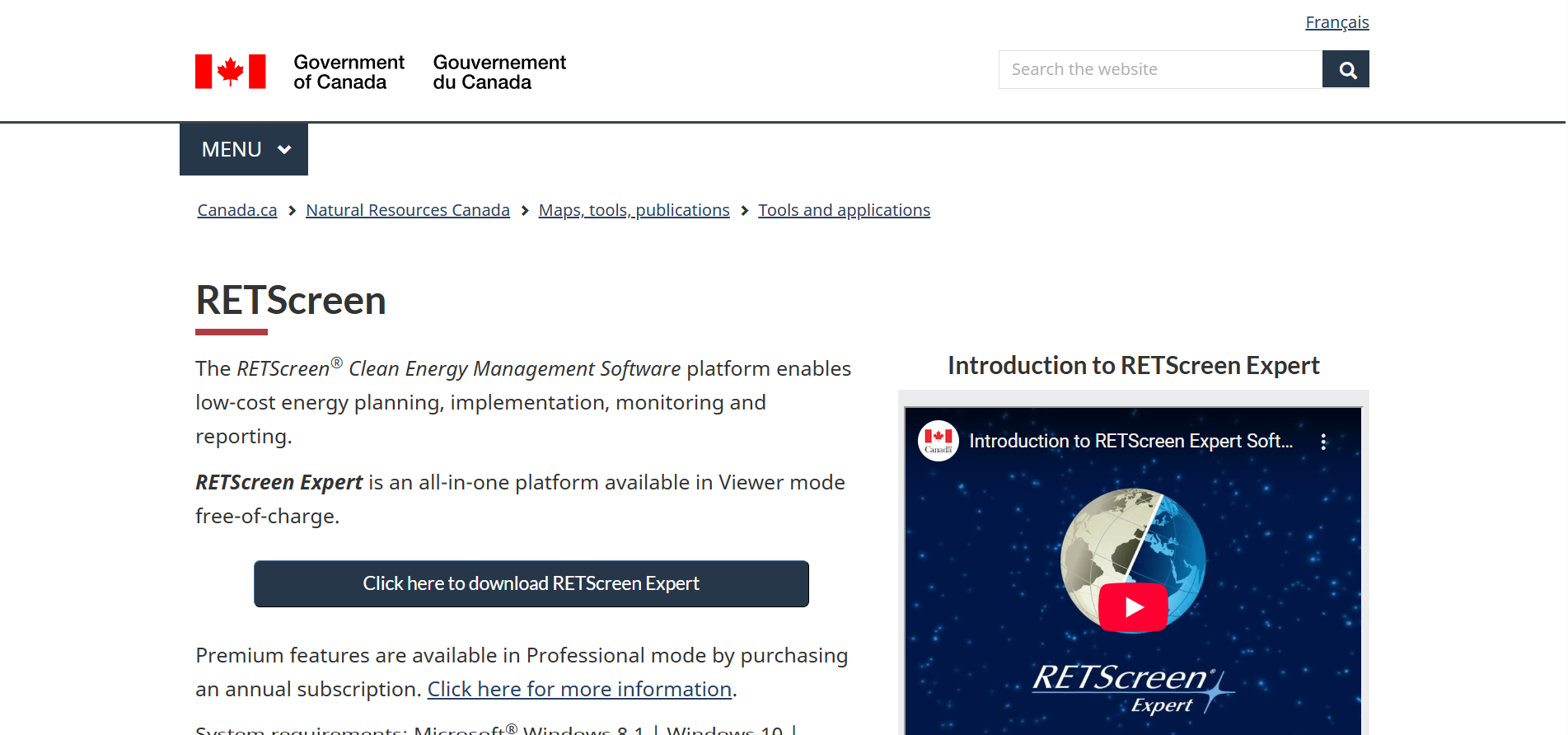
RETScreen
RETScreen is a clean energy management software developed by Natural Resources Canada to assess renewable energy and energy efficiency projects. It supports feasibility analysis, financial evaluation, energy performance tracking and greenhouse gas emissions analysis using integrated global climate, cost and benchmark datasets.

Carbon Majors
Carbon Majors is a public database that quantifies historical and current greenhouse gas emissions attributable to major fossil fuel producers. It provides company-level data, methodologies, and analysis to support climate risk assessment, policy research, and accountability across financial, regulatory, and academic contexts.
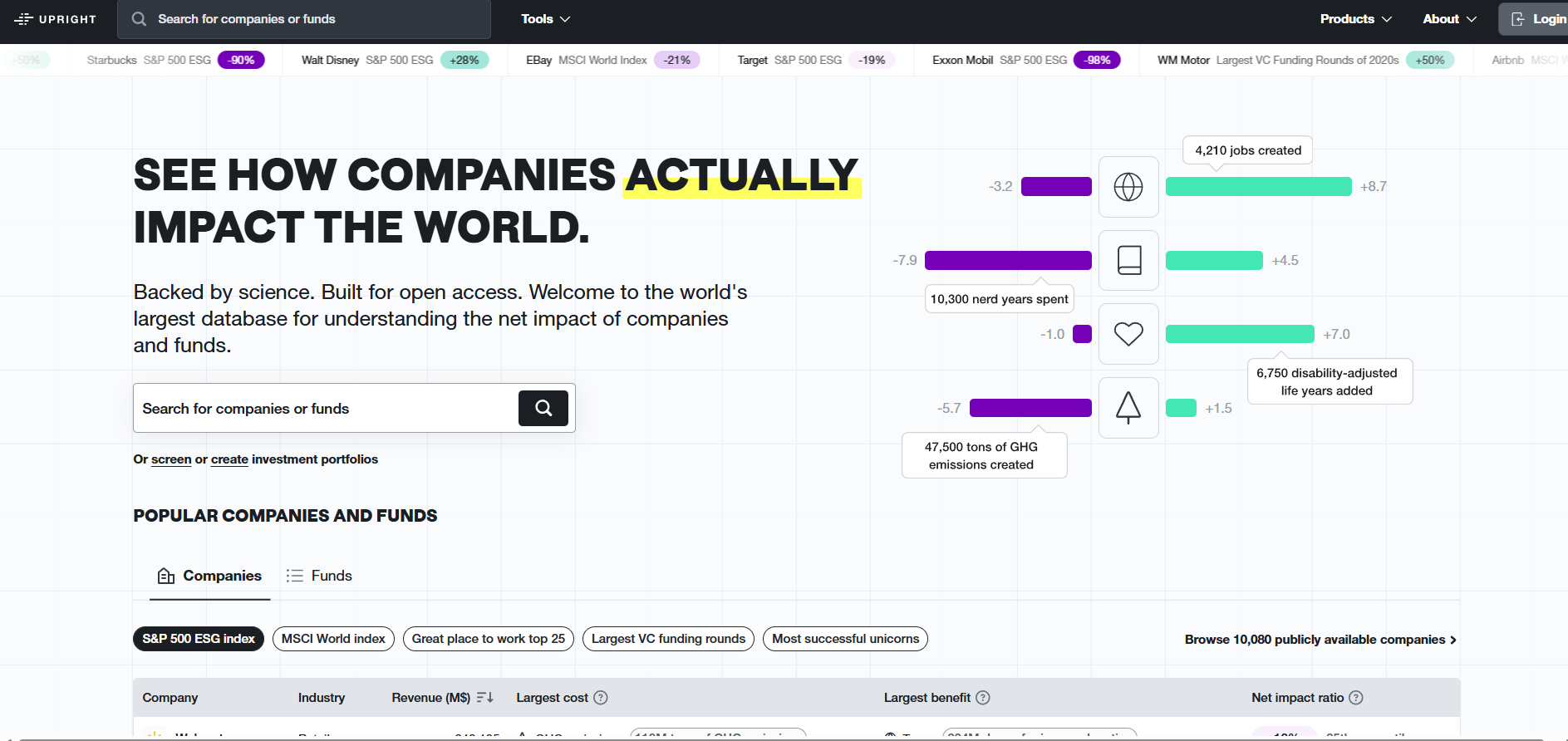
Upright Net Impact Model
Upright Platform offers impact-based ESG analytics that quantify companies’ positive and negative effects across environmental, social and economic dimensions. The S&P 500 ESG preset enables benchmarking of index constituents using monetised impact data to support portfolio analysis and comparability.

Climate Accountability Institute
Climate Accountability Institute (CAI) is a nonprofit research organisation advancing climate accountability through analysis of fossil fuel company emissions. It produces the Carbon Majors database, reports and datasets used by researchers, policymakers and litigators to assess corporate responsibility, climate risk, and transition pathways globally for energy systems and emissions transparency.

European Centre for Medium-Range Weather Forecasts (ECMWF)
European Centre for Medium-Range Weather Forecasts (ECMWF) is an independent intergovernmental organisation providing global numerical weather prediction and climate data. ECMWF supports forecasting, climate risk analysis, Copernicus services, research, and decision-making through high-resolution models, reanalysis datasets, and open scientific expertise.
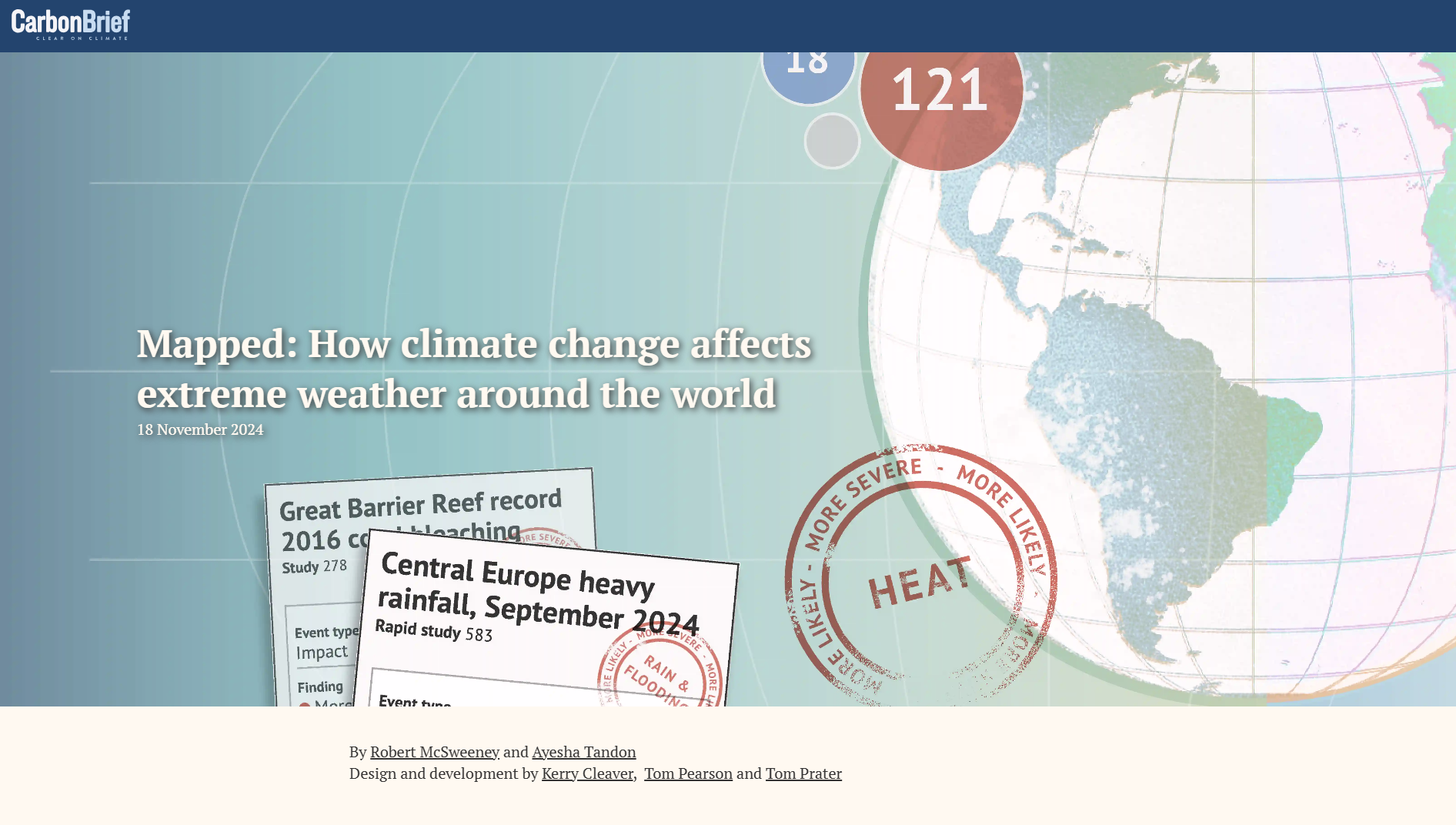
Climate Impact Attribution
Carbon Brief’s Attribution Studies Interactive Map is a searchable database mapping published climate-event attribution research. It shows how climate change influenced the likelihood or severity of extreme weather events globally, categorised by country and event type, with visual indicators of study findings on human-caused warming.
TransitionArc
TransitionArc is a public-facing platform that aggregates leading corporate climate transition data and analysis, enabling comparison of companies’ progress on science-aligned targets and disclosure metrics to support investment, engagement and policy decisions. It streamlines disparate assessments into a coherent view of corporate transition performance


