
Library | ESG issues
Law, Regulation & Compliance
The evolving legal and regulatory landscape financial organisations regarding Environmental, Social, and Governance (ESG) considerations comprises both voluntary frameworks and mandatory regulations. Voluntary initiatives, such as the Task Force on Climate-related Financial Disclosures (TCFD), provide guidelines for companies to disclose climate-related financial risks and opportunities. In contrast, mandatory regulations like the European Union’s Sustainable Finance Disclosure Regulation (SFDR) require financial market participants to disclose how they integrate ESG factors into their investment decisions.

Refine
715 results
REFINE
SHOW: 16


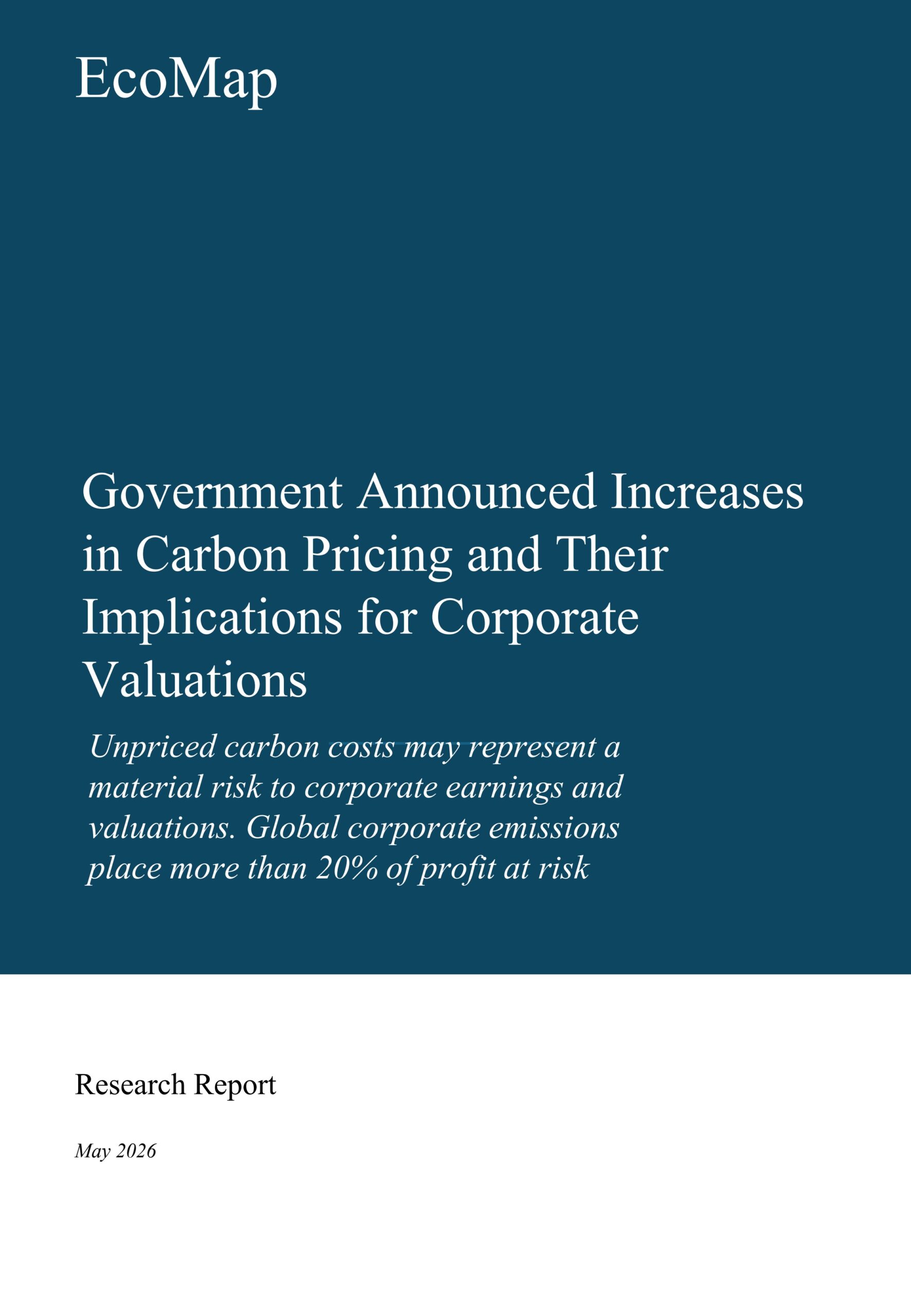
Government announced increases in carbon pricing and their implications for corporate valuations
This report explores global corporate environmental costs, finding that unpriced carbon emissions represent a material risk to valuations. Analysing approximately 20,000 companies, it illustrates how projected carbon price increases in jurisdictions like Norway and Canada could significantly erode enterprise values, especially within the aviation and maritime sectors.
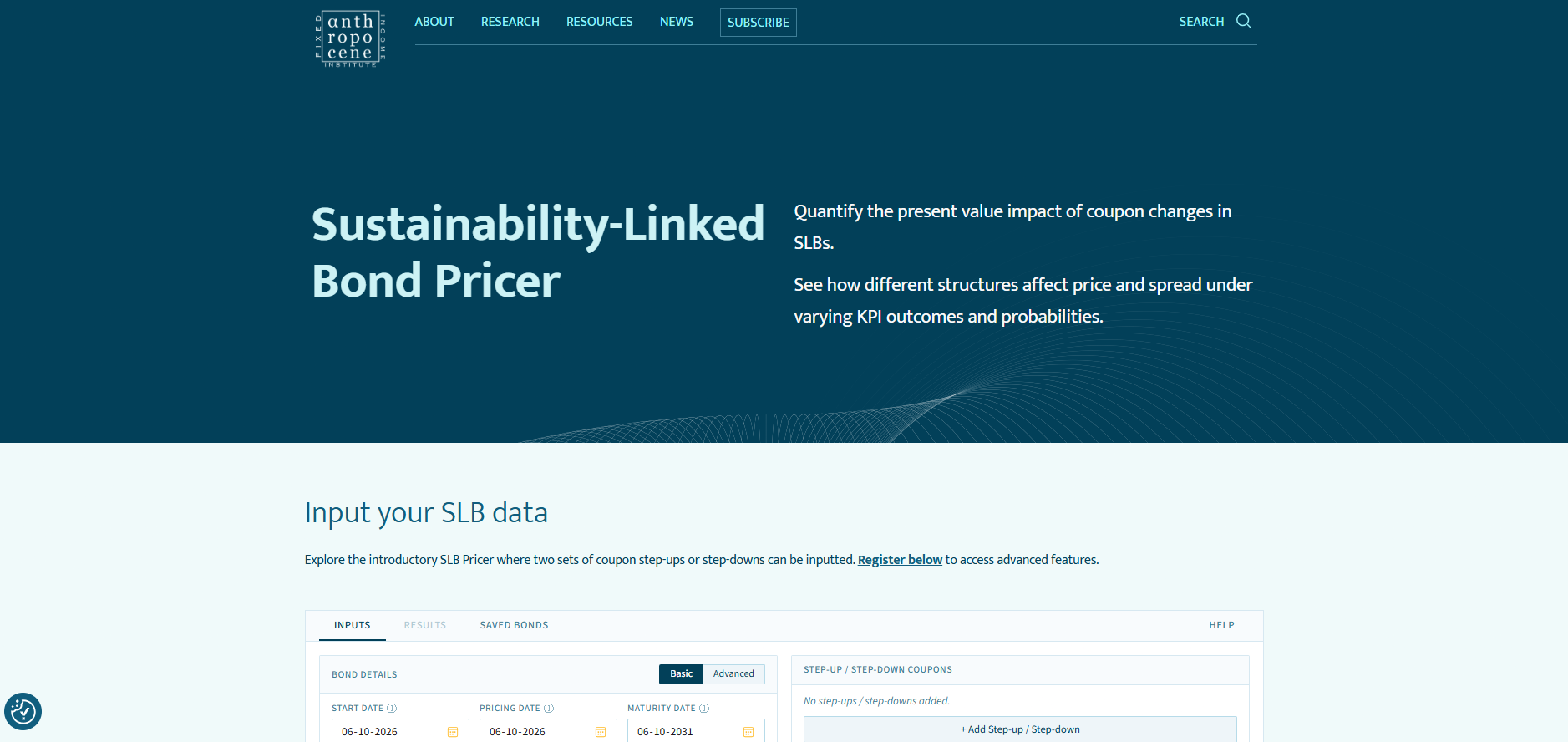
Sustainability-Linked Bond (SLB) Pricer
Developed by the Anthropocene Fixed Income Institute, the SLB Pricer helps investors value the embedded options and step-up features of Sustainability-Linked Bonds. It provides a quantitative framework to ensure bond structures remain robust and ambitious.
Stewarding a just transition: Frontiers of practice in listed equities
This report analyses just transition practices among 25 investment managers in listed equities. While policy recognition is high, active engagement remains a low priority concentrated in energy and mining. The research identifies barriers such as geopolitical headwinds and provides recommendations for investors, governments, and regulators to mainstream practice.
Greenwashing as aspirational signaling: From burden to benefit?
This research analyses the transition of sustainability disclosures from voluntary practices to mandatory legal frameworks in the US and EU. It examines the 'greenwashing enforcement gap' and argues that aspirational signalling, despite inaccuracies, can drive institutional change and attract a prosocial workforce to improve corporate conduct.
International Ethics Standards for Sustainability Assurance (including International Independence Standards) and other revisions to the Code relating to sustainability assurance and reporting
IESBA’s final pronouncement establishes ethics and independence standards for sustainability assurance by introducing Part 5 to the Code. It outlines five fundamental principles and a conceptual framework to address threats, alongside requirements for tax planning, responding to non-compliance, and leader rotation for public interest entities.
Measuring financial health: A framework
This working paper introduces a multidimensional framework for measuring financial health, grounded in 70 global initiatives. It translates G20/GPFI definitions into 17 indicators across six constructs, providing financial sector authorities with practical tools for diagnostic, evaluative, and early warning analysis using administrative and survey data.
Guidance for voluntary climate change mitigation
This guidance outlines expectations for voluntary climate change mitigation in New Zealand. It details six core principles for high-integrity carbon credits, including additionality and permanence. It distinguishes between contribution and exclusive-use claims and clarifies the role of the New Zealand Emissions Trading Scheme and Nationally Determined Contributions.
Assessing digital traceability systems for critical mineral value chains: Aligning upstream and downstream agendas
This report assesses digital traceability systems for critical raw materials, evaluating their architecture, feasibility, and impact. It emphasises aligning downstream regulatory demands with upstream producer realities, recommending that traceability should support due diligence and inclusion—particularly for artisanal mining—rather than serving as a standalone compliance burden.
Legal liability vs. proportional representation: What works in improving poor investor protection?
This research evaluates Korean governance reforms, comparing director legal liability with proportional representation. Findings indicate that markets react positively to increased director liability, especially for undervalued firms. Conversely, mandated proportional representation triggers negative reactions, as investors fear boardroom conflicts may hinder strategic decision-making and reduce board cohesion.
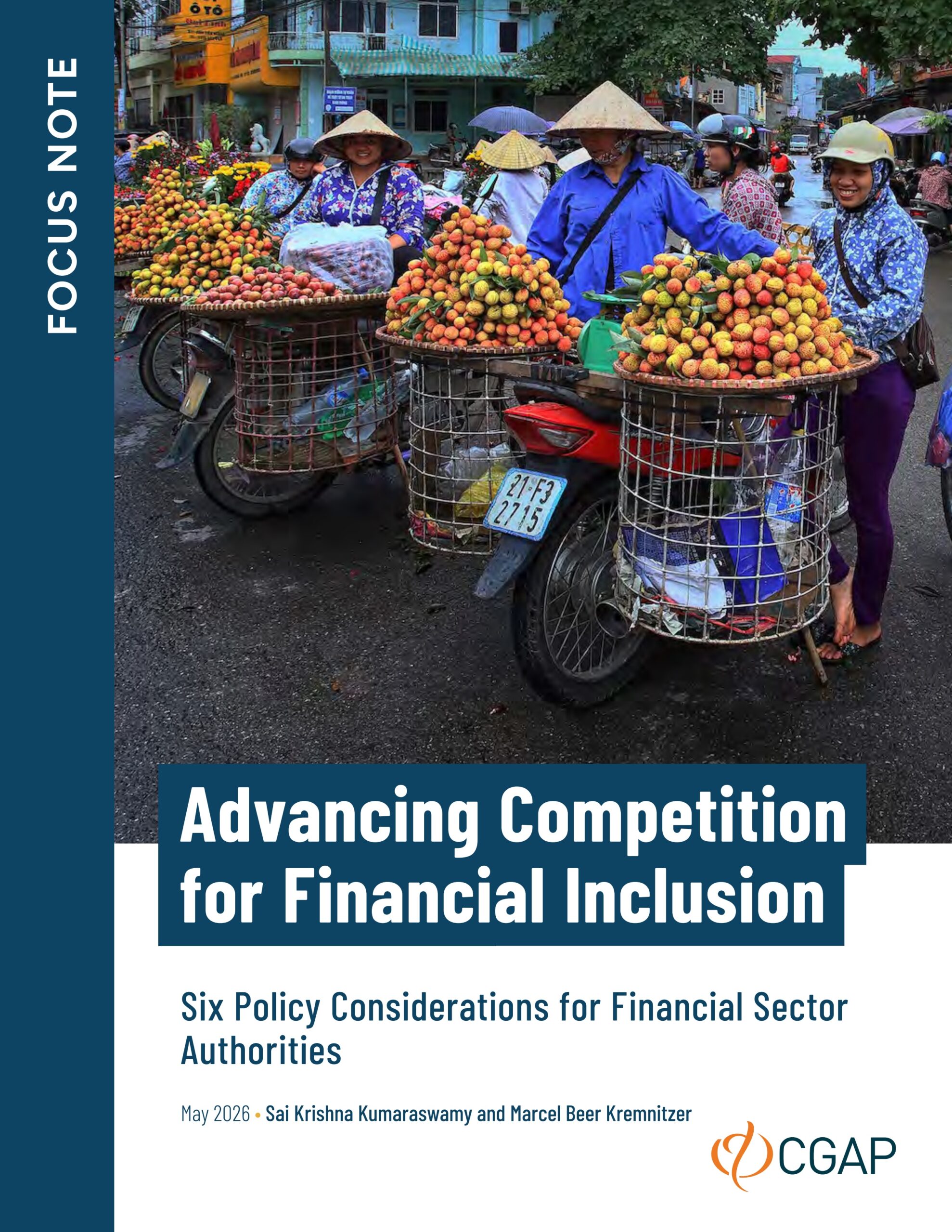
Advancing competition for financial inclusion: Six policy considerations for financial sector authorities
This report provides six policy considerations for financial sector authorities to promote competition and advance financial inclusion. Drawing on eight country case studies, it explains how regulators can use existing mandates, coordinate across sectors, and leverage infrastructure design to address market concentration and support digital financial innovation.
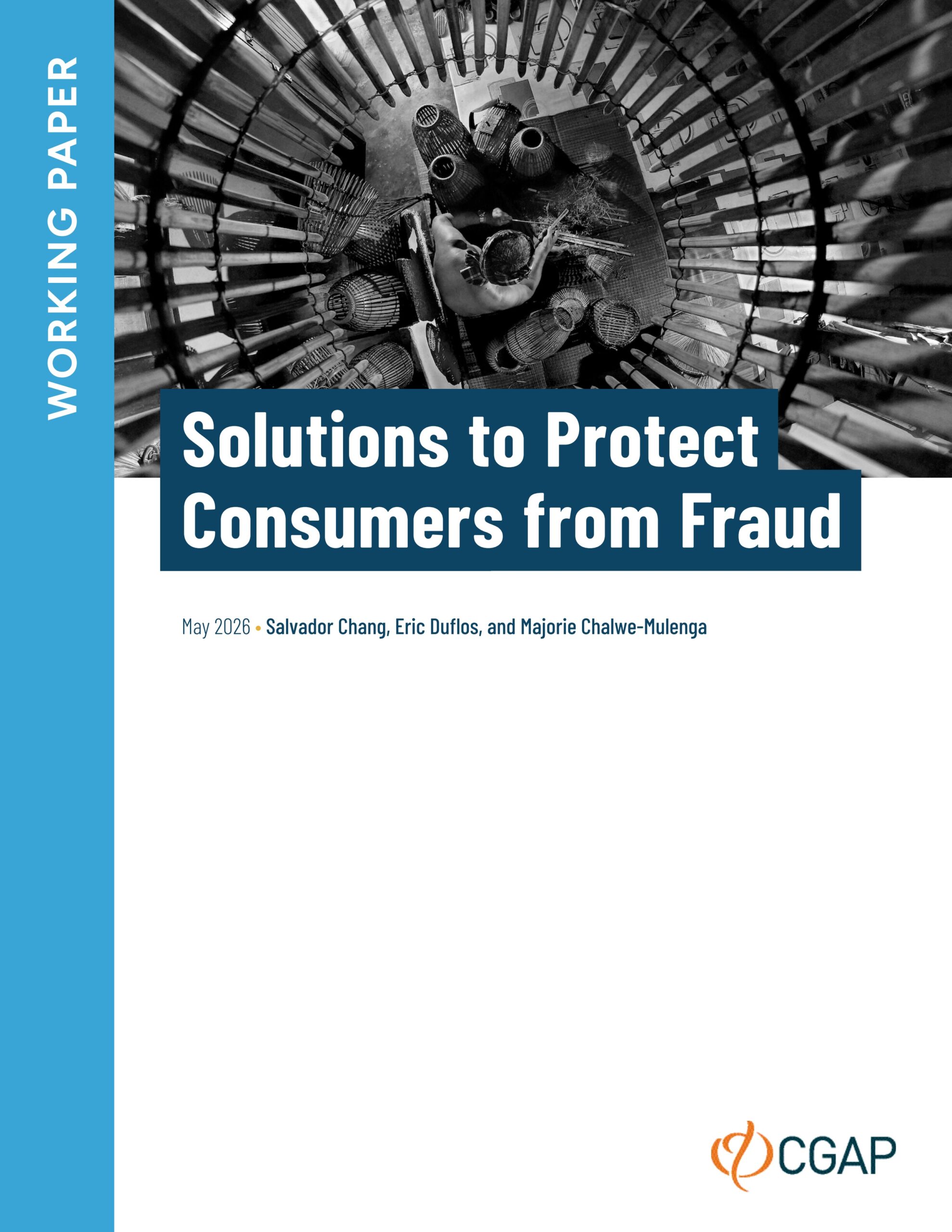
Solutions to protect consumers from fraud in digital finance
Curating 56 successful fraud protection solutions, this report details strategies across intelligence sharing, telecom security, and biometrics. It highlights how AI-driven oversight and multi-sector collaboration, such as Malaysia's NSRC and UK's reimbursement rules, can reduce losses and restore consumer trust in digital financial ecosystems.
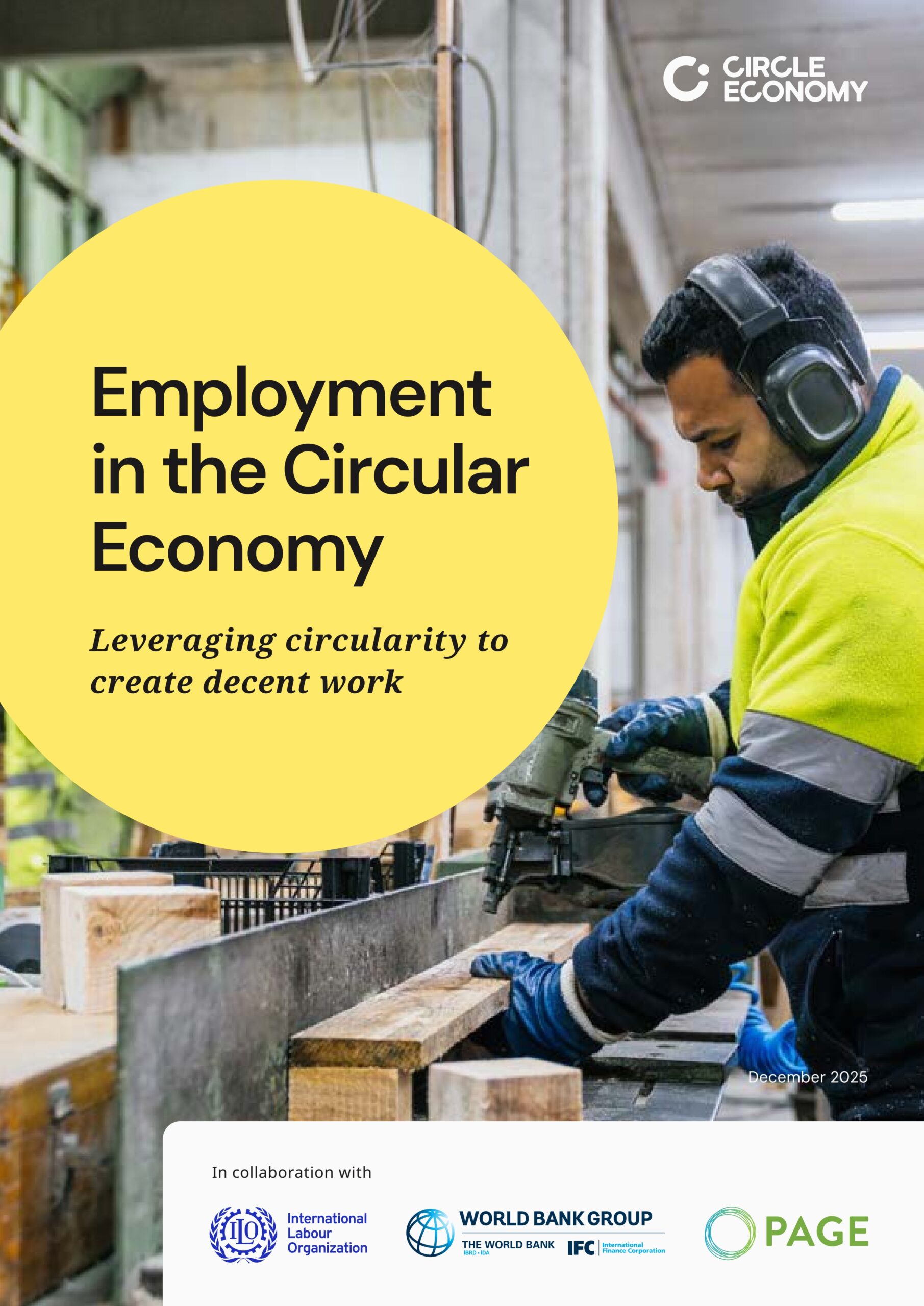
Employment in the circular economy: Leveraging circularity to create decent work
This report provides a global baseline for circular economy employment, estimating that 121 to 142 million people work in the sector. Produced by Circle Economy, the ILO, and World Bank Group, it highlights the prevalence of informal work and the need for policies ensuring a just, inclusive transition.
Annual sustainable investment asset owner survey series
This benchmark series examines global asset owner attitudes and approaches to sustainable investment. It tracks adoption levels, thematic priorities, and perceived barriers across diverse regions and asset classes. The research provides factual insights into how sustainability factors are integrated into core investment practices, aiding portfolio construction and risk management.
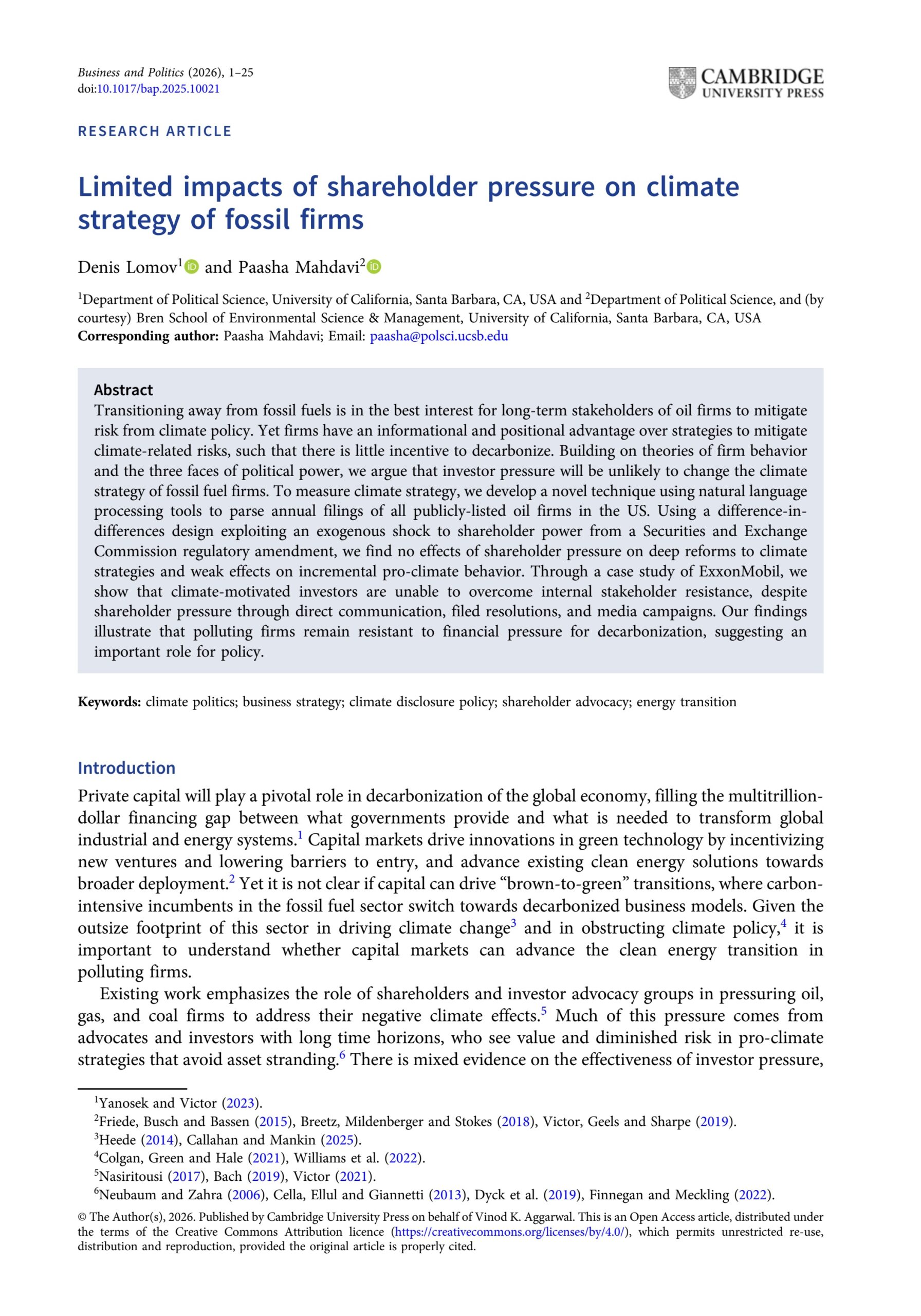
Limited impacts of shareholder pressure on climate strategy of fossil firms
This research examines shareholder pressure on US fossil fuel firms’ climate strategies. Using NLP to analyse 10-K filings and SEC regulatory changes, it finds limited impact on substantive reforms. Firms often employ symbolic disclosures or procedural tactics to resist decarbonisation, suggesting that mandatory policy is required for transition.
Reconsidering supply chains and industrial policy from the economic security perspective
This report analyses supply chain resilience and industrial policy through the lens of economic security. It evaluates market failures in supply chain investment, examines cases of Chinese economic coercion, and assesses Japanese semiconductor subsidies for TSMC and Rapidus, emphasizing the roles of diversification, existing industrial clusters, and international research collaboration.
AI systems at work: A changing psychosocial work environment
This International Labour Organization report examines the psychosocial risks of AI systems in workplaces. It identifies how algorithmic management and advanced robotics impact mental health, autonomy, and privacy. The paper advocates for integrated regulatory frameworks across labour law and safety standards to protect workers from emerging digital hazards.


